

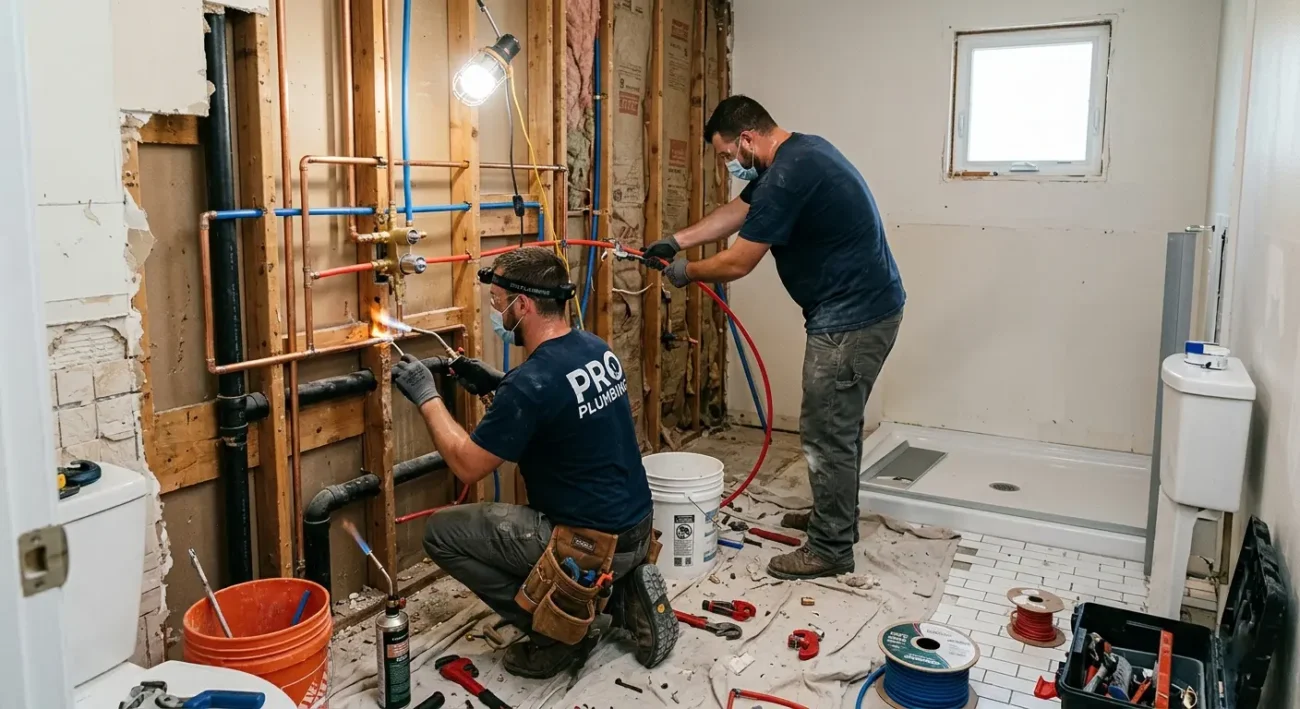
Why do so many bathroom plumbing upgrades in Brooklyn turn out to be more complicated than homeowners expect? In Brooklyn, NYC, upgrading bathroom plumbing is rarely just about changing a sink or shower. Many buildings have old pipes, shared water lines, and strict building rules that can affect even small plumbing changes. Without the right planning, what seems like a simple upgrade can lead to delays, higher costs, or problems with building management and neighbors.
In this guide, we’ll explain how to upgrade plumbing for a bathroom in Brooklyn, NYC, step by step.
Upgrade plumbing in a Brooklyn bathroom: what it really means
When you say you want to upgrade plumbing in a Brooklyn bathroom, you’re usually talking about improving the parts you don’t see, not just changing a faucet or showerhead. That can mean new supply lines, stronger shutoff valves, and cleaner drain connections so the bathroom runs quietly and reliably. And if the work alters, rearranges, relocates, or removes piping, NYC’s Department of Buildings says it must be supervised by a Licensed Master Plumber and done under the right permit and inspections. In other words, a real plumbing upgrade blends comfort and durability with the paperwork that keeps you compliant in New York City.
Signs your bathroom plumbing needs an upgrade
If your bathroom plumbing is starting to fail, it usually gives you clues long before you see a full-blown leak. Here are the warning signs Brooklyn homeowners and apartment residents should take seriously:
- Low or uneven water pressure. If your shower feels weaker than it used to, corrosion or mineral buildup may be narrowing the pipe and slowing the flow. Family Handyman lists obstructed pipes due to debris, mineral buildup, or corrosion as a common cause of pressure drops, especially in older pipe systems.
- Sudden brown or yellow water. NYC DEP says sudden brown water can occur after a nearby water main disturbance or hydrant use, when sediment is stirred back into the water. If it keeps happening inside your building, NYC311 notes that hot-water complaints can be tied to corroded pipes or a water heater problem that the building owner needs to address.
- Repeated leaks or “same spot” drips. When you keep tightening a valve or patching the same joint, the pipe or fitting may be worn out, not just loose. Family Handyman warns that hidden plumbing leaks can lead to rot and expensive damage, so repeated leaks are a good reason to upgrade the weak section.
- Water stains, bubbling paint, or soft drywall near the bathroom (or on the ceiling below). Stains and bubbling paint usually mean water has been escaping for a while, even if you don’t see an active drip. The Spruce notes that ceiling water stains can lead to structural damage, so treat them as a plumbing signal, not a cosmetic issue.
- Gurgling toilet, slow drains, or sewer smells. Gurgling and slow drainage often indicate that the airflow in the drain system is off or that a clog is building up deeper in the line. The Spruce explains that a gurgling toilet can be linked to vent or sewer-line issues, and persistent symptoms are a solid cue to bring in a plumber.
- Shower temperature swings or water that gets dangerously hot. If your water temperature jumps when someone else runs a sink, your shower valve may no longer control pressure changes well. NYC’s plumbing code requires shower and tub-shower valves to have a way to limit the maximum setting to 120°F, so an upgrade is your chance to bring that control up to code.
- A toilet that runs or refills when nobody uses it. A running toilet often points to a worn flapper or flush-valve seal, and it can waste water day after day. EPA’s WaterSense program recommends a simple dye test: add dye to the tank, wait 5 to 10 minutes without flushing, and if the color reaches the bowl, the toilet is leaking.
- Banging pipes after you shut off the water. That loud bang is often a water hammer, which occurs when water stops too quickly, causing the pipe to vibrate. Family Handyman explains that a water hammer can be addressed with fixes like a water-hammer arrester, and that it’s worth investigating because repeated banging can stress joints over time.
How to upgrade plumbing for the bathroom
First, decide whether you’re doing a simple fixture swap or you’re changing the pipes behind the wall. If you will alter or relocate piping, NYC DOB requires the work to be supervised by a Licensed Master Plumber, and owners typically hire a Department-licensed plumber or a Registered Architect or Professional Engineer to file the proper permits before work starts. Next, you open the right areas and upgrade the parts that fail most often in bathrooms: shutoff valves, supply lines, shower valves, and any problem drains or vents. Then you test for leaks, schedule the required inspections, and keep the paperwork so your building and future buyers know the work was done right.
Build a “plumbing upgrade plan”
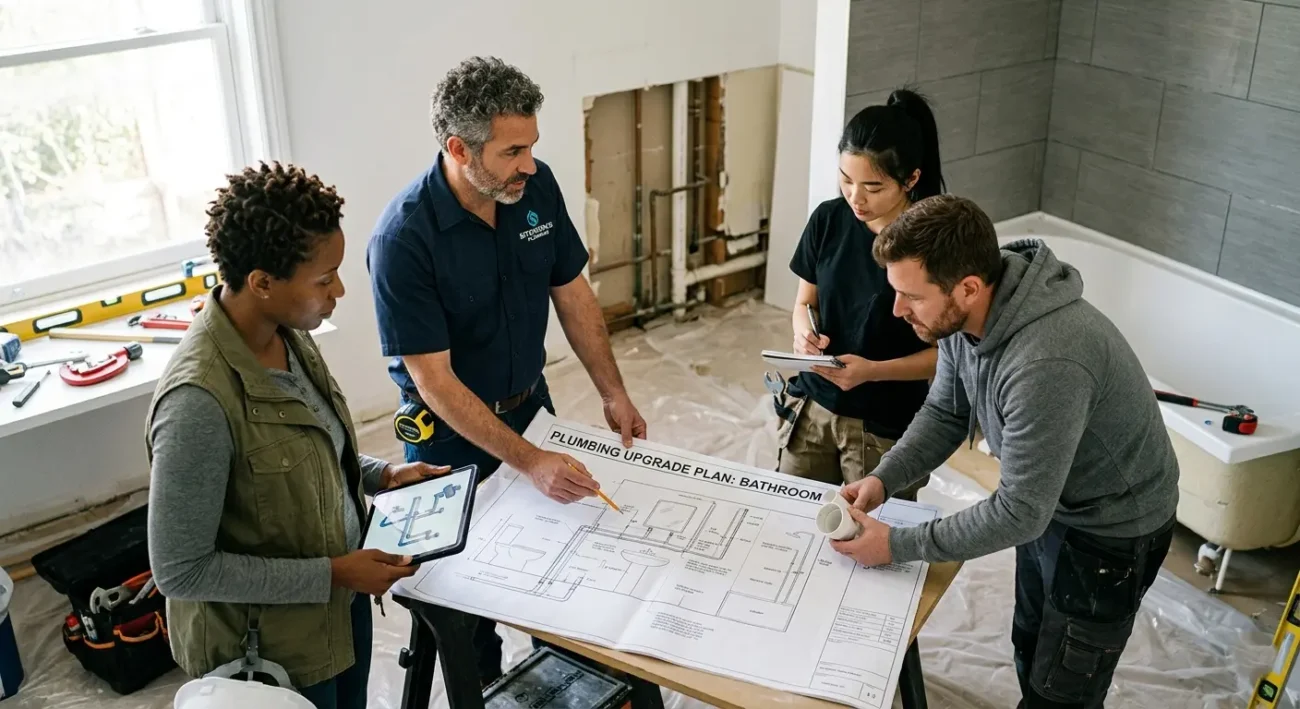
Before you open a single wall, take one hour to plan your plumbing upgrade on paper. That little plan helps you avoid change orders and keeps your Brooklyn project moving when the building asks, “What exactly are you doing?”
- Map the current layout and what you want to change. Draw a simple sketch of your toilet, vanity, and tub or shower, and note where the supply lines and drains enter the room. Mark what stays in place and what you want to move, even if it’s just shifting a vanity a few inches. In many Brooklyn apartments, staying close to the existing stack keeps the job simpler because you touch less shared piping.
- Pick the right permit path early. If the job goes beyond a cosmetic swap and you start changing piping, you may need DOB permits and a Licensed Master Plumber to supervise the work. DOB explains that a Limited Alteration Application is used for certain plumbing repair or replacement work that does not include construction work. For larger or more complex bathroom renovations, DOB notes that plans and permits may be required, and you may need a New York State-licensed Registered Architect or Professional Engineer to file the drawings.
- Choose fixtures and valves that comply with NYC water and safety regulations. Use NYC’s fixture flow limits as your buying filter so you don’t fall in love with a product your plumber can’t approve. For example, NYC’s plumbing code table sets maximums like 2.0 gallons per minute for a showerhead and 1.28 gallons per flush for a toilet (or an equivalent dual-flush). And when you upgrade the shower valve, the code requires a limit so the maximum setting does not exceed 120°F, which protects kids, guests, and distracted adults.
- Plan access and maintenance, not just the pretty tile. Decide where shutoff valves will be and how you will reach them without tearing out a finished wall. Add an access panel if your valve or cleanout will end up buried behind a vanity or in a tight corner. This is the kind of small design choice that saves you real money the first time a cartridge fails or a trap needs cleaning.
- Build a schedule that aligns with your building and DOB workflows. If permits are involved, plan for filing, approvals, and inspections as part of the timeline, not as an afterthought. NYC DOB explains that plumbing job filing and permit requests are handled through DOB NOW: Build, and owners often need to log in to approve filings. In a co-op or condo, also add time for management reviews, insurance paperwork, and water shutoff coordination, because those steps can slow you down more than the actual pipe work.
Hire a Contractor to Upgrade the Plumbing of Your Bathroom
In Brooklyn, hiring the right contractor is the difference between a smooth bathroom upgrade and a months-long headache. You want someone who can do the work cleanly, protect your neighbors, and handle NYC permits without guessing.
- Confirm a Licensed Master Plumber is leading the plumbing work. If your project involves altering or relocating piping, NYC DOB requires a Licensed Master Plumber to supervise it. DOB also states the Licensed Master Plumber must obtain the plumbing permits and arrange required tests and inspections. So if a contractor tells you they can “do it without a plumber,” treat that as a red flag, not a bargain.
- Ask who is filing and what type of filing it is. Before plumbing work begins, DOB says the property owner must hire a Professional Engineer, a Registered Architect, or a Department-licensed plumber to file the required permits. If the scope fits an LAA, DOB describes it as a path for certain plumbing repair or replacement work that does not include construction work. A good contractor will tell you up front whether you’re in a simple permit lane or a plan-and-permit lane, and what that means for timeline and cost.
- Make sure they understand your building’s rules. Co-ops and condos often have strict work hours, noise rules, and insurance requirements, and they may require approvals even when the city does not. Ask the contractor how they handle hallway protection, debris removal, and water shutoffs so your super and neighbors stay calm. If they have done similar Brooklyn buildings, they should be able to explain their process without hand-waving.
- Get a detailed written scope, not a one-line quote. Insist that the proposal lists exactly what gets replaced behind the wall, such as the shower valve body, shutoff valves, supply lines, and traps. Ask what is excluded, too, like waterproofing, tile, or mold remediation, so you do not get surprised later. A clear scope keeps you from paying twice when the wall opens, and someone says, “That wasn’t included.”
- Require testing, inspections, and closeout paperwork. Plumbing upgrades should end with a pressure and leak check before the walls close, not after the tile goes up. DOB notes that the Licensed Master Plumber must arrange tests and inspections of completed work by a DOB inspector, which helps you document that the work is compliant. Ask for the permit number, inspection sign-offs, and a short “what changed” note, so you have a clean record for building management and resale.
Water efficiency upgrades
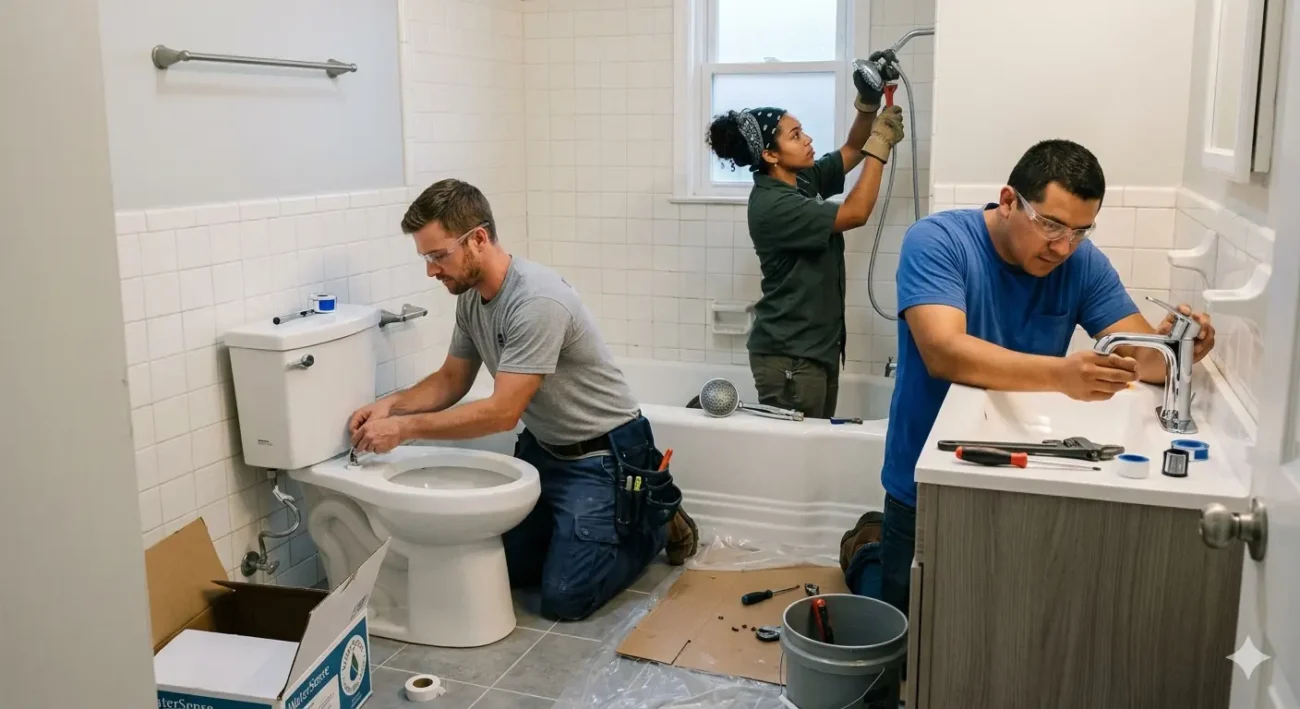
If you are opening a Brooklyn bathroom wall, it’s the perfect moment to make the plumbing more water-efficient. These upgrades feel small, but they can cut your water use and even lower the energy you spend heating hot water.
- Buy fixtures that meet NYC flow limits. NYC’s plumbing code table lists maximums, such as 2.0 gpm for a showerhead, 1.5 gpm for a private lavatory faucet, and 1.28 gpf for a toilet (or equivalent dual-flush).
- Use WaterSense as your shortcut. EPA says WaterSense showerheads can save the average family about 2,700 gallons per year, and WaterSense bathroom faucets or aerators can save about 700 gallons per year.
- Swap in quality aerators. Many bathroom faucets can be upgraded with an aerator that reduces flow while maintaining a comfortable feel.
- Grab NYC’s water-saving freebies if you qualify. NYC311 says a DEP water-saving kit can include low-flow showerheads, faucet aerators, toilet accessories, and leak-detection dye tablets.
- Hunt for silent toilet leaks. WaterSense outlines a dye-tablet test: add the tablet to the tank, wait 5 to 10 minutes without flushing, and if color appears in the bowl, you have a leak to fix.
- If you want body sprays or multiple shower heads, plan carefully. NYC guidance limits the combined flow that can operate simultaneously in a single shower compartment to the Table 604.4 flow rate for a single shower head.
Supply-side upgrades: shutoffs, pressure, and replacing tired piping
Supply-side upgrades are the behind-the-scenes changes that make your bathroom feel “new” every day. They also make repairs easier because you can shut off one fixture without shutting down the whole apartment.
- Add or replace fixture shutoff valves. Put reliable shutoffs at the toilet and vanity so you can stop a leak in seconds.
- Replace tired supply lines and weak fittings. If you find corrosion, scaling, or questionable old lines, replace them rather than reusing them and hoping for the best.
- Upgrade the shower valve body during rough plumbing. NYC code requires shower and tub-shower valves to include a way to limit the maximum setting to 120°F, and the plumber should field-adjust it correctly.
- Solve the low pressure at the root. A plumber can check for corrosion or mineral buildup that can cause pressure loss in older piping, as Family Handyman highlights as a common cause.
- Stop banging pipes with the right fix. If you have a water hammer, Family Handyman recommends a water-hammer arrester as one of the most effective ways to cure banging water pipes.
- Treat any piping changes as a “permit-level” decision in NYC. DOB says work involving alteration, rearrangement, relocation, or permanent removal of piping must be supervised by a Licensed Master Plumber, with permits and inspections handled properly.
Upgrades to Make Your Bathroom Functional & Beautiful
If you’re already opening walls to upgrade plumbing, you can make your Brooklyn bathroom feel better every single day; not just look nicer. The trick is choosing upgrades that improve comfort, storage, and reliability without creating future maintenance headaches.
- Upgrade the shower valve (not just the trim): Pick a modern, code-compliant valve that smoothly controls pressure and temperature. NYC’s plumbing code requires individual shower/tub-shower valves to be balanced-pressure, thermostatic, or a combination type, and it also requires a way to limit the maximum setting to 120°F, adjusted per the manufacturer’s instructions.
- Choose a shower system that fits your water pressure reality: In many Brooklyn buildings, pressure can vary during peak hours, so keep your setup practical. A good valve and a well-matched showerhead often feel better than complicated multi-spray setups that underperform when pressure dips.
- Add smart storage to make the room feel bigger: recessed medicine cabinets, a vanity with drawers, or shelves built into a niche can keep daily clutter off the counter. When your storage is planned, the bathroom instantly feels more “finished.”
- Improve lighting where you actually use it: Add bright, flattering light to the mirror (not just a ceiling light). It’s a small upgrade that makes mornings easier and gives the bathroom a higher-end look.
- Refresh the vanity drain and shutoff setup for easy future repairs: Ask your plumber to make shutoffs accessible and tidy, so you’re not fighting a cramped mess under the sink later. This makes maintenance easier and reduces panic when a leak happens.
- Use durable finishes that handle NYC humidity: Brooklyn bathrooms get steamy fast, so choose surfaces that don’t hate moisture (porcelain tile, solid-surface counters, washable paint rated for baths). Your bathroom will stay cleaner-looking longer.
Waterproofing and Finishing Walls and Ceilings
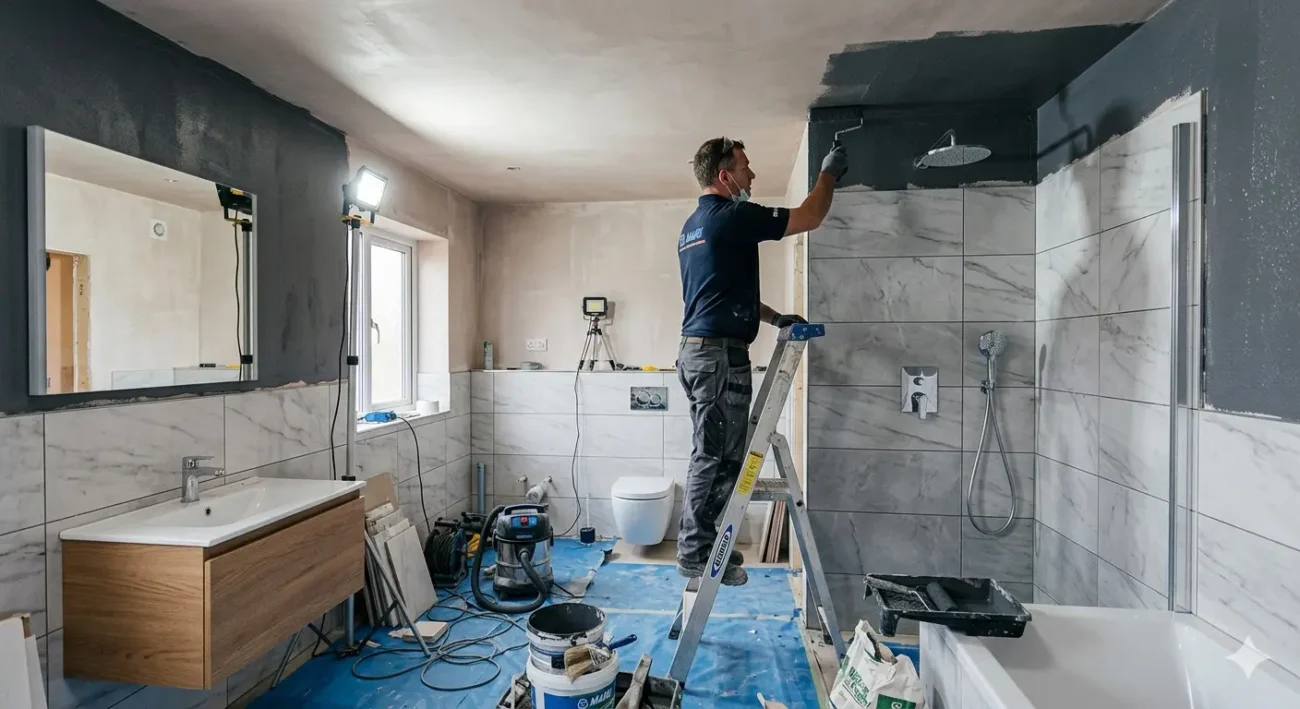
- Use the right shower lining/waterproofing system for your shower floor: NYC’s plumbing code requires shower floors (unless you use a prefabricated receptor) to be lined and made watertight, with the liner turning up the sides at least 2 inches above the finished threshold.
- Don’t puncture the liner in the danger zone: The code also says the liner should not be nailed or perforated less than 1 inch above the finished threshold; this is a common failure point when someone rushes.
- Make sure the waterproof layer slopes toward the drain: The shower liner must be pitched (sloped) toward the drain so water doesn’t sit and rot things out.
- Do a shower liner test before you close anything up: NYC code requires the completed liner installation to be tested: the drain gets plugged, the area is filled with water to at least 2 inches, and the water must be retained for at least 15 minutes with no evidence of leakage.
- Choose proper wall/ceiling backer materials in wet areas: NYC’s building code requires tile bases in tub/shower areas (and wall/ceiling panels in shower areas) to use materials listed in the code’s table and be installed per manufacturer recommendations.
- Finish walls and ceilings with moisture in mind: Use the right board/backer in the wet zone, seal penetrations (valve openings, shower arm, niches), and then finish the rest of the bathroom with products made for humid rooms.
Install fixtures and final connections.
This is the fun stage when your bathroom starts looking like a bathroom again. But it’s also the stage where rushed connections cause leaks, callbacks, and stress.
- Set and connect the toilet the right way: Your installer should confirm the flange is solid, the toilet is level, and the connection doesn’t rock (rocking toilets break seals). Then they connect the supply line and test for leaks at the shutoff and fill valve.
- Install the vanity faucet and drain without shortcuts: A clean drain assembly and proper trap alignment help you avoid slow drains and cabinet damage. Once installed, run water for several minutes and check every joint with a dry paper towel (you’ll spot tiny leaks fast).
- Trim out the shower and set safe temperature control: When the plumber installs the shower trim and cartridge, they should also set the valve’s maximum temperature limit correctly. NYC requires shower/tub-shower valves to include a means to limit the maximum setting to 120°F, field-adjusted per manufacturer’s instructions.
- Seal around fixtures where water splashes (not where water must drain): Caulk the right edges and leave weep paths where the system needs them (your contractor will know the correct approach for your setup). This helps water stay where it belongs.
- Do a full run-through test: Run the shower, fill and drain the tub (if you have one), flush the toilet multiple times, and run the sink hot and cold. You’re checking for leaks, temperature stability, and proper drainage before the bathroom is “done.”
Final Inspection of Plumbing Upgrade Projects
In Brooklyn, your final “inspection” is really two things: your own quality check and (when permits apply) the DOB inspection/sign-off process. This is the step that protects you if you ever sell, refinance, or get questioned by building management.
- Confirm whether your work required a permit and that it was filed correctly.
- Schedule DOB inspections correctly (if your permit requires them).
- Keep proof of testing where it matters most.
- Check every shutoff, run every fixture, look under the vanity, and inspect ceilings/walls around the bathroom for any damp spots.
What is an LAA permit in NYC, and when would a Licensed Master Plumber file it?
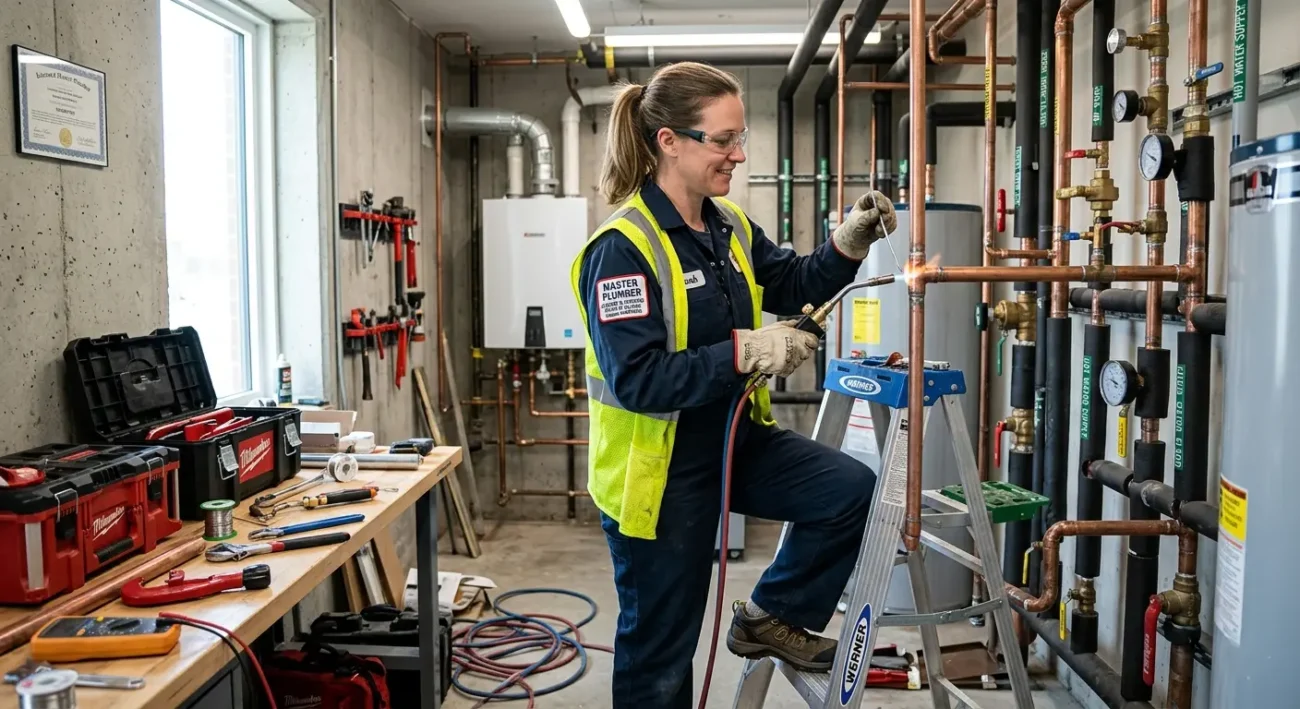
An LAA (Limited Alteration Application) is a DOB filing used for plumbing work (and certain other limited categories) that does not include construction work.
NYC DOB notes that, except for some new installations, LAAs are generally restricted to repair and/or replacement work for existing appliances and piping systems that do not require a Professional Engineer (PE) or Registered Architect (RA).
DOB also states that Licensed Master Plumbers are among the skilled trades who can submit an LAA filing in DOB NOW: Build.
So, if you’re upgrading plumbing in place (repairing/replacing existing piping or related components) and it falls within the “no construction work” lane, your LMP may file an LAA rather than a larger alteration application.
Your plumber will confirm the right filing type based on the exact scope and what your building allows.
When does a Brooklyn bathroom project require an ALT2 filing and an RA/PE?
NYC DOB explains that ALT2 applications are for renovations with multiple types of work that do not change the building’s use, egress, or type of occupancy.
DOB also states that most kitchen and bathroom renovations require an ALT2 permit application, and it must be filed by a PE or RA.
They give examples of when you’ll need an ALT2, such as adding a new bathroom, rerouting gas pipes, adding electrical outlets, or moving a load-bearing wall.
So if your Brooklyn bathroom upgrade expands into multi-trade renovation work or bigger layout changes, expect the ALT2 + RA/PE path.
How long does a bathroom plumbing upgrade usually take in Brooklyn?
It depends on the scope, but a useful rule is: the more you open walls or move plumbing, the longer it takes. Sweeten’s NYC guide says a bathroom remodel typically takes 2 to 4 months overall, with 4 to 8 weeks in the construction phase.
They also note that keeping the existing layout and choosing in-stock materials can wrap work up faster, while relocating plumbing and securing permits/board approvals can extend the schedule.
So, a “plumbing-only” upgrade in the same locations can be much quicker than a full gut, but if DOB permits and inspections apply, your timeline must include that process too.
Where to Find the Best Brooklyn Contractors
Are you looking for an expert contractor in Brooklyn, NYC? SR General Construction has you covered! Our business is located at 8807 Avenue B, Brooklyn, NY 11236, United States, in the Canarsie area.
Additionally, we offer services at Rockaway Parkway and Ralph Avenue, providing fast access to Flatlands, East Flatbush, Bergen Beach, Brownsville, and the Spring Creek section of East New York.
FAQ
1. When must I hire a Licensed Master Plumber (LMP) in NYC?
NYC DOB says that work involving the alteration, rearrangement, relocation, or permanent removal of piping must be supervised by a Licensed Master Plumber. The LMP also pulls permits and arranges required tests/inspections.
2. Can I move a toilet, tub, or shower in a Brooklyn apartment?
Sometimes, but your building’s pipe stacks, venting, and structural limits often restrict how far you can move drains. In co-ops/condos, the wet-over-dry rule commonly blocks moving a bathroom over a neighbor’s bedroom or living room.
3. What’s the biggest cost driver when upgrading bathroom plumbing?
Moving plumbing locations (toilet/tub/shower) usually costs more than upgrading pipes in place because drains, venting, and inspections get more complex. Keeping the same layout is often the most budget-friendly choice.
4. What water-efficiency upgrades work best in NYC bathrooms?
Start with WaterSense-labeled fixtures: EPA says a WaterSense showerhead can save the average family 2,700 gallons/year, and a WaterSense bathroom faucet or aerator can save 700 gallons/year. These upgrades are easy wins because they cut water use without making your shower feel weak.
5. Can I get free low-flow parts in NYC?
If you’re a building owner, NYC311 says you can request a DEP water-saving kit that includes low-flow showerheads, faucet aerators, toilet accessories, and leak-detector dye tablets (with limits per address). It’s a simple way to quickly improve efficiency.