

What makes a kitchen sink work in a Brooklyn home?
In Brooklyn, kitchen sink design is shaped by small spaces, older buildings, and modern city lifestyles. In this guide, we’ll explore the top 10 kitchen sink design trends in Brooklyn, NYC, highlighting the styles, materials, and features that are most popular and most practical for local kitchens.
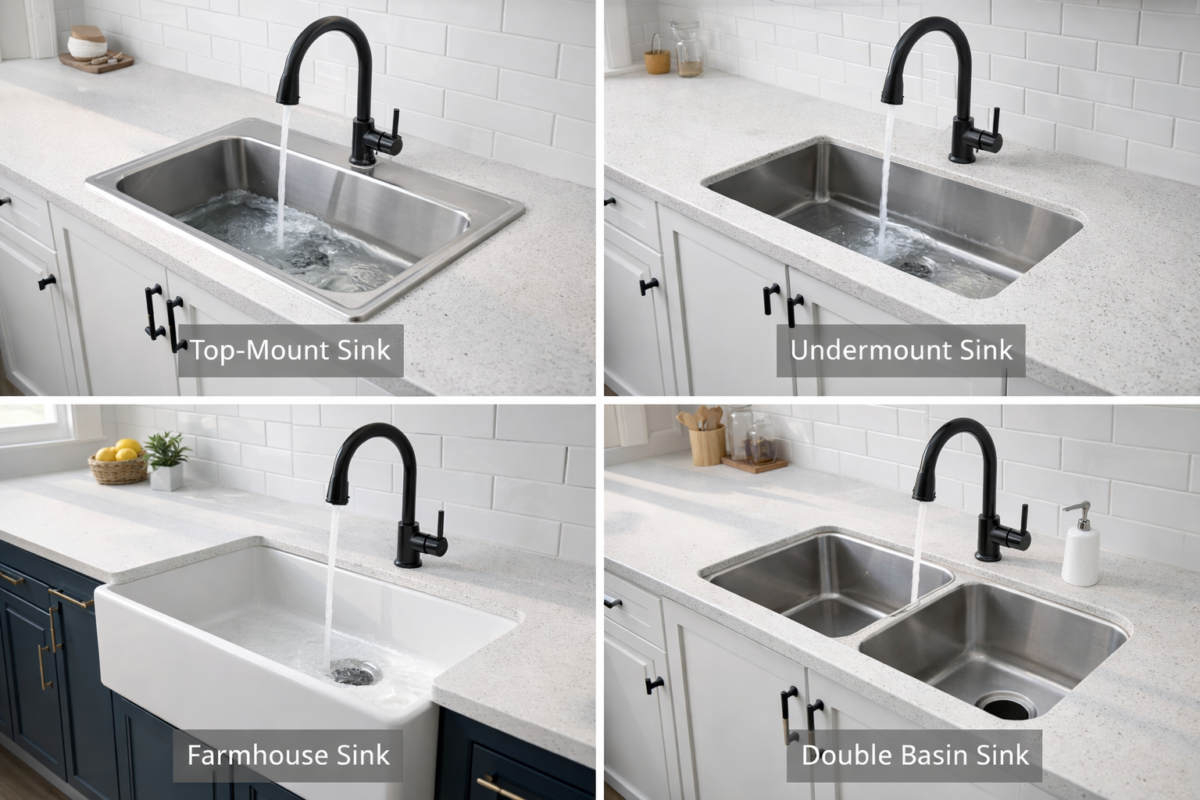
Why kitchen sink design trends matter in Brooklyn, NYC
Do you ever notice how the sink is the one spot in your kitchen that gets used all day, even in the smallest Brooklyn apartment? In Brooklyn, smart sink choices help you save counter space, speed up cleanup, and make a tight kitchen feel more “custom” without a full remodel. Trends also matter because buyers and renters often judge a kitchen by the sink-and-faucet area first. And if you live in an older building, choosing the right sink style can reduce headaches during installation and future repairs.
N.B. Do you need kitchen renovation service in Brooklyn? Call SR General Construction NYC for free estimate!
Best Kitchen Sink Design Types
| H3: Workstation sinks |
| H3: Deep single-bowl sinks |
| H3: Low-divider double bowls |
| H3: Matte + moody sinks |
| H3: Drainboard solutions for apartment-friendly drying |
| H3: Modern farmhouse/apron-front |
| H3: Prep/bar sinks for islands, beverage zones |
| H3: Undermount + quartz/stone |
| H3: Sleek pro-style faucets |
| H3: Bridge faucets + “classic Brooklyn” brownstone charm |
Workstation sinks
If your kitchen is short on prep space (hello, Brooklyn galley kitchens), a workstation sink can feel like adding an extra counter. It’s basically a sink designed to do prep, wash, and dry in one organized zone.
Key features:
- Built-in ledge system so accessories slide across the sink (cutting board, drying rack, etc.).
- Frees up counter space by moving prep work over the sink; super useful in compact kitchens.
- Multi-zone workflow (prep on one side, rinse on the other, dry above).
- Often includes premium accessories (rack/cutting board/strainer) that keep things tidy and “chef-y.”
- Works especially well with undermount installs for that clean, modern look (and easier wipe-down).
Cost (sink + install + repairs/materials):
- Sink price (Brooklyn typical): Many popular workstation lines range from $379–$899 (e.g., Kraus Kore collection). Bigger “XL” workstation models can climb past $1,199.
- Installation labor (replacement): Many installs land around $216–$663 (avg ~$438), but NYC labor rates can push higher, as plumbers often charge $150–$250/hour.
- Repairs to expect later: A kitchen sink drain repair is often estimated at around $280–$342 (baseline ranges vary by ZIP and job details)
Deep single-bowl sinks
If you wash big pans, sheet trays, or a stockpot, a deep single bowl keeps you from playing “sink Tetris.” It’s simple, practical, and still looks modern, especially in an undermount setup.
Key features:
- One big open basin; great for bulky cookware and baking sheets.
- A favorite for busy households because you’re not blocked by a divider when washing.
- Often paired with deeper dimensions (many popular models hit ~10″ depth).
- The undermount option makes it easy to wipe crumbs/water straight into the sink (no rim catching gunk).
- Easy to upgrade with a roll-up drying rack or bottom grid to protect the basin.
Cost (sink + install + repairs/materials):
- Sink price: Quality single-bowl stainless sinks commonly range from $370–$530 at major retailers (e.g., the Kraus Kore line).
- Installation labor: Often $216–$663 (avg ~$438), and NYC plumber rates commonly run $150–$250/hour depending on timing and complexity.
- Other materials/add-ons (common): old sink removal $20–$300, pipe adjustments $150–$500, faucet install $90–$600.
- Repairs: Drain repair estimates often start around $280–$342.
Low-divider double bowls
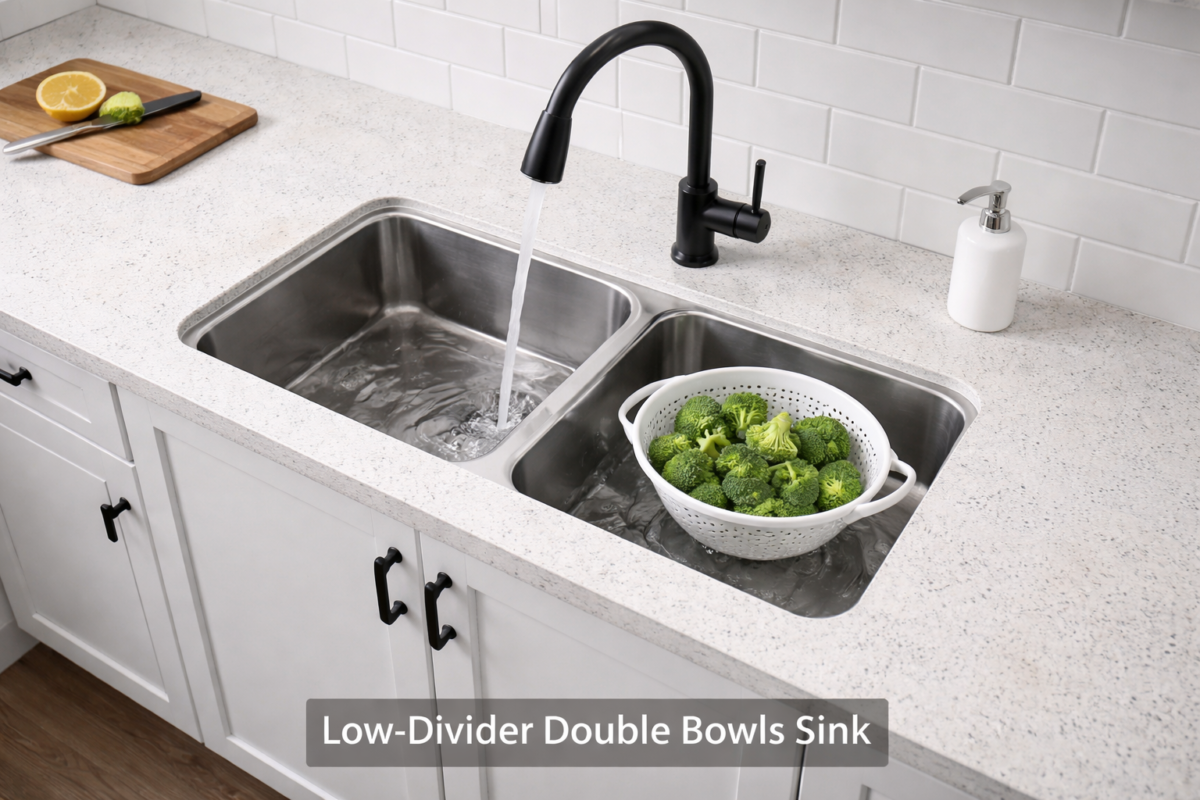
Want two bowls but still need room for big cookware? That’s exactly why low-divider sinks are popular; they’re basically the “best of both worlds” option. You get separation for prep and dishes, but the divider doesn’t feel like a wall.
Key features
- The lower center divider gives you more freedom to move larger items between bowls.
- Acts like a double bowl when you want it, but you can fill it higher when you need extra space.
- Great for food prep + cleanup at the same time (especially if more than one person cooks).
- Some brands design corners/dividers to maximize basin space while keeping a modern look.
- Usually priced higher than standard double bowls because fewer manufacturers make them.
Cost (sink + install + repairs/materials):
- Sink price: In real-world listings, low-divide options often start around $ 600 and can go higher by material/brand (e.g., KOHLER low-divide models listed around $603, with many options in higher brackets).
- Installation labor: Same baseline install range ($216–$663 average pricing data), but double bowls can mean more under-sink connections; so plumbers may spend more time (especially in older NYC cabinets).
- Other materials/add-ons: old sink removal $20–$300, plumbing pipe work $150–$500, faucet install $90–$600, and disposal install ~$400 if applicable.
- Repairs: Drain repair is often estimated at around $280–$342 (and clogs/leaks can show up faster when you have more joints under the sink).
Matte+moody sinks
Seeing more matte-black and deep-graphite sinks in Brooklyn kitchens lately? It’s because they create contrast instantly, especially with light countertops or warm wood cabinets, without screaming for attention. And when you choose a matte finish in a durable composite, it’s not just about looks; it’s about low-maintenance living.
Key features:
- Moody matte finishes (black/graphite/charcoal) give a modern, boutique feel, great for industrial or minimalist kitchens.
- Many matte “stone-look” sinks are granite composite, often made with up to ~80% natural granite/quartz sand plus resin.
- Non-porous composite options don’t require sealing (a nice option if you don’t want extra maintenance).
- Known for stain/acid resistance and everyday durability (depending on the specific composite line).
- Matte composite styles are available in single- or double-bowl configurations, including low-divide designs.
Cost (sink + install + repairs/materials):
- Brooklyn example price: A matte-black granite composite KOHLER Cairn low-divide sink is listed at around $603 at a major retailer.
- Installation labor: Often $216–$663 (avg ~$438), but NYC plumber hourly rates commonly run $150–$250/hour.
- Other materials/add-ons: old sink removal $20–$300, plumbing pipe work $150–$500, faucet install $90–$600 (plus disposal install ~$400 if needed).
- Repairs: Drain repair estimates often start around $280–$342.
Drainboard solutions for apartment-friendly drying
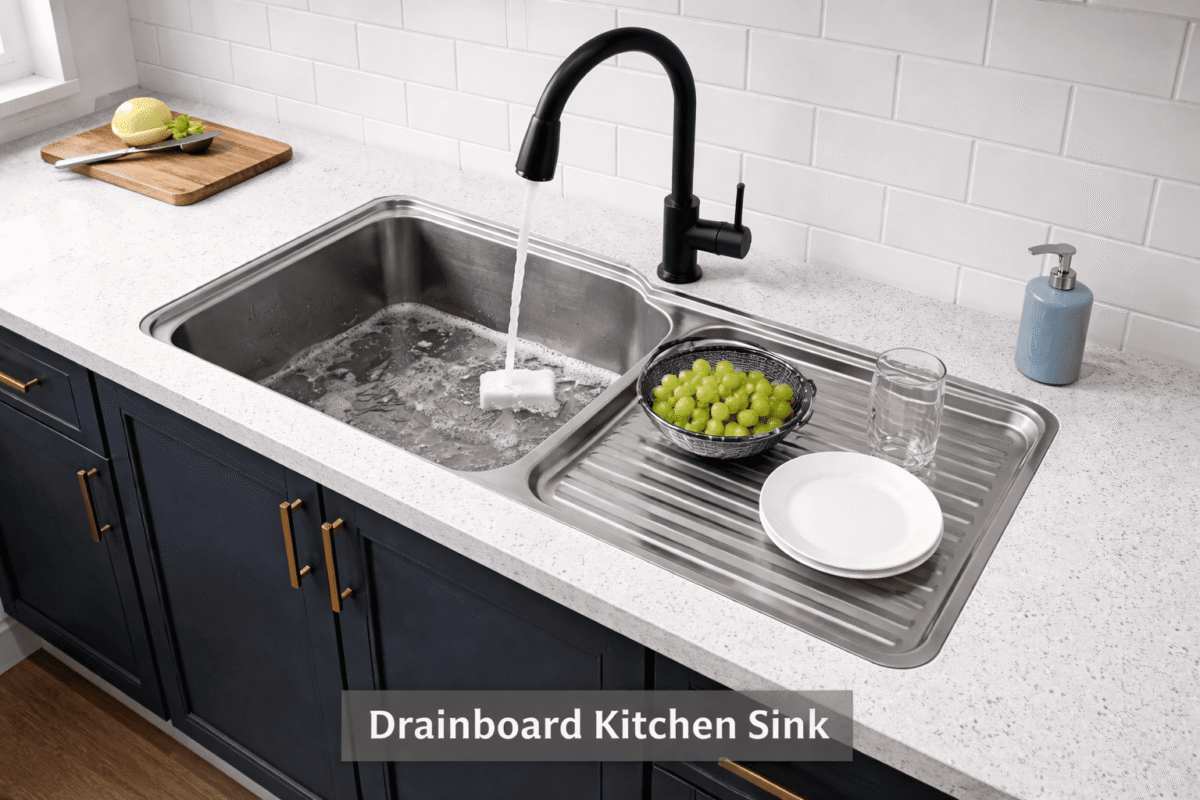
If your Brooklyn kitchen has limited counter space, a drainboard setup can feel like “free” extra workspace. It keeps drips contained and makes hand-washing less annoying (especially in apartments without a dishwasher).
Key features:
- Built-in drying zone: A drainboard sink pairs a smaller basin with a counter-level drainboard.
- Water runs back into the bowl: The drainboard has a lip that traps water and drains it back to the sink (so it doesn’t puddle on your counter).
- Apartment-friendly footprint: Often works well in galley kitchens and tight layouts.
- Left/right flexibility: Many designs are reversible, allowing the drainboard to sit on either side.
- Add-on options: If you can’t replace the sink, a roll-up drying rack or sink accessories can create a similar “drainboard” effect without using permanent counter space.
Typical cost (sink + install + materials + repairs):
- Installation (labor): Replacing a kitchen sink commonly runs $216–$663 (average around $438).
- Other materials: Budget for a new strainer/drain parts, sealant, and small plumbing pieces; often $30–$150 depending on what you replace (and whether you add accessories). (Common add-on dish racks can also land around $40–$90, depending on style.)
- Repairs to plan for: A common under-sink fix, like a P-trap replacement, can cost $200–$325. Clogs and small plumbing repairs can vary, but labor pricing and access in apartments can push totals up.
Modern farmhouse/apron-front
Want that cozy “Brooklyn brownstone kitchen” vibe without going full country? An apron-front sink gives you that statement look, but it also earns its keep when you’re washing big pots and sheet pans.
Key features:
- Iconic exposed front: The sink’s front wall becomes the visible “apron” at the cabinet line.
- Big, deep single basin: Made for oversized cookware and busy cooking.
- More comfortable reach: A shorter counter between you and the bowl can reduce leaning (nice if you cook a lot).
- Install style options: Often installed flush/integrated with counters, but can also be installed “country style” in some setups.
- Watch the splash/drip factor: There’s a narrower barrier at the front edge, so drips can be more noticeable if you’re messy with water.
Typical cost (sink + install + materials + repairs):
- Installation (labor + extra work): Installed costs are typically $1,000–$4,000, as the job may involve heavier materials and cabinet/counter adjustments.
- Repairs to plan for: Under-sink plumbing fixes still apply (like a $200–$325 P-trap replacement).
Prep/bar sinks for islands, beverage zones
If you host friends in Brooklyn, a small prep sink can be the “secret weapon” that keeps people out of your main cleanup zone. It’s also perfect for a coffee or cocktail corner—quick rinse, no traffic jam.
Key features:
- Made for drinks + prep: Bar/prep sinks support bartending and extra food prep.
- Smaller footprint: Usually a single bowl, often around 15 inches.
- Best placement: Commonly installed in a kitchen island or at the far end of a counter run.
- Better flow for two cooks: Let someone rinse/prep while another uses the main sink.
- Not always essential: In very tight kitchens, it can steal valuable counter space, so it’s worth planning the layout carefully.
Typical cost (sink + install + materials + repairs):
- Installation (labor): If plumbing is already there, the sink installation often falls in the $216–$663 range.
- Repairs to plan for: If you add a disposal at the prep sink, replacement can run around $200–$625 (average ~$550). Standard under-sink repairs, like a P-trap replacement, can be $200–$325.
Sleek pro-style faucets
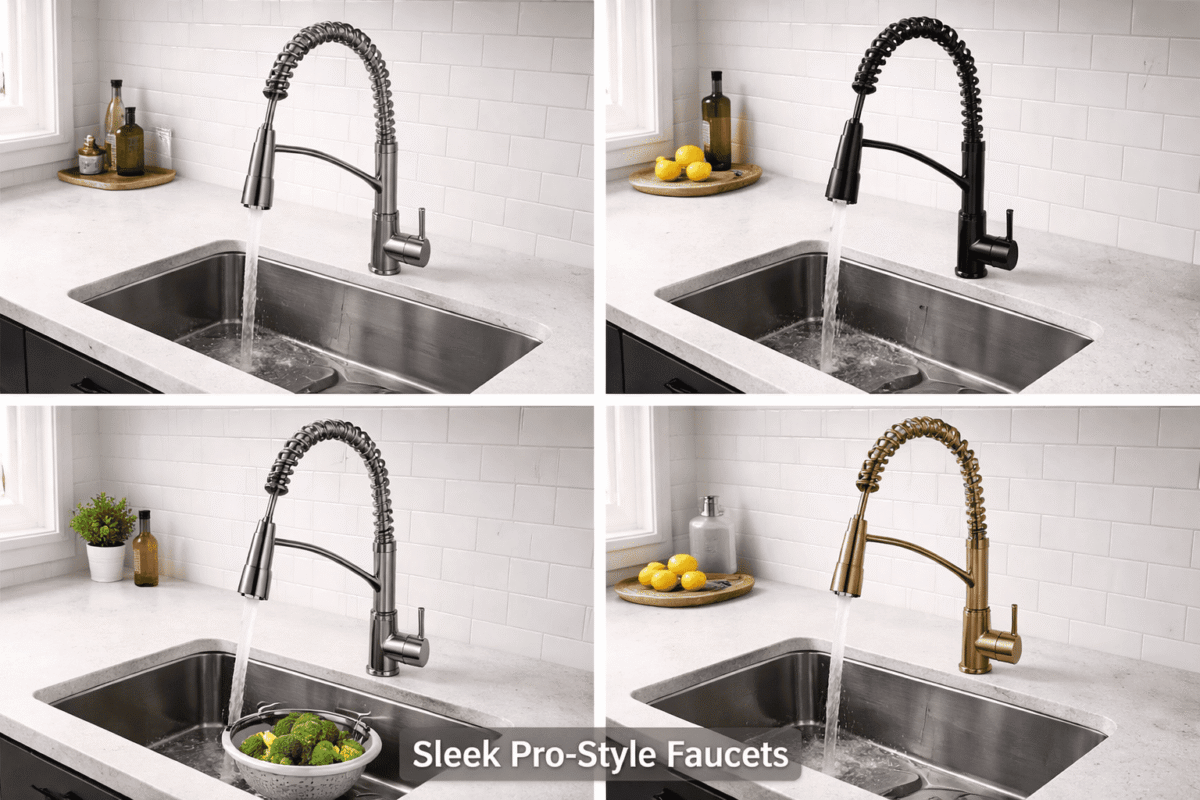
If you want your sink area to look “designer” without redoing the whole kitchen, a pro-style faucet is one of the fastest upgrades. You get that clean, modern silhouette, and a sprayer that actually feels powerful for everyday cooking and cleanup.
Key features:
- Pull-down spray control: Great for rinsing produce, blasting pans, and cleaning the sink itself.
- Tall, high-arc clearance: Handy with deep sinks (including farmhouse styles) and big pots.
- Pro look, practical function: “Semi-pro” designs are popular because they balance style and daily usability.
- Finish-forward choices: Pro-style faucets often come in modern finishes that pair well with matte or minimal sink setups.
- Sink + faucet must match: Height, reach, and splash control matter—especially with smaller bowls or shallow counters.
Typical cost (faucet + install + materials + repairs):
- Product cost (faucet): Faucets can range from about $25 up to $1,800, depending on brand/features. (A pro-style example, Kohler Sous, is listed at about $260.)
- Installation (labor): Having a pro replace a faucet often runs $162–$364 (average around $262).
- Repairs to plan for: Leaks, sprayer issues, and cartridge replacements typically require a plumber visit; costs vary, and access in apartments can change the final number.
Bridge faucets + “classic Brooklyn” brownstone charm
If you love that timeless brownstone-meets-modern look, a bridge faucet is one of the quickest ways to get it. It brings “old Brooklyn” character, but it still works great in a fresh, updated kitchen.
Key features:
- Signature “bridge” shape: Hot and cold handles connect with an exposed horizontal bar above the counter, so the plumbing detail becomes part of the design.
- Two-handle control: You fine-tune temperature the classic way—one handle for hot, one for cold.
- Bridge faucets naturally complement traditional and transitional kitchens (marble, soapstone, Shaker cabinets, warm metals).
- Room for big pots: Many bridge faucets have a generous spout height/reach, which helps when you’re filling tall stockpots or vases.
- Usually costs more than basic faucets: Angi notes that bridge faucets tend to cost about twice as much as common single-handle/pull styles (so it’s a style upgrade and a budget choice).
Typical cost (faucet + install + materials + repairs):
- Faucet price: Bridge faucets commonly run about $400–$700 (with higher-end models going beyond that).
- Installation (replacement): Typical install cost range is $162–$364 (average around $262).
- Repairs later (leaks, cartridge, etc.): Leaky-faucet repairs often run $100–$400 total; kitchen-sink-faucet repairs are commonly $100–$250, depending on the part and labor.
What are the Common Sink Materials
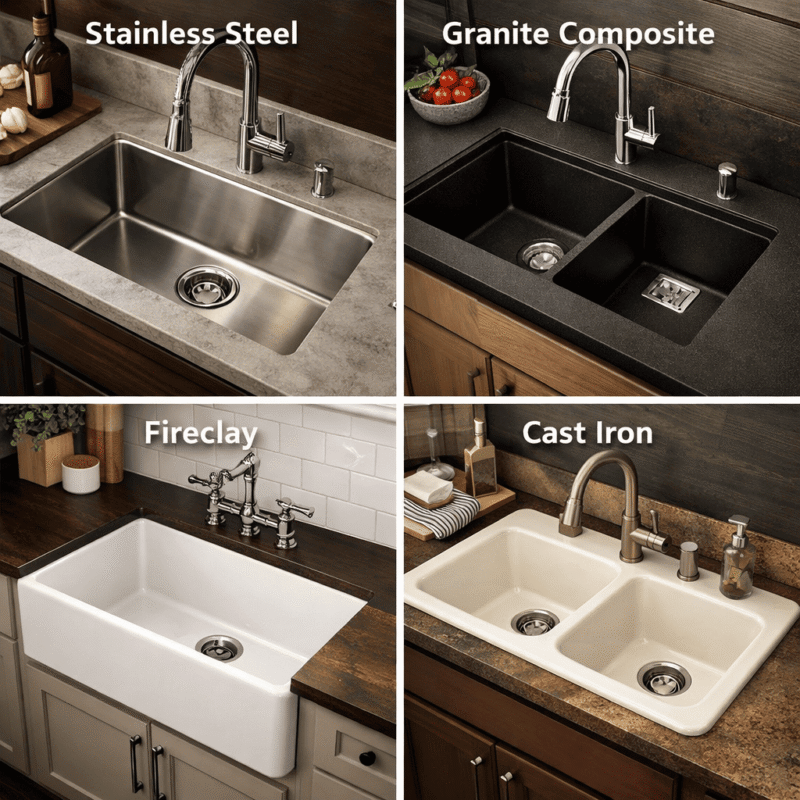
Before you pick a “trend,” it helps to know what the sink is actually made of, because material affects noise, stains, scratches, and even how hard installation will be. In Brooklyn kitchens, the best material is usually the one that matches your cleaning style and the roughness of your daily routine.
- Stainless steel: Stainless steel is the most common option; Angi notes that around 70% of kitchen sinks are stainless, because it’s versatile and budget-friendly. It can show scratches and water spots, and may be noisier, so many people look for thicker steel and sound-dampening features.
- Composite (granite/quartz composite): Composite sinks mix stone dust (granite or quartz) with resin, so you get a matte, modern look without the weight of real stone. Angi lists composite sinks around $300–$600, and many people like them because they don’t require sealing like natural stone.
- Fireclay: Fireclay is made from clay and glaze fired at very high heat, then finished with an enamel-like surface, so it looks clean and classic. Angi notes that fireclay sink installation costs can run $600–$1,400, and they’re heavy enough that professional mounting is required.
- Cast iron / enamel-coated cast iron: Cast iron sinks are extremely durable but heavy; Angi lists them at $300–$900, and their weight can make installation more demanding. Enamel-coated versions look classic, but the enamel can chip if you drop something heavy.
- Ceramic / porcelain: Ceramic sinks cost around $250–$400 and can look beautiful in vintage Brooklyn-style kitchens. Porcelain is fired at higher temperatures (making it denser and more durable), but it typically costs more; Angi notes you can expect to pay about 30% more than for ceramic.
- Copper: Copper sinks make a warm statement and have natural antimicrobial properties, but they require more care to maintain the finish you want. Angi lists copper sinks at roughly $600–$1,200, so this is usually a “design splurge” choice.
What kitchen sink size works best for a Brooklyn apartment kitchen?
For most Brooklyn apartment kitchens, the smartest “space-saving but still usable” choice is a 24–27 inch single-bowl sink (roughly 22 inches front-to-back and 8–9 inches deep) because it keeps more counter space while still handling everyday pots and pans. If you’re lucky enough to have a wider sink base cabinet, a 30-inch-wide sink is the safe, popular upgrade; but in many apartments, 24–27 inches is a better fit.
Where to Find the Best Brooklyn Contractors
Are you looking for an expert contractor in Brooklyn, NYC? SR General Construction has you covered! Our business is located at 8807 Avenue B, Brooklyn, NY 11236, United States, in the Canarsie area.
Additionally, we offer services at Rockaway Parkway and Ralph Avenue, providing fast access to Flatlands, East Flatbush, Bergen Beach, Brownsville, and the Spring Creek section of East New York.
FAQ
1. What are the biggest kitchen sink design trends in Brooklyn right now?
Brooklyn kitchens are leaning into workstation sinks, deep single bowls, apron-front (farmhouse) looks, and cleaner undermount lines, because they boost function without eating up precious counter space. You’ll also see more bridge faucets, mixed metals, and space-saving drying solutions that suit apartment life.
2. What sink size works best for a Brooklyn apartment kitchen?
A smart rule is: your sink should be about 3 inches smaller than your sink base cabinet, so it actually fits and mounts correctly. Many compact kitchens work well with 24–26-inch-wide sinks, while “standard” setups often measure around 30 inches wide by ~22 inches front-to-back.
3. Should I choose a deep single-bowl sink or a double-bowl sink?
A single bowl is usually better for big pots, sheet pans, and a tighter Brooklyn workflow where you don’t want a divider stealing space. A double bowl helps if you truly multitask (wash + rinse/soak), but each bowl can feel smaller fast.
4. Do farmhouse/apron-front sinks work in Brooklyn brownstones?
They can look amazing in older homes because the style fits classic architecture and becomes a focal point. Just remember, they often need cabinet adjustments/support and can cost more to install than a basic drop-in.
5. What sink materials are most popular (and practical) in NYC kitchens?
You’ll see a lot of stainless steel because it’s versatile and easy to live with, plus a growing interest in granite/quartz composites and fireclay for a more designed look. The right pick depends on how you cook and how much maintenance you’re willing to do.