

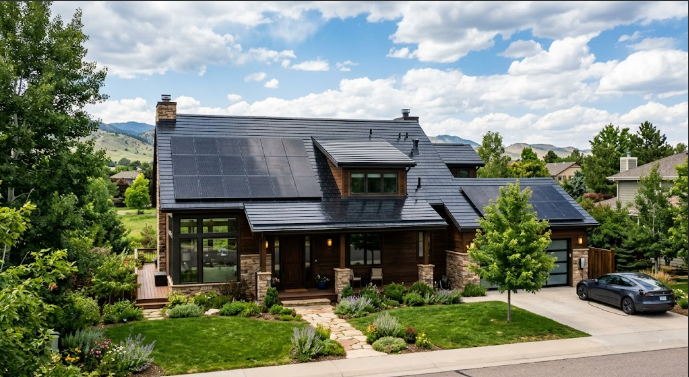
What if your Brooklyn home could power itself through the sun right above your roof? With rising energy costs and growing climate concerns, an increasing number of homeowners across New York City, particularly in Brooklyn, are turning to solar roofs as a smart, long-term solution.
In this complete guide, we’ll expose everything you need to know before you decide to go solar. You’ll learn what solar roofs are, how they work, and what types are best for Brooklyn homes. We’ll cover the installation process step by step, the average costs in NYC, and the permits you need from the city. You’ll also discover the benefits, possible drawbacks, and the financial incentives that can make solar roofing more affordable. Finally, we’ll share a real case study from Brooklyn and show you how to choose the right local contractor for a seamless installation.
What Are Solar Roofs?
Solar roofs (or solar shingles/tiles) are roofing materials with built-in photovoltaic (PV) cells. They resemble traditional roofing but generate electricity from sunlight, serving as both your roof and a solar panel. In practice, a solar roof protects your home while converting sun rays into power for your house.
What Roof Pitch and Material Mean for Solar
The roof angle and material significantly impact solar performance. A roof with a good slope and the right covering makes solar installation easier and more efficient.
- Roof Pitch: Roofs pitched at an angle of about 15°–40° toward the sun yield the best solar output. A moderately sloped roof naturally catches more sunlight, so panels sit at an effective angle. If a roof is very flat or very steep, installers may need special racking to tilt the panels properly for maximum energy production.
- Roof Material: Certain roofing types are more suitable for solar applications. Asphalt shingle roofs are very common and easy for installers to work with. Standing-seam metal roofs are also ideal because solar mounting clamps can be attached without drilling into the roof. In contrast, fragile materials like clay or slate tiles can support solar, but only with special hardware and extra care to avoid cracks.
Types of Solar Roofs
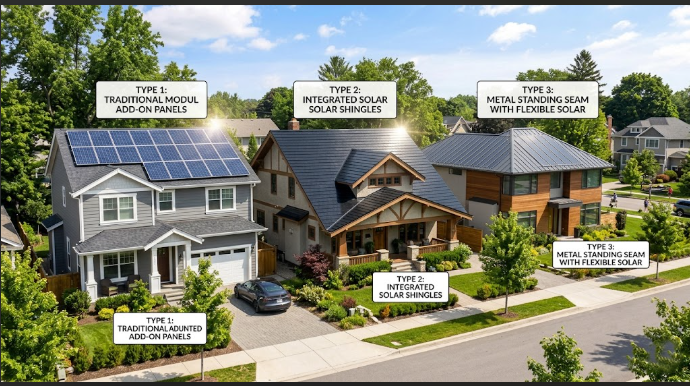
Solar roofs come in a few main styles. Some systems replace your roof materials entirely with integrated solar products, while others use regular solar panels mounted on top of the roof.
- Solar Metal Roofing: This type of metal roof features built-in solar layers. It looks just like a normal standing-seam metal roof, but beneath the surface is a layer of solar cells (often topped with tempered glass). The wiring is hidden inside, and you can pick metal roofing colors that match your house. Solar metal roofs offer durability and a sleek appearance while generating electricity.
- Interlocked Solar Panel Roofing: In this system, sections of solar panels replace the traditional roof covering. The panels interlock edge-to-edge, replacing shingles or tiles, and seal out water and debris without any roofing material underneath. This design resembles a continuous roof of solar modules and is highly weather-tight. Because the panels become the roof deck itself, there is no separate roofing underlayment in those areas.
- Solar Shingles (PV Shingles): Solar shingles look almost identical to standard asphalt or composite shingles. They clip into place like regular shingles, but each contains a small solar cell that converts sunlight to electricity. The hidden wiring behind the shingles gives them a clean look on your roof. High-efficiency monocrystalline solar shingles can produce a lot of power while blending in with the roof’s appearance.
How a Solar Roof Works
Solar roofs turn sunlight into usable electricity through the photovoltaic effect. The process works in steps:
- Sunlight Hits the Roof: The solar shingles or tiles contain PV cells made of silicon and other semiconductors. When sunlight strikes these cells, photons from the light excite electrons in the material. This creates an electric current inside the shingles.
- Electricity is Produced: The excited electrons flow through the PV material, generating direct-current (DC) electricity. In effect, each solar shingle acts like a small solar panel, creating DC power whenever the sun shines on it.
- Conversion to AC: The DC electricity from the shingles is fed to a solar inverter, which converts it to alternating-current (AC) electricity – the type your home uses. This AC power can immediately run your lights, appliances, and devices.
- Use, Storage, or Grid Export: The AC electricity then powers your house. Any extra power you don’t use can be used to charge a battery system if you have one, or it can be sent back to the utility grid. Through net metering, the excess energy you feed into the grid earns you credits. This means your meter can spin backwards when you produce more power than you need.
The Benefits of Solar Roofs in Brooklyn
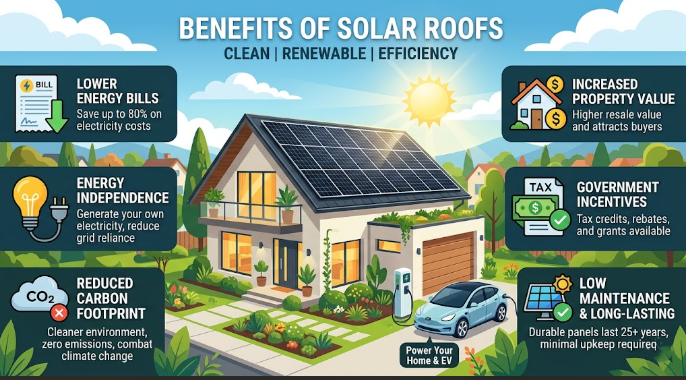
Solar roofs in Brooklyn offer both financial and environmental perks. New Yorkers pay some of the country’s highest electricity rates, so generating your own power can lead to big savings. Plus, generous local incentives make the investment more attractive.
- Lower Electricity Bills: Solar roofs supply your home with free energy from the sun, reducing your Con Ed charges. In Brooklyn, where electricity costs around 25¢/kWh, every kWh you generate at home (at effectively 6–7¢/kWh after incentives) dramatically lowers your bills. Through net metering, you also get credits for any extra power sent to the grid, which offsets the cost of power you draw later.
- Strong Incentives: New York State and New York City offer valuable solar rebates. Brooklyn residents can claim a 25% state tax credit on the system cost and a 30% federal tax credit. In addition, New York City offers sales tax and property tax exemptions for solar installations, as well as an extra NYC property tax abatement program. Altogether, these incentives can reduce the net installation cost by many thousands.
- Increased Home Value: Homes with solar typically sell for more. Studies show NYC homes with solar panels fetched about a 5.4% premium – roughly $37,800 more on the median Brooklyn home. And thanks to property tax exemptions, the added home value won’t raise your taxes for many years. In short, a solar roof can make your property more attractive to potential buyers.
- Environmental Impact: Each kilowatt-hour your solar roof generates is clean power, replacing fossil fuels. That means significantly lower carbon emissions and cleaner air. In Brooklyn’s densely populated city environment, reducing reliance on polluting power plants benefits the neighborhood and helps New York achieve its climate goals. You’ll literally be cutting your carbon footprint every time your solar roof powers the house.
The Drawbacks of Solar Roofs
While solar roofs have numerous advantages, several drawbacks should also be considered. The primary concerns are cost and practical challenges associated with roof design and weather conditions.
- High Upfront Costs: Solar roofs are expensive to buy and install. The materials (solar shingles or tiles) cost significantly more than ordinary roofing materials, and labor to fit them can be higher than typical roofing labor. Even with incentives, the initial investment is substantial, which means it can take many years to earn back the cost through energy savings.
- Reduced Winter/Cloudy Output: Brooklyn’s climate is not as sunny as the Southwest, and solar production drops on cloudy or snowy days. In winter months, the sun is lower and days are shorter, so a solar roof may generate far less power than in summer. This weather dependence means you must rely on grid power or battery storage more of the year.
- Roof Limitations: Not every roof is ideal for solar. Factors such as roof pitch, orientation (ideally south-facing), and shade from nearby buildings or trees can significantly impact output. A north-facing or heavily shaded roof will produce much less solar power, reducing the system’s value. Additionally, if your existing roof is old or in poor condition, you’ll need to repair or replace it before installing solar panels, which adds to the overall expense.
- Maintenance and Repairs: Solar shingles are durable, but addressing roof damage can be more complicated. If a shingle or section fails, replacing it means working with the solar system wiring as well, which can be costly. Unlike plain asphalt shingles, damaged solar shingles often require the expertise of professional electricians or specialists to repair. Additionally, panels should be kept clean and may need occasional maintenance; ignoring this can reduce efficiency over time
Factors to Consider Before Solar Roof Installation
Before going solar, evaluate key factors that affect your outcome. A thorough assessment helps ensure the project will meet your energy and financial goals.
- Roof Condition and Age: Check your roof’s health before installing solar. If your roof is old or damaged (e.g., leaks, cracked shingles), repair or replace it first. You don’t want to install a solar roof on a failing base, only to tear it out later. Also consider roof orientation and pitch. South-facing roofs with a moderate slope work best for capturing sunlight.
- Sun Exposure and Shading: Understand how much sun your roof actually gets. Look for shading from trees, neighbors’ buildings, or any other objects that could block the sun during peak hours. Even a small amount of shade on panels can greatly reduce output. Use solar mapping tools or on-site assessments to estimate annual sunlight. If your roof has significant shading issues, you may need a bigger system or microinverters to mitigate the losses.
- Local Regulations and Incentives: Research New York City and state rules before you buy. NYC requires building and electrical permits from the Department of Buildings to install solar. Landmark buildings have extra review steps. On the upside, know what incentives you can claim: for instance, the federal solar tax credit (30%), New York’s 25% tax credit, city sales-tax exemptions, and net metering programs. These programs can significantly offset costs, but they have deadlines and paperwork, so it’s essential to plan early.
- Budget and Financing: Installing solar roofs is a significant investment. Calculate the total expected cost (materials, labor, electrical work, permits, etc.) and compare it to your budget. Explore financing options, such as solar loans or leases, if you prefer not to pay all cash. Also, factor in rebates or credits, as the big incentives often require you to act quickly to lock in the savings. In general, set a realistic budget and consider how long it will take to break even on the investment.
How to Install a Solar Roof in Brooklyn (Step-by-Step Guide)
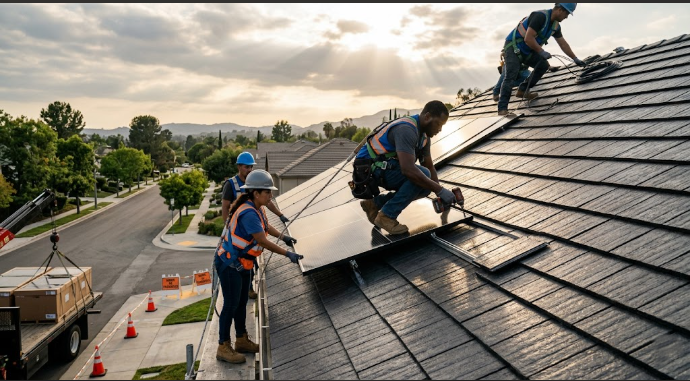
Installing a solar roof in Brooklyn is a multi-step process that typically requires professional assistance. Here are the typical steps from start to finish:
- Site Evaluation & System Design: First, a solar installer will assess your home’s energy needs. They measure your roof, inspect its condition, and create a system design that outlines the number of shingles or tiles required to meet your electricity goals. You review the design, get a cost estimate, and sign a contract once you’re ready.
- Permitting and Approvals: Next, the installer handles the necessary permits for New York City. You’ll need a DOB (Department of Buildings) permit for both the roofing work and the electrical work. If your building is landmarked, approval from the Landmarks Preservation Commission is also required. Permitting can take several weeks to months, as paperwork is filed and city inspectors review the plans.
- Roof Preparation: While waiting on permits, prepare your roof. If you’re installing a fully integrated solar roof (like Tesla’s), the contractor will strip off your existing roof materials (shingles or tiles) down to the roof deck. Any weak or damaged wood is repaired or replaced. A new waterproof underlayment is installed over the deck to protect against leaks.
- Solar Roof Installation: Once the roof is prepped and permits are in hand, the crew installs the solar roofing materials. For solar shingles, workers nail or clip them on like regular shingles, connecting their internal wiring as they go. For solar tiles or panels, they mount the units and interlock them to form the roof surface. The installer also installs an inverter (often in your attic or on a wall) and connects all wiring from the roof to it. On a typical home, this installation day might only take one or two hours for a professional crew.
- Electrical Hookup: After the panels/tiles are in place, the inverter and main service panel are hooked up. This step links your new solar array to your home’s electrical system and meter. A bi-directional meter (if not already present) is set up to track energy going in both directions for net metering.
- Inspection and Activation: Finally, the job must pass city inspections. An electrical inspection by the DOB ensures the solar system is installed safely. Once it passes, you receive “Permission to Operate” from Con Edison, meaning you can legally turn on the system. At this point, the inverter is turned on, and your solar roof starts producing clean power. You can immediately begin using your solar energy and accumulating net-metering credits.
Installation Cost of Solar Roofs in Brooklyn, NYC
Solar roofs can be costly upfront, but incentives help offset the initial expense. In New York City, total installed cost often ranges widely by system type.
| Solar Roof Type | Material Cost (per sq. ft.) | Labor Cost (per sq. ft.) | Total Cost (per sq. ft.) |
| Solar Shingles (Mono-Si) | $15 – $20 | $5 – $8 | $20 – $28 |
| Solar Tiles (Thin-Film PV) | $12 – $16 | $4 – $6 | $16 – $22 |
| Solar Panel Roof (Panels) | $6 – $10 | $4 – $6 | $10 – $16 |
Solar Roof Design and Permitting in NYC
Before you begin, be aware that New York City has strict design guidelines. Any solar roof plans must be stamped by a licensed engineer or architect, who will conduct a structural analysis to ensure your roof can withstand the extra weight. In your drawings, you’ll show panel layout, roof pitch, and required clearances for firefighters to access the roof. You also need detailed plans for wiring and anchoring systems that meet NYC construction codes. In short, designing a solar roof in NYC means careful planning and professional certification to satisfy the building code.
Once the design is ready, you will need to obtain the necessary permits. NYC requires both a construction (building) permit and an electrical permit for solar installations. You’ll likely need an asbestos inspection if your building is old before filing. The Department of Buildings reviews your application and plans. After work is done, you’ll schedule both a roof inspection and an electrical inspection by DOB inspectors. Only after both DOB inspectors approve can you legally connect and activate your system.
Roof Inspection and Solar System Activation
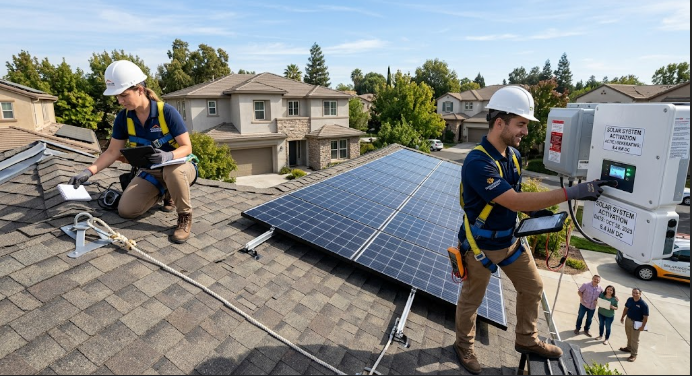
Once your panels are up, a DOB inspector comes to check everything. The inspector ensures that panels are securely mounted and wiring is installed according to the plans. They look for compliance with safety standards – for example, confirming that there are no penetrations or loose mounts. If any issues arise, the installer must resolve them and have the inspector re-check. This final sign-off from DOB confirms the installation is safe and up to code.
After DOB gives the green light, Con Edison steps in. A ConEd representative will visit to swap your old meter for a net-metering meter. This new meter lets you earn bill credits for any excess solar energy you export to the grid. When Con Edison completes their inspection and sees everything is correct, it issues a Permission-to-Operate (PTO) letter. At that point, you (or your installer) can close the AC disconnect or solar breaker to activate the system. From then on, your solar roof starts supplying power to your home and cutting your electricity bills.
Solar Panels vs. Solar Tile Roofs: Which Is Worth It?
When choosing between standard panels and integrated solar tiles (or shingles), the best fit depends on your priorities. The table below compares them across five key factors to help you decide which is better for your home:
| Factor | Solar Panels | Solar Tile Roofs |
| Cost | Generally much lower upfront cost. For example, a ~3.5 kW panel system costs about £7k–£9k in the UK (roughly $9k–$11k), while a similar solar tile system can be £9k–£16k. | Significantly higher cost. Tiles must replace the whole roof, so a new solar roof often costs 2–3× as much as panels. |
| Efficiency & Output | Higher efficiency. Modern panels reach ~17–23% efficiency and produce 300–500 W each. You can tilt them for optimal sun exposure. | Lower efficiency (~10–20%). Individual tiles usually produce less power (e.g. ~132–150 W per m²). Because they sit flush, they can heat up more and work less well in shade. |
| Appearance | Bulky look on roof. Panels sit on top of racks and are quite visible (black/blue rectangles). They don’t blend in with shingles. | Sleeker look. Tiles are flush with the roof and mimic normal shingles or slate. From the street they can be nearly indistinguishable from a regular roof. |
| Installation & Suitability | Quick and versatile. Panels can be mounted on almost any roof type (even flat with racks) in a few days. Your roof must be in good shape beforehand, since panels just attach on top. | More complex. Installing tiles usually means a full roof replacement or new build, taking a week or more. Not suitable for flat roofs or very shallow slopes. They integrate into the roof’s structure. |
| Durability & Maintenance | Proven 25–30 year lifespan. Individual panels can be replaced if broken, and routine maintenance (cleaning) is straightforward. | Durable (often 20+ year warranty). Tiles act as both roof and solar panel – some are warranted as long as the house. But repairs may require matching specialized tile pieces. |
What Are Solar Shingles?
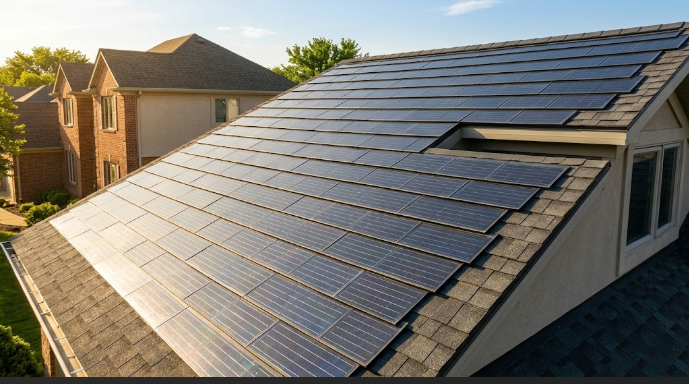
Solar shingles (also called solar roof tiles) are roofing materials with built-in solar cells. They look and function like regular roof shingles or tiles while generating electricity. In other words, they serve as both your roof covering and your solar panel. Instead of adding panels on top of an existing roof, solar shingles replace part or all of the roof itself, capturing sunlight to power your home with minimal visual impact.
How Many Solar Shingles Do I Need for My Roof?
The number of shingles you need depends on your home’s energy use and the shingles’ wattage. A single solar shingle typically produces between 13 and 63 watts of power. To roughly meet an average U.S. home’s daily use (~29 kWh), calculations show you’d need on the order of 130–170 shingles on your roof. For example, if each tile produces ~50 W in full sun, one tile generates ~0.225 kWh per peak-sun hour. Accounting for inefficiencies (like shading or night-time) gives an estimate of roughly 160–170 tiles for a typical home. In practice, installers will measure your roof area, power needs, and local sun conditions to figure out the final count.
Solar Roof Incentives and Financial Assistance in Brooklyn
New York offers several incentives that make solar roofs more affordable. The federal government provides a tax credit of 30% of your system’s cost through at least 2032. New York State also offers a tax credit equal to 25% of your solar equipment costs (up to $5,000). In addition, NYC has a property tax abatement program for solar installations, which allows homeowners to deduct a portion of the system costs from their property taxes. You also benefit from Con Edison’s net metering: any extra power you send to the grid earns you bill credits at the retail rate. Altogether, these programs can cover a large chunk of the solar roof expense.
If you still need help covering upfront costs, financing options are available. NYSERDA offers low-interest loan programs like On-Bill Recovery and Smart Energy Loans, which can finance up to tens of thousands of dollars for solar systems. You repay these loans over time (often added to your utility bill). Home equity loans or solar-specific loans from banks and credit unions are also common ways to finance a solar roof. Some local programs (like PACE financing for qualifying buildings) or nonprofit lenders can help as well. In short, you can combine loans with the incentives above so that your savings on electricity help pay off the investment.
How Can You Maintain Your Solar Roof System
Even after installation, you’ll need to care for your solar roof to ensure it remains safe and efficient. Consider routine maintenance as an integral part of owning the system.
- Clean the panels or shingles regularly. Rain often does much of the job, but you should wipe off dust, pollen, bird droppings, and any dirt that builds up. Most experts recommend a gentle cleaning (with water and a soft brush) at least once or twice a year. Keeping the surfaces clean ensures they receive maximum sunlight and maintain high power output.
- Clear debris and shade. Make sure leaves, snow, or nearby tree branches aren’t blocking the panels. Trim any overhanging branches that might fall on or shade the roof. Even partial shade can greatly cut production, so keeping panels in full sun pays off.
- Monitor performance. Check your inverter or monitoring app periodically. If you see warning lights or a sudden drop in output, have it checked right away. Quick fixes (like tightening a loose wire) can prevent bigger problems.
- Inspect roofing and hardware. Occasionally, look at the roof around the panels. Ensure mounts and flashing are intact and watertight. A small leak or loose bolt should be fixed promptly to protect both the roof and the system.
- Schedule professional check-ups. Every few years, have a qualified solar tech inspect the whole system. They can test electrical components, verify grounding, and ensure the warranty remains in good standing. A pro check can catch issues you might miss and help your solar roof stay in great shape for decades.
Where to Find the Best Brooklyn Roofing Contractors
Are you looking for an expert roofing contractor in Brooklyn, NYC? SR General Construction has you covered! Our business is located at 8807 Avenue B, Brooklyn, NY 11236, United States, in the Canarsie area.
We proudly serve all areas of Brooklyn with high-quality, durable roofing solutions. From new installations to repairs and maintenance, we provide the best service at affordable prices. Contact us and experience why we’re Brooklyn’s roofing experts!
FAQ
1. Will installing a solar roof increase my property taxes?
No, in New York State, the added home value from solar is often exempt from property tax increases for a number of years under certain programs.
You should verify your local tax assessor’s rules to ensure eligibility and timeframe.
2. What roof conditions might prevent a solar roof installation?
If the roof structure is old, damaged, or nearing the end of its life, it may require replacement before solar can be safely installed. Additionally, heavy shading, poor orientation, or very steep/irregular slopes may reduce the viability of solar energy.
3. Is there a difference in suitability between flat roofs and pitched roofs in Brooklyn?
Yes, flat roofs (typical in Brooklyn row-houses) may require tilt racks or canopies to achieve optimal sun exposure. Pitched roofs can sometimes mount panels directly without complex geometry, but both types must be structurally sound.
4. How long does the permitting process usually take in NYC for a solar roof?
It varies, but many homeowners report that it can take several weeks to a few months, including obtaining building/roof permits, as well as utility interconnection. Factors such as historic district approval or complicated roof geometry may add time.
5. Will solar shingles (tiles) work as well as standard solar panels?
Solar shingles produce electricity, but generally at lower efficiencies than standard panels and usually cost more per watt installed. They may make more sense if you’re replacing the roof anyway for aesthetic or structural reasons.
6. Will solar panels or shingles reduce the lifespan of my roof?
No, in fact, they often help by shading the roof surface from direct sun and reducing thermal cycles.