

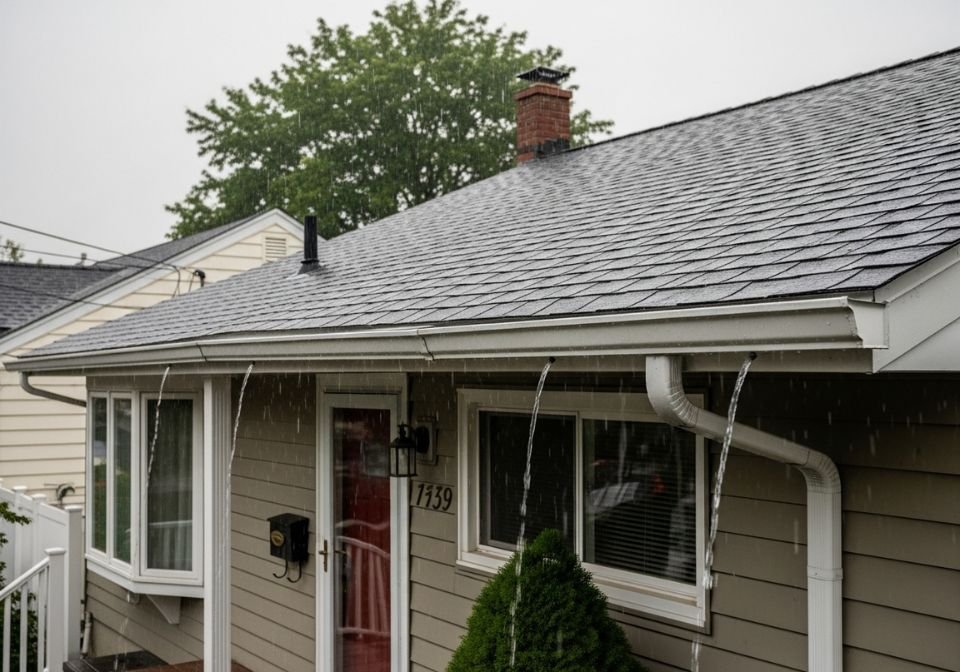
Do your drains get clogged every time it rains, or do they melt quickly in Brooklyn?
It’s not just you. In our borough, roof systems have to work hard due to tight blocks, tall trees, and freeze–thaw cycles. Give me a few minutes and a clear goal, and I’ll give you plain steps to solve real roof-gutter problems on brownstones, rowhouses, and semis.
Here’s the plan for this guide. We’ll spot the top issues in Brooklyn—sagging sections, clogs, leaks, bad pitch, corrosion, overflow, downspouts that dump near the foundation, and missing gutters. You’ll learn how to quickly diagnose each problem and determine which fixes are DIY and which need a pro. We’ll cover NYC basics for slope and sizing, the 5-inch vs 6-inch choice, 2×3 vs 3×4 leaders, outlet upgrades, and guard options that work on tree-lined streets.
So, let’s explore detailed information together!
Common Roof Gutter Problems in Brooklyn, NYC
On tight Brooklyn blocks, gutters work hard through leaves, flash rain, and freeze-thaw swings. The most common issues are sagging runs, clogs at outlets and elbows, corner leaks, crushed or bent sections, and bad pitch that leaves standing water. Fixes involve better support, correct slope, bigger outlets or leaders, and sealing or swapping sections.
Sagging Gutters
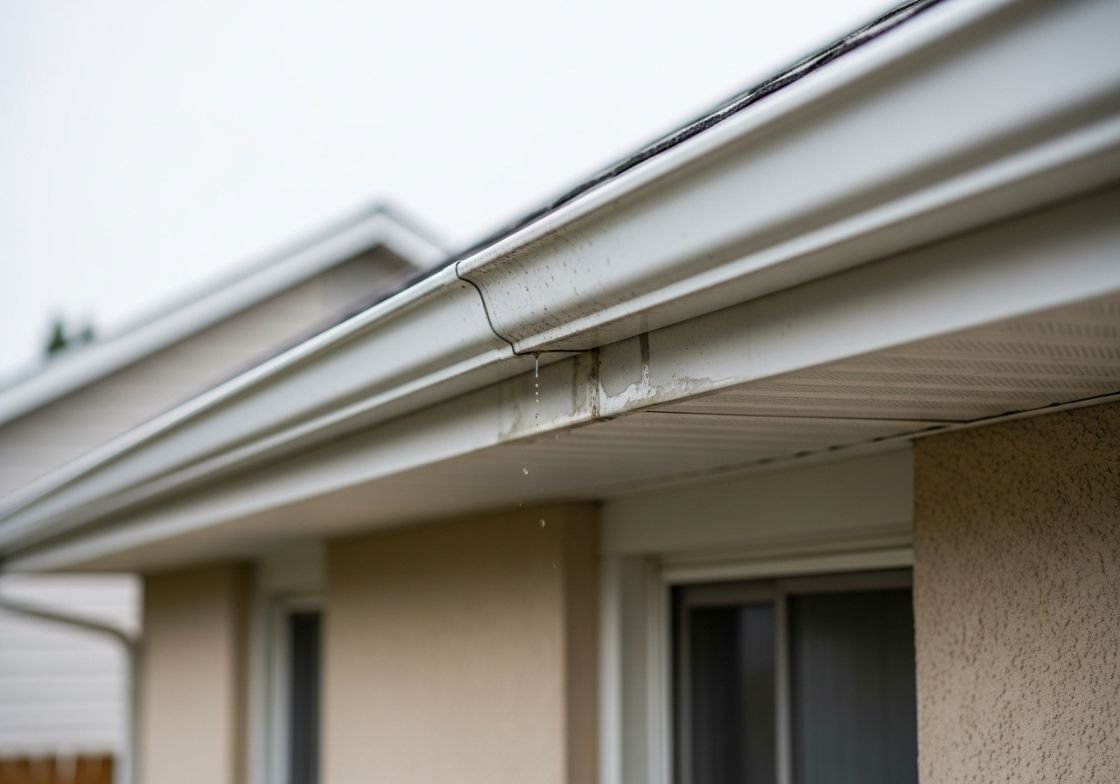
Sagging shows up as a dip or a run that pulls from the fascia; water then stalls and spills at the low spot. Ice and heavy debris add weight and widen the sag. Loose spikes or light hangers are often the problem. A clean re-hang with strong concealed hangers and proper slope brings flow back.
How to fix it (step by step):
- Re-secure the run with heavy-duty hidden hangers; hit solid wood, not just trim.
- Re-pitch toward the drop to restore flow (target ≥ 1/8 in per ft).
- Add extra hangers near corners and outlets where loads peak.
- Replace failed spikes/ferrules with gutter screws or new hangers.
- Hose-test the run and adjust until water moves cleanly to the outlet.
Typical repair costs (Brooklyn often sits at the high end):
- Sagging correction / re-hang: $75–$300 per run (labor + small parts).
- Pitch adjustment: $75–$200.
- General gutter repair range (national): $195–$625 total, typical.
Clogged Gutters
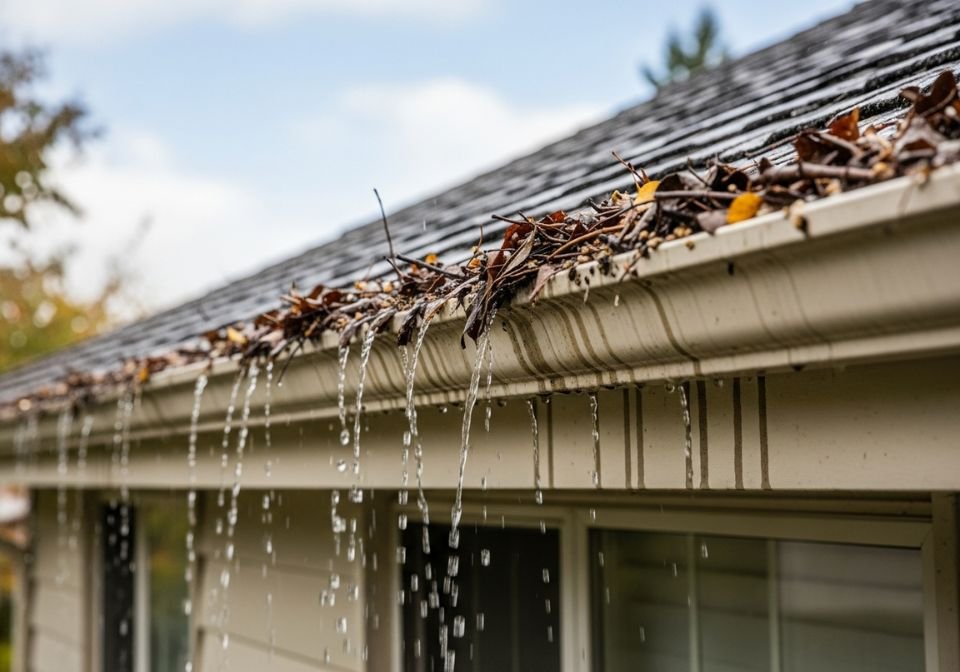
You’ll notice water spilling over the front lip, stains on the fascia, or downspouts that stop during a thaw. Most clogs start at the outlet hole and the first elbow. Trees and roof grit feed the problem fast in the fall. Clean paths and bigger choke points solve most of it.
How to fix it (step by step):
- Clean troughs and outlet holes before the first hard freeze; repeat after heavy storms.
- Flush downspouts from the top; clear elbows that pack slush and grit.
- Upgrade to a wide-mouth outlet to reduce backup at the drop.
- Upsize tight lines to 3×4 leaders on long faces or combined roof planes.
- Add micro-mesh or quality perforated guards if trees hang over your roof; still plan quick checks.
Typical cleaning/clearance costs (NYC):
- Gutter cleaning (NYC): about $0.94–$1.26/ft; many homes cost $150–$340.
- Other surveys show $90–$300 or $0.80–$1.30/ft in NYC.
Leaks and Holes
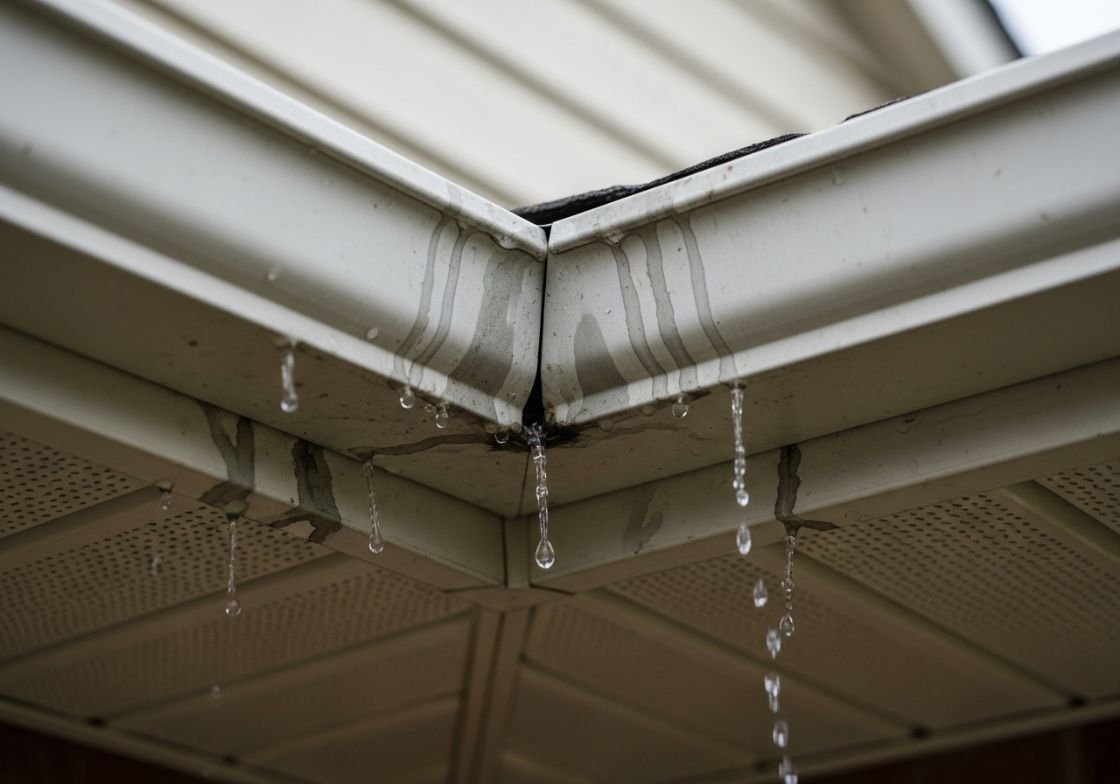
Leaks show at miters (corners), seams, and old fastener holes; cold snaps open small gaps, then drips stain brick and wood. Pinholes grow where water sits. A tight, clean surface is key; the sealant will not bond if the surface is not clean. Patch small holes and reseal corners; replace bad sections when the metal thins.
How to fix it (step by step):
- Clean the area around the leak to bare metal; dry the area.
- Apply cold-rated gutter/roof sealant (a waterproof adhesive designed for gutters and roofs) to seams and fastener holes.
- For larger holes, rivet (attach with a metal fastener) a patch and seal edges; repaint if needed.
- Rebuild leaky miters: remove old compound, reseal, and fasten tight.
- If corrosion spreads, swap the section and re-tie into the run.
Typical repair costs:
- Leak repair (seam/miter): $100–$225.
- Typical full repair visit (varies by scope): $195–$625.
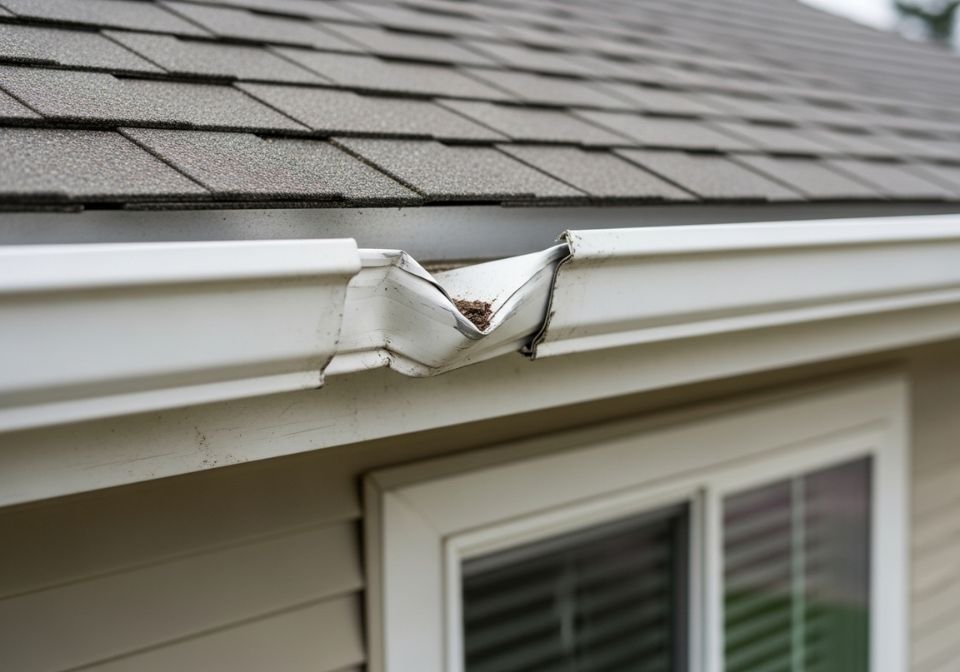
Damaged Gutters
You’ll see dents from ladders, crushed spots under snow slides, or kinked runs after tree limbs fall. Damage narrows the channel and triggers overflow in storms. If the piece is short or badly bent, replacement is better than patchwork. Check the fascia behind the damage before you re-hang.
How to fix it (step by step):
- Swap crushed sections with new pieces cut to length; match profile and material.
- Reseal adjacent joints/miters after the swap.
- Add heavier-duty hangers and tighten spacing near impact zones.
- Verify slope as you reinstall (aim ≥ 1/8 in per ft).
- If damage repeats, consider 6-inch K-style plus wide-mouth outlets for more capacity.
Typical repair/replacement costs (by length):
- Replace 10 ft section: about $75–$170 (materials + labor).
- Replace 20–40 ft: about $120–$680 depending on length and height.
- Full installation cost context (per ft, material-driven): ~$9/ft average; aluminum often $6–$13/ft, steel $8–$16/ft, copper higher.
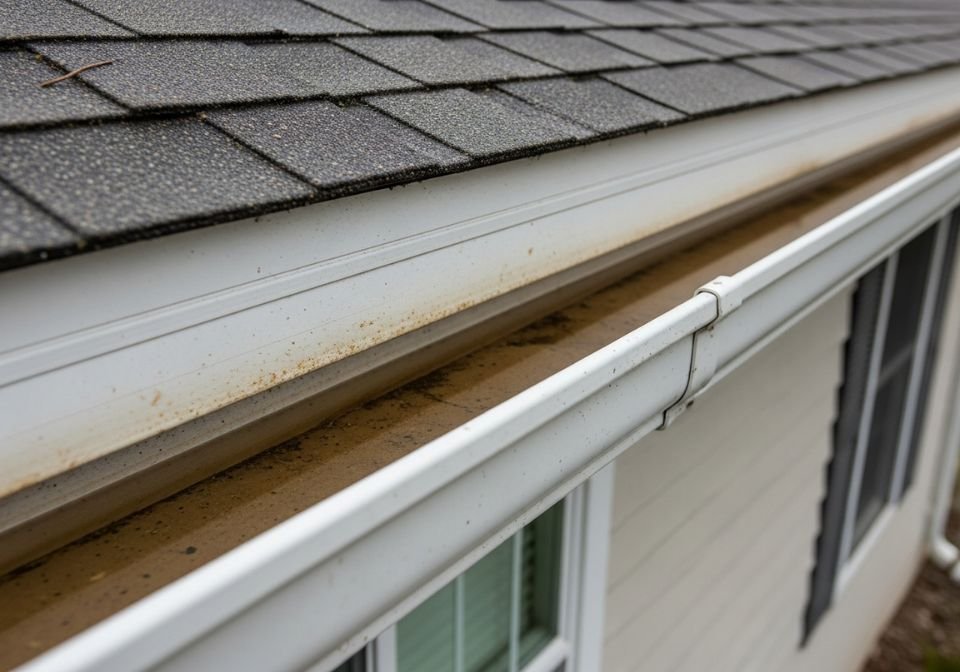
Improperly Pitched Gutters
If your gutter holds water instead of moving it to the outlet, the slope is off. You’ll see puddles that freeze, stains on fascia, or overflow at the low spot. Brooklyn winters push these flat sections into cracks and leaks fast. NYC code calls for a continuous fall of at least 1/8 inch per foot, so water never ponds in the trough.
How to fix the pitch (step by step):
- Snap a chalk line, check from the high end to the outlet, then mark a steady fall to code (≥ 1/8 in/ft).
- Loosen hangers, lift or lower sections to meet the line, then retighten into solid wood.
- Add extra concealed hangers (hidden brackets supporting the gutter) near corners and outlets to hold shape under winter load.
- Move or enlarge the outlet if the low point sits in the middle of a long run.
- Hose-test from the high end; adjust any spot where water lingers.
Typical repair cost (Brooklyn often runs near the high end):
- Pitch adjustment or re-hang on a run: about $120–$900 total; job size drives price.
- Minor slope tune-ups on short sections can fall near the lower end of that range.
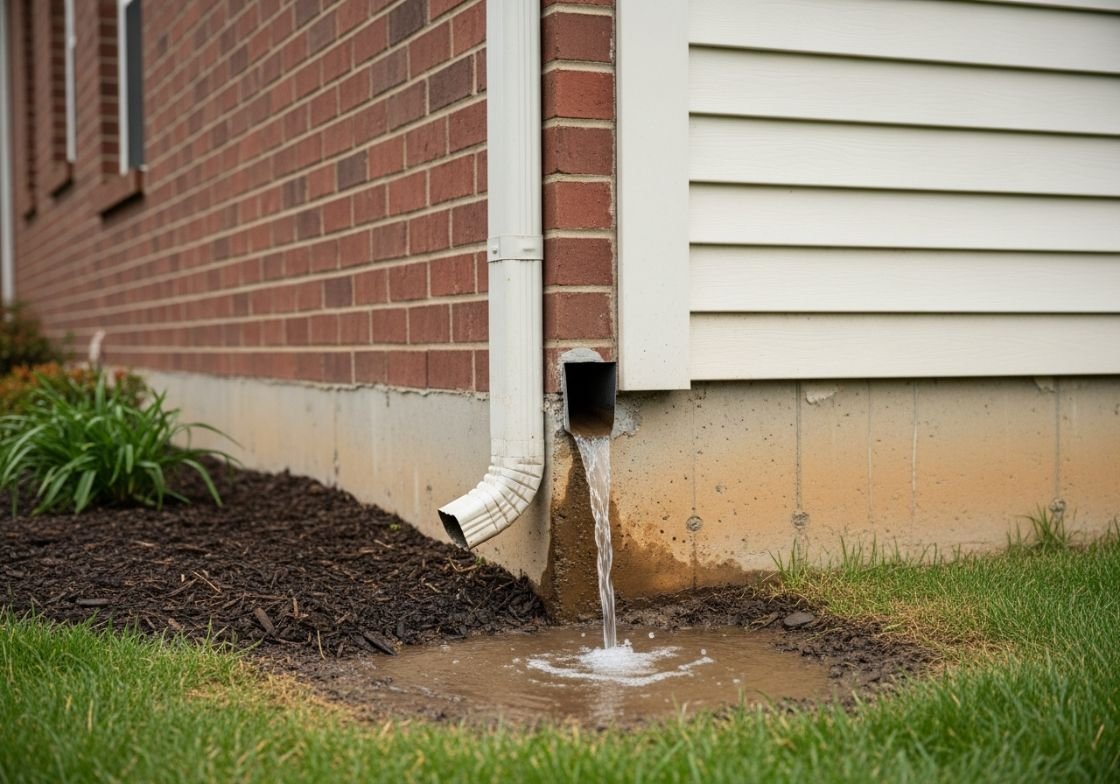
Downspout Too Close to Foundation
When the leader drops water on your wall, basements get damp and sidewalks ice up. You’ll notice soil washouts, musty smells, or a winter sheet of ice by the exit. The goal is distance and a safe path over soil or into an approved system. EPA and extension guidance recommend at least 5 feet from the foundation, with many homes safer at 10 feet.
How to fix the discharge (step by step):
- Add a rigid or flexible extension to carry the flow away from the wall; point it toward the lawn or garden, not the pavement.
- Place a splash block or level-spreader pad to spread and soak in water.
- If one downspout handles too much, add a second outlet on that run and split the load.
- For tight lots or chronic pooling, route to a rain garden or drywell per local rules.
- Avoid sending water to a sidewalk or neighbor; check NYC/DEP rules before any sewer connection.
Typical repair cost:
- Snap-on extensions and splash blocks: roughly $30–$40 per extender installed (materials + basic labor).
- If you also need minor gutter/leader tweaks, overall small jobs still fall within the typical $120–$900 repair band.
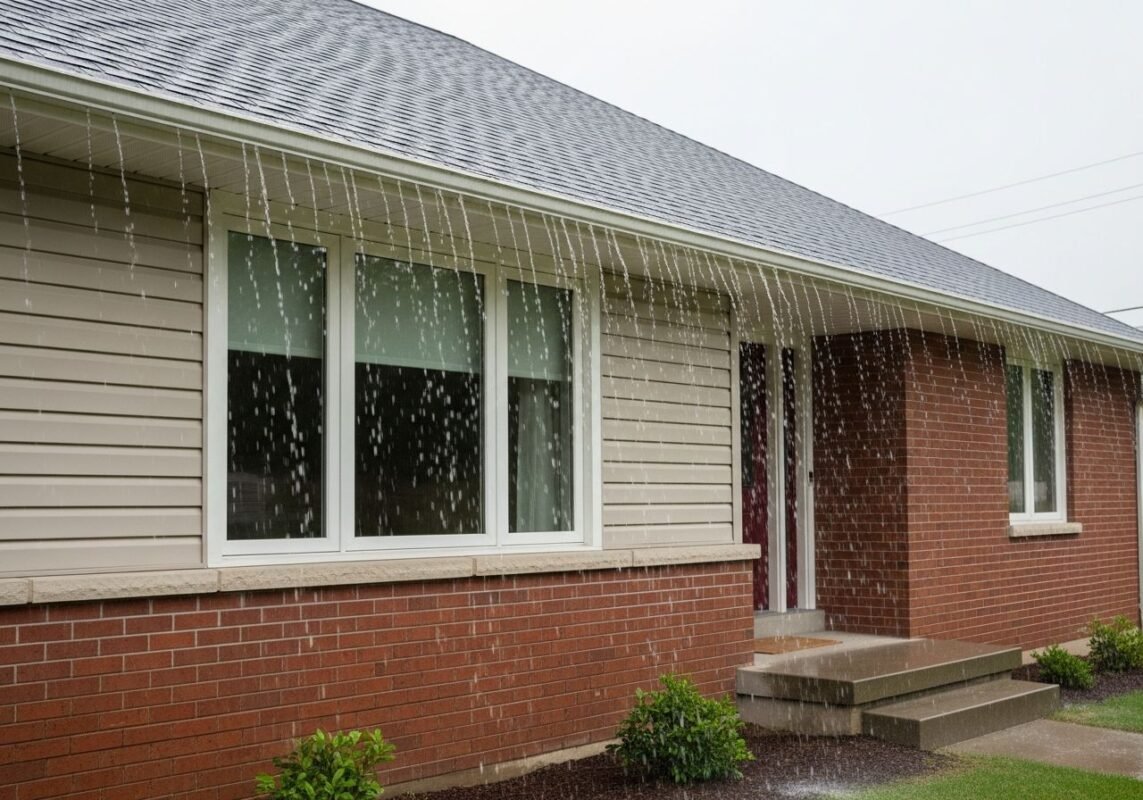
Missing Gutters
No gutter means roof water hits your cornice, brick, and stoop. You’ll see streaks on the facade, mortar erosion, and ice on the walk after a thaw. Brownstones and rowhouses suffer fast because walls sit close to the fall line. New, right-sized gutters and leaders stop that damage and move water to a safe exit.
How to add them the right way (step by step):
- Measure roof edge length and drainage area; pick a 5-inch or 6-inch K-style based on roof size and flow.
- Plan outlet locations first, then set a continuous fall toward each drop.
- Use wide-mouth outlets (outlets with a larger opening to allow higher water flow) and 3×4 leaders (vertical pipes measuring 3 by 4 inches for water drainage), with one edge carrying a large area.
- Fasten with concealed hangers (hidden brackets for gutter support) at tight spacing for winter loads.
- Discharge water 5–10 feet from the foundation or to an approved system.
Typical installation cost (material + labor):
- Aluminum gutters: about $6–$13 per linear foot; project totals are often $1,160–$3,500 depending on size and height.
- Seamless aluminum often sits near the higher end of that range; Brooklyn labor can nudge totals up.
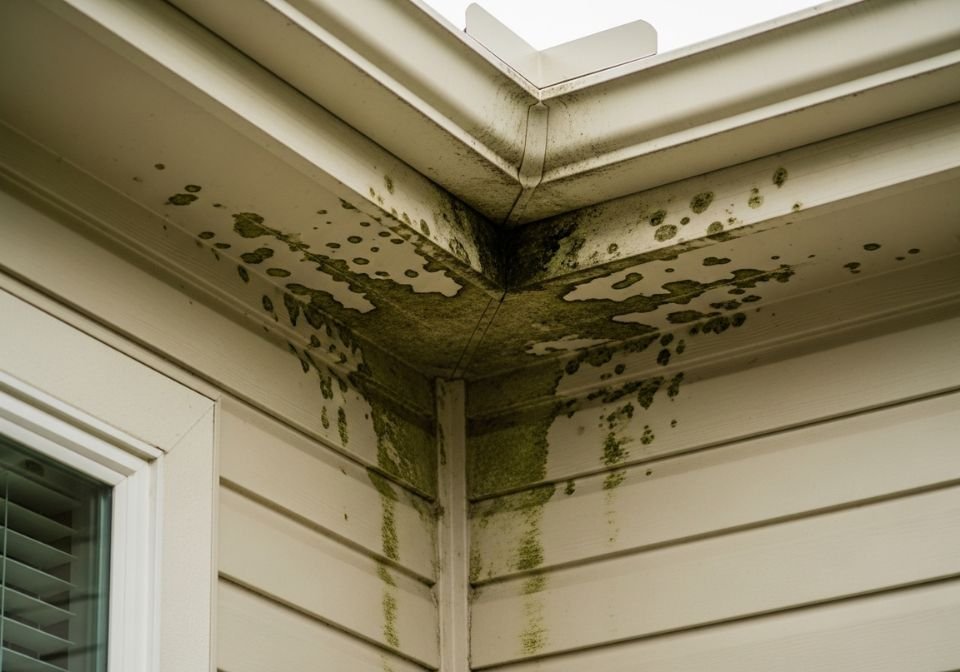
Mold and Mildew
Overflow and wall wetting from bad gutters feed mildew on siding and soffits. Indoors, chronic leaks can push real mold growth in walls or basements. You want to fix the water path first, then clean or remediate. Small surface spots respond to cleaning; larger or hidden growth needs a pro.
How to stop it and clean up (step by step):
- Restore drainage: clear clogs, correct slope, and move discharge away from the wall.
- Scrub exterior mildew with an appropriate cleaner; keep runoff off plants.
- Dry the area fully; dehumidify basements where leaders (downspout pipes) used to dump.
- For interior growth, contain and remove contaminated materials and correct the moisture source.
- Recheck after the next storm to confirm the wall stays dry.
Typical cleanup/remediation cost:
- Professional mold remediation averages about $1,200–$3,750; small jobs fall on the lower end, large/complex jobs go higher.
- Keeping gutters in good order costs far less than a full remediation, so address drainage first.
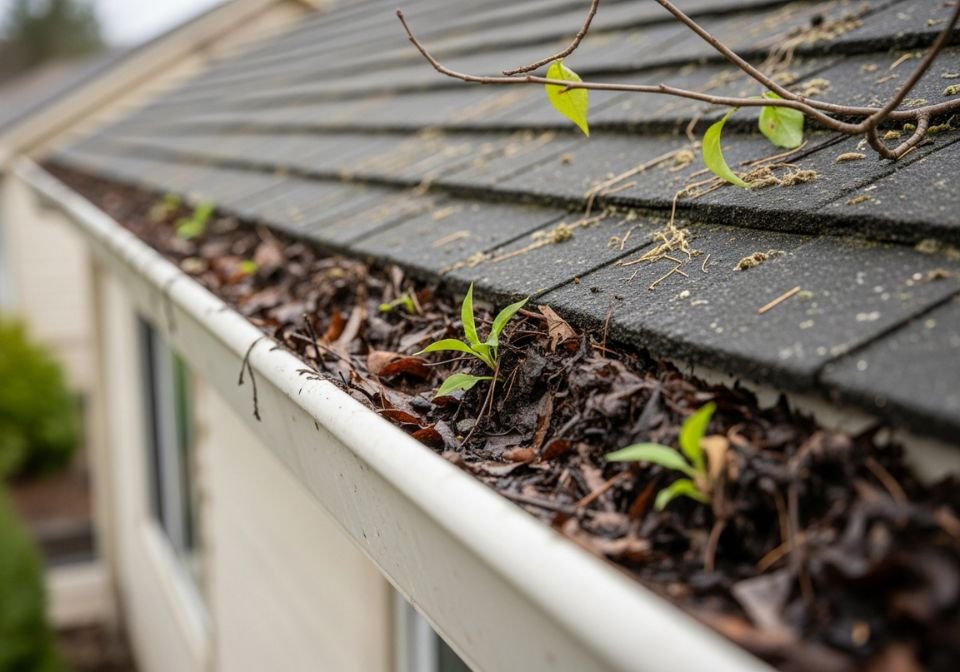
Plant Growth
Plants pop up in gutters when wind-blown seeds land in wet leaf muck that behaves like soil. That “mini garden” traps more debris and blocks the outlet fast. Overflow can then stain the brick and wet basements after storms. Regular cleaning and a debris barrier stop the cycle.
How you fix it (step by step):
- Clear the troughs and outlets before peak leaf drop and again after big storms; flush toward the downspout.
- Scrape out the composted layer at low spots so seeds lose their “soil.”
- Install micro-mesh or quality guards where trees hang over the roof; still plan quick visual checks.
- Trim back branches above the eaves to cut seed and leaf fall.
- Upsize choke points (places where water flow is restricted, like narrow outlets or pipes) with a wide-mouth outlet and 3×4 leader on long runs so bursts clear out.
Typical costs (Brooklyn context):
- Gutter cleaning (NYC): about $0.94–$1.26/ft; many homes cost $150–$340.
- Gutter guards: $6–$13/ft installed; type and height drive price.
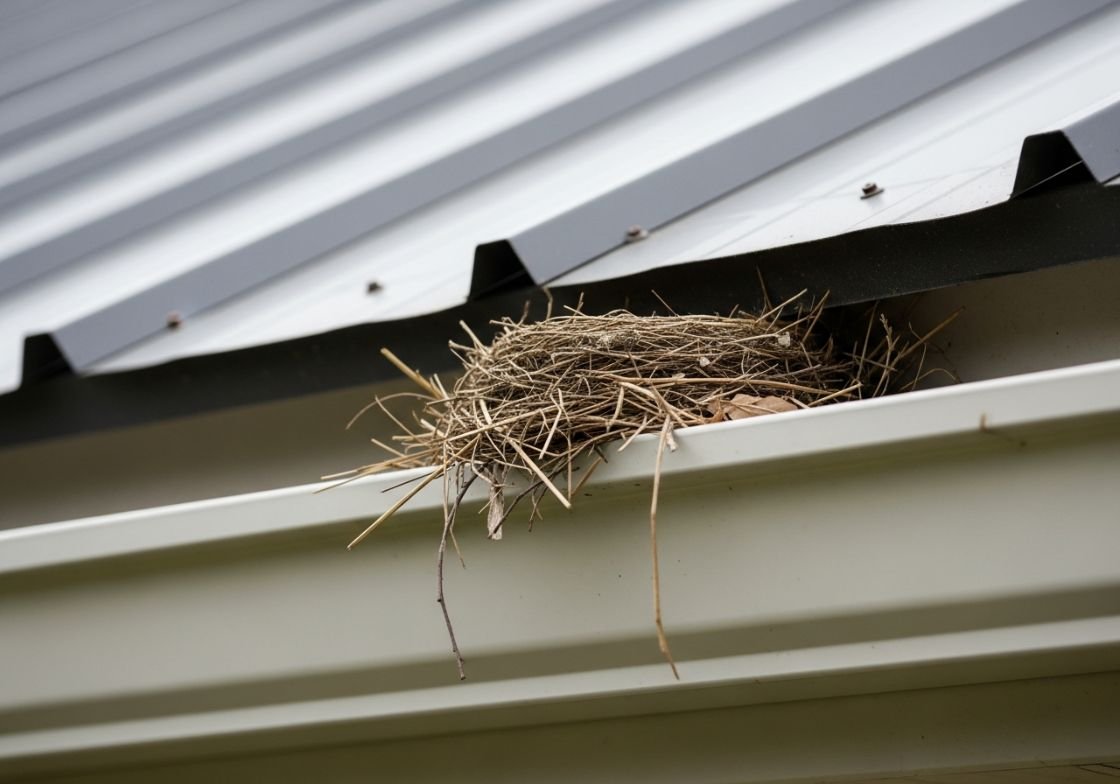
Animals and Pests
Birds’ nests, squirrels, and wasps love sheltered gutters; nests block water and pile debris. Active nests of most native birds are protected under federal law, so timing and method matter. Mosquitoes also breed in any standing water, including clogged gutters. Your plan targets legal nest handling and no standing water.
How you fix it (step by step):
- Inspect gently; if a nest looks active, pause and check federal guidance (inactive nests can be removed without a permit; active nests need care).
- Schedule removal after nesting, or work with wildlife pros when removal is required.
- Drain the habitat: clean gutters and keep outlets open so water cannot stand and breed mosquitoes.
- Block re-entry with guards, small-mesh screens at inlets, and trims that deny perches.
- Trim nearby branches and conduct a simple seasonal check to prevent debris and nests from restarting.
Typical costs:
- NYC cleaning visit to remove debris/standing water: ~$150–$340 typical.
- Bird-nest removal (inactive/accessible vs. hard roofline): ~$200–$2,000+ depending on access and cleanup.
- Gutter guards: $6–$13/ft installed.
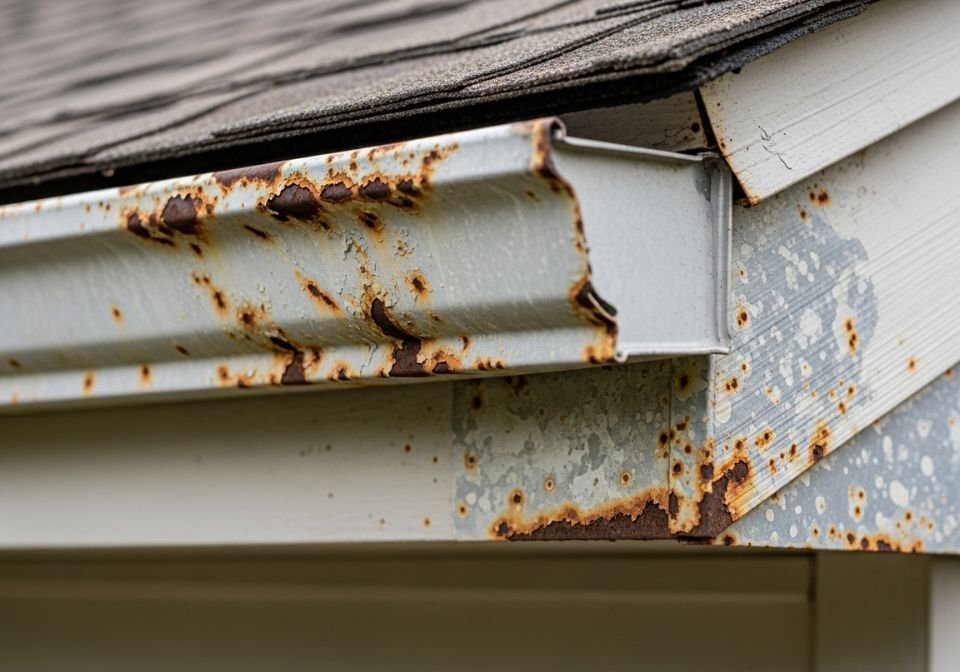
Corrosion Damage
Steel rusts when coatings fail; aluminum oxidizes and pits in harsh exposure; copper forms a patina that actually protects the metal. Dissimilar metals that touch each other can accelerate corrosion through a galvanic reaction. Brooklyn salt slush and urban pollutants add stress, so details and compatible fasteners matter. Replace thin or flaking sections before leaks spread.
How you fix it (step by step):
- Identify the metal and check thickness; probe suspect spots at seams and hanger points.
- Clean to bare, sound metal; treat light steel rust and re-coat per manufacturer guidance.
- Isolate dissimilar metals (separate copper from steel/aluminum; use compatible fasteners) to avoid galvanic attack.
- Replace perforated sections; reseal miters with cold-rated sealant after the swap.
- Consider copper or thicker-gauge aluminum where long life and corrosion resistance matter.
Typical costs:
- Minor leak/seam reseal: ~$100–$225.
- General gutter repair band (material + labor): ~$100–$450 common.
- Section replacement context (aluminum install): about $7–$12/ft; seamless at the higher end.
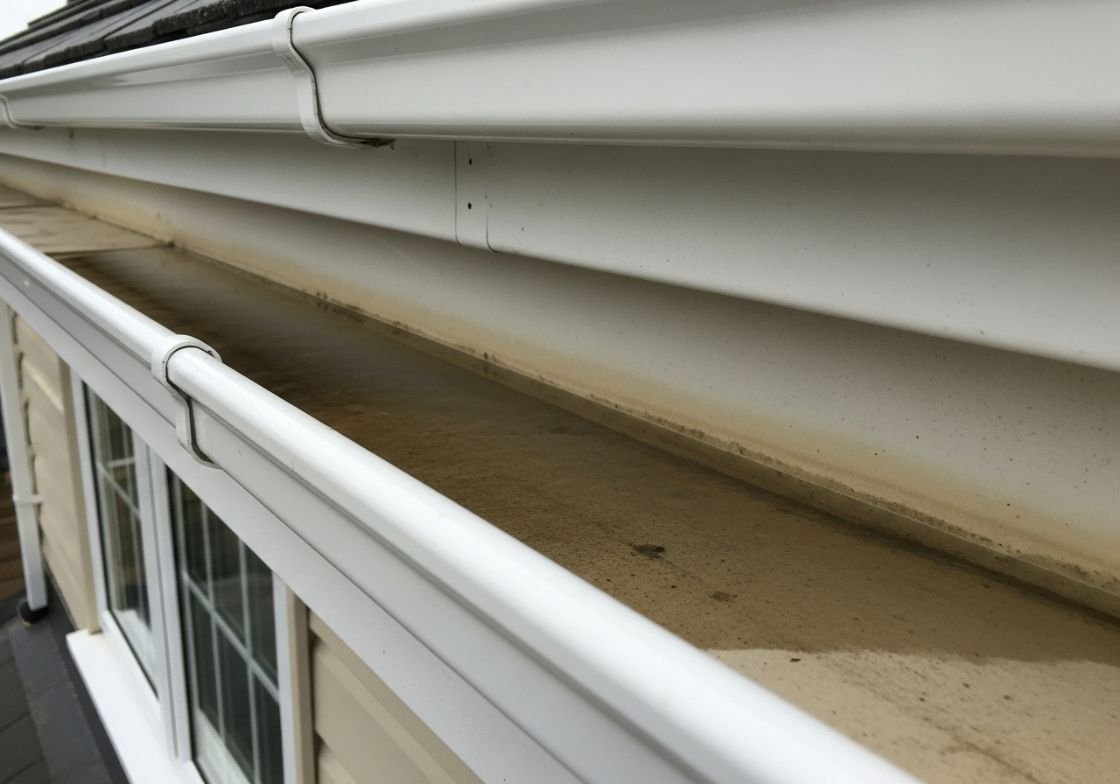
Poor Sloping
If the run lacks fall, water sits, freezes in winter, and overflows in storms. You’ll see stains, ice at the lip, and joints that open. NYC requires a continuous slope of at least 1/8 in per ft with no ponding, so flat spots fail both function and code. A careful re-hang restores flow and stops repeat clogs.
How you fix it (step by step):
- Snap a reference line from the high end to the outlet at ≥ 1/8 in/ft.
- Loosen hangers, raise or lower sections to the line, then fasten into solid wood.
- Add hangers near corners/outlets so the run holds shape under snow and ice.
- Move or enlarge the outlet if the low point sits mid-run; consider a second drop on long faces.
- Hose-test from the high end and tweak any place where water lingers.
Typical costs:
- Pitch adjustment/realign: ~$75–$200 (small tune-ups), more as length/height grows.
- If new sections are needed: aluminum installation is ~$7–$12/ft; seamless is on the high side.
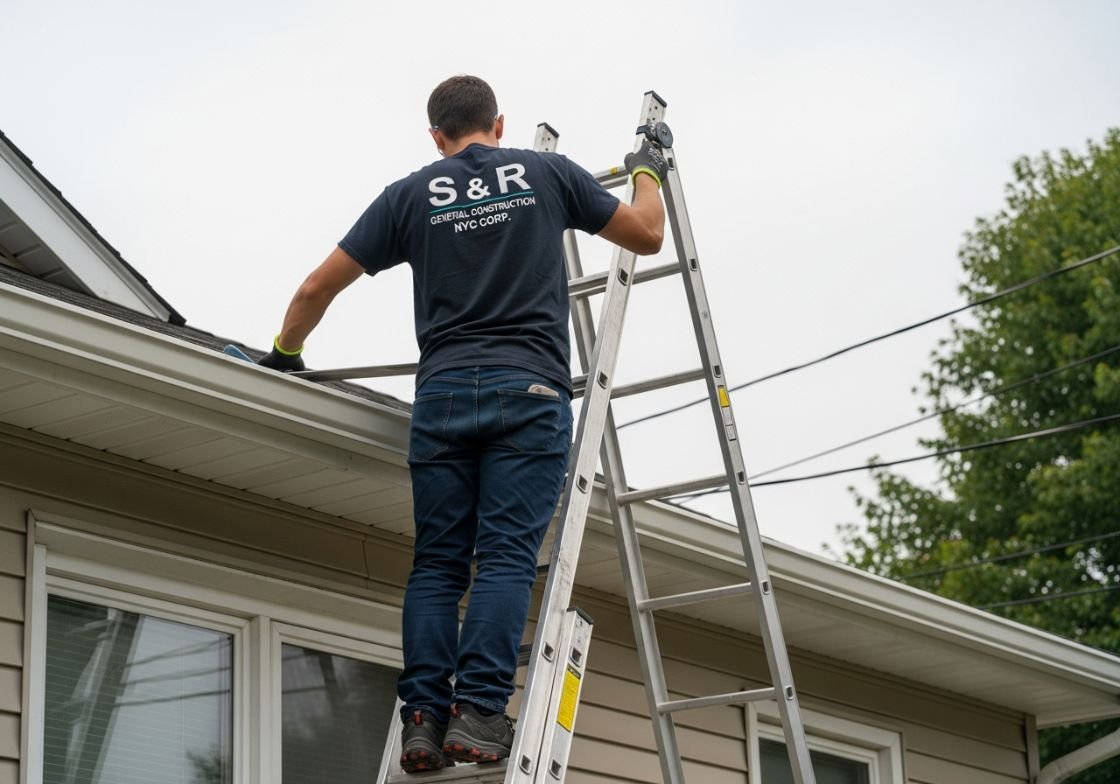
Safety Considerations for Repairing Roof Gutters
You want the job done fast, but safety must set the pace. Most mishaps come from ladders, power lines, or slick surfaces. Use a short plan before you climb, then stick to it while you work.
- Ladders: set, climb, and stand right: Place an extension ladder at the 4:1 angle, keep both rails supported, and hold three points of contact. Stay off the top rungs and level the feet on firm ground. Keep at least 10 ft from overhead lines and use non-conductive rails near any electrical source.
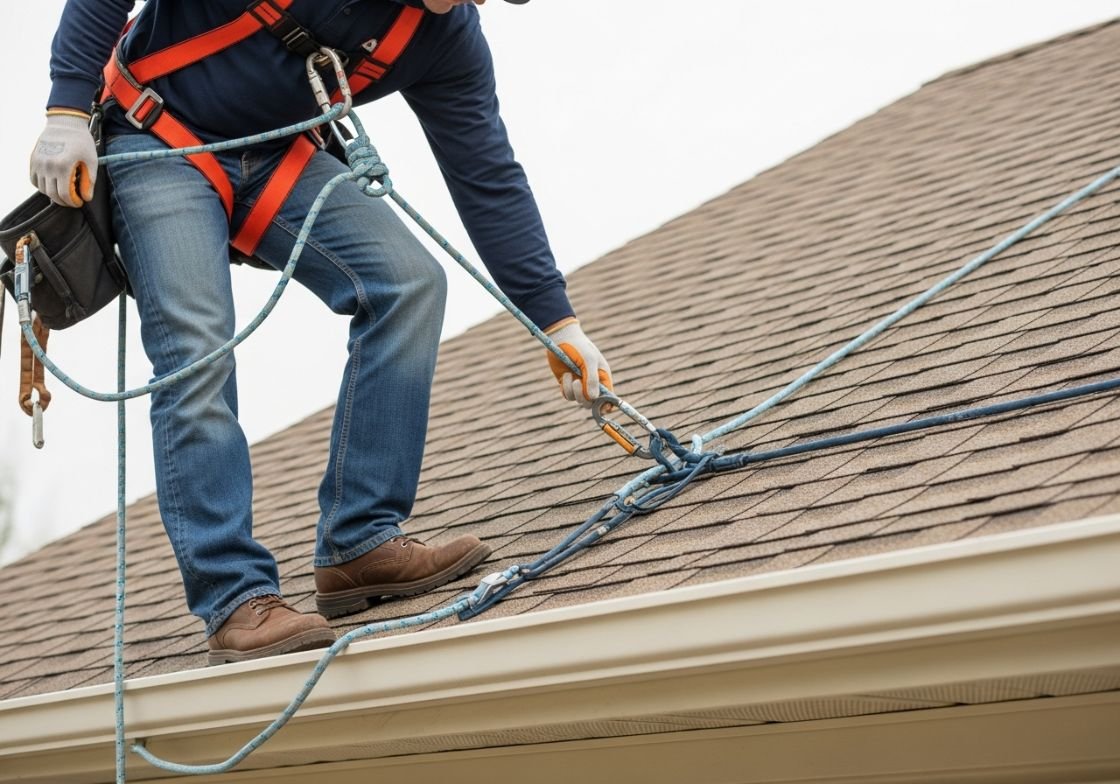
- Fall protection and roof strength: If you step onto the roof, first confirm the surface can hold your weight; that duty is in OSHA’s fall-protection rule. Use a harness, guardrail, or safety system when exposure meets the threshold. Do not work on weak or wet surfaces.
- Weather and footing: Skip work in high wind, active rain, or ice. Wet metal and wet shingles kick feet out fast. Wait for a dry window and daylight you can trust.
- Personal protective gear: Wear cut-resistant gloves, eye protection, and shoes with a good grip. Sharp metal and grit sit in every trough. PPE prevents most hand and eye injuries.
- Use a helper and spotter: A second person steadies the ladder and passes tools, so you move less on each trip up. Many homeowner guides refer to this as a basic control. Work slowly, speak up, and keep phones handy.
Materials, Profiles & Hardware that are needed for Repairing Roof Gutters
You do not need a truck full of parts, but a short kit saves repeat trips. Match materials and profiles to what you have, then add hardware that fixes the weak points. Tested gutter assemblies and code-aware details hold up best in NYC weather.
- Gutter sections (5-in or 6-in K-style, or half-round)—match profile and metal; upsize where flow demands more headroom.
- Concealed hangers and hanger screws—stronger support than spikes/ferrules; add near corners and outlets.
- Outlets (standard and wide-mouth)—reduce choke at drops; pair with 3×4 leaders when runs are long.
- Downspouts (2×3 or 3×4), elbows, straps—size for flow and number your drops along long eaves.
- Sealants (cold-rated), rivets, screws—reseal miters and seams after any swap.
- Drip edge and small flashing pieces—guide water into the trough, not behind it.
- Guards (micro-mesh/perforated)—cut debris load but do not replace checks; pick quality units.
- Tested assemblies for low-slope edges—look for ANSI/SPRI GT-1 compliance on external gutters.
How to DIY Clean Gutters
You can handle routine cleaning if you plan the steps and watch your footing. Work from a stable ladder first, then decide if the roof itself is worth the risk. Stop if wind or wires create doubt.
- Prep the area and set the ladder: Pick a dry day, clear any obstacles, and set the ladder at a 4:1 angle. Keep 10 ft from any power line. Put on gloves and eye protection before you touch metal or grit.
- Scoop out large debris from the trough: Start near the high end and move toward the outlet. Use a hand scoop or your gloved hand and drop waste into a bucket. Do not overload the ladder with tools.
- Flush the gutter toward the outlet: Run a garden hose from the high end and watch for slow spots. Mark any pondering that hints at a bad pitch. Note the spray at the corners that signals a weak miter.
- Clear the downspout: If water backs up, detach the bottom elbow and flush from the top. Use a plumber’s snake for stubborn plugs, then reattach and test the flow.
- Inspect and button up: Reseal small seam leaks, tighten loose hangers, and add a wide-mouth outlet if the corner surges. Consider guards if trees on your block drop heavy debris.
When to Replace Gutters
If you keep fixing leaks, watch the run sag again, or fight chronic overflow after cleaning and outlet upgrades, it is time to price new gutters. Widespread cracks, seam failure, rust-through, or fascia rot also point to replacement. Systems that cannot handle cloudbursts without spilling at corners need larger gutters, larger outlets, and bigger leaders. National homeowner guides list these signs as the usual triggers for new work.
How to Prevent Future Gutter Problems
You want peace of mind when storms hit Brooklyn. A few smart habits give your gutters a clean path, strong support, and a legal, safe discharge. Use this list as your seasonal playbook.
- Set a simple schedule: Clean in late fall after leaf drop, then again in spring. Add a quick check after big storms or thaws, since debris shifts quickly. Most home-improvement pros call fall and spring the baseline.
- Keep slope to code: Your gutter must drop toward each inlet with a continuous fall. NYC calls for at least 1/8 inch per foot with no ponding anywhere. Mark the line, then re-hang until the water runs clean.
- Open the choke points: Many overflows start at the outlet and first elbow. A wide-mouth outlet and a 3×4 leader move far more water than a small hole and a 2×3 pipe. This upgrade helps during cloudbursts and fast thaws.
- Add a second drop on long faces: Long runs and multi-plane roofs dump too much flow at one corner. A second outlet shortens travel time and lowers surge at the end cap. Watch the next storm and place the new drop where water piles first.
- Use guards where trees shed: Micro-mesh or quality perforated panels keep fine grit and seeds out of the outlet. You still plan quick peeks each season because no guard is perfect. Guards reduce ladder trips and mid-storm surprises.
- Protect the sidewalk and your foundation: Aim downspouts away from the wall and away from walkways that ice. Owners must keep sidewalks clear and must also clean 18 inches into the street gutter; ice from your downspout still counts as your duty.
- If your home is landmarked, check permits first: any visible exterior changes to landmarked buildings require LPC approval. Staff can often approve in-kind work at the desk if the design stays consistent with the facade.
- Know your flood risk before you pick a discharge path: Use NYC’s Flood Hazard Mapper and FEMA’s map to see the risk on your block. A short extension may help on a dry lot, while a dry well or a different route may be better for a higher-risk parcel.
Historic Districts (LPC): Permits for Visible Gutter Work
Staff-level approvals with the LPC Permit Guidebook: Many in-kind repairs or like-for-like swaps qualify for staff review. The guidebook explains submittals, photos, and typical drawings that the staff need for quick decisions.
Certificate of No Effect (CNE): Used when DOB permits are involved, but the work does not affect protected features. Gutters replaced in kind at the same location often fit here. All permits are filed through the LPC Portico portal.
Permit for Minor Work / Staff Approval under Title 63: Staff can approve specific visible changes that meet LPC rules, such as matching profiles, compatible metals, and historically appropriate placement. The standards live in Title 63 RCNY.
Certificate of Appropriateness (hearing): Needed when the design changes the street view in a way staff cannot approve at the desk. Bigger profile shifts at a brownstone cornice or new leader heads with a different look may trigger a hearing.
Street-Side Responsibilities (DSNY) & Ice Risk on Sidewalks
Brooklyn owners carry legal duties at the curb. You must keep the sidewalk clear, and you must also keep the gutter area 18 inches into the street along your property clean. DSNY inspects during set windows and issues summonses if the area stays dirty or obstructed.
Why downspout discharge matters in winter
- Discharge that sheets across a sidewalk turns into ice. NYC law then puts the burden on you to remove ice or sand within set time limits after a snowfall or after deposits on the walk; failure to do so can trigger fines. The rule gives owners four hours after snow stops to clear sidewalks and gutters, excluding night hours.
- If DSNY finds litter or debris on the curb and extending 18 inches into the street, owners can receive a violation; repeat offenders face higher fines. Keeping the curb area clean helps meltwater reach storm inlets and reduces ponding near your lot.
Practical curbside steps for you
- Aim leaders away from the walk and extend flow to the lawn or garden where site grades allow. That reduces ice risk and still moves water off the facade.
- Keep the curb line clear during leaf season so street water can pass to the catch basin. Cleanings during DSNY windows lower summons risk.
- Sand or ash icy spots fast when a hard freeze locks the surface; return to scrape clean as soon as weather allows. The code names sand or similar material as an acceptable temporary aid.
Where to Find the Best Brooklyn Roofing Contractors
Are you looking for an expert roofing contractor in Brooklyn, NYC? SR General Construction has you covered! Our business is located at 8807 Avenue B, Brooklyn, NY 11236, United States, in the Canarsie area.
We proudly serve all areas of Brooklyn with high-quality, durable roofing solutions. From new installations to repairs and maintenance, we provide the best service at affordable prices. Contact us and experience why we’re Brooklyn’s roofing experts!
FAQ
1. Why do my gutters overflow in heavy Brooklyn rain?
Most overflows come from clogged outlets/elbows, too-small downspouts, or long runs that lack enough drops. Fix the choke points first, then upsize outlets or leaders where the roof area is large.
2. Do gutters cause ice dams?
No—ice dams start with roof heat loss that melts snow; water refreezes at cold eaves and blocks runoff. Gutters may hold more ice once a dam forms, but the root fix is air sealing, insulation, and ventilation.
3. 5-inch vs 6-inch gutters—what’s right for Brooklyn storms?
Five-inch K-style works on many homes, but 6-inch handles larger roof areas and intense bursts better—especially where multiple planes dump to one edge. Choose based on roof area and rainfall, not looks alone.
4. Are micro-mesh gutter guards worth it on tree-lined blocks?
Yes for debris-heavy sites: stainless micro-mesh consistently blocks fine grit and seeds better than basic screens or foam, though any guard still needs periodic checks. Independent reviews rank micro-mesh at or near the top.
5. How often should I clean gutters in Brooklyn?
Plan at least twice per year (late spring and fall), plus quick checks after big leaf drops or storms. Heavily treed streets may need an extra pass.
6. What’s the correct gutter pitch?
Industry guidance targets roughly 1/16–1/8 inch of fall per foot (≈1/4 inch per 10 ft minimum) toward each outlet to prevent water from ponding and freezing. Rehang flat sections to restore a continuous slope.