

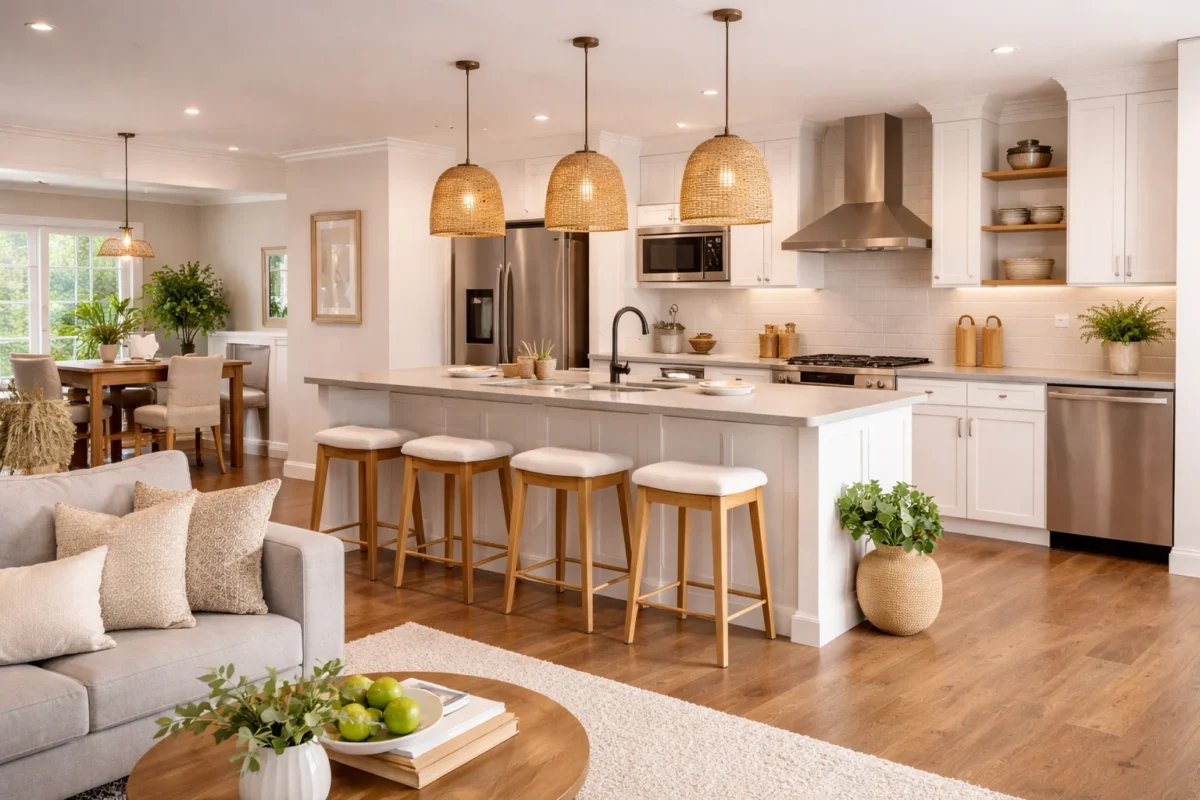
Do you know what Open Concept Kitchen Design is?
It’s a modern kitchen layout that seamlessly blends with the dining or living area, with no walls separating the spaces. In busy places like Brooklyn, NYC, this design has become popular because it makes homes feel brighter, larger, and more social.
In this guide, we’ll explain what open concept kitchen design really means, its benefits and challenges, and how it works in Brooklyn homes. You’ll also learn about layout options, design tips, and important local factors to consider before making changes. This will help you decide whether an open-concept kitchen is the right choice for your home.
Why Open Concept Kitchen Design is Important in Brooklyn
Brooklyn homes often have long, narrow layouts (especially brownstones), and closed-off rooms can make the main floor feel tight and dark. Opening the kitchen helps light and conversation travel, so the space feels more welcoming for everyday living and hosting. It also lets you use the kitchen as a true “hub,” which matters when your dining and living areas need to do double duty in a city home. And when it’s well planned, you can keep the home’s character while improving flow and function.
N.B. Do you need Open Concept Kitchen installation service in Brooklyn? Call SR General Construction NYC for free estimate!
Benefits of Open Concept Kitchen Design
If you love the idea of cooking without feeling cut off, an open concept kitchen can change how your whole home feels. In Brooklyn, it’s especially helpful because you often need one space to cook, dine, work, and hang out.
- More natural light: With fewer walls, daylight can spread further into the kitchen and nearby rooms.
- Better connection with family and guests: You can cook and still stay part of the conversation in the living or dining area.
- A bigger “feel” without adding square footage: Open layouts can make compact city homes feel wider and less boxed in.
- More flexible use of space: You can add seating, a homework spot, or a casual dining area without needing a separate room.
- Smoother flow for daily life: When the layout is planned around clear paths and work zones, moving through the kitchen feels easier.
Key Features of Open Concept Kitchen Design
An open concept doesn’t mean “one big empty room.” The best designs still create clear zones, so your kitchen works hard while the rest of the space stays calm and comfortable.
- A cohesive look across rooms: Use colors and finishes that connect the kitchen to the living/dining area so it feels like one intentional space. A unified palette also makes the kitchen feel less “busy” when you’re sitting nearby.
- A defining element (usually an island): Islands work like a natural boundary between cooking and relaxing zones. They also add prep space, storage, and casual seating in one move.
- Seamless flooring for visual flow: Carrying the same flooring across zones makes the layout feel larger and more continuous. It’s one of the simplest ways to avoid the space feeling chopped up.
- Layered lighting: Open plans need more than one ceiling light; think pendants for task lighting and softer light for the living side. Dimmers are a small upgrade that makes the whole space feel better at night.
- Storage that keeps counters clear: Open kitchens look best when clutter has a home, so plan for pantry storage, deep drawers, and cabinets that reach the ceiling. In Brooklyn homes, even a hallway can become a bonus pantry space if you plan it early.
- Ventilation that actually works: Because air moves freely, you’ll want a properly sized hood; NKBA recommends a ducted system and notes minimum exhaust rates for ducted hoods, plus makeup air considerations at higher CFM. Good ventilation is what keeps cooking smells from becoming “living room smells.”
How to Choose the Right Layout for Your Open Concept Kitchen

The “right” layout depends on your room shape, how you cook, and where people naturally walk through your home. In Brooklyn, the best choice is often the one that protects your work zone while still giving you that open, social feel.
- Island layout (best for social cooking): Choose an island if you have enough width to keep comfortable aisles around it, so people can pass without bumping the cook. It’s ideal when you want seating, extra storage, and a clear divider between the kitchen and living areas.
- Peninsula layout (best for tighter spaces): A peninsula gives you “island benefits” when a full island won’t fit, especially in narrower homes. It still creates a boundary and adds seating without blocking the room.
- L-shaped layout (best all-around): L-shapes work well in open plans because they keep the kitchen on two walls, leaving the center open for dining or lounging. This layout can also support an island or peninsula if you have the space.
- U-shaped layout (best for serious cooks): If you want maximum counter space, a U-shape is hard to beat, but you must protect clearances so it doesn’t feel cramped. NKBA also notes that U-shaped kitchens may need wider clearances between opposing runs for comfortable use.
- One-wall or open galley (best for apartments): In smaller Brooklyn apartments, a single-wall kitchen can keep the room open while still feeling modern. Add smart storage and strong ventilation, and you’ll avoid the “tiny kitchen” vibe.
How to Plan for an Open Concept Kitchen Design
Planning is where open concept kitchens succeed or fail. If you handle structure, flow, and ventilation up front, the “open” part feels effortless later.
- Start with the walls (and what they do): Before you remove anything, confirm whether a wall is load-bearing and plan structural support if needed. Contractors also emphasize securing proper permits before demolition.
- Map your work triangle and keep traffic out of it: NKBA recommends that major traffic patterns should not cross through the work triangle. This is how you stop guests, kids, and pets from cutting through your cooking zone.
- Lock in clearances early: NKBA recommends at least 42″ for a one-cook work aisle and 48″ for multiple cooks, and at least 36″ for walkways. These numbers matter even more in Brooklyn homes where every inch counts.
- Plan ventilation like it’s a priority (because it is): NKBA recommends a ducted ventilation system and lists minimum exhaust requirements for ducted hoods, with makeup air needs at higher airflow levels. In open layouts, this is the difference between “fresh” and “everything smells like last night’s dinner.”
- Use lighting to separate zones without walls: A layered plan (pendant, recessed, and under-cabinet lighting) helps each area feel purposeful. It also keeps the living area from feeling like it’s sitting inside the kitchen.
- Design storage to protect the “open” look: Open kitchens show more, so build in storage that hides the daily mess; tall cabinets, deep drawers, and pantry space. Real Brooklyn remodels often add pantry storage by reworking nearby hall space or unused corners.
- Make cohesion a rule, not a hope: Carry finishes (flooring, cabinet style, hardware tone) across the open area to create a sense of calm and connection. Designers also recommend avoiding hard transitions that visually chop up the room.
Types of Open Concept Kitchen Design
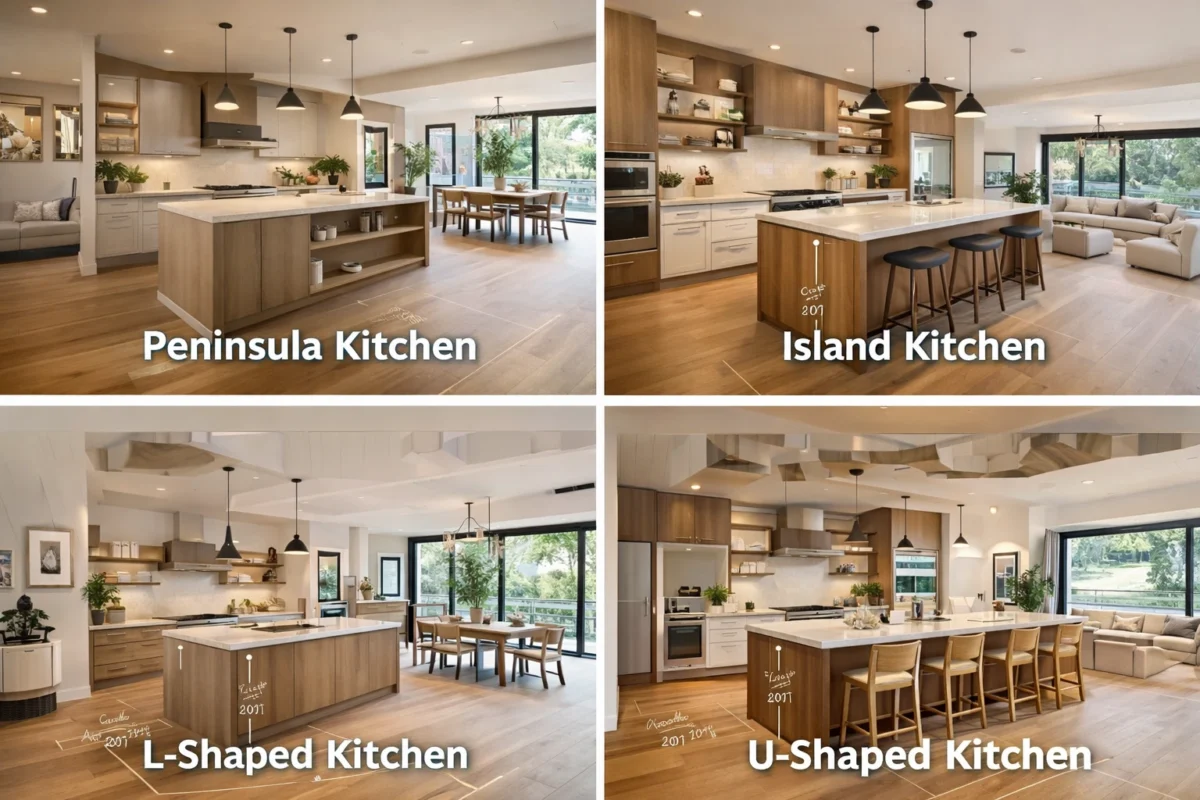
Open-concept kitchens aren’t “one size fits all”; the best type depends on your room’s shape, how you cook, and how you want people to move through the space. In Brooklyn homes (brownstones, pre-war apartments, condos), layout choice matters even more because every inch has a job.
- Island-centered open kitchen: This type uses a kitchen island to separate cooking from living/dining without adding walls, so you keep the open feel. It’s great when you want extra prep space, seating, and storage in one “hub.”
- Peninsula open kitchen: A peninsula gives you many island benefits when your space is too narrow for a freestanding island (common in Brooklyn layouts). It also creates a natural “edge” to the kitchen so the living area feels calmer and more defined.
- L-shaped open kitchen: An L-shape keeps most of the work counters on two walls, leaving the center open for a table, an island, or better flow. It’s a flexible option that fits both apartments and wider townhouse floors.
- U-shaped open kitchen: A U-shape wraps your counters around three sides, which can feel “cook-friendly” because storage and tools stay close at hand. It works best when you plan your clearances so it doesn’t feel tight, especially with more than one cook.
- Open galley kitchen: A galley layout features two parallel runs and can be very efficient in narrow spaces; perfect for many Brooklyn apartments. The key is keeping the ends open (or opening one side visually), so it feels connected to the living area, not boxed in.
- One-wall open kitchen: This type places cabinets and appliances along one wall, which keeps the rest of the room open and flexible. It’s a smart choice when your goal is a clean, modern look and you’d rather use the remaining space for dining or lounging.
Required Tools and Materials for Open Concept Kitchen Design
Before you “open up” anything, set yourself up with the basics for planning, measuring, and coordinating the work. And a quick note: if your project involves wall removal, electrical, or plumbing changes, you’ll want qualified pros; good open-concept remodels start with a safe structure and proper approvals.
- Tape measure / laser measure.
- Level.
- Stud finder.
- Pencil + painter’s tape (for layout marking).
- Safety gear (gloves, eye protection, respirator).
- Drop cloths / plastic sheeting.
- Utility knife.
- Drill/driver + bits.
- Screwdrivers.
- Pry bar.
- Hammer.
- Adjustable wrench / pliers.
- Caulk gun.
- Putty knives.
- Tile tools (trowel, spacers, grout float).
- Paint tools (rollers, brushes, trays).
Common materials you’ll likely select:
- Cabinets (base, wall, tall/pantry) + hardware.
- Countertops.
- Backsplash tile + grout.
- Flooring + underlayment.
- Sink + faucet.
- Lighting (recessed, pendants, under-cabinet).
- Electrical (outlets, switches, wire, boxes).
- Plumbing parts (supply lines, shutoff valves, trap kits).
- Ventilation (range hood + ducting or approved recirculating setup).
- Trim and paint.
Green & Energy-Efficient Features
If you’re already investing in an open concept kitchen, it’s smart to bake sustainability into the plan, because these choices can lower bills and make the space more comfortable day to day. The best part is you don’t need “exotic” upgrades; a few proven options make a real difference.
- ENERGY STAR appliances (fridge + dishwasher): ENERGY STAR-certified refrigerators are about 9% more energy efficient than models that only meet the federal minimum standard. ENERGY STAR dishwashers can save about 5,800 gallons of water over their lifetime, which is huge in daily use.
- Induction cooking (efficient + cooler kitchen feel): ENERGY STAR-certified electric cooking products are about 18% more efficient on average than standard electric models, and induction is a standout option within that category. In an open plan, that efficiency can also mean less wasted heat drifting into your living area while you cook.
- LED lighting + high-efficiency fixtures: Designers consistently lean on LED lighting for sustainable kitchens because it uses less energy and lasts longer than older bulb types. If you want to keep it simple, look for ENERGY STAR-certified light fixtures to narrow your choices fast.
- Water-saving fixtures (WaterSense, where available):The EPA’s WaterSense label is designed to help people identify water-efficient products, and partner guidance notes that WaterSense-labeled products use at least 20% less water than federal water-efficiency requirements. Even small upgrades can add up over time, since the kitchen faucet is used constantly.
- Low-VOC/VOC-free paints and finishes: NKBA sustainability guidance highlights these products as popular eco-upgrades because they help improve indoor air quality. If indoor air quality matters to you (and it usually does in open plans), low-emission finishes are an easy win.
- Responsibly sourced cabinetry (FSC-certified wood): FSC certification helps buyers choose wood products that support responsible forestry, and FSC’s “tick-tree” logo is used worldwide for verified sourcing. Choosing FSC-certified cabinetry is a practical way to make your remodel a little lighter on the planet without changing your style.
- Built-in recycling/compost storage: NKBA also points to built-in storage for recycling as part of sustainable kitchen planning. When you hide bins inside a base cabinet or pantry zone, you keep the open kitchen looking clean while making it easier to form good habits.
Which layouts are most efficient in open concept designs?
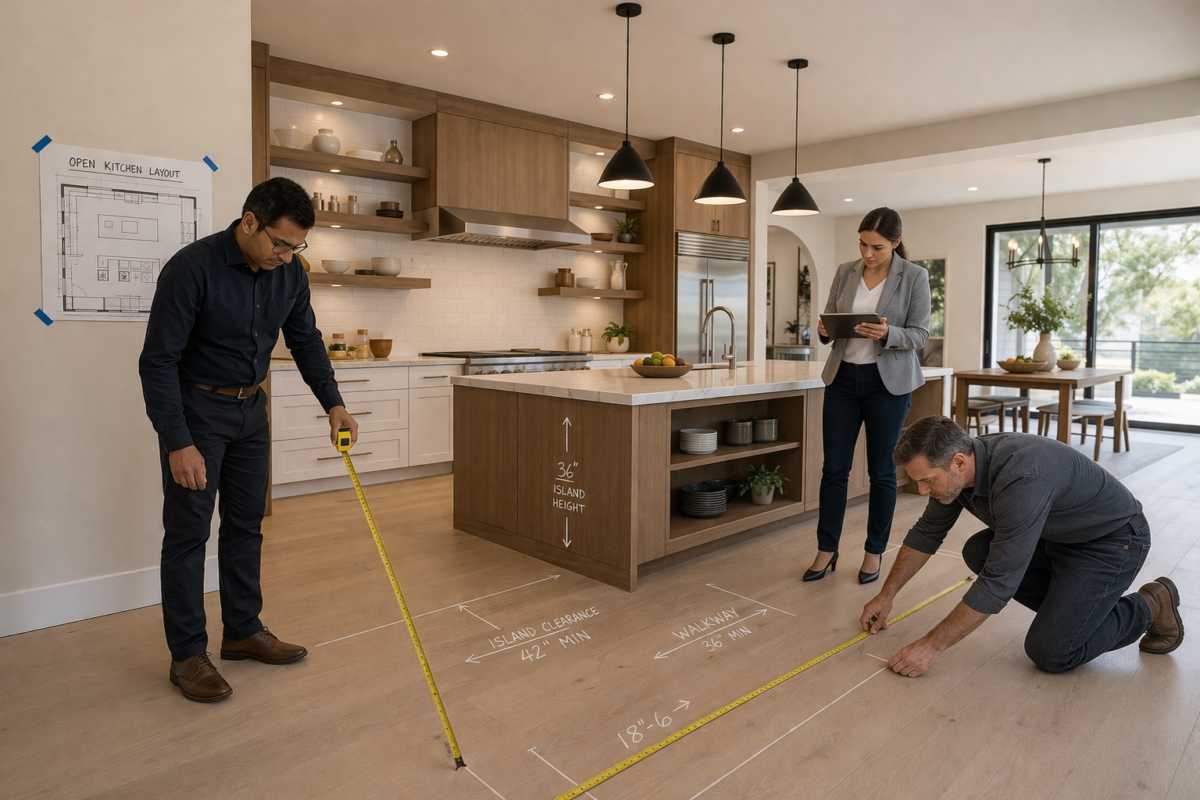
If you’re talking pure “cooking efficiency,” a galley or compact L-shape often wins because it keeps your main zones close and reduces steps. For households with more than one cook, U-shaped or L-shaped with an island can be efficient too; just protect your work aisles (NKBA recommends 42″ for one cook and 48″ for multiple cooks). If “efficient” for you also means hosting and staying social, an island or peninsula layout is hard to beat because it supports flow without closing the kitchen off. In Brooklyn specifically, the most efficient layout is usually the one that keeps traffic out of your work zone while still letting the room feel open.
How do I maximize storage without cluttering an open kitchen?
First, go vertical: tall pantry units and cabinets to the ceiling give you more storage without eating up floor space. Zicklin’s open concept tips also call out islands with built-in cabinets and floor-to-ceiling pantry units as practical storage upgrades. Next, use deep drawers and pull-outs (for pantry goods, trash, and cookware) to store more while keeping counters clear. For small appliances, consider an appliance garage or a dedicated pantry shelf; these are among the simplest ways to keep your open kitchen from looking messy. Finally, make your island (or peninsula) work harder with hidden storage on the kitchen side; when the living room can “see” the kitchen, that hidden space becomes your best friend.
L-shaped vs U-shaped layouts
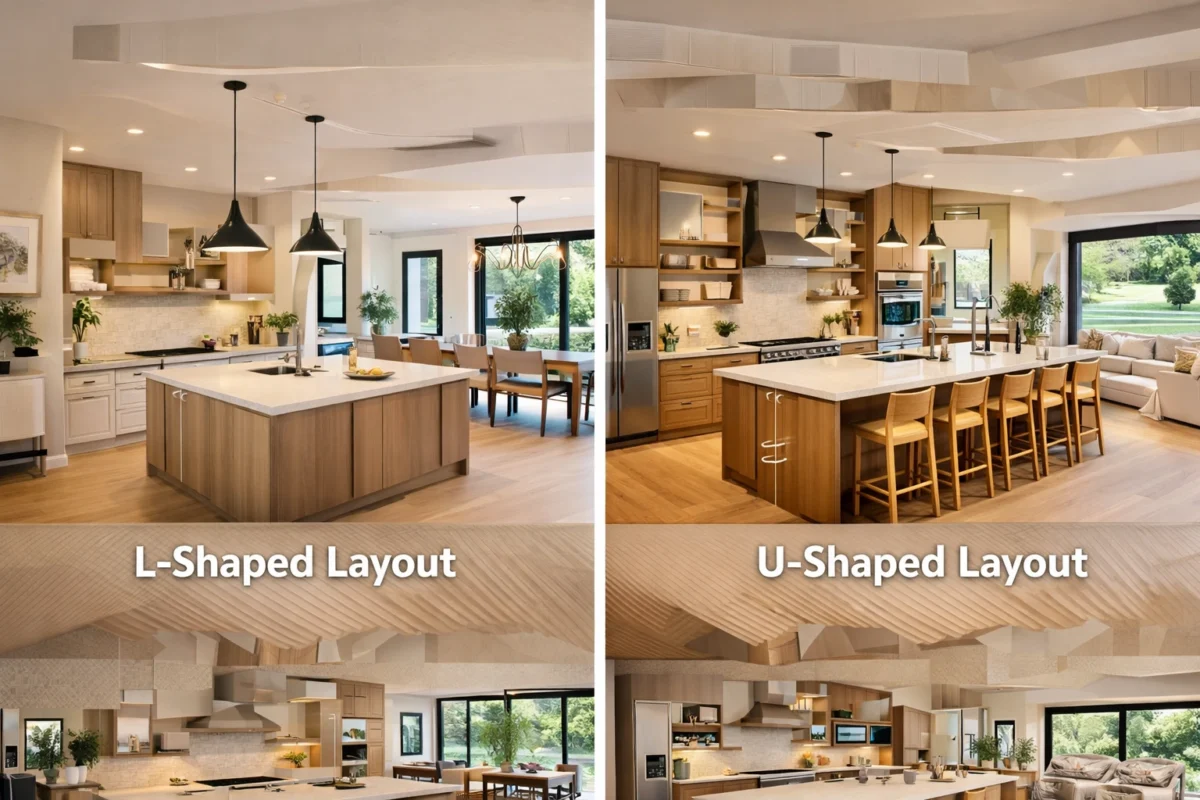
If you want an open concept kitchen in Brooklyn, both layouts can work, but they feel very different in real life. One quick rule that helps either layout: keep comfortable clearances (NKBA recommends 42″ work aisles for one cook, 48″ for multiple, and 36″ walkways) so your kitchen doesn’t turn into a traffic jam.
| What to compare | L-shaped layout | U-shaped layout |
|---|---|---|
| Best for | Open plan living where you want the kitchen to “blend” into the dining/living zone. | People who cook a lot and want everything within easy reach. |
| How it feels | More open and social, especially with an island or peninsula. | More “contained” and work-focused; it can feel cozy or tight depending on clearances. |
| Space needs | Great for small-to-mid spaces because it uses two walls and leaves the center open. | Needs enough width for comfortable aisles; works best in medium-to-large rooms. |
| Workflow | Efficient for everyday cooking, especially when you set up clear work zones. | Very efficient because counters surround you; fewer steps between tasks. |
| Island compatibility | Often the most island-friendly option when the room allows it. | Sometimes works with a small island, but many U-shapes don’t need one. |
| Counter + storage | Good counter space; storage depends on whether you add tall/pantry cabinets. | Usually the winner for counter space and base-cabinet storage. |
| Common downside | You may “need” an island or extra run to avoid feeling short on workspace. | Can feel cramped if aisles are too narrow, especially with two cooks. |
| Brooklyn fit (practical) | A strong match for brownstones and apartments where you want openness and better flow. | A strong match when you have enough width and want a “serious cook” kitchen in an open plan. |
Where to Find the Best Brooklyn Contractors
Are you looking for an expert contractor in Brooklyn, NYC? SR General Construction has you covered! Our business is located at 8807 Avenue B, Brooklyn, NY 11236, United States, in the Canarsie area.
Additionally, we offer services at Rockaway Parkway and Ralph Avenue, providing fast access to Flatlands, East Flatbush, Bergen Beach, Brownsville, and the Spring Creek section of East New York.
FAQ
1. What is an ALT2 permit, and why does it matter for open kitchens?
ALT2 (Alteration Type 2) generally applies to renovations that change layouts or building systems without changing the building’s use or occupancy. Many NYC apartment layout changes are handled through an ALT2 filing process.
2. If I live in a co-op or condo, do I also need board approval?
Yes, NYC renovations often have a “double approval” reality: city rules and building board requirements. Getting the board package right can save you weeks of delays.
3. How wide should aisles be in an open kitchen?
The NKBA baseline is 42″ work aisles for one cook and 48″ for multiple cooks, measured between counter fronts and appliances. Those clearances make a huge difference when your kitchen opens to a living area, and people walk through.
4. What is a “broken-plan” kitchen, and when is it better than fully open?
A broken-plan layout uses partial dividers, furniture, or subtle zoning to separate areas without fully closing them off. It’s useful when you want openness but also want some privacy, smell control, or visual calm.
5. What lighting works best for an open kitchen + living area?
Layer your lighting—task lighting for counters, stronger general lighting for the kitchen, and softer lighting for the living side. This helps each zone feel intentional even without walls.
References:
Goldbet Casino Auszahlung s3.amazonaws.com
References:
Snatch Casino Einzahlung pdaf.awi.de
References:
Venlo Casino Bonus ohne Einzahlung https://httpx.lapbook.ru/
References:
Hitnspin Casino Bonus cds.zju.edu.cn
References:
Jet Casino Bonus ohne Einzahlung http://www.nwnights.ru
References:
Holland Casino Bewertung http://aktsh.ru/go.php?url=http://tamilachat.org/community/profile/adelaidaschultz/
References:
Luna Casino Auszahlung utmagazine.ru
References:
Instant Casino Login proplay.ru
References:
Novoline Casino Bonus ohne Einzahlung https://school43br.ru/blog/index.php?entryid=2852
References:
Goldex Casino Bewertung https://benditojobs.com/employer/online-casinos-mit-niedriger-mindesteinzahlung-in-deutschland-2026/
References:
Nanaimo casino https://1gocasinotest.onlinespielhallende.workers.dev
References:
Betino Casino Bewertung https://jobs.ethio-academy.com/employer/instant-casino-test-2026-unser-erfahrungsbericht-aus-deutschland/