

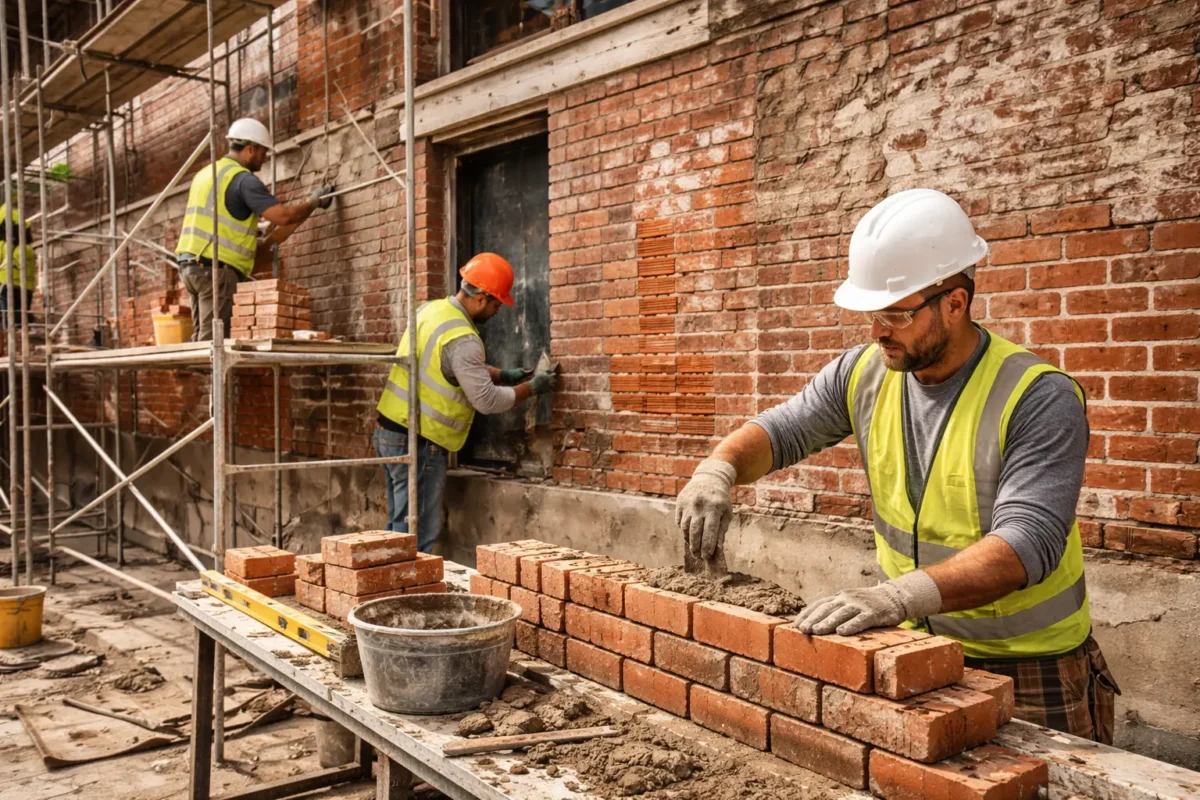
Is your Brooklyn home quietly telling you something is wrong with its brick or stone walls?
Small cracks, loose mortar, or white stains on the surface may not look serious at first, but they are often early signs of deeper masonry problems that many homeowners overlook.
In this detailed guide, we will explain what masonry renovation is, why it is especially important for Brooklyn homes, and the real signs that tell you it is time to take action. You will also learn how Brooklyn’s climate, building styles, and NYC regulations play a role in masonry damage and why timely renovation can save you from costly structural issues in the future.
What is Masonry Renovation
Masonry renovation is the work you do to fix and refresh brick, stone, or block surfaces so they stay strong and weather-tight. It often includes repointing (removing weak mortar and adding new mortar) to restore the wall’s strength and seal out water.
It can also involve repairing cracks, replacing damaged bricks or stones, and rebuilding small, weak sections before they turn into bigger problems. When it’s done right, your masonry looks better and performs better in real Brooklyn weather.
Why Masonry Renovation is Important in Brooklyn
In Brooklyn, many homes sit behind older brickwork and mortar that naturally wear down over time, especially with NYC’s climate swings and moisture exposure. NYC DOB materials guidance highlights how local climate conditions contribute to deterioration, and brick and mortar can break down from moisture movement and salt crystallization.
If your building is over six stories, NYC’s Façade Inspection Safety Program (often called Local Law 11/FISP) also makes exterior wall safety a serious issue, not just a “nice-to-fix” project. And if your home is in a historic district, exterior masonry work may need to comply with Landmarks rules and approvals, which can affect how repairs are performed.
When Do You Need Masonry Renovation?
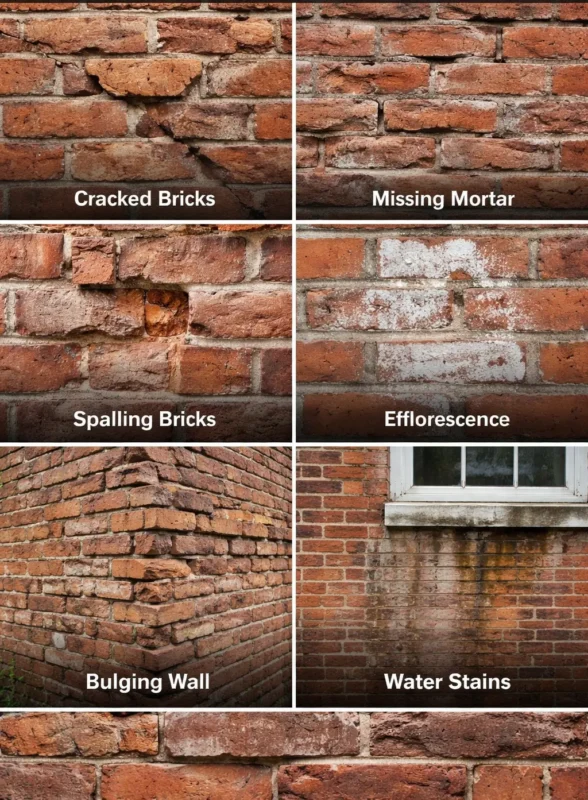
You usually need masonry renovation when you notice crumbling or missing mortar, brick cracks, or areas that look like they’re “washing out” after rain. If bricks start flaking or chipping (spalling), that often points to moisture getting in and weather doing the rest.
White, powdery stains (efflorescence) are another common warning sign because they typically show moisture moving through the wall and leaving salts behind.
And if you’re seeing interior damp spots, peeling paint near exterior walls, or leaks around chimneys/parapets, that’s your cue to stop guessing and get the masonry checked.
Benefits of Masonry Renovation
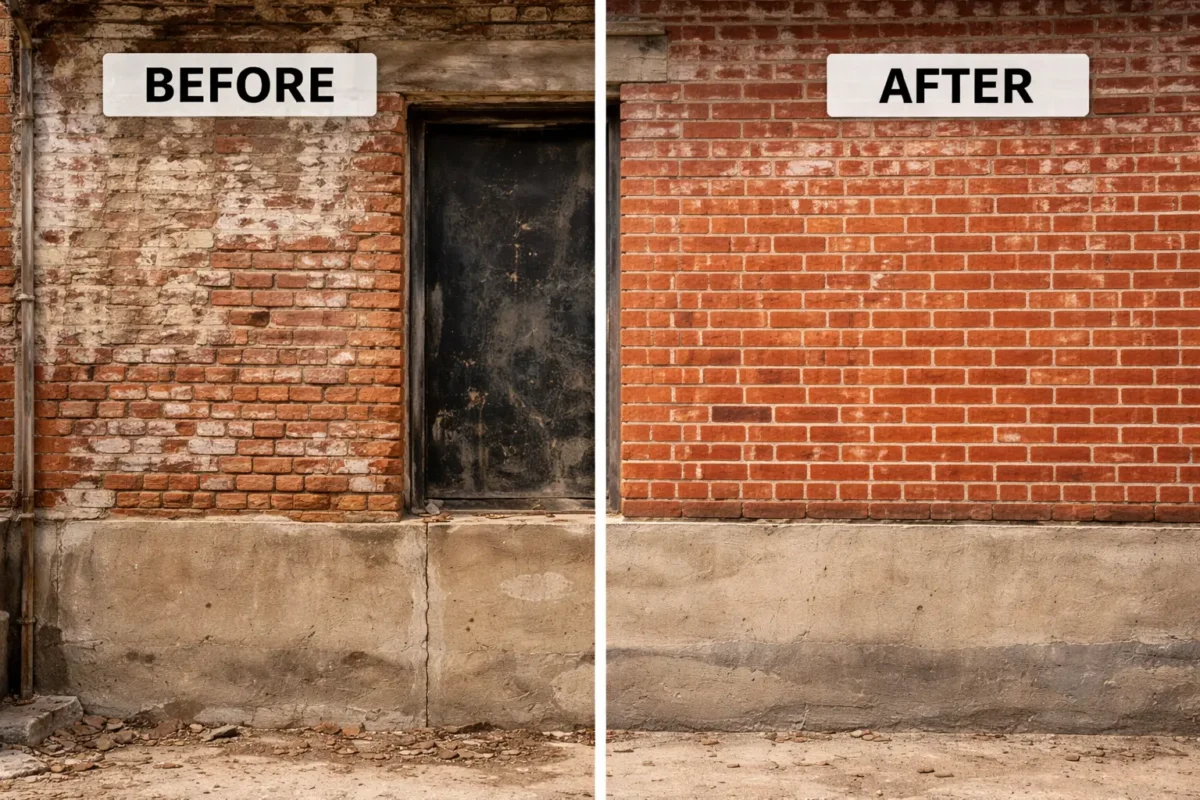
Here’s the simple truth: masonry renovation isn’t only about making your home look sharp. It’s about keeping water out, keeping people safe, and avoiding those “how did it get this bad?” repair bills later.
- It keeps water from sneaking into your walls. Fresh mortar joints and sealed weak spots help block moisture pathways that lead to stains, mold, and interior damage.
- It helps prevent brick spalling and surface breakdown. When you cut off moisture intrusion early, you reduce the chance of freezing–thaw damage that cracks and flakes masonry.
- It protects your home’s structure, not just its look. Repointing and proper repairs restore the physical integrity of masonry so the wall can do its job safely.
- It improves curb appeal and resale confidence. Clean joints, repaired brickwork, and restored details make a Brooklyn façade look cared for—and buyers notice that fast.
- It supports compliance and peace of mind for larger buildings. For buildings covered by FISP, staying ahead of façade issues helps you avoid urgent repairs and safety concerns.
How to Choose a Professional Masonry Contractor in Brooklyn
If you’re hiring someone to touch your brickwork, you’re not just hiring “a crew” you’re trusting them with your home’s safety and long-term value. A good Brooklyn masonry contractor will explain what’s wrong, show you the plan, and do the work in a way that holds up through NYC seasons.
- Check NYC licensing and proper insurance. In NYC, many residential improvement jobs require a Home Improvement Contractor license through DCWP, and a legit contractor won’t dodge that topic.
- Ask how they handle mortar matching and the quality of repointing. Repointing isn’t just “stuffing in new mortar” done wrong; it can damage masonry or trap moisture.
- Make sure they understand Brooklyn’s building types and weak points. A contractor who regularly works on row homes, townhouses, chimneys, parapets, and rear walls will know what usually fails first and how to prevent repeat damage.
- Confirm they can navigate DOB/Landmarks rules when needed. Buildings over six stories may require professional façade inspection cycles under FISP, and landmarked properties may need Landmarks-compliant approaches.
- Choose a team with a proven local track record and real support. SR General Construction, NYC, is fully licensed and has 15+ years of experience upgrading home and commercial buildings in Brooklyn. We’ve completed 750+ projects for 500+ satisfied clients, and we offer 24/7 support to help keep your property safe when issues show up.
Types of Common Masonry Renovation Services
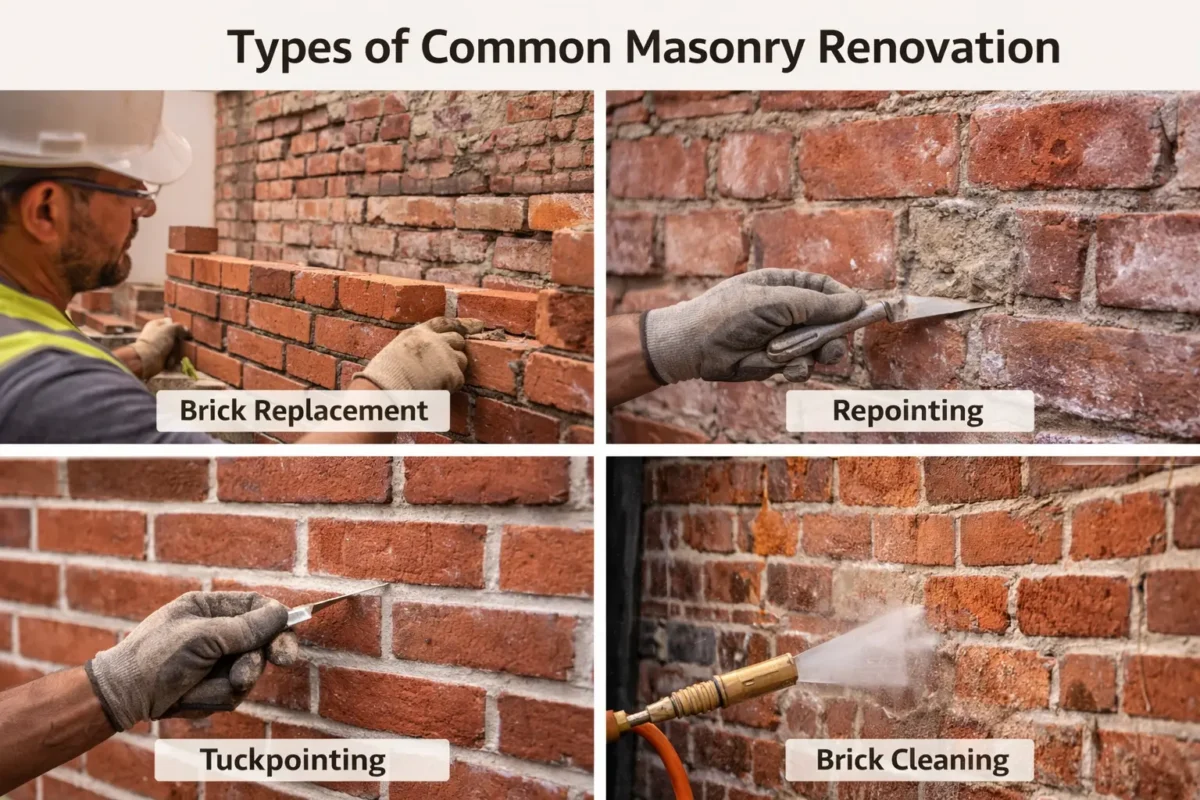
In Brooklyn (from Park Slope to Williamsburg), masonry problems usually show up the same way: loose mortar, cracked brick, leaks, and “wavy” walls. Here are the most common renovation services homeowners and property owners ask for.
- Brick repointing (pointing) & tuckpointing: This means removing weak mortar and repacking it with new mortar to lock the bricks back together. It stops water from sneaking in through open joints and slowly wrecking the wall. When it’s done right, it also brings back that clean, crisp “brick-line” look.
- Brick replacement (spot rebuilds / “toothing-in”): If bricks are cracked, spalled, or loose, a mason removes the damaged units and installs new matching brick. This is common around window edges, parapets, and other areas where water collects. Small brick replacement may be permit-exempt in some cases, but larger rebuild areas often trigger permits.
- Parapet wall & coping repair: Parapets take a beating from wind, rain, and freeze-thaw cycles, so they crack and loosen fast. Fixing coping stones/bricks and rebuilding weak parapet sections helps prevent leaks and falling masonry. In NYC, parapet demolition/reconstruction commonly requires a permit.
- Lintel and steel support repairs (over windows/doors): Cracks that start above windows often trace back to rusting, sagging, or failing lintels. Repair may include cleaning and treating steel, resetting brick, and replacing damaged sections. Work tied to relieving angles/lintels and new brickwork beyond small limits can require permits.
- Chimney repair or rebuild: Chimneys take a beating from the weather on all sides, so mortar joints break down and water leaks inside. Repairs often include repointing, replacing damaged bricks, and fixing crown and flashing issues. Budget-wise, chimneys can be pricey, mainly because access and safety setup are important.
- Stone and brownstone restoration: Many Brooklyn homes feature stone or brownstone details that chip, crack, or delaminate over time. Restoration can include patching, resetting pieces, or careful replacement to keep the original look. This is the kind of work where matching materials and technique really matters.
- Crack repair (injection/stitching/localized rebuild): Some cracks are cosmetic, but others indicate movement or failing support. Depending on the crack type, a contractor might inject repair mortar, stitch the crack, or rebuild the area. NYC classifies some masonry crack repair with injection as permit-exempt, but it depends on the full scope.
- Waterproofing details (flashing, weeps, sealants, drainage fixes): The goal isn’t “paint the wall and hope” it’s to manage where water goes. That means repairing flashing, adding drainage paths, and fixing gaps that allow moisture to enter the wall. Coatings can backfire if they trap moisture or salts inside the brick.
- Facade cleaning and stain/efflorescence cleanup: Dirt and white salt stains can make brick look worse than it is, but you still need to figure out the moisture source first. Cleaning should be gentle, as harsh methods can damage the brick face and accelerate deterioration. After cleanup, the real win is stopping water entry so the staining doesn’t return.
- New masonry installation (walls, veneer, steps/stoops, small structures): Sometimes renovation includes building new brick/stone features, not just repairing old ones. Costs swing widely based on material, wall type, and access. For NYC homes, hiring a qualified mason is important because poor installation can lead to expensive repairs later.
Masonry Renovation Costs in Brooklyn
| Cost type (Brooklyn masonry) | Typical range | How it’s priced |
|---|---|---|
| Initial site visit / assessment | $0–$200 (often credited if you hire) | Flat visit fee |
| Mason labor (general) | $40–$75/hr or $20–$40/sq ft | Hourly or per sq ft |
| Repointing (mortar joints) | $3–$15/sq ft | Per sq ft of brick area |
| Tuckpointing (decorative finish line) | $5–$25/sq ft | Per sq ft of brick area |
| Brick wall repair (common projects) | $798–$2,616 (avg ~ $1,704) | Project price |
| New brick wall installation | $10–$45/sq ft (avg ~ $25) | Per sq ft (or project) |
| Brick material (by type) | Real brick $3–$8/sq ft; Brick veneer $3–$10/sq ft; Hollow brick $15–$30/sq ft | Materials |
| Brick purchase (bulk) | $350–$850 per 1,000 bricks (avg ~ $625) | Materials |
| Footing / foundation (for new walls) | $15–$55 per linear foot | Linear foot |
| Building permits (general benchmark) | $100–$500 | Filing/permit fees |
| Sidewalk shed / scaffolding (common in NYC) | ~$125–$150 per linear foot (first 3 months); then ~6% of install cost per month | Linear foot + monthly rental |
| Structural engineer (when movement/structure is involved) | $200–$1,500 (avg ~ $554); $70–$250/hr if billed hourly | Report / hourly / project |
| Chimney masonry repair | $160–$750 (avg ~ $455) | Project price |
| Pressure washing / brick cleaning | Brick: ~$0.10–$0.40/sq ft; NYC whole-house range: ~$260–$520 | Per sq ft or project |
| Caulking / sealant at joints & gaps | $2.50–$4.00 per linear foot | Linear foot |
| Waterproofing (masonry/foundation walls, basements) | $3–$10/sq ft | Per sq ft |
| Surface sealing (water-repellent sealer benchmark) | $2.68–$5.51/sq ft | Per sq ft |
| Debris disposal / dumpster (common on tear-out jobs) | $200–$800 typical; $350–$550/week; $500–$1,200/month | Rental duration + size |
The Masonry Renovation Process (Step-by-Step)
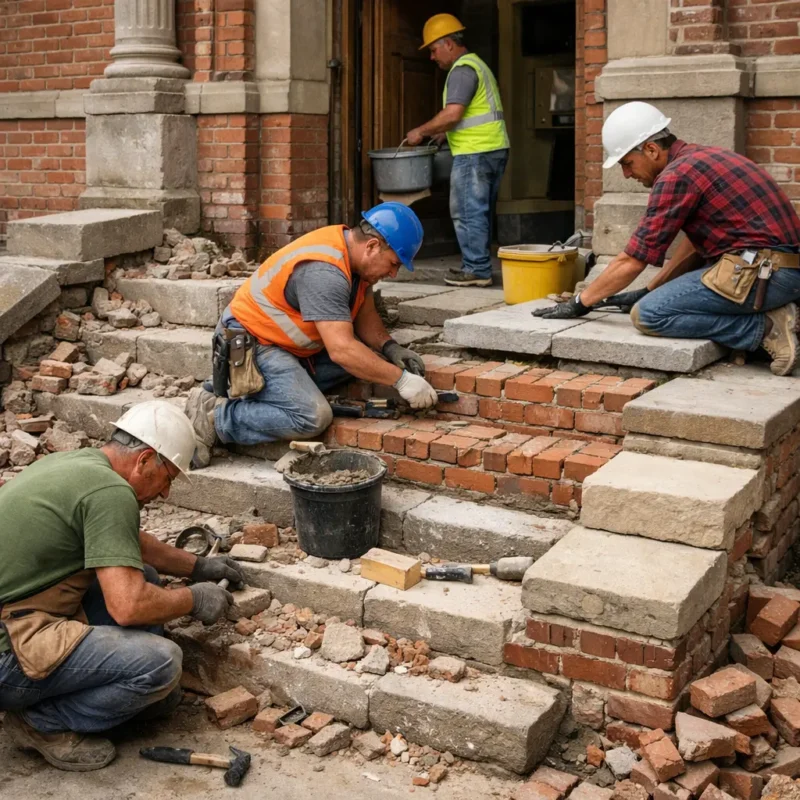
If you’re picturing “mix mortar and slap it in,” let’s slow that down; good masonry renovation is more like surgery than makeup. Here’s the step-by-step flow most solid Brooklyn projects follow.
- Step 1: Visual inspection & crack monitoring: First, you (or your contractor) check for cracking, spalling, bulging, leaning, and failing mortar joints. You also want to note where cracks are—around openings, corners, and parapets- that tells a story. If cracks change with seasons, that usually points to movement and moisture expansion.
- Step 2: Identify the real cause (not just the symptom): A good mason looks for what’s feeding the damage—roof leaks, bad gutters, missing flashing, trapped moisture, or movement. If you repoint without fixing the water source, the mortar can fail again, and you waste money. That’s why drainage fixes often come before pointing.
- Step 3: Scope the work and choose the right materials: The contractor defines what’s repairable vs. what needs rebuilding and matches brick and mortar as closely as possible. Mortar shouldn’t be “too hard” for the brick, especially on older buildings, because a mismatch can damage the masonry units. For historic-style walls, mortar matching is a big deal for both strength and appearance.
- Step 4: Handle permits, filings, and safety planning: Depending on height, scope, and building type, you may need DOB filings and permits for the work or for access equipment. If a sidewalk shed is going up, a permit is required. Getting this right early prevents stop-work headaches later.
- Step 5: Site protection and access setup: Contractors protect sidewalks, windows, landscaping, and neighbors’ property before heavy work begins. If scaffolding or a shed is required, it’s installed and inspected as needed. In Brooklyn, access is often the hidden “cost driver,” especially for taller facades.
- Step 6: Remove damaged mortar/brick carefully: Old mortar is raked out to the proper depth so new mortar bonds well and doesn’t pop out. The National Park Service guidance notes that mortar removal depth is typically 2 to 2 1⁄2 times the joint width, and careless grinding can damage brick edges. This is where skilled hands matter most—rushing here can permanently scar the wall.
- Step 7: Rebuild weak areas (as needed): If bricks are loose or cracked, or the wall shows displacement, those areas are rebuilt and tied back correctly. Around windows and doors, support issues (like lintels) may need repair before brickwork is restored. Structural fixes come first, cosmetic fixes come second.
- Step 8: Repoint/point the joints and tool the finish: New mortar is packed into joints in layers, then tool-tied to match the original joint style. Timing matters because tooling too early or too late affects the seal and look. Proper curing is part of durability, not an “extra.”
- Step 9: Cleaning, final sealing decisions, and walkthrough: After the mortar has set appropriately, the wall is cleaned without damaging brick faces or fresh joints. If a water repellent is used, it should be chosen carefully—some coatings can trap moisture/salts and lead to spalling. Finally, you should get a simple maintenance plan (what to watch, and when to reinspect).
Permits and Regulations for Masonry Work in NYC
- If your building is over six stories, Local Law 11/FISP is a big deal: Owners must have exterior walls and appurtenances inspected every 5 years and file a technical report with NYC DOB.
- Some masonry facade work can be permit-exempt—but only within limits: For example, brick repointing is listed as “NO permit required,” while parapet reconstruction and many structural-related facade items require permits.
- Even if the masonry work is “exempt,” related items may still require filings: NYC rules note exemptions don’t remove the need to follow code or file with other agencies when required (like DOT, LPC, and FDNY), and they don’t remove obligations for things like sidewalk protection.
- Sidewalk shed/scaffold permits are required for facade work: NYC DOB requires a permit before erecting a sidewalk shed or a supported scaffold over 40 feet.
- If the property is landmarked or in a historic district, you may need LPC approval: LPC permit types include staff-level permits (like Permit for Minor Work) and others, depending on what you’re doing.
- A “Certificate of No Effect” may apply in landmark situations involving DOB permits: LPC explains that a CNE is one type of permit that can be issued through Portico when the proposed work requires a DOB permit.
- For many residential permit filings, the contractor’s Home Improvement Contractor license info may be required: NYC DOB notes that both DOB and DCWP require submission of the HIC license/number when obtaining certain permit applications for 1–4 family homes and certain units.
Understanding Brick Cracks: Causes and Risks
Brick cracks aren’t all equal—some are “normal movement,” and some are a warning sign you shouldn’t ignore. The trick is understanding what likely caused the crack and what could happen if you leave it alone.
- Thermal and moisture movement: Brick walls expand and contract with temperature and moisture, and restraint can turn that movement into cracking. If cracks cycle open/closed with the seasons, they can still let water in and slowly widen over time.
- Foundation settlement (differential movement): When one part of a building settles more than another, masonry often cracks in stair-step patterns along mortar joints. If settlement continues, cracks can spread and require larger structural repairs later.
- Failed support over openings (lintels/arches): Cracking above windows and doors often happens when lintels sag, decay, or rust and push the surrounding brick out of line. If you only “patch the crack,” the area can reopen until the support is repaired.
- Freeze-thaw damage and water intrusion: Water soaking into brick and mortar can freeze, expand, and break down the masonry surface. Over time, this can cause spalling, loose bricks, and even pieces falling from parapets or facades.
- Corrosion of embedded metals: Rusting steel and iron in or near masonry can expand and create stress that cracks brickwork. The risk here is that cracking can signal an ongoing corrosion problem—not a one-time cosmetic issue.
- Salt crystallization and “trapped moisture” problems: Efflorescence itself is often cosmetic, but salts and moisture that move through masonry can become destructive if they crystallize within the wall. Some coatings can trap moisture/salts beneath the surface and contribute to brick spalling, so “sealing everything” isn’t always the safest fix.
Common Masonry Issues in Brooklyn Brownstones (2025)
If you live in a classic Brooklyn brownstone, think Park Slope, Bedford-Stuyvesant, Carroll Gardens, Fort Greene, or Brooklyn Heights, you’re basically living in beautiful (but high-maintenance) history. And because brownstone is layered and porous, Brooklyn’s wet winters and temperature swings can be extra tough on it.
- Brownstone exfoliation (layers peeling or “hollow” areas): This is when the stone separates along its natural bedding planes and starts to flake or pop off. It often gets worse when water gets inside, and freeze-thaw cycles push the layers apart.
- Contour scaling and surface crumbling: Sometimes the damage looks like a thin outer “skin” failing or blistering. It’s common on spots that stay wet and then dry repeatedly, like sills and copings.
- Loose, missing, or crumbling mortar joints: Mortar is supposed to be the “sacrificial” part that takes wear first, so it’s normal for it to break down before brick or stone does. A typical mortar joint lifespan can exceed 25 years, but exposure and water intrusion can shorten it quickly in NYC.
- Cracks around windows/doors (and other movement cracks): Cracking can come from foundation settlement, seasonal expansion/contraction, freeze-thaw stress, corrosion of embedded metal, or poor support over openings. The key is watching whether the crack is actively growing or just moving slightly with the seasons.
- Moisture intrusion around openings (lintels, windows, doors): Open joints around doors and windows are a common source of moisture problems because they let water ride right into the wall system. Once moisture is in the wall, it can carry salts, cause staining, and accelerate deterioration.
- Efflorescence (white, powdery, or crystalline deposits): This usually shows up when water inside the masonry carries dissolved salts to the surface, then the water evaporates and leaves the salts behind. It’s often “cosmetic,” but it’s also a big clue that moisture is moving through your wall.
- Salt damage from de-icing and trapped moisture: Salts don’t just look ugly salt recrystallization can actually contribute to stone breakdown. Brownstone can be especially vulnerable when water and salts reach the stone’s internal weak layers.
- Parapet and coping deterioration at the roofline: Roof edges take a beating, and small gaps along parapets or horizontal joints can keep feeding water into the façade. Regular attention to open joints and protective flashing helps stop slow leaks that turn into expensive masonry repairs.
- Damage from “too-hard” past repairs: This one is super common someone used hard, cement-heavy mortar or an aggressive patch, and it actually speeds up brownstone decay instead of protecting it. For brownstone, the wrong materials can trap moisture and make the stone fail faster.
- Moisture problems made worse by clogged gutters or vegetation: When gutters and leaders overflow, they dump water down the façade and wash out joints over time. And vines/vegetation trap moisture on the surface, so the wall can’t dry properly.
How often should brick or stone masonry be inspected and renovated in a building?
For most Brooklyn homes, you should do a simple visual check twice a year (spring and fall) and after major storms, look for open joints, crumbling mortar, bulges, and new cracks. Brick mortar joints often last 25+ years in typical conditions, so renovation usually isn’t “every few years,” but repairs can be needed sooner if water is getting in. If your building is over six stories in NYC, façade inspections are required every five years under the city’s Façade Safety and Inspection Program (FISP). And for brownstones specifically, a regular maintenance routine matters because water intrusion and freeze-thaw cycles are major drivers of deterioration.
When is the best time of year to schedule masonry renovation work in New York City?
In NYC, spring and fall are usually the sweet spot because mortar work performs best when temperatures stay comfortably above cold-weather thresholds. Building codes require special cold-weather masonry procedures when the ambient air temperature is 40°F and below, which can slow work and raise complexity. On the other end, extreme heat and wind can also trigger special hot-weather requirements, so mid-season weather is simply easier for quality control. And if your property is in a landmark district (very common in Brooklyn), build extra time into your schedule because many exterior façade changes require review/approval before you start.
Where to Find the Best Brooklyn Contractors
Are you looking for an expert contractor in Brooklyn, NYC? SR General Construction has you covered! Our business is located at 8807 Avenue B, Brooklyn, NY 11236, United States, in the Canarsie area.
Additionally, we offer services at Rockaway Parkway and Ralph Avenue, providing fast access to Flatlands, East Flatbush, Bergen Beach, Brownsville, and the Spring Creek section of East New York.
FAQ
1. Is masonry renovation the same as masonry repair or restoration?
Repair usually means fixing a specific problem (like loose bricks or cracked joints), while renovation is a broader “upgrade + fix” approach across an area. Restoration focuses on preserving a historic look and using compatible materials, which are especially important for Brooklyn brownstones.
2. What’s the difference between repointing and tuckpointing?
Repointing replaces failing mortar to protect the wall and restore strength. Tuckpointing is a more decorative method that can improve the look of joints (and is often confused with repointing).
3. What are the first signs that I need masonry renovation?
If you see crumbling mortar, cracks along joints, loose bricks/stones, or damp interior walls, your masonry is waving a red flag. Those are classic “time to act” signs—not “wait until next year” signs.
4. How long does repointing usually last?
A properly done repointing job is meant to last decades, not just a few seasons. For historic masonry, guidance commonly expects at least ~30 years (and sometimes much longer) when the work and materials are right.
5. What is spalling brick, and why does it happen in Brooklyn winters?
Spalling is when the face of a brick starts to flake, crack, or “pop” off. It commonly happens when moisture gets into the brick, freezes, expands, and repeats that freeze-thaw damage cycle.
6. What is Local Law 11 / FISP, and does it apply to me?
If your building is more than 6 stories tall, NYC requires façade inspections every 5 years and the filing of a technical report. Homeowners in smaller buildings aren’t in the FISP program, but they still should maintain masonry for safety and water control.