

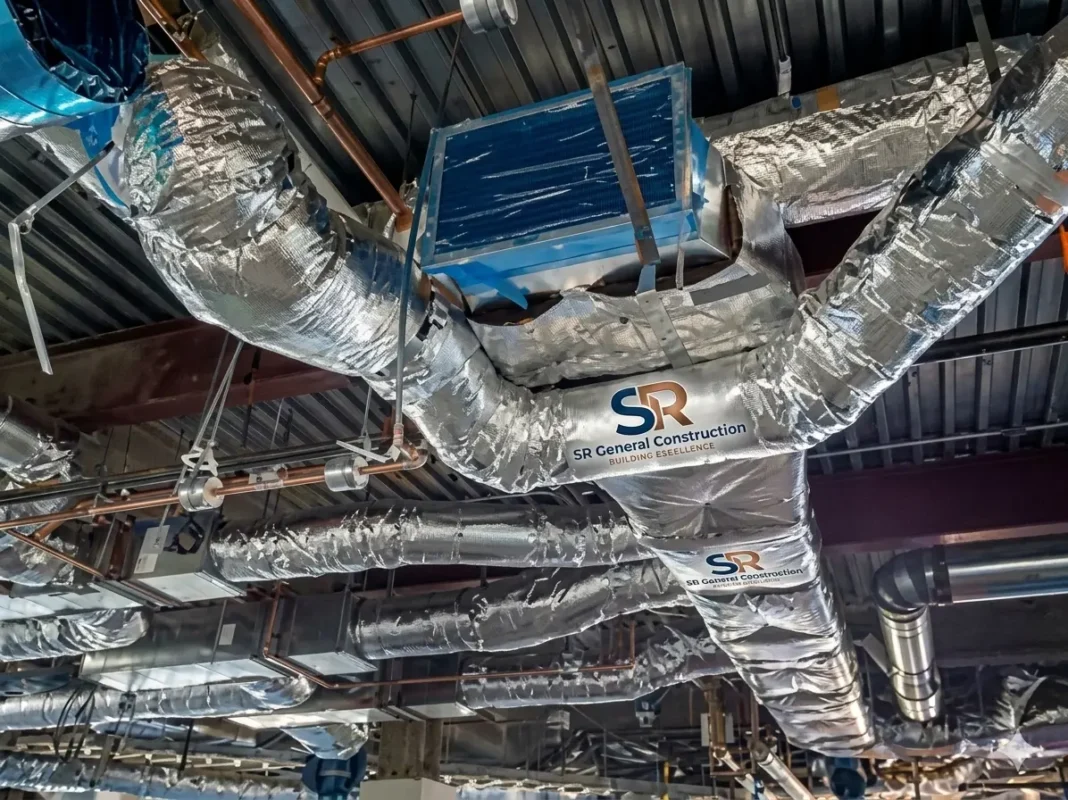
Have you ever wondered which HVAC system makes the most sense for a Brooklyn home, especially when you’re dealing with tight spaces, old radiators, or the charm (and challenges) of a historic brownstone?
Brooklyn homes present unique HVAC challenges—tight spaces, old radiators, and landmark rules can complicate upgrades. While renovating isn’t as easy as replacing an AC, today’s options range from ductless mini-splits and high-efficiency heat pumps to central air and small-duct systems for historic buildings.
| Overview of HVAC System Renovation Options |
| Ductless Mini-Split Systems |
| Central Air Conditioning (Ducted Systems) |
| Heat-Pump Systems |
| High-Velocity Small-Duct Systems |
| Radiator + AC Hybrid Upgrades |
Why Renovate Your HVAC System?
If you live in Brooklyn, you probably feel every season is pretty hard – humid summers, cold winters, and lots of days in between when your home never feels “just right.” An older HVAC setup, or a mix of radiators and window units, often means uneven rooms, noise, and higher energy bills than you’d like. Renovating your HVAC system can deliver steady comfort, quieter operation, and improved air quality throughout your home.
It also helps you keep up with NYC’s push toward cleaner, more efficient heating and cooling under rules like Local Law 97, which encourage buildings to cut emissions and adopt modern systems such as heat pumps. And on top of comfort and compliance, a well-designed HVAC renovation can make your Brooklyn brownstone, condo, or co‑op more attractive to future buyers or renters.
Suggestion
SR General Construction, NYC, is fully licensed and has over 15 years’ experience of Renovation and Remodelling work in Brooklyn. We’ve completed more than 750 projects for 500+ satisfied clients, and we offer 24/7 support to keep your home safe.
Ductless Mini‑Split Systems
A ductless mini‑split system uses one outdoor unit connected to one or more slim indoor units mounted on your walls or ceilings. You get heating and cooling in specific rooms without running big metal ducts through your home.
Key features you’ll notice:
- You don’t need bulky ductwork that can damage your ceilings, plaster, and moldings.
- Each room or zone has its own thermostat, so you only heat or cool the spaces you use.
- Systems are very efficient and can cut energy use compared with older central systems.
- Many mini‑splits use heat‑pump technology, so they provide both heating and cooling.
- Indoor units run quietly, which is great for bedrooms, home offices, and nurseries.
- Installers can often hide lines behind walls or in closets, so the system looks clean in a historic home.
Typical installation cost in Brooklyn, NYC
In Brooklyn, local contractors quote a wide range, but a rough guide helps: a basic single‑zone ductless mini‑split (one outdoor unit and one indoor head) often starts around $3,000–$7,000 installed, depending on brand and capacity. For a full brownstone or multi‑zone setup with 4–5 indoor units, equipment, and installation, costs commonly range from $15,000–$25,000+ when electrical upgrades and plaster repair are included, though large or complex projects can go higher.
Central Air Conditioning (Ducted Systems)
Central air uses a large indoor air handler and a network of ducts to deliver cool air through vents in your ceilings, floors, or walls. In many Brooklyn homes, it’s added during a major renovation because the ducts need space inside ceilings and soffits.
Key features you’ll notice:
- You get whole‑home cooling from one central system with a single main thermostat.
- Vents are low‑profile, and there are no wall‑hung indoor units, so the look is very clean.
- Central AC can tie into a furnace or air handler to provide both heating and cooling through the same ducts.
- When ducts are well designed and insulated, you get even airflow from room to room.
- Many buyers and high‑end renters in NYC see central AC as a must‑have feature that can boost resale or rental value.
- Central systems can use advanced filters and dehumidification to improve indoor air quality.
Typical installation cost in Brooklyn, NYC
For smaller NYC apartments with existing ducts, central AC installation or replacement often falls in the $5,000–$10,000 range, depending on unit size and efficiency. In Brooklyn brownstones or pre‑war buildings that need all‑new ductwork and possibly roof‑mounted condensers, full central systems can run from the high teens into $20,000+ for a 1,500‑sq‑ft unit, and larger or more complex townhouses can go well beyond that range.
Heat‑Pump Systems
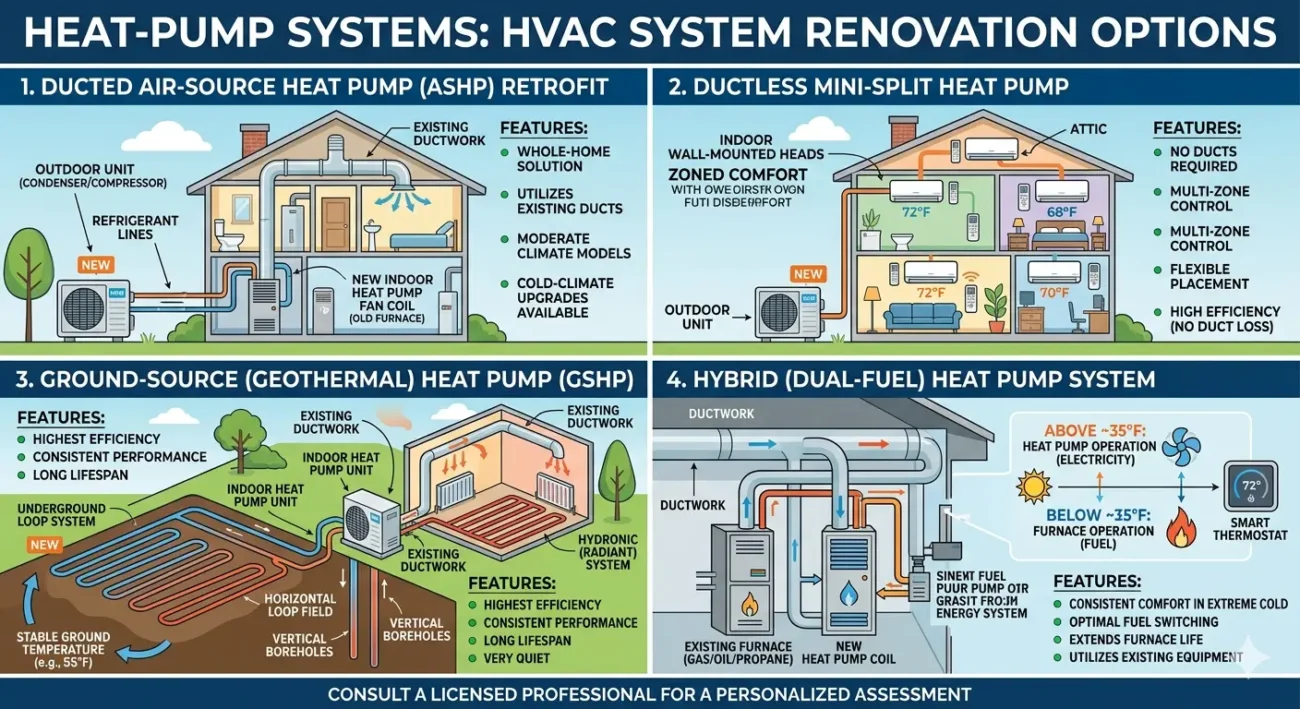
A heat‑pump system is basically an air conditioner that can run in reverse: it moves heat out of your home in summer and pulls heat in from the outside air in winter. Many ductless mini‑splits and some central systems in Brooklyn now use cold‑climate heat‑pump technology instead of a traditional gas or oil furnace.
Key features you’ll notice:
- One system provides both heating and cooling, so you don’t need a separate furnace.
- Cold‑climate models can deliver reliable heat in New York winters, often down to around ‑13°F.
- Heat pumps are very efficient because they move heat instead of burning fuel, which can cut energy bills.
- They help you lower your carbon footprint and align with NYC’s clean‑energy and Local Law 97 goals.
- Many NYC homeowners can qualify for rebates through programs like Con Edison Clean Heat and NYSERDA’s heat‑pump incentives.
- Heat‑pump systems can pair with ductless mini‑splits, small‑duct systems, or existing ducts, giving you flexible design options.
Typical installation cost in Brooklyn, NYC
In New York City, installing an air‑source heat pump (either ductless or ducted) typically ranges from about $3,200 up to around $10,000 per unit, including materials and labor, depending on capacity and complexity. For a whole Brooklyn home with multiple indoor units or zones, total project costs can climb higher, but state and utility rebates can offset thousands of dollars if you qualify.
High‑Velocity Small‑Duct Systems
A high‑velocity small‑duct system uses very narrow, flexible ducts and small, round outlets to move air faster than a standard central system. It’s designed for older homes where you don’t have room for big sheet‑metal ducts but still want discreet vents and central‑style comfort.
Key features you’ll notice:
- The ducts are only a few inches in diameter, so they can snake through tight wall and ceiling spaces.
- Round outlets are small and low‑profile, which helps preserve historic ceilings and moldings.
- Systems provide even, draft‑free comfort because of the way high‑velocity air mixes in each room.
- They can be paired with a heat pump or a conventional condenser, giving you flexible fuel options.
- Noise levels are often low when the system is properly designed and balanced.
- High‑velocity systems are more specialized, so you need an installer who has specific experience with this type of equipment.
Typical installation cost in Brooklyn, NYC
National guides suggest that a professionally installed high‑velocity AC system usually falls in the $8,000–$15,000+ range for a typical home, depending on size and layout. In a Brooklyn brownstone or pre‑war townhouse with tricky framing or landmark limits, you can expect to be toward the higher end of that range, and sometimes above it, once design, permits, and restoration work are factored in.
Radiator + AC Hybrid Upgrades
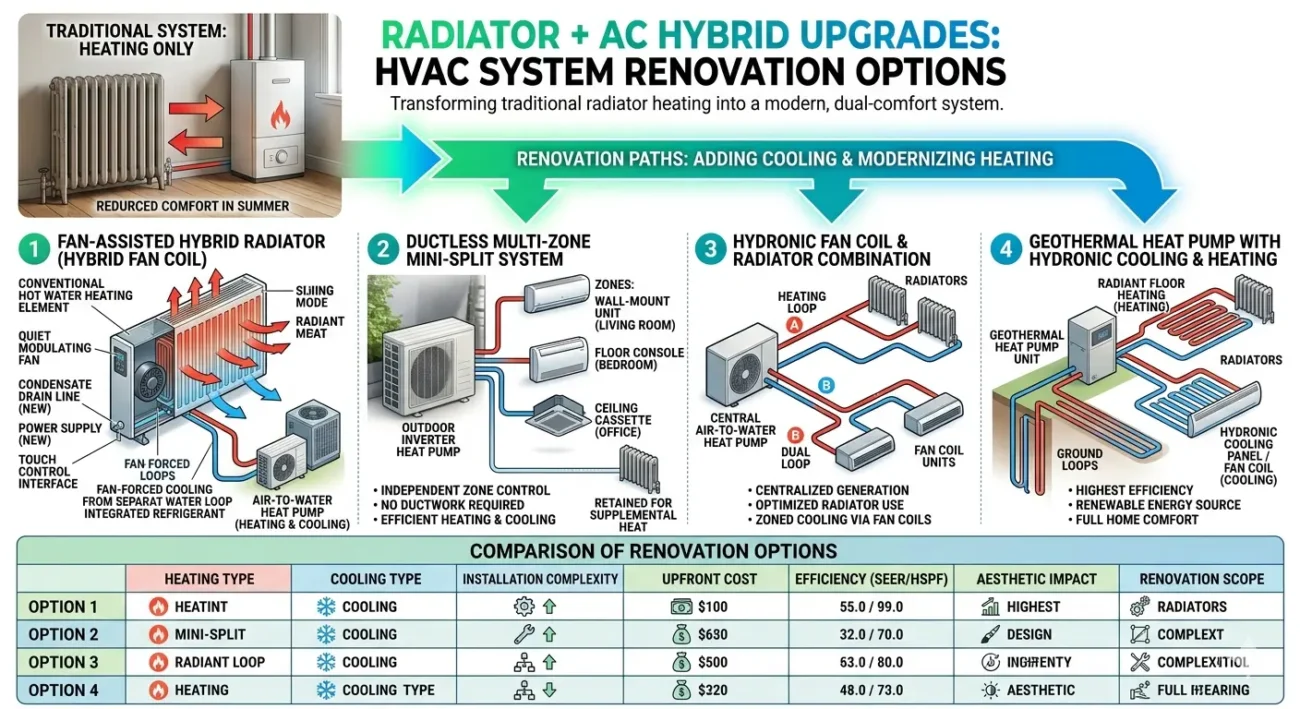
A radiator + AC hybrid setup keeps your existing steam or hydronic radiators for heating and adds a separate cooling system, usually mini‑splits or a new AC coil on an existing forced‑air system. This option is popular in Brooklyn because many people like the comfort and look of radiators, but want modern cooling without ripping the whole house open.
Key features you’ll notice:
- You keep the familiar, cozy feel of your radiators for heat, especially on very cold days.
- You add targeted cooling in main living areas and bedrooms with mini‑split indoor units or small ducts.
- The project is often less invasive than a full central HVAC rebuild because you don’t touch all the heating pipes.
- You can phase the work: start with a few key rooms for AC and expand later as budget allows.
- Hybrid setups give you backup options: if the boiler needs service, mini‑splits with heat‑pump mode can help keep rooms comfortable.
- This approach can be a good stepping‑stone toward future electrification, since you’re already adding efficient electric cooling and sometimes heating.
Typical installation cost in Brooklyn, NYC
If you already have a forced‑air heating system with ducts, adding an AC coil for cooling alone is often quoted at around $10,000–$12,000 for a townhouse‑scale project, plus any electrical or cosmetic work. If you keep steam or hydronic radiators and add ductless mini‑splits for AC, the cooling side will usually follow the mini‑split ranges above—starting from a few thousand dollars for a single zone and rising into the mid‑teens or higher for a multi‑zone brownstone.
Comparing Mini-Splits vs. Central Air vs. Radiators
When you renovate in Brooklyn, you’re usually not starting from zero—you’re working around radiators, window units, odd room shapes, and sometimes landmark rules. To choose the right upgrade, it helps to see how mini-splits, central air, and traditional radiators stack up side by side.
| Aspect | Ductless Mini-Splits | Central Air (Ducted) | Radiators (Steam / Hydronic) |
|---|---|---|---|
| Heating & Cooling | Provide both heating and cooling in one system (when using heat-pump models). | Mainly cooling; heating usually comes from a separate furnace or boiler. | Heating only; you still need a separate AC solution for summer. |
| Installation Impact | No large ducts; small wall/ceiling penetrations for lines and wiring. | Requires ductwork and soffits; best during gut or major renovations. | Existing system stays as-is; no new walls opened for the radiators themselves. |
| Look & Aesthetics | Small indoor units are visible on walls or ceilings. | Vents and grilles are low-profile; equipment mostly hidden. | Exposed radiators or baseboards; classic look but can limit furniture layouts. |
| Zoning & Room Control | Strong zoning – each indoor unit can have its own temperature setting. | Zoning possible with the right design, but often fewer zones than mini-splits. | Limited control – usually one thermostat for many radiators or risers. |
| Energy Efficiency | Very efficient, especially modern heat-pump models with high SEER ratings. | Efficient if ducts are well-designed and sealed; older systems can waste energy. | Depends on boiler age and fuel type; newer high-efficiency boilers perform better. |
| Best For | Brownstones and apartments without ducts, or where you want flexible zoning with less demolition. | Gut renovations or new builds where you can easily add and hide ductwork. | Owners who love the feel of radiant heat and want to add separate cooling later. |
Permits & Landmark Approvals: Working with DOB & LPC
When you renovate HVAC in Brooklyn, you’re not just picking equipment – you’re also dealing with New York City rules. Here’s how you and your contractor usually work with DOB and LPC:
- You almost always need a mechanical permit from the NYC Department of Buildings (DOB) for new HVAC systems, major replacements, or new ductwork and condensers. Your licensed contractor files the permit through DOB’s online system (DOB NOW) before starting work.
- Only licensed contractors can pull mechanical permits. The DOB issues permits to properly registered contractors, and in one‑ to four‑family homes or individual apartments, they may also need a Home Improvement Contractor (HIC) license.
- Larger HVAC equipment usually needs a Certificate of Compliance (formerly an Equipment Use Permit) before you can operate it. Small window or sleeve units up to about 3 tons are often exempt, but most central systems and bigger condensers are not.
- If your building is landmarked or in a historic district, you also need Landmarks Preservation Commission (LPC) approval. LPC considers where you place condensers, louvers, and lines, and generally wants them hidden from public view or to have a “minimal effect” on the historic façade.
- LPC has a dedicated HVAC chapter in its permit guidebook. It explains which rooftop units, wall penetrations, or rear‑yard condensers staff can approve at the office level, and when you need a more formal review. This can make or break where you put your mini‑split condensers or rooftop units.
- On landmark townhouses, architects often prepare mockups and drawings for the LPC. For example, Fontan Architecture shows projects where condensers sit on dunnage on the roof or in rear yards, with mockups submitted to Landmarks before contractors pull DOB permits.
How to Install an HVAC System: Step-by-Step Guide
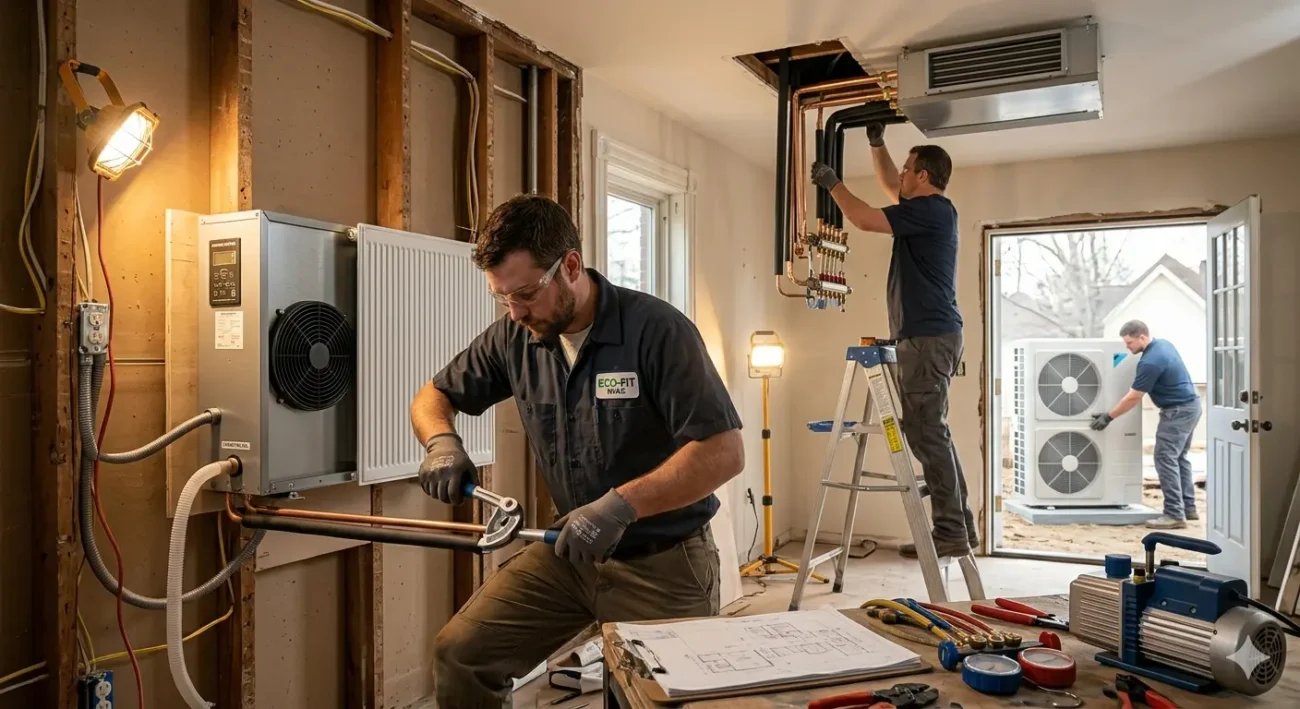
You don’t have to do the work yourself, but it really helps if you understand how a proper HVAC installation should unfold. When you know the steps, you can ask better questions and hold your contractor to a higher standard.
- Step 1: Assess your home and run a load calculation: Your HVAC designer or engineer walks the home, checks window sizes, insulation, and current equipment, and talks through your comfort issues. They then run a Manual J-style load calculation to size the system for your actual Brooklyn home, not just guesswork based on square footage.
- Step 2: Choose the right system type and layout: Together, you decide if mini‑splits, ducted central air, high‑velocity small‑duct, or a hybrid fits your building, renovation scope, and budget. The designer sketches zones, duct routes (if any), and condenser locations that comply with the landmarks’ rules and building management requirements.
- Step 3: File permits and secure approvals: Your contractor or architect files mechanical permits with DOB through DOB NOW and, if needed, submits an application package to LPC for landmark approval. In a co‑op or condo, you’ll also send drawings to the board or management, who may have their own HVAC rules and noise limits.
- Step 4: Prepare the space and open key areas: Before installation, the crew protects floors and furniture, then opens ceilings, soffits, or chases where lines, ducts, or vents will run. In brownstones and pre‑war apartments, this step is delicate because you may be working around plaster medallions, old joists, or ornate trim.
- Step 5: Install equipment, lines, and controls: Technicians set outdoor units on pads or roof dunnage, mount indoor heads or air handlers, and run refrigerant lines, drains, ducts, and electrical feeds to each zone. They also install thermostats or smart controls and label panels so you can easily understand which breaker or zone serves which room.
- Step 6: Test, commission, and close out permits: A good contractor pressure‑tests and evacuates refrigerant lines, checks airflow and temperatures, and verifies that the system meets design and code requirements. After inspection, they close the DOB permit and, if needed, secure any Certificate of Compliance so you’re fully legal and covered.
How to Choose the Right HVAC System For Your Home
Picking an HVAC system in Brooklyn isn’t just about brand names – it’s about matching the system to your building, your comfort needs, and your renovation plans. If you get this part right, the rest of the project will go much more smoothly.
- Think about your building type and age: A narrow brownstone with plaster ceilings and ornate trim has very different constraints than a newer condo with dropped ceilings. Townhouse experts often lean toward ductless or small‑duct systems for older homes and are more comfortable with full-duct central air in newer or gut‑renovated spaces.
- Match the system to your renovation scope: If you’re doing a full gut renovation with open walls, you can consider a traditional ducted central air system or a high‑velocity system. If you’re only refreshing finishes and want to protect details, ductless mini‑splits or hybrid solutions are usually less invasive.
- Decide how much zoning control you want: If different rooms run hot or cold, or you have tenants on one level and owners on another, zoning matters a lot. Multi‑zone mini‑splits and ducted systems with multiple zones let each floor or room run at its own setpoint.
- Set your energy and compliance goals: If you’re trying to cut bills and stay ahead of NYC’s emissions rules, lean toward high‑efficiency equipment and heat‑pump technology. Systems that qualify for ENERGY STAR or local utility rebates can ease the upfront hit and help with Local Law 97 over the long term.
- Budget, disruption, and resale value: Ductless heat‑pump mini‑splits are often cheaper and less invasive than a full new ducted central air system, especially in tall brownstones. But in higher‑end sales, buyers sometimes pay a premium for invisible central systems, so talk with your architect and broker about what makes sense for your block and price point.
Mini‑Split Zones: Independent Room Control
With a multi‑zone mini‑split system, you treat each room or group of rooms like its own tiny “apartment” for heating and cooling. Every indoor unit has its own thermostat or remote, so you’re not stuck with one temperature for the whole house. That means you can keep bedrooms cooler at night, warm a home office during the day, and let rarely used rooms sit at a more efficient setting.
Architects working in NYC townhouses point out that this zoning is one of the biggest comfort and energy advantages of mini‑splits, especially when some rooms face the street and others face the yard. Over time, that independent room control can translate into lower bills and fewer arguments over “who touched the thermostat.”
Custom HVAC Solutions for Pre‑War Apartments
Pre‑war apartments in Brooklyn and Manhattan are beautiful, but they’re not easy HVAC projects. Thick walls, strict co‑op rules, and limited chases mean a basic “one‑size‑fits‑all” system usually doesn’t work.
- Protect the architecture first: Good designers start by deciding what must stay: plaster ceilings, moldings, casings, and old radiators. From there, they tuck ducts and lines into hallways, closets, or soffits so the HVAC upgrade doesn’t ruin the original character.
- Use compact, flexible systems: Many pre‑war projects mix ductless mini‑splits, slim ducted units, or small‑duct high‑velocity runs rather than big trunk ducts. This lets you weave modern comfort into tight cavities and odd structural conditions without major structural surgery.
- Plan around landmarks, façades, and windows: In landmarked buildings, you can’t just pop through‑wall units through the front façade or hang condensers where they’re visible from the street. Teams work with LPC and building management to place units on roofs, in rear yards, or behind railings so they stay largely hidden.
- Coordinate with boards and shared systems: Pre‑war co‑ops often have shared risers, boilers, and strict alteration agreements. Some buildings adopt a master plan for split systems or central cooling, so individual unit upgrades don’t stress electrical or structural capacity.
- Prioritize quiet operation and clean finishes: Because pre‑war spaces carry sound, designers choose quieter equipment, anti‑vibration pads, and well‑sealed chases. Custom grilles and careful paint work help vents and returns fade into the background instead of shouting “new HVAC.”
What is the best HVAC system renovation option for a Brooklyn brownstone?
There isn’t one “perfect” system for every Brooklyn brownstone, but there are patterns that make sense. If you’re not doing a full gut renovation, multi‑zone ductless heat‑pump mini‑splits are often the most practical mix of comfort, efficiency, and low disruption, as they avoid large ducts and preserve historic details. In a full gut reno with open walls and higher budgets, a carefully designed ducted or high‑velocity system (sometimes paired with mini‑splits or radiators) can deliver invisible comfort and strong resale value.
How much does it cost to install mini-split systems vs. central AC in Brooklyn?
| Cost Consideration | Mini Split System (1–3 zones, typical Brooklyn setup) | Central AC (small home or apartment) |
|---|---|---|
| Material Cost (equipment, lines, basic accessories) | Approx. $2,000 – $6,000 for outdoor unit + 1–3 indoor heads, depending on brand, size, and efficiency. | Approx. $3,500 – $8,000 for condenser, coil/air handler, duct materials, and basic controls. |
| Labor Cost (installation, wiring, mounting, charging) | Approx. $1,000 – $4,000 depending on wall/ceiling access, line length, and electrical work. | Approx. $2,500 – $7,000 depending on ductwork scope, difficulty of routing, and electrical upgrades. |
| Total Installed Cost (typical range) | Approx. $3,000 – $10,000 for 1–3 zones in a Brooklyn home or apartment. Larger multi-zone whole-home systems can reach $15,000 – $20,000+. | Approx. $6,000 – $15,000 for a full central AC system. Complex brownstones needing extensive new ductwork can go higher. |
How do I choose an Experienced HVAC contractor in Brooklyn?
Choosing the right HVAC contractor in Brooklyn matters just as much as choosing the right equipment. A good team will protect your home, navigate NYC bureaucracy, and stand behind their work for years.
- Check licenses, insurance, and permits: Always confirm that your HVAC contractor is properly licensed, insured, and able to pull mechanical permits with DOB – don’t just take a verbal promise. This protects you if something goes wrong and ensures the work meets NYC code and energy requirements.
- Look for deep NYC and brownstone experience: You want someone who already knows how to work in narrow stairwells, tight backyards, and landmark districts. Ask to see photos or case studies of previous Brooklyn brownstones, pre‑war apartments, or townhouses they’ve successfully upgraded.
- Ask how they handle design, approvals, and coordination: The best teams don’t just “install units”; they help design the system, coordinate with architects, and handle DOB and LPC filings when needed. They should be comfortable talking through zoning, condenser placement, and how they’ll protect your finishes while they work.
- Review credentials, reviews, and commissioning process: Look for EPA‑recognized or ENERGY STAR–aligned credentials where possible, and read real customer reviews, not just testimonials on their own site. Ask how they test and commission new equipment to ensure it meets the design performance, not just “turns on.”
- Consider a trusted general contractor to coordinate the whole project: SR General Construction, NYC, is fully licensed and has over 15 years of experience upgrading electrical systems and roofing in Brooklyn. We’ve completed more than 750 projects for 500+ satisfied clients, and we offer 24/7 support to keep your home safe.
Where to Find the Best Brooklyn Contractors
Are you looking for an expert contractor in Brooklyn, NYC? SR General Construction has you covered! Our business is located at 8807 Avenue B, Brooklyn, NY 11236, United States, in the Canarsie area.
Additionally, we offer services at Rockaway Parkway and Ralph Avenue, providing fast access to Flatlands, East Flatbush, Bergen Beach, Brownsville, and the Spring Creek section of East New York.
FAQ
1. What are the main HVAC renovation options for a Brooklyn home?
The most common options are ductless mini-splits, ducted central air, high-velocity small-duct systems, heat-pump setups, and radiator + AC hybrids.
2. Are ductless mini-splits better than central air for a Brooklyn brownstone?
For many brownstones that retain original walls and ceilings, mini-splits are easier to install because they don’t require large ducts. Central air can still be a great choice during a gut renovation, but it usually involves more demolition and a higher overall project cost.
3. Can mini-splits fully replace my boiler and radiators in Brooklyn winters?
Cold-climate mini-split heat pumps can deliver strong heat down to very low temperatures, sometimes as low as -13°F, so many owners use them as a main heat source. In older Brooklyn homes, some people still keep radiators as backup or use mini-splits to supplement the boiler on the coldest days.
4. Do I need DOB or LPC approval to install new HVAC in a landmarked Brooklyn building?
You almost always need a permit from the NYC Department of Buildings for new HVAC, and landmarked properties usually require Landmarks Preservation Commission review as well.
5. What is the best HVAC option for a small Brooklyn apartment or condo?
For many apartments, a multi-zone mini-split system or a few ductless heads is the most flexible and board-friendly option.
References:
Stratosphere Casino Erfahrungen http://burana.ijs.si/wiki14/api.php?action=https://www.tfw2005.com/boards/proxy.php?link=https://instantcasinodeutschland.de/
References:
Sugar Hill Casino App https://b.grabo.bg/special/dealbox-492×73/?affid=19825&city=Sofia&cityid=1&click_url=https://smartbusinesscards.in/andersonkethel&deal=199235&rnd=2019121711
References:
Revolution Casino Bonus ohne Einzahlung https://app.salesloft.com/
References:
Circus Casino Auszahlung https://totalfreewebcams.chaturbate.com
References:
Casino Of Gold Bonus ohne Einzahlung https://www.sjsu.edu
References:
Billybets Casino Erfahrungen validate9jajobcert.com
References:
This Is Vegas Casino Bonus https://sellyourcnc.com/author/sherlenedeg/
References:
F1 Casino Test pennswoodsclassifieds.com
References:
Casino sanremo online https://1gocasinotest.onlinespielhallende.workers.dev/
References:
Iris Casino Test raftoffshore.com