

Why is choosing the right home renovation contractor in Brooklyn challenging? Renovating here is different from other cities.

In this guide, we’ll evaluate the key steps to finding the right Home Renovation Contractors in Brooklyn, NYC. You’ll learn how to check licenses, understand local building rules, compare bids, evaluate portfolios, spot red flags, and ask the right questions before signing any contract. By the end, you’ll know exactly how to choose a skilled, trustworthy contractor who understands Brooklyn homes and can bring your renovation plan to life.
Why Choose the Right Home Renovation Contractors in Brooklyn, NYC
Finding the right contractor isn’t just about getting the lowest bid; it’s about partnering with someone who understands Brooklyn’s unique architecture and vibrant communities. Neighborhoods like Park Slope, Williamsburg, and Brooklyn Heights each have their own charm and challenges, from strict co‑op boards to landmark brownstones. A seasoned local contractor knows how to navigate those quirks, secure permits, and respect your neighbors’ peace of mind. Choosing a trusted professional gives you peace of mind that your project will be completed on time, on budget, and with the craftsmanship Brooklyn homes deserve.
Sample Questions to Ask at Your Site Visits
- What similar projects have you completed in my neighborhood?
- How do you handle unexpected structural issues or change requests?
- What is your projected timeline for this project, including permits?
- Can you provide references from past clients and show me completed projects?
- How do you protect my property and my neighbor’s property during construction?
- Who will be my primary point of contact, and how frequently will I receive updates?
- Do you carry all required licenses and insurance for Brooklyn and NYC?
Determine Your Home Renovation Needs
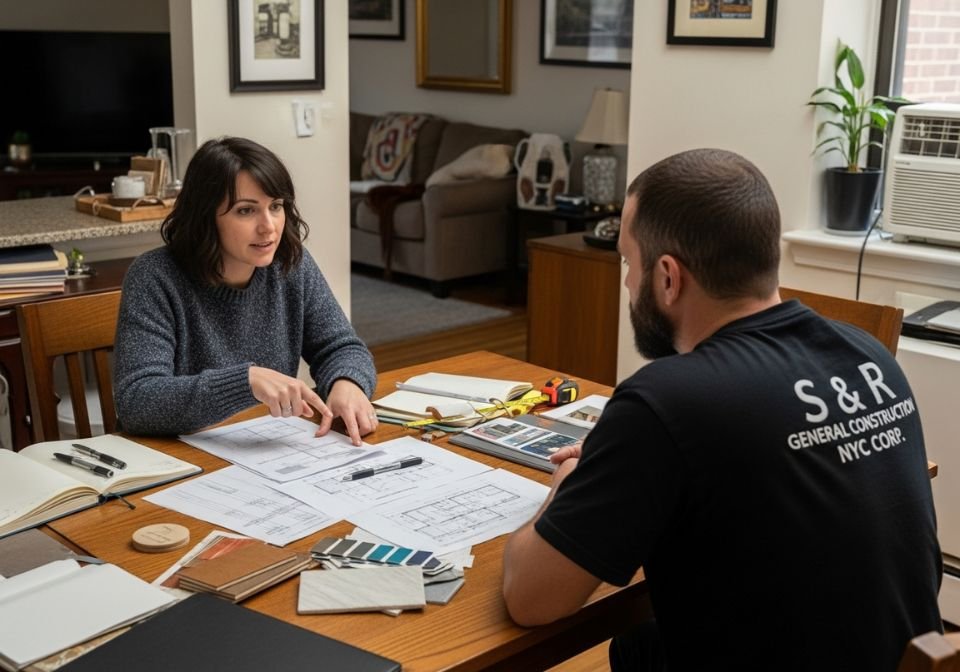
Before you call a single contractor, it helps to know what you want to achieve and why. In Brooklyn, homes can range from historic brownstones to brand-new condos, so take a moment to think through your goals and style.
- Define your project scope: Decide if you’re renovating a single room or the entire home. A clear scope will make it easier to compare bids and avoid surprises.
- Know your timeline: Consider whether you have a deadline tied to events like a new baby or moving in. Some projects, such as gut renovations, can take months, while kitchen updates can be completed more quickly.
- Set a realistic budget: Research typical costs in Brooklyn to determine the average expenses for kitchens, bathrooms, and structural changes. Include a 10–20% cushion for unforeseen issues, such as hidden plumbing or electrical problems.
- Prioritize your must-haves: List the elements you absolutely need, such as additional storage, energy-efficient upgrades, or more natural light. Focus on the features that will make your home more livable every day.
- Consider existing layouts and building rules: Brownstones and co‑ops often have restrictions on what you can alter. Understanding these limitations up front helps you avoid frustration down the road.
- Consider long-term value: Renovations can increase property value, but some improvements yield higher returns than others. Kitchens and bathrooms, for example, tend to add more value than niche features.
5 Tips to Start Initial Contact and Interviews
Making the right first impression with potential contractors can set the tone for the entire project. Taking the time to prepare helps you gather useful information and avoid common pitfalls.
- Do your homework first. Read reviews, ask neighbors for recommendations, and check licensing online to ensure you only reach out to contractors with a solid reputation.
- Prepare a clear brief. When you call or email, please include a brief description of your project’s scope, timeline, and location (neighborhood) so the contractor can respond accurately.
- Schedule on‑site meetings. Telephone calls are a start, but an on-site visit allows contractors to see your space, identify potential challenges, and provide more detailed suggestions.
- Ask about communication practices. Find out how often you’ll get updates, whether they use texts, emails, or apps, and who your main point of contact will be.
- Compare professionalism. Observe how promptly they respond, how they address your questions, and whether they follow through on their promised estimates. A contractor’s behavior at this stage often predicts how they’ll manage your project.
How to choose the Best Home Renovation Contractors in Brooklyn
Picking a contractor is like choosing a business partner; the wrong choice can lead to delays and hidden costs, while the right choice leads to a home you love. Here are ten key considerations to help you make the best decision:
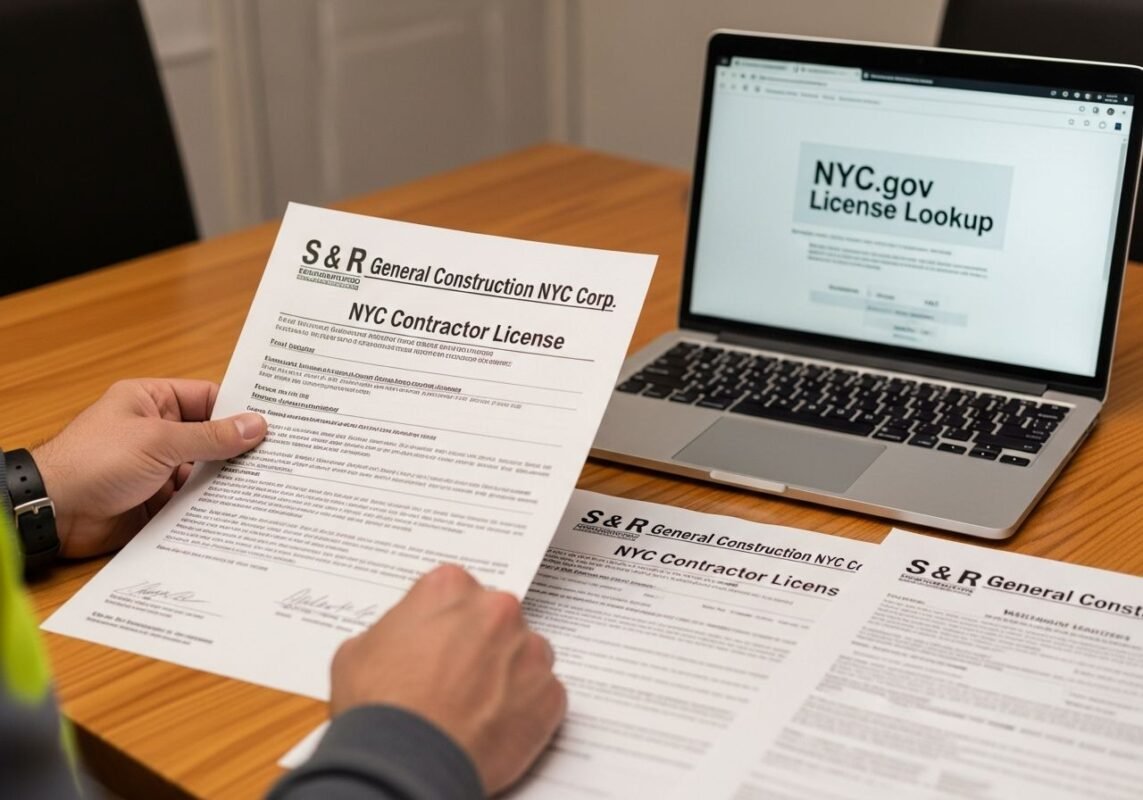
- Check for proper licensing and insurance. Any reputable contractor should hold a New York City Home Improvement Contractor license, carry proper liability coverage, and maintain workers’ compensation insurance. This protects you in the event of accidents on-site and ensures they’ve met city requirements.
- Look for experience in Brooklyn. Brooklyn’s mix of brownstones, co-ops, and condos requires specialized knowledge. Ask contractors if they’ve handled projects in your type of building and neighborhood—experience matters when dealing with local building boards and landmark properties.
- Verify permit know‑how. Most renovations in NYC require permits, especially when structural work or plumbing is involved. A contractor who handles this process smoothly can save you months of stress and expedite board or city approvals.
- Check reviews and references. Local reviews on platforms like Google and Houzz offer insight into past clients’ experiences. Ask for references and speak to customers about how the contractor managed timelines, budgets, and communication.
- Assess communication and transparency. Clear, consistent updates help keep projects on track. Find out how often your contractor will report progress, discuss changes, and whether they provide written scopes and change orders.
- Compare detailed proposals. When you receive bids, ensure they include a detailed breakdown of materials, labor, and timeline. This allows you to understand how costs stack up and where differences lie between contractors.
- Evaluate their team and subs. A good renovation isn’t just about one contractor—it’s about the full team, including plumbers, electricians, and designers. Ask who will be on the job, and make sure the contractor uses skilled and insured tradespeople.
- Look for red flags. Beware of contractors who demand large cash payments up front, lack written contracts, or make unrealistic promises about timelines. These are often signs of trouble later on.
- Visit past projects. If possible, tour a recently completed renovation. You’ll see the quality of their craftsmanship firsthand and talk to homeowners about their experiences.
- Consider SR General Construction NYC. As a fully licensed Brooklyn team with over 15 years of experience in the city, we’ve completed more than 750 projects and served over 500 happy clients. Beyond our expertise, we provide 24/7 support, ensuring you always have the answers you need. Our clients value our dedication to quality and our deep knowledge of Brooklyn’s neighbourhoods and codes.

Understand Brooklyn’s housing types before shortlisting Home Renovation Contractors.
- Brownstones and row houses – These classic Brooklyn homes often date back to the 19th century, with multi-story layouts, stoops, and ornate facades. Many sit in historic or landmark districts, so you want a contractor who understands brownstone structure, facade rules, and Landmark Preservation requirements.
- Pre-war apartment buildings – These are older brick or stone buildings constructed before World War II, typically featuring thicker walls and aging plumbing and electrical systems. Renovating them typically involves addressing old pipes, uneven floors, and strict building codes.
- Co-ops and condos – In these buildings, you don’t just answer to the city; you also answer to your board. Most co-ops and condos have alteration agreements, insurance rules, and work-hour limits that only an NYC-savvy contractor will know how to navigate.
- Townhouses and multi-family homes – These may look simple, but they can hide structural changes, shared walls, and multi-unit systems. A good contractor will know how to plan work so that you and your tenants or neighbors can continue to function during the renovation.
- Lofts and industrial conversions – Converted warehouses and factories often have high ceilings, exposed beams, and big open spaces. They also come with unique structural and mechanical layouts, so you want a contractor who’s used to this type of space, not just standard apartments.
- Newer condos and modern developments – These buildings tend to have newer systems but stricter building management, detailed alteration rules, and more modern materials. A contractor who regularly works in new Brooklyn buildings can help you upgrade without voiding warranties or breaking house rules.
How to Verify NYC licensing, insurance & registration
In New York City, checking a contractor’s paperwork is not optional; it’s your first line of protection. A contractor can sound great on the phone, but if their license or insurance is not in order, you’re taking a real risk.
- Confirm their NYC Home Improvement Contractor (HIC) license: Visit the NYC Department of Consumer and Worker Protection (DCWP) website and search for the business name or license number. By law, any person or company doing residential remodeling or repair in NYC must have an HIC license.
- Check General Contractor (GC) registration with the NYC Department of Buildings (DOB): If your project needs structural work or permits, the contractor (or their GC partner) must be registered with DOB. Only licensed or registered contractors can pull many types of building permits in NYC.
- Ensure the license number appears on the contract and matches the lookup. New York’s home improvement laws require written contracts to include the contractor’s name, address, phone number, and license number. When you compare the contract to the DCWP/DOB lookup, the information should match exactly.
- Ask for proof of insurance and a sample COI: A serious contractor will show you proof of general liability and workers’ compensation insurance, and can provide a Certificate of Insurance (COI) made out to your building. NYC consumer guides specifically advise homeowners to ask for proof of insurance before signing.
- Confirm they can obtain permits for your type of home: For work in 1–4 family homes, co-ops, condos, or rental units, DOB and DCWP require contractors to provide their HIC license when applying for Alteration 1, 2, or 3 permits. If a contractor shrugs this off or wants to work “without permits,” that’s a major red flag.
- Check for complaints or trust fund eligibility: The DCWP operates a Home Improvement Contractor Trust Fund that can reimburse consumers if a licensed contractor fails to complete the job or owes money. Looking up a contractor’s name can reveal complaints or actions associated with them.

What’s the difference between a traditional GC and a design-build firm—and which is better for a Brooklyn brownstone?
A traditional general contractor (GC) usually enters the picture after you’ve already hired an architect or designer and have plans in hand; the GC focuses on building what’s on paper and coordinating trades, while you juggle the design and budget with separate professionals. A design-build firm, on the other hand, keeps design, permitting, and construction under one roof, so one team handles everything from concept to final walkthrough under a single contract. Design-build often provides better budget control and fewer redesigns, as the same team that designs the project also knows the actual costs of building in NYC.
For a Brooklyn brownstone, where you may be dealing with historic facades, aging systems, and Landmark or DOB approvals, a design-build team with experience in brownstones can simplify coordination and reduce surprises. That said, if you already have a strong architect who specializes in brownstones, pairing them with an experienced brownstone GC can also work very well—what matters most is that everyone has real Brooklyn row-house experience and communicates clearly.
Budget & timeline realities in Brooklyn for Home Renovation
A professional contractor in Brooklyn will initiate your budget discussion by examining your home type, scope, and whether the work involves gutting or non-gut renovations. Recent NYC cost guides indicate that a basic non-gut apartment renovation typically falls within the $100–$200 per square foot range, while a full brownstone remodel can start at around $100,000 for light work and reach $250,000–$ 500,000 or more for a comprehensive renovation, especially when incorporating historic details. Good contractors will build in a contingency—often 10–20%—because older Brooklyn homes can conceal issues in plumbing, wiring, or structure that only become apparent once walls are opened.
When it comes to the timeline, a careful contractor will separate planning from construction, rather than providing you with a single, vague number. In Brooklyn, it’s common to spend several weeks or months on design, board approvals, and DOB permits before any demolition starts, especially in co-ops or landmarked brownstones. Once work begins, a non-gut kitchen or bathroom might take a few weeks, while a full-home or brownstone gut renovation can run several months, depending on scope and inspections.
What contract terms should be non-negotiable?
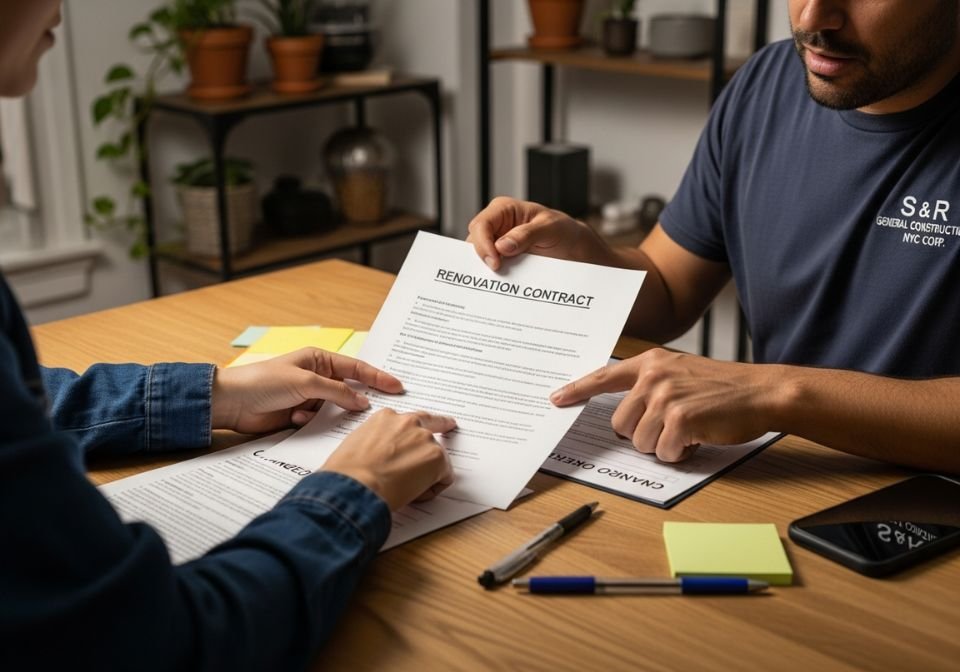
- Written, signed contract with full contractor information: The contract must be in writing and signed by both you and the contractor, clearly displaying the contractor’s name, address, phone number, and license number.
- Detailed scope of work and materials: The contract should clearly outline exactly what work will be done and what materials will be used, rather than simply stating “kitchen remodel.” This level of detail is required under New York law and protects both parties in the event of a disagreement about what was included.
- Start date and estimated completion date: You want approximate start and completion dates in writing, so you can hold the contractor accountable if the project drifts without reason.
- Clear payment schedule tied to progress: Instead of large upfront payments, the contract should outline progress payments with specific dollar amounts and milestones (for example, after rough plumbing, after tiling, etc.).
- Change-order process in writing: Any changes to the work or price should be documented on a written, signed change order—not just agreed “on the fly.” DCWP’s sample contracts and templates include separate change-order forms for exactly this reason.
- Three-day right to cancel: New York home improvement laws require a notice of cancellation, usually giving you three business days to cancel after signing.
- Warranty and guarantees in writing: Any promise regarding workmanship or materials should be clearly stated in the contract, including its duration and specific conditions. The DCWP model estimate and contract have a dedicated section for warranties, which is a good standard to follow.
- Mechanic’s lien notice and payment protections: Contracts in New York must warn you that unpaid subs or suppliers can file a mechanic’s lien, and explain that payments held in escrow or backed by a bond protect your money.
Where to Find the Best Brooklyn Contractors
Are you looking for an expert contractor in Brooklyn, NYC? SR General Construction has you covered! Our business is located at 8807 Avenue B, Brooklyn, NY 11236, United States, in the Canarsie area.
Additionally, we offer services at Rockaway Parkway and Ralph Avenue, providing fast access to Flatlands, East Flatbush, Bergen Beach, Brownsville, and the Spring Creek section of East New York.
FAQ
1. Why is choosing the right home renovation contractor in Brooklyn so important?
Because Brooklyn homes are older, denser, and more regulated than many places, the wrong contractor can cost you time, money, and even DOB or building violations.
2. What licenses should a home renovation contractor have in Brooklyn, NYC?
For most residential remodeling jobs over $200, a person or business must hold a NYC Home Improvement Contractor (HIC) license issued by the Department of Consumer and Worker Protection (DCWP).
3. How can I check if a contractor is properly licensed in NYC?
You can use the NYC “Check a DCA License” / DCWP license search tool online and enter the contractor’s legal business name or license number.
4. Do I really need a licensed contractor if my project is small?
If the job total exceeds $200 (labor and materials combined) and involves home improvement work, such as remodeling or repair, NYC law requires the contractor to be licensed, even if the project appears “small.”
5. Should I always choose the lowest bid?
Not necessarily. Consumer and pro guides consistently warn that the lowest bid can come from cutting corners, using unlicensed subs, or leaving important items out of the scope.