

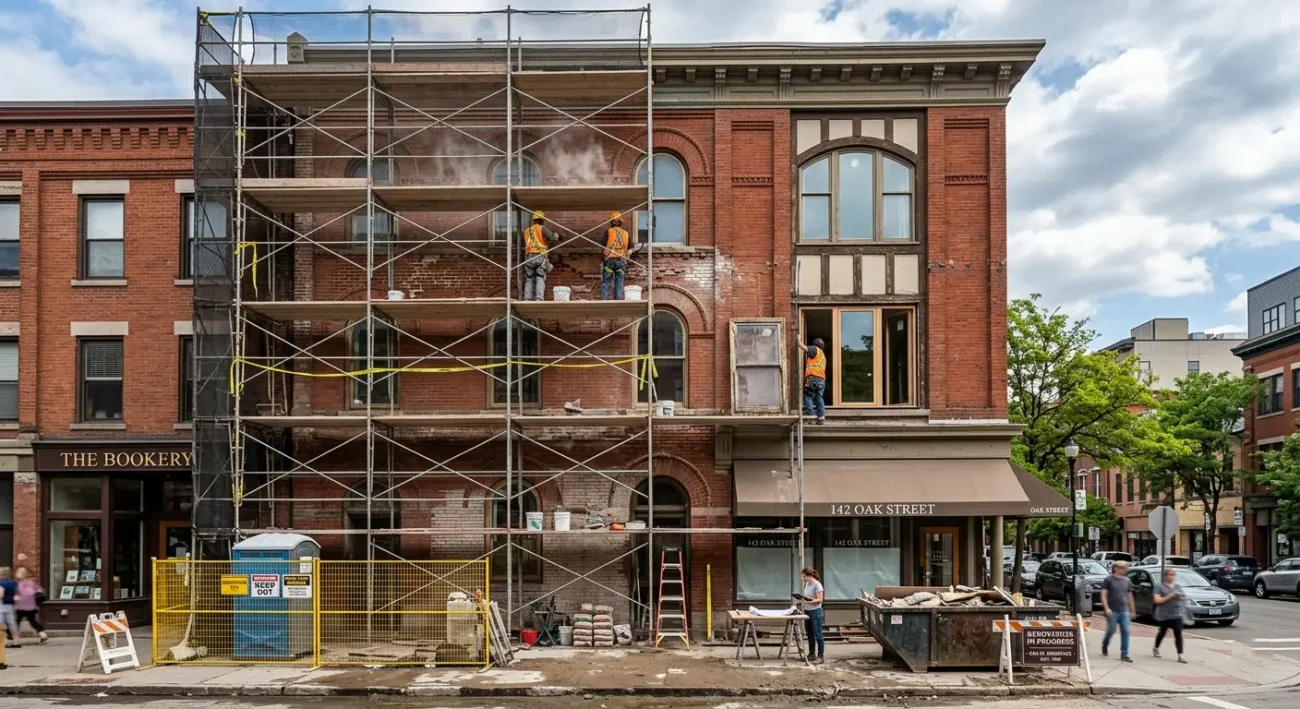
Have you ever wondered what it really means to renovate the outside of a building and why it matters so much in a place like Brooklyn, NYC? Exterior renovation goes far beyond fresh paint or new siding. It’s the process of repairing, upgrading, and improving a property’s exterior surfaces and structures.
In this complete guide, we’ll clearly explain what exterior renovation is, why it’s important, and what it typically includes, from façade restoration and roofing upgrades to window replacements and waterproofing solutions.
What Is Exterior Renovation?
Exterior renovation means repairing, upgrading, or restoring the outside of your building so it stays safe and dry and looks good. It can include the façade (front walls), roof, windows/doors, waterproofing, and entry details like steps and railings. In Brooklyn, exterior renovations often focus on masonry care (brick/brownstone), water control, and roof-edge issues because many properties are older. If your building is mixed-use, exterior renovation can also include storefront-facing work that affects tenants and foot traffic.
Exterior Inspection Checklist: Signs It’s Time to Renovate
If you’re asking yourself, “Do I really need an exterior renovation right now?” you’re not alone. The easiest way to answer that is to do a quick inspection and look for red flags.
- Cracked or missing mortar joints (mortar looks sandy, washed out, or falling out)
- Spalling brick/stone (flaking, crumbling, or chunks dropping near the wall)
- Bulging or bowed walls (the façade looks wavy instead of flat)
- Water stains, peeling paint, or bubbling finishes (often mean moisture is trapped)
- Roof-edge or parapet leaks (wet spots near top floors after rain)
- Drafty, foggy, or rotting windows/frames (air and water are getting in)
- Loose railings, shaky stoops, or rusted fire escapes (safety issue, not just looks)
- Wet basement walls or a musty smell after storms (water is coming through the envelope)
Exterior Renovation Services in Brooklyn
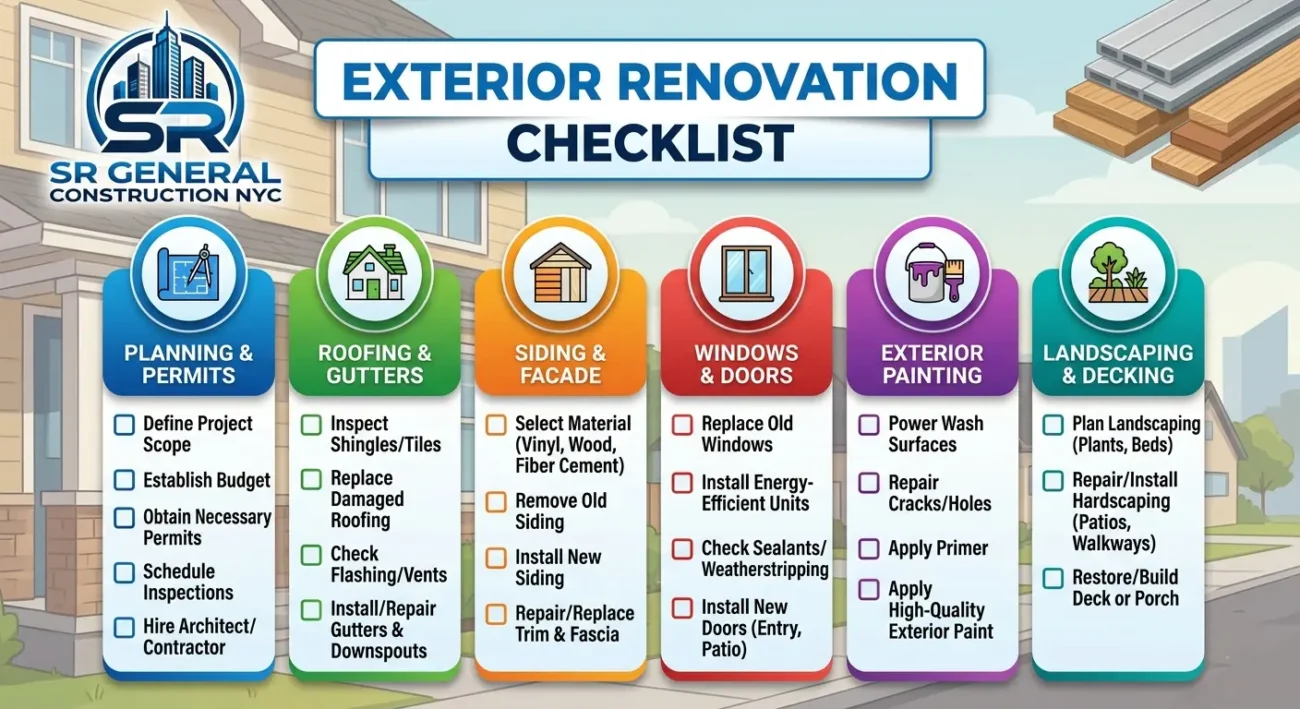
Brooklyn exterior work rarely comes as one single job it’s usually a set of services that work together to protect your building. The right mix depends on your building type (brownstone, brick row-house, condo, mixed-use) and your neighbourhood rules.
- Façade repair / restoration (brick, brownstone, limestone, stucco): This work fixes cracks, weak areas, and damaged surfaces on the building facade. It also helps stop water entry and keeps the structure stable. On historic façades, restoration focuses on preserving the original look while ensuring the surface is sound.
- Brick pointing & repointing (mortar joint repair): Repointing removes failing mortar and replaces it with fresh mortar. It protects brickwork from water penetration and long-term erosion. It’s one of the most common exterior services in Brooklyn because it prevents expensive wall damage.
- Brick wall repair (cracks, damaged areas, partial rebuilds): Brick repair goes beyond mortar; it can include replacing damaged bricks and stabilizing weak sections. It’s common when moisture has caused spalling or when the wall has movement cracks. Labor pricing often depends heavily on access and the condition of the wall.
- Stucco repair (patching cracks, fixing delamination, addressing water damage): Stucco cracks can act as tiny entry points that allow water to seep behind the surface. A proper repair matches the texture and seals the system so moisture can’t sneak back in. Costs can vary widely because small patches differ from structural or water-driven failures.
- Waterproofing (façade, parapets, flashing, foundation/basement protection): Waterproofing keeps water out of places it shouldn’t be, especially around roof edges and foundations. It often includes sealing weak points and improving drainage paths. In older NYC buildings, waterproofing is often needed because porous materials and tight lots increase the risk of seepage.
- Roof repair or roof replacement (very common on flat roofs): Roof work is often the first step because it protects everything below it. A new roof can prevent repeat leaks that ruin interior finishes and masonry. NYC roof costs depend on system type, size, and complexity of details like flashing and drains.
- Window and door replacement / restoration (including storefront systems): New windows can reduce drafts, noise, and water leaks, especially in older buildings. Storefront doors and glazing also affect security and tenant operations in mixed-use properties. In land-marked buildings or historic districts, exterior window/door changes often require LPC review.
- Exterior painting and protective coatings: Paint improves curb appeal and provides a protective layer when the underlying surface is properly repaired. Good painting starts with prep, scraping, patching, and cleaning, not just rolling on color. In NYC, exterior painting costs often rise with building height and access challenges.
- Stoop/steps repair + railings + exterior metalwork (including fire escapes): Steps and railings take daily wear and exposure to water and salt. Repairs can range from resurfacing and leveling to replacement and railing upgrades. Step repair pricing varies by method, and railing work can quickly raise the total.
How much does exterior renovation typically cost in Brooklyn?
Brooklyn prices vary based on building height, access/scaffolding, damage level, materials, and approvals. Still, these NYC-based ranges give you a solid planning baseline for the most common exterior renovation items.
| Exterior renovation item (Brooklyn/NYC) | Typical cost range | How it’s usually priced |
|---|---|---|
| Brick repointing / tuckpointing | $14–$25 per sq ft | Per sq ft |
| Brownstone façade restoration (patch-to-full) | $50,000–$250,000 (many projects land around $80k–$150k) | Per project |
| Roof replacement | $4–$11 per sq ft (NYC average ≈ $5.40/sq ft) | Per sq ft |
| Flat roof waterproofing (membrane/coating) | $5–$12 per sq ft | Per sq ft |
| Roof repair (patching/leaks) | $5.50–$20 per sq ft | Per sq ft or per repair |
| Exterior painting | $1,953–$5,552 (NYC average ≈ $3,751) | Per project |
| Window replacement (multi-window project) | $2,150–$8,402 (NYC average ≈ $5,226) | Per project |
| Siding replacement | $8,114–$21,116 (NYC average ≈ $14,519) | Per project (often also priced per sq ft) |
| Gutter installation / replacement | $541–$1,607 total (often $6–$40 per linear foot) | Per project or per linear foot |
| Stucco repair | $600–$2,700 typical (patching often $8–$20 per sq ft) | Per project or per sq ft |
| Basement / foundation waterproofing | $3,485–$8,259 (NYC average ≈ $5,842) | Per project |
| Concrete steps / stoop repair | $300–$750 typical | Per repair |
| Sidewalk shed / scaffolding (often needed for façade work) | $50–$150 per linear foot per month (shed); $2,000–$5,000 per month (suspended scaffold) | Rental (monthly) |
Step-by-step Exterior Renovation Checklist
A good exterior renovation doesn’t start with demolition; it starts with a plan you can actually follow. Here’s a simple checklist that keeps you in control from day one to final cleanup.
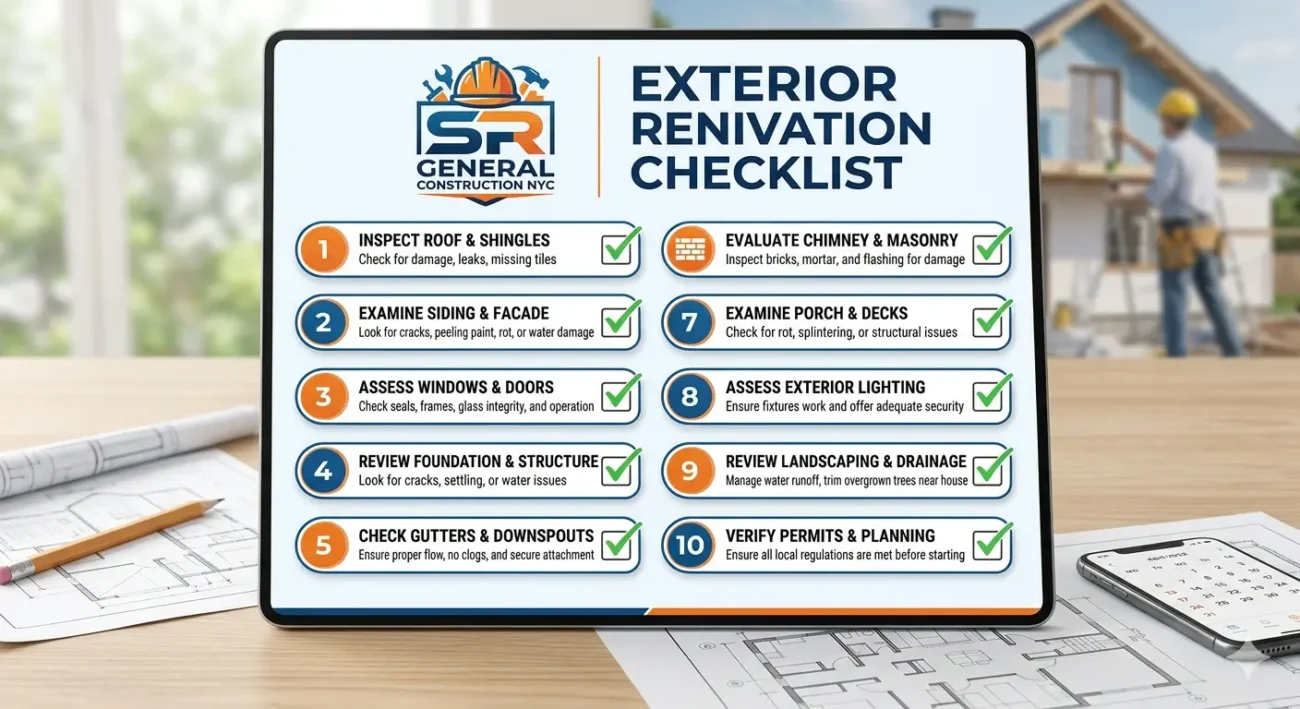
- 1) Walk the exterior and take clear photos: Take photos of each wall, roof edge, windows, doors, and the stoop/storefront. These photos help you explain problems clearly to contractors. They also help you track what changed after the work is done.
- 2) Write your goal in plain words: Say what you want: stop leaks, fix unsafe masonry, upgrade curb appeal, or improve comfort. When your goal is clear, contractors can bid the right scope. Vague goals usually lead to vague estimates.
- 3) Mark urgent issues first (water + safety): Water entry and loose exterior parts should always be your top priority. Cosmetic work can wait if moisture is still active. This order prevents you from paying twice.
- 4) Get a professional assessment for serious symptoms: If you see bulging masonry, repeated leaks, or fast-spreading cracks, bring in a qualified professional. A proper assessment helps you avoid “guess repairs.” It also makes the repair scope easier to price and approve.
- 5) Check whether you need DOB permits: Some exterior work needs DOB approval, especially when it affects safety, structure, or public areas. The safest move is to verify early so the project doesn’t stall mid-way. NYC also has rules that classify some work as ordinary repair vs work that needs permits.
- 6) If you’re in a historic district, confirm LPC requirements: In many Brooklyn historic districts, exterior changes visible from the street often need LPC review. That can include windows, doors, and façade changes. If you skip this step, you risk delays and expensive rework.
- 7) Build a clear scope and add a budget buffer: List each task clearly: repointing, repairs, waterproofing, roof work, window work, and finishing. Add a cushion because older Brooklyn buildings often hide issues behind walls or roof edges. A clear scope also helps you compare bids fairly.
- 8) Get 2–3 itemized bids from experienced local contractors: Ask each contractor to price the same scope so you can compare apples to apples. Make sure they list materials, access plans, and a timeline. Itemized bids reduce surprise change orders.
- 9) Plan access and safety (especially on taller buildings): Exterior work may require protective measures for pedestrians and workers. Access planning affects cost because scaffold/rigging changes labor time. DOB also addresses façade safety measures when risks exist.
- 10) Sequence the work the smart way (top-down protection first): Start with roof edges, flashing, and active water entry points. Then handle masonry repairs and openings, such as windows/doors. Save paint and final finishes for last so you don’t ruin new work.
Waterproofing and Drainage: The “Hidden” Upgrade That Prevents Repeat Repairs
Waterproofing and drainage are the quiet upgrades that stop most “same problem, new paint” situations. In Brooklyn, the trouble usually starts when water sits where it shouldn’t at roof edges, parapets, cracked mortar lines, or around window joints. When moisture gets in, it can travel behind finishes, freeze in winter, and slowly break masonry from the inside. A smart plan fixes the weak details first (flashing, coping, joints), then uses the right breathable protection so walls can shed rain without trapping moisture. If you get drainage right, you won’t keep paying for patch-and-repeat repairs every year.
Roof and Weatherproofing Upgrades
Your roof is the “top shield” of your building, so roof upgrades often give you the biggest protection payoff. In Brooklyn, flat roofs are common, and the usual failure zones are roof edges, parapets, drains, and penetrations. Good weatherproofing starts with water flow: keep drains clear, control ponding, and install reliable flashing so water can’t sneak behind the system. After that, you can improve comfort by upgrading insulation or using roof surfaces that reduce heat gain when it makes sense for your building. When the roof stays dry and tight, your new façade work stays clean—and your interior stays protected.
Energy Efficiency Upgrades and NYCECC Touchpoints
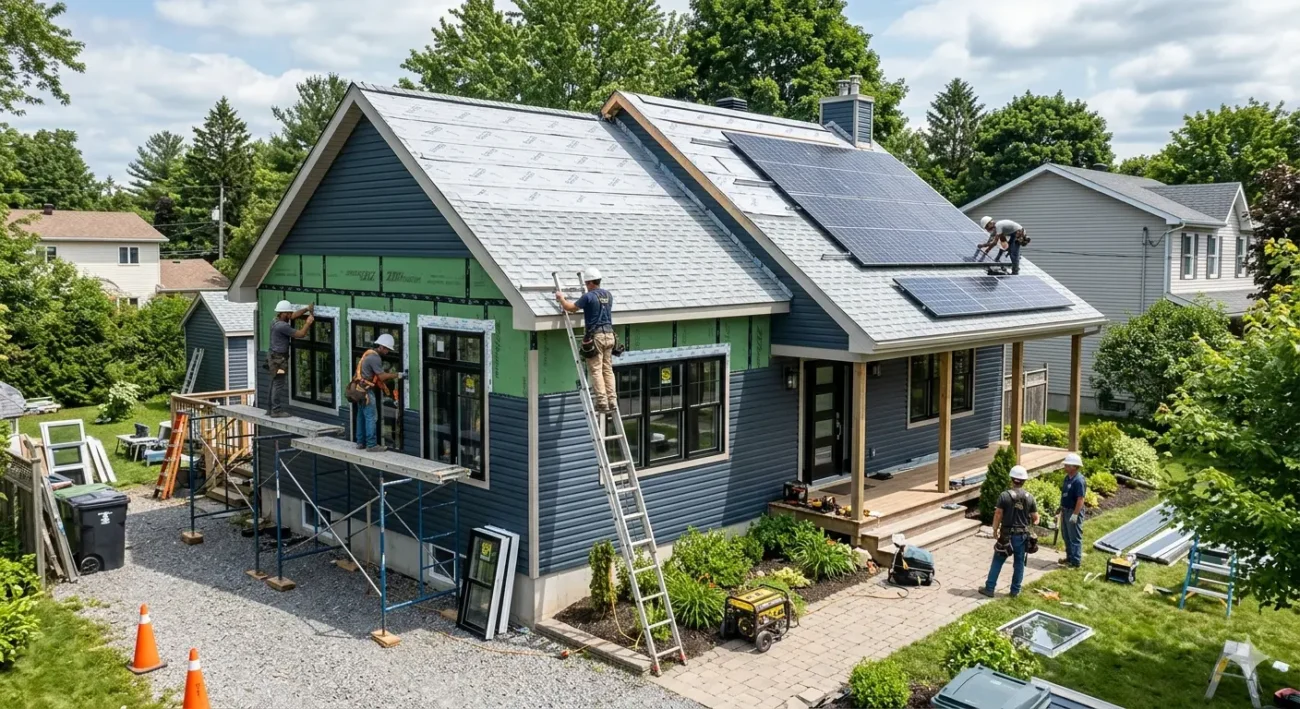
If you’re already renovating the exterior, you’re in a great position to make the building more comfortable and cut energy waste. In NYC, many renovation and alteration projects must comply with the New York City Energy Conservation Code (NYCECC), so it helps to know the common areas it “touches” within your scope.
- Tight building envelope (air sealing + insulation): You’ll often improve insulation and sealing in the roof, walls, windows, and even foundation areas, so heating and cooling stay inside. NYCECC focuses heavily on this “tight and insulated envelope” idea because it reduces drafts and energy loss.
- Windows and doors (fenestration upgrades): Upgraded windows/doors can reduce drafts and comfort problems, but they may also trigger energy-code performance requirements for the parts you change. If your building sits in a historic district, exterior window or door changes may also need LPC review, so you want to plan both paths early.
- Roof insulation and edge details (parapets/thermal bridges): Roof work often becomes an energy upgrade opportunity, because insulation and roof-edge continuity matter a lot on flat-roof buildings. NYC’s energy-code materials highlight tighter envelope performance, and the city also flags items like parapets as part of modern performance improvements.
- Efficient lighting and controls (especially in mixed-use spaces): If you’re updating retail or common-area lighting during exterior work, energy rules may push you toward more efficient fixtures and smarter controls. NYC specifically calls out efficient lighting and daylight use as part of the NYCECC goals.
- Heating/cooling sizing and ventilation coordination: When exterior tightening happens, ventilation and HVAC planning matter more because the building holds air better. NYC’s energy-code guidance emphasizes efficient, properly sized heating/cooling systems as part of compliance and performance.
Local Law 11 / FISP Basics
Local Law 11, now under the Façade Inspection & Safety Program (FISP), exists to protect the public from hazardous building exteriors. If your property is higher than six stories, you must have the exterior walls and related elements inspected every five years and file a technical report with NYC DOB. A licensed professional (typically a registered architect or professional engineer) performs the inspection and prepares the filing. If inspectors find hazardous conditions, owners may need to install pedestrian protection, such as sidewalk sheds, until repairs are completed. Even if you’re planning a “simple exterior refresh,” FISP timing can shape your schedule and budget, so it’s worth checking early.
How to Plan for Exterior Renovation
Planning is what keeps your exterior renovation from turning into stress and surprise costs. If you plan the scope and paperwork first, you’ll move faster—and you’ll avoid expensive do-overs.
- Start with a real condition check (not guesses): Walk the building and take clear photos of the roof edges, parapets, walls, windows, doors, and stoop. Then write down what you see in plain words like “water stains,” “cracked mortar,” or “loose railing.” When you hand that to a contractor or engineer, you get better answers and cleaner estimates.
- Confirm what approvals you might need (DOB + LPC + safety rules): NYC requires permits for many kinds of construction work, so you want to identify permit triggers before work starts. If you’re in a historic district, LPC says most exterior changes to front and rear façades typically need review, while ordinary maintenance may not. And if your building is over six stories, FISP inspection/report cycles can affect how your time façade works.
- Build a scope that follows the “water-first” order: Put leak sources and water entry points at the top of the list, because water damage spreads. Next, address structural and masonry stability issues such as bulges, loose stones, or failing mortar. Save paint and finish upgrades for last, so you don’t cover problems that will come right back.
- Get itemized bids that match the same scope: Ask for 2–3 bids, but make sure each contractor prices the same tasks and materials. Itemized bids make it easier for you to compare line by line, rather than guessing why one quote is cheaper. When something is unclear, you can ask for a revision before you sign—this is where you prevent change-order drama.
- Vet your contractor the NYC way (license + proof): In NYC, you can check whether a home improvement contractor is licensed through DCWP, and NYC311 notes that many home improvement jobs over $200 require a DCWP license. Request insurance proof and obtain the scope, timeline, and payment schedule in writing. When you verify these basics, you protect yourself from the most common contractor problems.
- Plan safety and occupant impact (especially in mixed-use): Decide how the team will protect sidewalks, entrances, and retail access while work is underway. Set rules for work hours, deliveries, noise, and keeping storefronts secure at the end of each day. When you communicate early with tenants and neighbors, the project runs more smoothly, and you get fewer “emergency” interruptions.
What’s the best order of operations for an exterior renovation
The smartest order is top-down and water-first: fix the roof edges, parapets, flashing, and any active leaks before you touch finishes. Next, handle gutters/drainage, then move to façade repairs (repointing, patching, lintels/sills) and waterproofing so the walls can shed water properly. After the building shell is tight, you can upgrade windows/doors and then finish with painting and cosmetic details. This sequence helps you avoid “redo work,” like repainting a wall that later gets opened up for leak repairs.
What exterior upgrades improve energy efficiency
If you want real energy savings, start with the building envelope, add or upgrade insulation, and air sealing so heat and cool air don’t leak out. Next, upgrade windows and doors (better glazing and tighter seals) to reduce drafts and cold spots. Roof work is also a big chance to improve comfort, because the energy code focuses on insulation and moisture/air control at roofs and walls. In NYC, envelope alterations often need to meet insulation, air leakage, and window/door (fenestration) requirements for the parts you change.
How to Choose the Best Contractor for Exterior Renovation
If you want a team that checks those boxes, SR General Construction, NYC, is fully licensed and has 15+ years of renovation and remodelling experience in Brooklyn. We’ve completed 750+ projects for 500+ satisfied clients, and we offer 24/7 support to help keep your home safe during and after the job.
- Confirm the right NYC license (don’t skip this): In NYC, many home improvement jobs require a Home Improvement Contractor license through DCWP, especially when the work costs more than $200 on residential property. Ask for the license number and verify it before you sign anything.
- Ask who pulls permits and which trade licenses are required: Façade projects can involve multiple scopes (masonry, railings, lighting), and NYC notes that some work must be done by contractors with the right specialized licenses and permits. A good contractor explains what an “ordinary repair” is vs. what needs DOB filings, and how they’ll handle it.
- Look for proven Brooklyn experience with your building type: A contractor who works on brownstones, brick rowhouses, and mixed-use buildings will spot common failure points faster (roof edges, parapets, mortar joints, storefront transitions). Ask to see recent projects in neighborhoods like Park Slope, Bed-Stuy, Williamsburg, Brooklyn Heights, or Fort Greene, so you know they understand local building styles.
- Demand an itemized scope (so you can compare bids fairly): Ask for line items like “repointing area,” “parapet flashing,” “window install,” and “paint prep,” not a lump sum with vague wording. Clear scopes reduce surprise change orders and make your budget feel predictable.
- Get a real access and safety plan (especially if you’re near the sidewalk): Exterior work often needs staging and protection, and poor planning can slow everything down. The contractor should tell you how they’ll protect entrances, tenants, and pedestrians, especially on mixed-use buildings with storefront traffic.
- Check insurance, warranty terms, and post-job support: You want proof of coverage, written warranty details, and a clear plan for handling leaks or touch-ups after completion. A strong contractor will talk about maintenance because exterior work only lasts when you keep water and small cracks under control.
- Choose a team that communicates like pros: Ask who your day-to-day contact is, how often you’ll get updates, and how they handle surprises behind walls or roof edges. If you manage a mixed-use property, that communication matters even more because tenants and customers feel every delay.
Where to Find the Best Brooklyn Contractors
Are you looking for an expert contractor in Brooklyn, NYC? SR General Construction has you covered! Our business is located at 8807 Avenue B, Brooklyn, NY 11236, United States, in the Canarsie area.
Additionally, we offer services at Rockaway Parkway and Ralph Avenue, providing fast access to Flatlands, East Flatbush, Bergen Beach, Brownsville, and the Spring Creek section of East New York.
FAQ
1. What happens if a façade is flagged as unsafe under FISP?
When hazardous conditions are found, NYC may require public protection, such as a sidewalk shed, fencing, or netting, until repairs are made. Those protective measures also require DOB permits.
2. What’s the best order of operations for an exterior renovation?
Start “water-first”: roof edges/parapets/flashing and active leaks; then drainage/gutters; then façade repairs and waterproofing; then windows/doors; and finally paint/finishes. This order helps you avoid redoing fresh work because moisture problems weren’t solved first.
3. What exterior upgrades improve energy efficiency the most?
Air sealing + insulation upgrades, better windows/doors, and improved roof insulation usually give the biggest comfort gains. If you alter parts of the building envelope, NYC energy code rules may apply to the affected portions.
4. What does NYCECC require when I change the building envelope (walls/roof/windows)?
NYCECC says envelope alterations must meet requirements for insulation, air leakage, and fenestration for the specific portions being altered. NYC’s energy-code notes also explain that thermal envelope and related system alterations must comply.
5. What maintenance keeps exterior renovations from failing early?
Do seasonal checks for roof-edge flashing, clogged drains/gutters, and new cracks in mortar joints. Small fixes early help you avoid big “surprise” repairs later.
Здесь веб-сайте удастся почерпнуть интересную информацию.
https://sites.google.com/view/randx-casino/index
На данном сайте удастся обнаружить ценную информацию.
https://muview.ru/read-full/2026-05-25-astrakhantsy-vynesli-mozg-baltike-i-povisli-nad-bronzoy/
Поисковая оптимизация интернет-проектов — это набор действий, ориентированных на повышение видимости в поисковой выдаче.
Главная цель поисковой оптимизации — поднять проект в верхние позиции поисковой выдачи по ключевым словам.
создание сайтов на Тильда
Чтобы достичь такого результата оптимизаторы проводят технический анализ, работают над текстами, архитектурой и ссылками.
В результате веб-ресурс делается виднее в поиске, собирает больше аудитории и повышает прибыль.
Продвижение интернет-проектов — это система усилий, нацеленных на улучшение позиций в результатах поиска.
Основная цель SEO — продвинуть веб-ресурс в верхние позиции поисковой выдачи по нужным словам.
http://prodvizhenie-saytov-moskva.ru/sozdanie-saytov-v-sankt-peterburge/
Чтобы достичь такого результата эксперты выполняют технический аудит, трудятся над текстами, структурой и ссылками.
В итоге веб-ресурс делается популярнее в поиске, получает значительно больше аудитории и повышает прибыль.
Ресурсы для взрослых способны служить инструментом интимного просвещения, а также поддержкой в понимании собственных желаний.
Подобные сервисы помогают людям изучать собственные желания в контролируемой форме, уменьшая риски реальных осложнений.
ero-storitop.com
В отношениях совместное обсуждение подобных сюжетов может укреплять близость и становиться причиной для честного диалога о предпочтениях и границах.
Кроме того эти сайты предоставляют возможность для безрисковой разрядки потребностей и снятия психологического напряжения, не причиняя ущерба окружающим.