

What if your bathroom could save water, cut energy bills, and create a healthier home, without sacrificing comfort or style?
For many homeowners and contractors in Brooklyn, NYC, bathroom renovation is no longer just about new tiles or modern fixtures. It is about making smarter choices that protect the environment, improve daily living, and add long-term value to the property. This is where Eco-Friendly Bathroom Renovation comes in. In this step-by-step guide, we will explain what eco-friendly bathroom renovation really means and how it works in real Brooklyn homes. You will learn how sustainable materials, water-saving fixtures, energy-efficient lighting, and non-toxic finishes can transform a regular bathroom into a greener, healthier space.
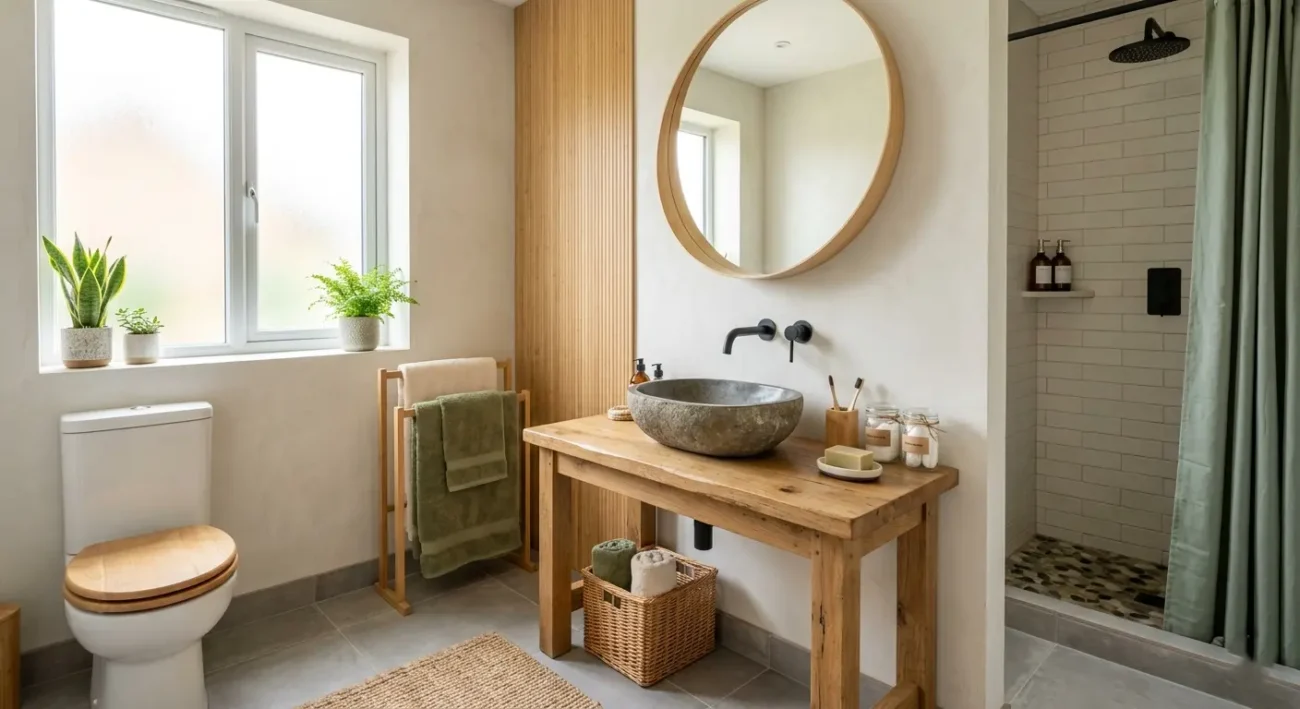
What is Eco-Friendly Bathroom Renovation
An eco-friendly bathroom renovation means upgrading your bathroom to use less water and energy, generate less waste, and support healthier indoor air. In practice, you choose efficient fixtures (like WaterSense-labeled toilets and faucets), smarter lighting/ventilation, and safer finishes that reduce harmful fumes. The goal is simple: a bathroom that works great for you while putting less stress on the environment. In Brooklyn, it also means thinking about apartment airflow, shared plumbing lines, and responsible debris removal.
Benefits of Green Bathroom Renovations
If you’re renovating in Brooklyn, going green isn’t just a trend—it’s a practical upgrade that pays you back over time. You get a bathroom that feels better to live in and often costs less to run month after month.
- Lower water use (and a smaller water bill): When you install WaterSense-labeled products, you’re choosing fixtures that are certified to use at least 20% less water while still performing well. For example, switching to WaterSense-labeled bathroom faucets and aerators can save an average family about 700 gallons per year.
- More efficient toilets without weak flushing: Modern high-efficiency toilets can use 1.28 gallons per flush or less, which is 20% less than the federal standard of 1.6 gpf. That’s a big deal because toilets are among the biggest indoor water users, so this single change can move the needle quickly.
- Healthier indoor air (especially in small NYC bathrooms): Many common renovation products release VOCs, and the EPA notes that VOCs can have short- and long-term health effects, and that indoor levels can be much higher than outdoor levels. Using low-VOC materials and being picky about paints/adhesives helps you keep that “new renovation smell” from turning into a lingering indoor air problem.
- Less moisture, less mold, and fewer musty smells: Bathrooms create hot, humid air, and ENERGY STAR explains that this humidity can lead to mold growth, so proper exhaust ventilation matters. A good fan that vents to the outdoors helps pull moisture and contaminated air out right where it starts (your shower zone).
- Cleaner, more responsible renovation waste handling in Brooklyn: In NYC, bathroom demo waste from professional work can’t just go out with regular trash; you typically need a private hauler or dumpster arrangement for items like sinks and tubs. Building your plan around reuse/recycling and correct disposal keeps the job cleaner, avoids headaches, and supports a more sustainable renovation.
Pro Tip
SR General Construction, NYC, is fully licensed and has over 15 years’ experience of Renovation and Remodeling work in Brooklyn. We’ve completed more than 750 projects for 500+ satisfied clients, and we offer 24/7 support to keep your home safe.
N.B. Do you need Eco-friendly bathroom renovation service in Brooklyn? Call SR General Construction NYC for free estimate!
Step-by-Step Process of Eco-Friendly Bathroom Renovation
| H3: Planning Your Sustainable Bathroom Makeover |
| H3: Budgeting for an Eco-Friendly Bathroom Remodel |
| H3: Choosing Sustainable Materials for Bathroom Surfaces |
| H3: Low-VOC Paints and Eco-Friendly Finishes |
| H3: Water-Conserving Fixtures and Plumbing Upgrades |
| H3: Energy-Efficient Lighting and Ventilation |
| H3: Efficient Water Heating Solutions |
| H3: Incorporating Natural Light and Biophilic Elements |
| H3: Waste Reduction: Recycling and Reusing During Renovation |
Planning Your Sustainable Bathroom Makeover
- Start with a quick “what stays / what goes” audit: Walk through your current bathroom and list what you can keep (like a solid tub you can reglaze) to cut waste and cost.
- Check Brooklyn building rules before you design anything: If you’re in a co-op/condo, you’ll usually need board approval, and NYC may require plans and permits depending on the work.
- Build your plan around moisture control first: Pick ventilation that actually exhausts humid air to the outdoors, because hot shower air can raise humidity and lead to mold.
- Choose fixtures and materials using trusted labels: WaterSense helps you target real water savings without guessing, especially for faucets, toilets, and showerheads.
- Make a debris and disposal plan before demo day: In NYC, contractor-generated construction debris can’t go out as normal trash, so you’ll want a private carting/dumpster plan ready.
Budgeting for an Eco-Friendly Bathroom Remodel
- Separate “must-haves” from “nice-to-haves.”: Put water-saving fixtures, ventilation, and leak fixes in the must-have bucket because they deliver daily savings.
- Budget for permits, plans, and licensed work if your scope triggers it: NYC notes that plans and permits may be required for bathroom renovations, and you may need a licensed architect or engineer for permitted work.
- Spend where you get the fastest payback: WaterSense-labeled faucets/aerators and toilets reduce water use right away, so your money starts working for you immediately.
- Add a “Brooklyn surprise fund” for hidden issues: Older buildings can hide problems behind walls (old shutoff valves, uneven subfloors, outdated wiring), so a buffer prevents stalled work.
- Think in terms of lifetime cost, not just the price tag: A fixture that uses less water and lasts longer can beat a cheaper option once you factor in bills and replacements over time.
Choosing Sustainable Materials for Bathroom Surfaces
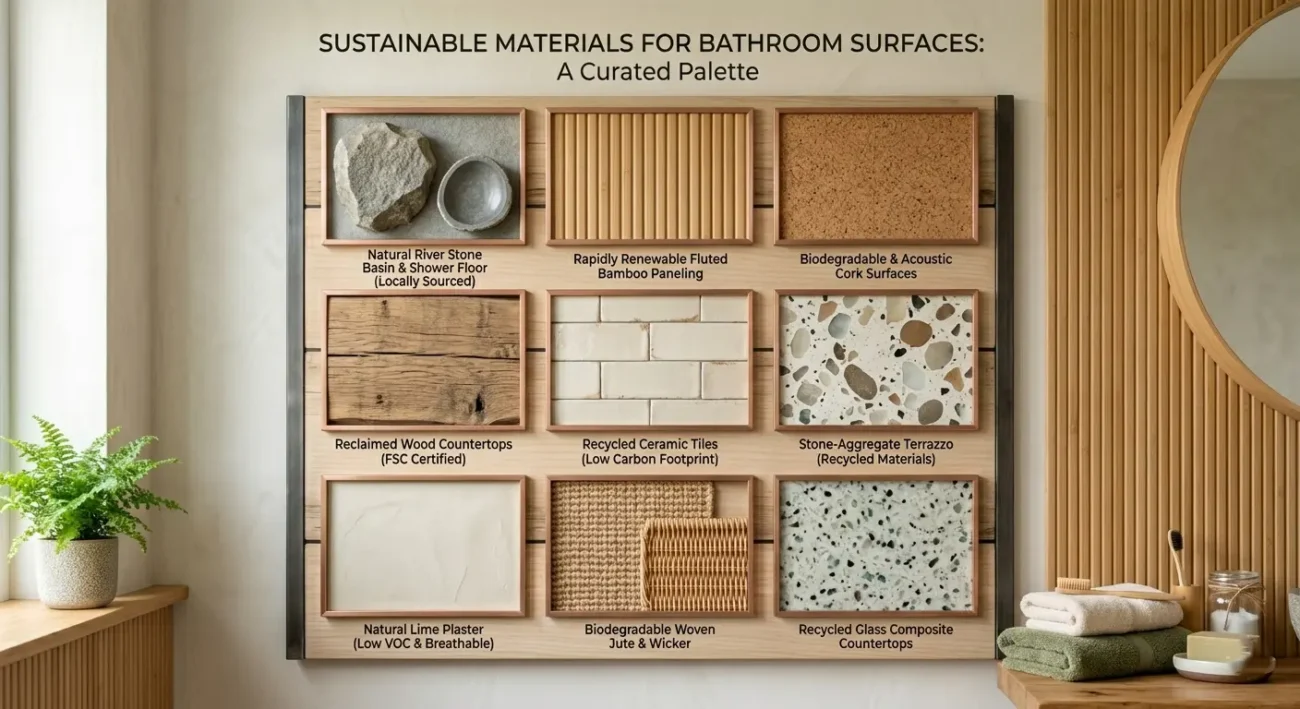
- Recycled glass tile (walls or accents).
- Recycled-content porcelain or ceramic tile (floors/walls).
- FSC-certified wood vanities or shelving.
- Reclaimed wood accents (shelves, mirror frames).
- Bamboo vanities or accessories.
- Cork flooring (only with the right seal and good ventilation).
- Recycled-metal fixtures (towel bars, hardware).
- Natural stone (choose responsibly sourced and seal it well).
- Solid-surface or recycled-content countertops.
- Cement board and moisture-rated backers (behind tile).
- Low-VOC grout, caulk, and sealants (wet zones).
- Reglazing instead of replacing tubs (when the tub is structurally sound).
Low-VOC Paints and Eco-Friendly Finishes
- Pick low-VOC or zero-VOC paint made for bathrooms: VOCs can be much higher indoors than outdoors, so reducing VOC sources is a smart move in small NYC bathrooms.
- Use certifications to avoid “greenwashing.”: Labels like Green Seal help you identify paints/coatings designed around low-VOC and safer-chemistry goals.
- Choose low-emitting materials for cabinets, panels, and adhesives: GREENGUARD (including GREENGUARD Gold) is designed to identify products with low chemical emissions for indoor environments.
- Ask for the SDS and check what you’re bringing into your home: The Safety Data Sheet provides clear details on fumes, ventilation requirements, and curing time, so you can avoid surprises.
- Ventilate hard during and after application: Good exhaust ventilation helps push out humid air and contaminants close to the source, exactly where bathrooms need it most.
Water-Conserving Fixtures and Plumbing Upgrades
- Install a WaterSense-labeled toilet (1.28 gpf or less): EPA notes these toilets use 1.28 gallons per flush or less, about 20% less than the 1.6 gpf federal standard, while meeting performance criteria.
- Switch to WaterSense-labeled showerheads (max 2.0 gpm): These are independently certified for efficiency and performance, and EPA’s technical sheet specifies a maximum of 2.0 gpm.
- Upgrade faucets and add efficient aerators: EPA says WaterSense-labeled bathroom faucets and aerators can save the average family about 700 gallons of water per year.
- Fix leaks and replace worn shutoff valves while walls are open: A small drip becomes a long-term waste problem, and it’s cheaper to handle during a remodel than after tile goes up.
- Right-size your plumbing choices for your building type: In many Brooklyn apartments with shared plumbing stacks, smart fixture selection helps maintain comfort while lowering overall flow demands.
Energy-Efficient Lighting and Ventilation
- Switch your bulbs to LEDs (especially in vanity and ceiling lights). LEDs use at least 75% less energy and last much longer than incandescent bulbs, so you save money without changing your routine.
- Use layered LED lighting so you don’t over-light the whole room. Add bright LED task lighting to the mirror and keep the rest softer, so you use only what you need.
- Install an ENERGY STAR-certified exhaust fan. ENERGY STAR ventilation fans use about 48% less energy than standard models and still move air effectively.
- Make sure the fan vents to the outdoors, not into a wall or ceiling. ENERGY STAR notes that hot, humid shower air can raise indoor humidity and lead to mold, so venting to the outside helps remove that moisture at the source.
- Add a timer (or humidity control) so the fan runs long enough after showers. Running the fan after bathing helps keep humidity down, keeping the bathroom cleaner and fresher in tight Brooklyn layouts.
Efficient Water Heating Solutions
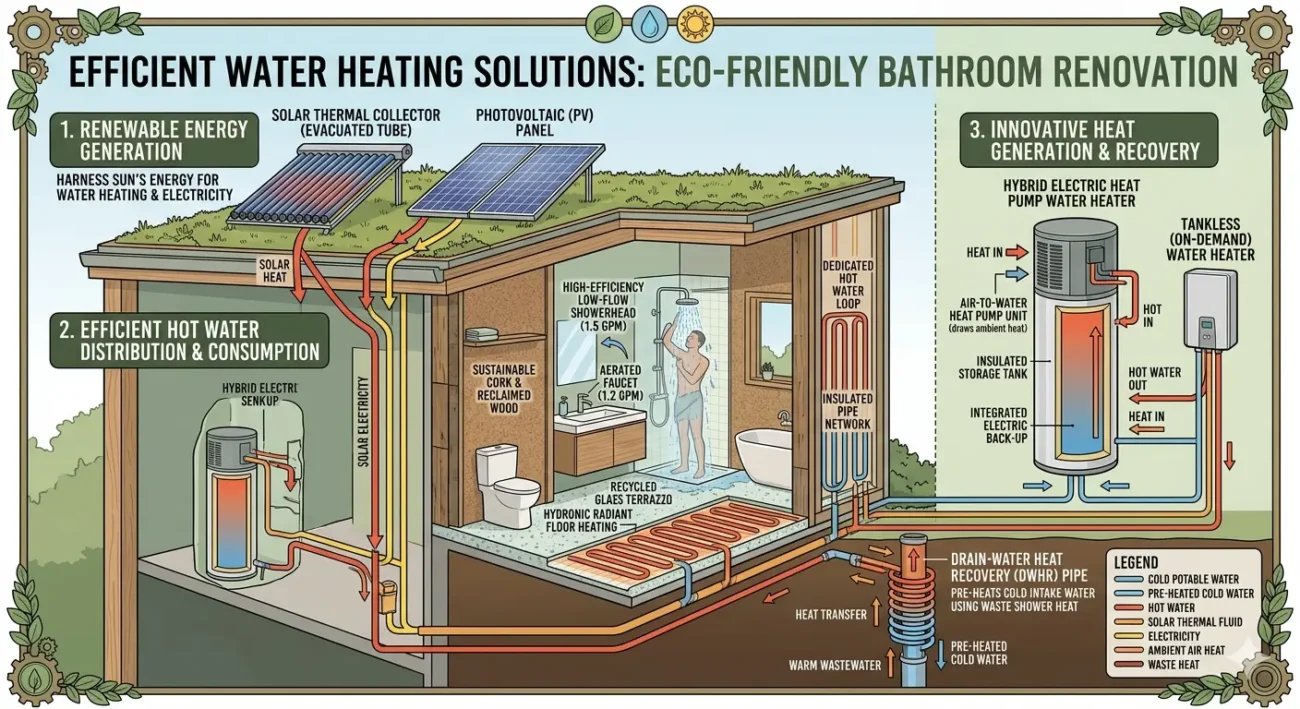
- Set your water heater temperature lower for safety and savings. DOE explains that higher settings (like 140°F) waste energy through standby heat loss and increase the risk of scalding, so turning it down can save money.
- Consider a heat pump water heater if your home setup allows it. ENERGY STAR says certified heat pump water heaters can use 70% less energy than a standard electric water heater, significantly reducing operating costs.
- Use a tankless (demand-type) water heater when it fits your household. DOE notes that tankless units heat water only when needed, avoiding standby energy losses from storage tanks.
- Reduce hot water demand with efficient fixtures. When your showerhead and faucets use less water, you automatically use less hot water, so your heater works less.
- Ask your contractor to size the system to your real usage (not a guess). Proper sizing prevents wasted energy and helps you avoid “cold shower” moments when multiple fixtures run at once.
Incorporating Natural Light and Biophilic Elements
- Look for daylighting opportunities before you buy more lighting. DOE explains that properly placed windows or skylights can reduce lighting needs and even support temperature control.
- Use privacy-friendly daylight options in Brooklyn bathrooms. Frosted glass, top-down blinds, or a light tube can bring in daylight while keeping neighbors’ sightlines out.
- Bounce natural light around with reflective surfaces. Light wall colors, glossy tile, and a well-placed mirror help daylight travel farther so the room feels brighter without extra power.
- Bring nature into the design in simple, realistic ways. Biophilic design research links nature-based features with better wellbeing and reduced stress, so even plants, natural textures, or stone/wood looks can help.
- Pair daylight with efficient lighting controls for evenings and cloudy days. Daylighting works best when combined with efficient electric lighting, so you only “top up” light when you need it.
Waste Reduction: Recycling and Reusing During Renovation
- Decide what you can keep before demolition starts. EPA recommends source reduction and preserving what’s already working, because reuse is usually greener than replacing everything.
- Donate usable fixtures and materials instead of throwing them out. NYC’s DonateNYC highlights organizations like Big Reuse that accept building materials and keep them out of landfills.
- Follow NYC rules for construction debris (especially if a contractor is doing the work). DSNY states that contractor-generated construction and demolition waste can’t be put out as residential trash, so you must arrange a private hauler or dumpster.
- Sort materials so recycling is actually possible. EPA points out that diverting C&D materials works best when teams plan for salvaging and recycling instead of mixing everything together.
- Choose “repair instead of replace” when it’s safe and practical. Refinishing a tub or keeping a solid vanity frame can cut hauling, landfill waste, and the cost of buying new materials.
Who is the Right Eco-Friendly Contractor in Brooklyn
If you want an eco-friendly renovation done the right way in Brooklyn, clean work, code-aware decisions, and fewer “surprise” headaches, you need a team that understands both sustainability and NYC renovation realities.
SR General Construction, NYC, is fully licensed and brings 15+ years of renovation and remodeling experience across Brooklyn. We’ve completed 750+ projects for 500+ satisfied clients, and we offer 24/7 support to help keep your home safe and your project on track.
Types of Eco-Friendly Bathroom Design
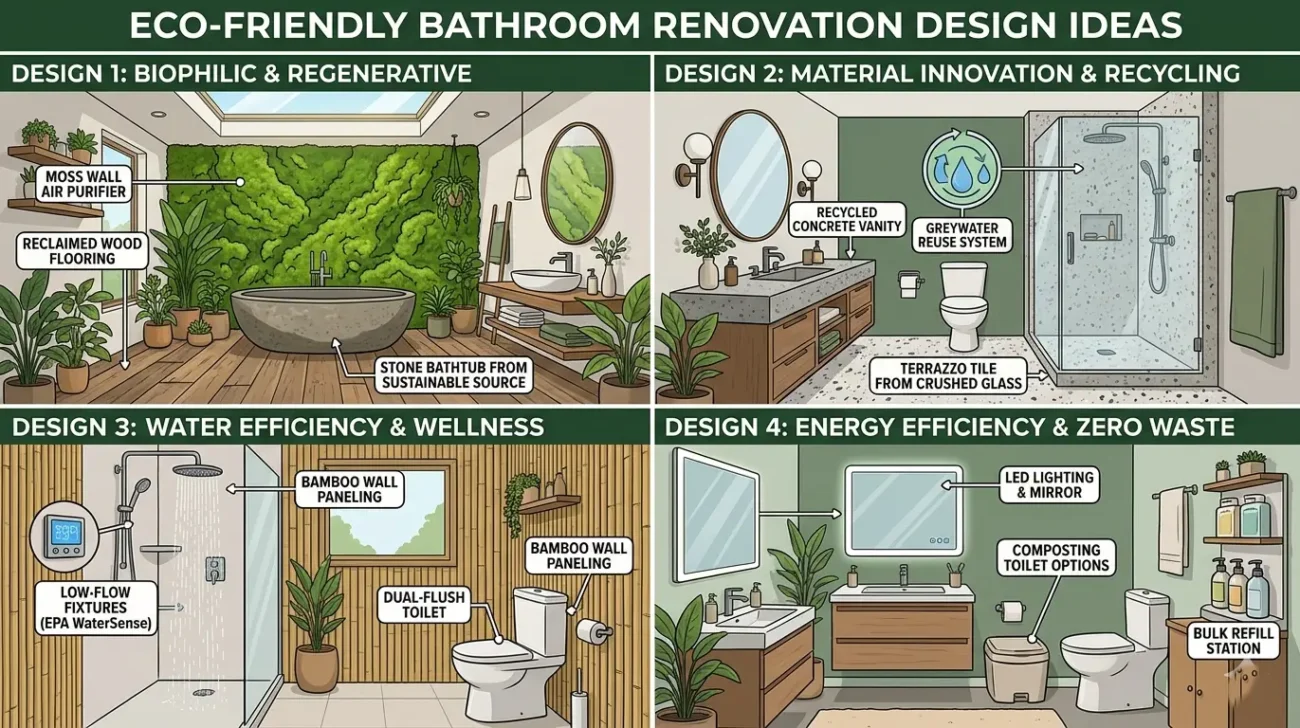
Ever notice how two “green bathrooms” can look totally different? That’s because eco-friendly design isn’t one style; it’s a set of smart choices you can mix and match for your Brooklyn home or your client’s project.
- Water-Smart Bathroom Design (WaterSense-first): This type focuses on high-impact water savings using WaterSense-labeled toilets, faucets, and accessories. For example, WaterSense bathroom faucets/aerators can save the average family about 700 gallons per year, and WaterSense toilets use 1.28 gpf or less (20% below the 1.6 gpf standard).
- Energy-Smart Bathroom Design (LED + efficient ventilation): Here, you cut power use with LED lighting and better airflow control, which matters a lot in tight Brooklyn bathrooms. LEDs use at least 75% less energy than incandescent bulbs, and ENERGY STAR ventilation fans use about 48% less energy than standard models.
- Healthy, Low-Toxic Bathroom Design (low-VOC + low-emitting materials): This style is all about indoor air quality, especially important in small bathrooms where smells and fumes tend to linger. The EPA notes that VOC concentrations can be up to 10 times higher indoors than outdoors, so low-VOC paints, sealants, and adhesives make a real difference.
- Low-Waste / Circular Bathroom Design (restore, don’t replace): Instead of ripping everything out, you keep what still works, like reglazing a tub, reusing a vanity frame, or choosing salvaged pieces. NYC also has strict rules around construction debris disposal, so reducing demo waste can make your project simpler and cleaner.
- Sustainable-Surfaces Bathroom Design (recycled + responsibly sourced finishes): This design leans into materials like recycled glass tile, recycled tiles, terrazzo, bamboo, cork, and reclaimed wood for floors and feature areas. These surfaces can look high-end while reducing demand for new raw materials, a key part of “green” building.
- Natural-Light + Biophilic Bathroom Design (light, calm, and nature-forward): Think brighter spaces that rely less on electric lighting and feel more relaxing day to day. It’s usually a mix of daylight-friendly finishes (light tile, mirrors) and natural textures that make the bathroom feel like a small retreat—great for Brooklyn apartments that can feel boxed-in.
Average Cost Ranges for Eco-Friendly Bathroom Renovation in Brooklyn
In Brooklyn, a small bathroom renovation typically costs around $10,000–$15,000, while a full bathroom renovation often runs $15,000–$30,000, depending on materials and labor. Larger bathrooms and more complex projects (layout changes, premium tile, custom storage) often push into $30,000+, and high-end work can exceed $50,000. Eco-friendly upgrades usually fall within these same ranges, but premium sustainable finishes can raise the total, while WaterSense/LED upgrades often stay budget-friendly compared to major layout changes.
Which sustainable materials are best for bathroom renovations?
If you want the best mix of durability + sustainability, go with recycled-content surfaces (like recycled glass tile, recycled tiles, terrazzo) and responsibly sourced woods (FSC-certified or reclaimed wood) for vanities and shelving. Bamboo and cork can also work well when properly sealed and paired with good ventilation. And don’t forget low-VOC finishes; EPA highlights that indoor VOC levels can be much higher than outdoors, so safer paints and sealants matter in bathrooms.
Are eco-friendly bathroom renovations more expensive than traditional ones?
Sometimes the upfront cost is a bit higher, mainly if you choose premium recycled surfaces or specialty low-emitting products, but it’s not always a huge jump. Many “green wins” are straightforward swaps (like WaterSense fixtures and LEDs) that cut water and energy use over time. Even Brooklyn cost guides point out that eco options can cost more upfront but may lower utility bills in the long run.
Where to Find the Best Brooklyn Contractors
Are you looking for an expert contractor in Brooklyn, NYC? SR General Construction has you covered! Our business is located at 8807 Avenue B, Brooklyn, NY 11236, United States, in the Canarsie area.
Additionally, we offer services at Rockaway Parkway and Ralph Avenue, providing fast access to Flatlands, East Flatbush, Bergen Beach, Brownsville, and the Spring Creek section of East New York.
FAQ
1. What upgrades save the most water in a bathroom?
Toilets and showerheads are usually the biggest wins because they use a lot of water every day. Using WaterSense-labeled fixtures is a simple way to lock in verified savings.
2. What is a WaterSense toilet, and how much water does it use?
WaterSense labeled toilets use 1.28 gallons per flush or less, which is 20% less than the 1.6 gpf federal standard. They’re also independently certified to meet EPA performance and efficiency criteria.
3. Do WaterSense faucets or aerators really make a difference?
Yes, EPA says that replacing old faucets/aerators with WaterSense-labeled models can save the average family about 700 gallons of water per year. That’s a low-cost change with a noticeable impact.
4. How much water can a WaterSense-focused bathroom remodel save?
EPA says a whole or partial bathroom remodel with WaterSense fixtures can save nearly 10,000 gallons of water every year. You also save energy by using less hot water.
5. How do I choose the right exhaust fan for my bathroom?
Match airflow (CFM) to your bathroom size and choose a quieter “low sone” fan so people actually use it. ENERGY STAR-certified fans are a good baseline for efficiency and performance.
6. What’s the easiest energy upgrade for an eco-friendly bathroom?
Switch to LED lighting—DOE says residential LEDs use at least 75% less energy and can last up to 25 times longer than incandescent bulbs. This is usually a fast, budget-friendly upgrade.