

What does it mean by bathroom plumbing upgrades?
Bathroom plumbing upgrades mean improving, replacing, or modernizing the plumbing system in your bathroom to make it safer and more efficient. In simple words, bathroom plumbing upgrades are not just repairs. They are smart improvements that help your bathroom use less water, avoid leaks, and improve comfort.
In this detailed guide, we will walk you through the Top 7 plumbing upgrades for bathrooms, focusing on what works best in Brooklyn, NYC. You’ll learn about water-efficient toilets and faucets, safer shower systems, pipe replacements for older buildings, drainage improvements, and modern leak-prevention solutions.
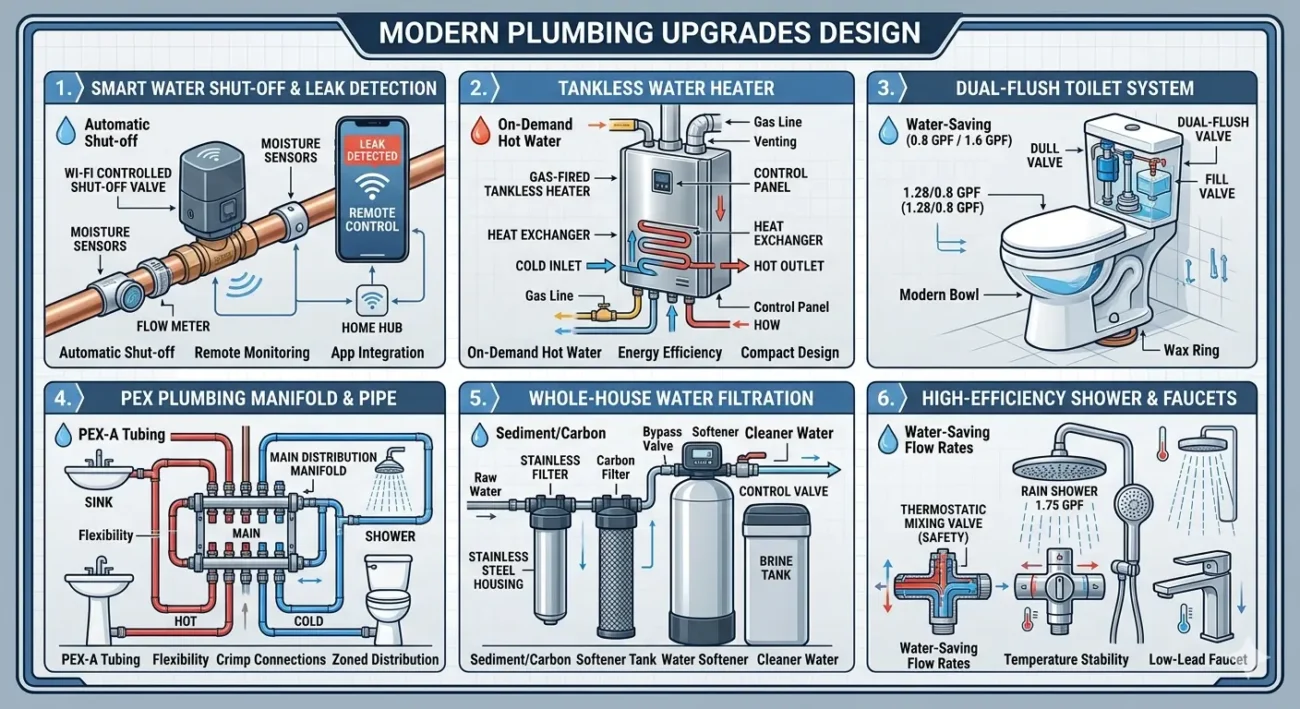
Why Bathroom Plumbing Upgrades Are Important for Brooklyn, NYC
Bathroom plumbing upgrades are especially important in Brooklyn because many homes and buildings have older plumbing systems that were not designed for modern water use. Aging pipes, outdated fixtures, and poor drainage can lead to low water pressure, leaks, and frequent repairs. Upgrading bathroom plumbing improves water efficiency, safety, and daily comfort, while reducing long-term maintenance costs. In a city like Brooklyn, where building codes and water-use standards are strict, plumbing upgrades also help ensure code compliance and protect property value.
Top 7 Plumbing Upgrades for the Bathroom
| High-Efficiency Dual-Flush Toilets for Water Savings |
| Low-Flow Faucets and Showerheads (WaterSense Fixtures) |
| Touchless & Sensor-Activated Fixtures for Hygiene |
| Luxury Shower Systems (Rainfall Showerheads & Body Jets) |
| Tankless Water Heaters and On-Demand Hot Water |
| Replacing Old Pipes with PEX or Copper |
| Larger Drain Lines and Updated Vent Pipes for Better Drainage |
Pro Tip
SR General Construction, NYC, is fully licensed and has over 15 years’ experience of Renovation and Remodeling work in Brooklyn. We’ve completed more than 750 projects for 500+ satisfied clients, and we offer 24/7 support to keep your home safe.
N.B. Do you need bathroom renovation service in Brooklyn? Call SR General Construction NYC for free estimate!
High-Efficiency Dual-Flush Toilets for Water Savings
- Pick a Water-Sense-labelled toilet (including dual-flush models) so you cap flush volume at 1.28 gallons per flush while keeping strong performance.
- Measure your toilet “rough-in” (distance from wall to bolts) and confirm bowl shape/height so the new unit fits your Brooklyn bathroom layout.
- Shut off the stop valve, drain the tank, and remove the old toilet so you can inspect the flange and replace the wax ring (or gasket) for a tight seal.
- Set the new toilet, tighten evenly, connect the supply line, and follow the manufacturer’s steps to avoid rocking or slow leaks.
- Test both flush modes, check for leaks around the base and supply, and verify the tank fills correctly before you call it done.
Low-Flow Faucets and Shower-heads (Water Sense Fixtures)
- Start by choosing WaterSense-labeled bathroom faucets (up to 1.5 gpm) and WaterSense showerheads (up to 2.0 gpm) to cut water use without the “weak stream” feeling.
- If you’re keeping the faucet body, swap in a WaterSense-rated aerator/laminar device—this is often the fastest upgrade for rentals and quick renos.
- Turn off the water, remove the old faucet or showerhead, and clean the threads so the new fixture seats properly (this helps prevent those annoying drips).
- Use plumber’s tape on shower threads, snug everything by hand first, and then tighten gently so you don’t crack finishes or strip fittings.
- After installation, run water and check the pressure; WaterSense bathroom faucets are tested to still deliver usable flow even at lower pressure.
Touchless & Sensor-Activated Fixtures for Hygiene
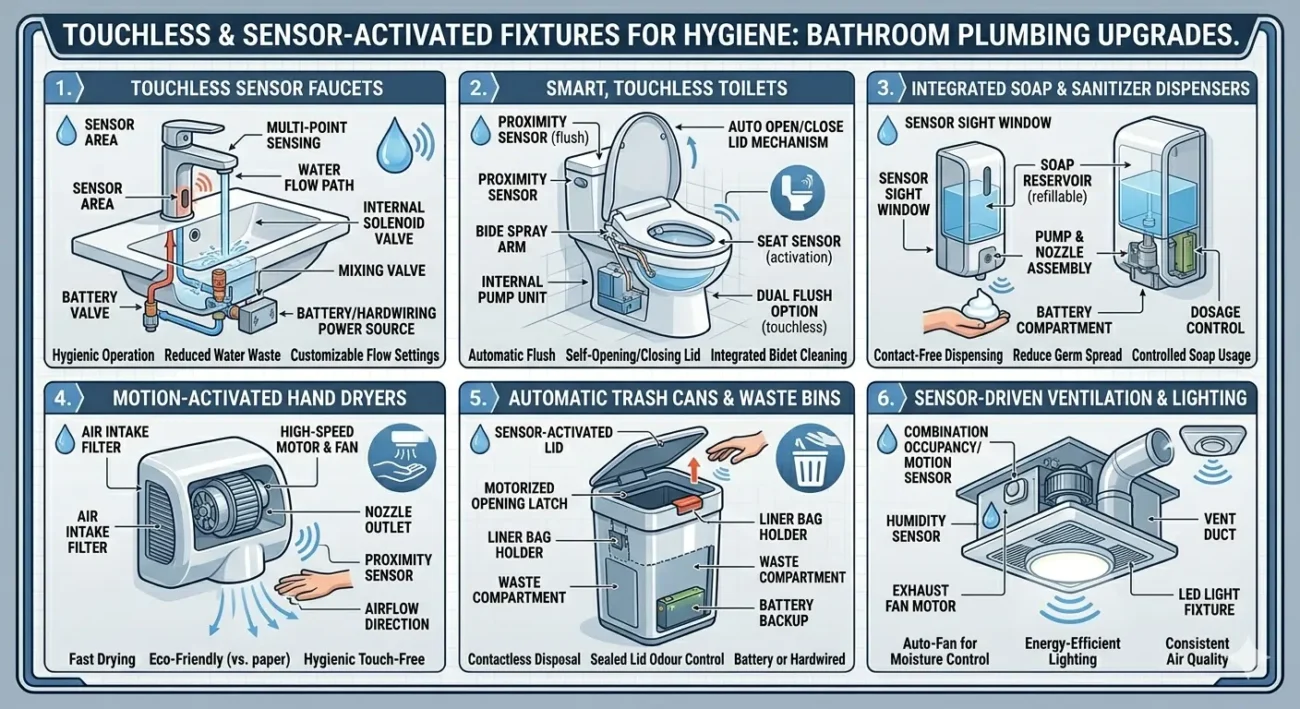
- Choose where touchless makes the biggest impact (sink faucet, flush valve, soap dispenser), especially in high-traffic commercial bathrooms where many hands touch the same surfaces.
- Pick the right power plan (battery vs hardwired) and make sure you’ll have service access, because sensors and solenoids need occasional maintenance.
- Install the fixture like a standard faucet, then connect the control box/solenoid and sensor module exactly as the manufacturer specifies.
- Program the sensor range and shutoff timing so it runs only when hands are present; EPA notes sensors can help, but settings and use patterns matter.
- Run a real-world test with different users (kids, adults, quick hand-rinse) and fine-tune sensitivity to avoid “false on/off” frustration.
Luxury Shower Systems (Rainfall Shower-heads & Body Jets)
- Plan the system like a mini-project: a complete setup usually combines a mixing valve, showerhead, and body sprays, so you need a clear layout before walls close.
- Decide your “spray zones” (overhead rain, handheld, and body sprays) and pick the right diverter so each outlet works the way you expect.
- Add up the flow needs of the outlets and check if your supply lines and water heater can keep up; multi-outlet showers can demand much more hot water.
- Choose a temperature-control valve you trust (many homeowners prefer thermostatic control for steady temps) and place the valve at a comfortable height for daily use.
- Before the tile goes up, pressure-test every connection and run each outlet to confirm coverage, temperature stability, and the absence of leaks behind the wall.
Tankless Water Heaters and On-Demand Hot Water
- Size the unit based on your bathroom’s actual demand: add up the fixture flow rates you’ll use simultaneously and determine the temperature rise you need.
- Decide if you want a whole-building tankless system or a point-of-use unit near the bathroom to reduce “wait time” and wasted water in long pipe runs.
- Check site requirements early; gas units may need proper venting and gas capacity, while electric units may require electrical upgrades (common in renovations).
- Reduce the load on the heater by pairing it with low-flow fixtures, as lower demand makes tankless performance more consistent during peak times.
- After installation, test hot-water delivery at the shower and sink (flow + temp), then set a simple maintenance routine to prevent scale from slowly choking performance.
Replacing Old Pipes with PEX or Copper
- Start with a real assessment: open a small access area (or use a camera) to confirm what you actually have (galvanized, old copper, mixed materials) and identify the weak points.
- Check NYC rules and pull the right permits early, because the NYC DOB regulates plumbing work and issues permits only to a Licensed Master Plumber (LMP) when required.
- Choose the right material for your building; copper is widely used in NYC water service work (DEP programs replace lead/galvanized lines with copper), and your LMP can confirm if any PEX use is allowed for your specific scope (PEX is referenced in NYC code for certain piping applications, so it’s “case-by-case” here).
- Plan the shutoff and reroute smartly; schedule a water shutoff with your building manager (co-op/condo or commercial), then map the shortest, cleanest runs to reduce future leak points.
- Pressure-test and inspect before closing walls, because DOB inspections and sign-offs are part of doing this safely and correctly in NYC (especially when permits apply).
Larger Drain Lines and Updated Vent Pipes for Better Drainage
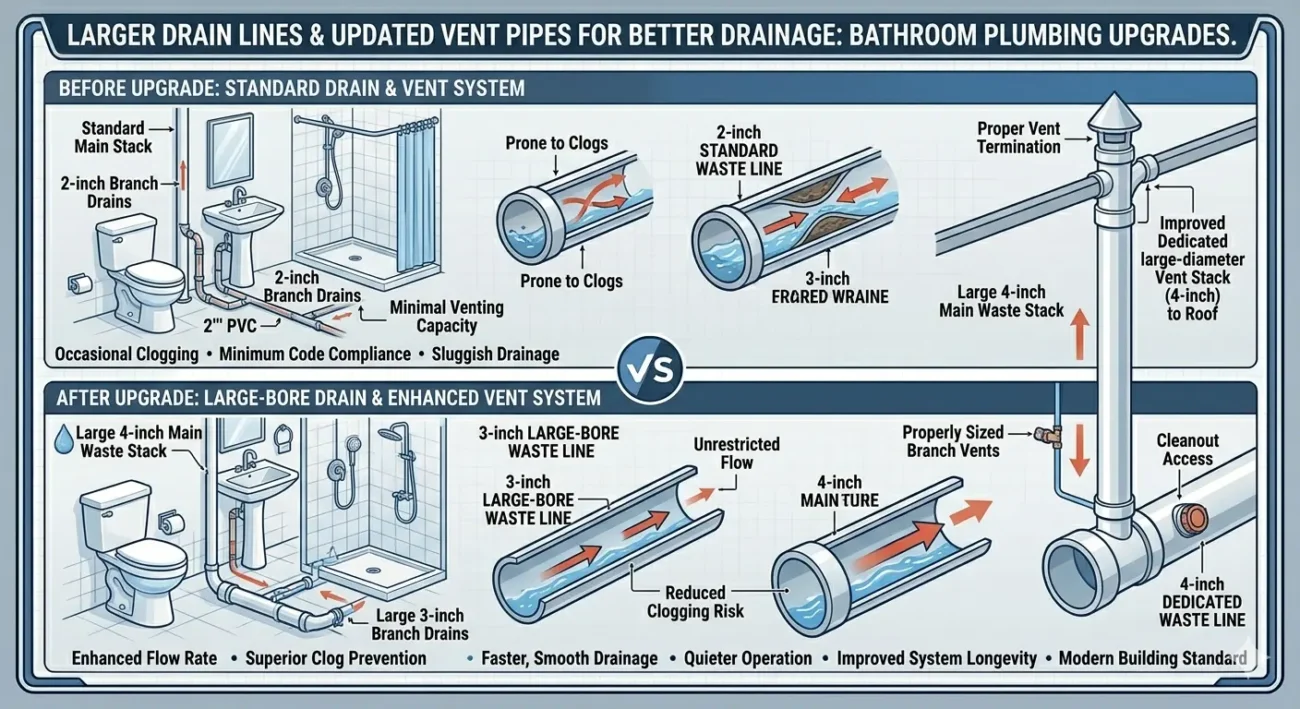
- Diagnose first; if you’re seeing slow drains or sewer smells, a camera inspection helps you find undersized lines, belly/sag, or old trap/vent problems before you start breaking tile.
- Upgrade drains with proper trap protection, because NYC plumbing rules require fixtures to be trapped and traps must keep a liquid seal (that “water plug” that blocks sewer gas).
- Make sure venting protects the trap seal, since bad venting can siphon a trap dry and cause odor issues (vent system design is a core part of code compliance).
- Add trap-seal protection where needed, like primer solutions for floor drains or traps that may dry out—this is a common commercial-bathroom fix.
- Test and verify performance before finishing work: run lots of water through the system, check for leaks, confirm strong drainage, and only then close walls/floors.
Who Is the Right Professional for Your Plumbing Needs
In Brooklyn, the “right” pro is the one who can keep your job code-compliant, clean, and predictable, especially when you’re opening walls or touching supply/drain lines. NYC DOB is clear that plumbing work tied to permits must be handled through a Licensed Master Plumber (LMP).
That’s where SR General Construction, NYC, comes in. We’re fully licensed, bring 15+ years of renovation and remodeling experience in Brooklyn, and we’ve completed 750+ projects for 500+ satisfied clients with 24/7 support to help protect your property.
What Plumbing Upgrades Are Recommended for Older Brooklyn Homes?
For older Brooklyn properties, I’d prioritize replacing lead/galvanized service lines and aging supply pipes, because NYC DEP programs specifically replace eligible lead/galvanized service lines with new copper lines. Next, add Water-sense fixtures (toilets, faucets, showerheads) to cut water use without sacrificing comfort. Then tackle hidden waste; DEP even recommends testing toilets for leaks (a running toilet quietly burns money). Finally, upgrade safety and reliability with modern shutoff valves and leak detection so small issues don’t turn into big water damage.
Plumbing Upgrades for Commercial Bathrooms
Commercial bathrooms in Brooklyn take more daily wear and tear, so you need upgrades that handle heavy traffic, reduce downtime, and make maintenance easier. You also want choices that improve hygiene and keep water use under control.
- Touchless faucets and sensor flush systems reduce touchpoints, helping keep restrooms cleaner for customers and staff. When you tune the sensor range correctly, you also reduce wasted water from people leaving taps running.
- WaterSense-rated faucets and shower fixtures (where applicable): WaterSense-labeled bathroom faucets cap flow at 1.5 gpm, and WaterSense showerheads cap flow at 2.0 gpm, so you reduce usage without a “weak” experience. In busy restrooms, those small savings add up fast across the year.
- Floor drains with trap-seal protection: Commercial bathrooms often have floor drains that dry out, allowing odors to escape. NYC code addresses trap seals and even allows trap-seal primer options for traps subject to evaporation, which is a practical fix for “mystery smells.”
- Bigger, better-draining waste lines (where your layout supports it): Upsizing problem sections and fixing venting issues reduces clogs and improves flow during peak usage times. This also lowers emergency calls, because most “overflow” events start with slow drainage and poor venting.
- Accessible shutoffs + service-friendly valve placement: In commercial spaces, downtime costs money, so you want shutoffs that staff or maintenance can reach quickly. This speeds up repairs and helps limit damage if a fixture fails.
- Code-compliant permitting and inspections: If your upgrade involves new piping or permitted work, you’ll want a team that can handle the DOB filing process, inspections, and final sign-off correctly. NYC DOB notes that plumbing permits (when required) are issued only to LMPs and that inspections are required for permitted plumbing work.
Popular Bathroom Products to Elevate Your Space
If your bathroom feels dated, the easiest “wow” factor often comes from swapping a few key products—not tearing everything apart. The best choices add comfort, style, and better daily use while still working with your current plumbing layout.
- Wall-hung toilets (clean look + easier floor cleaning)
- Bidet seats or bidet toilet attachments (comfort upgrade without a full remodel)
- Comfort-height toilets (great for daily comfort and accessibility)
- Touchless bathroom faucets (less mess + more hygiene)
- Thermostatic shower trim kits (steady temperature, spa-like control)
- Rainfall showerheads + handheld combo sets (luxury feel + practical use)
- Linear shower drains (modern look + smoother drainage in many layouts)
- Anti-scald shower valves / pressure-balancing valves (safer showers)
- Quiet exhaust fans with humidity sensors (helps reduce moisture issues)
- Medicine cabinets with integrated LED lighting (clean lighting + extra storage)
- Smart mirrors (defog + better lighting for grooming)
- Water leak sensors for vanity/toilet areas (early warning before damage spreads)
Eco-Friendly Solutions in Bathroom Plumbing Upgrades
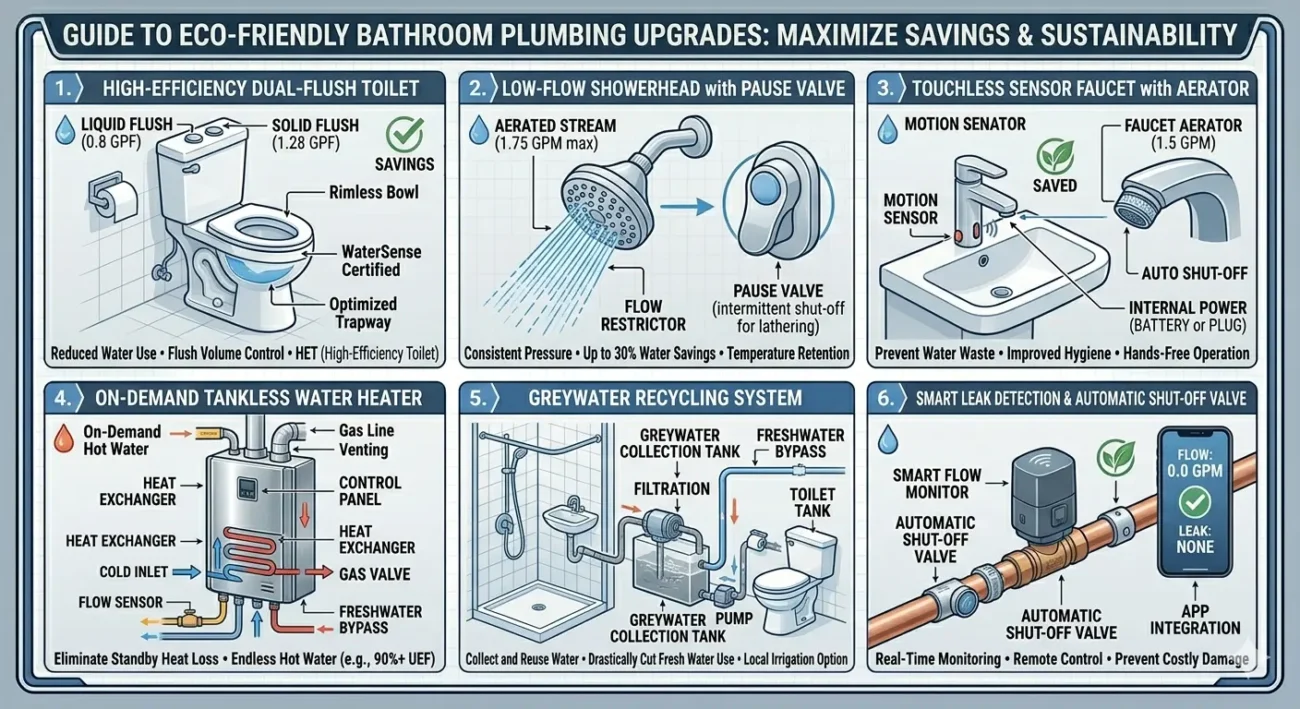
Brooklyn water isn’t “free,” and bathrooms are where a lot of waste hides, especially with slow leaks and older fixtures. The good news is you can cut water use without making your shower feel weak or your sink feel slow.
- Choose WaterSense bathroom faucets (max 1.5 GPM). These are designed to reduce flow versus the standard 2.2 GPM while still keeping good performance.
- Install WaterSense showerheads (max 2.0 GPM). You still get a satisfying shower, but you use less water than older/high-flow heads.
- Upgrade to WaterSense toilets (1.28 GPF or less). That’s about 20% less water per flush than the older 1.6 GPF federal standard.
- Stop “silent” toilet leaks early. NYC DEP recommends testing toilets for leaks (even once a year), because a leaky toilet can waste thousands of gallons in a hurry.
- Add a smart leak detector in high-risk areas. Basic sensors can alert you quickly, and higher-end systems can pair with shutoff solutions for stronger protection.
- Plan upgrades with NYC permit rules in mind. In NYC, plumbing permits are issued to a Licensed Master Plumber (or equivalent license class for fire suppression).
What is the cost of bathroom plumbing upgrades?
| Plumbing upgrade type | Typical cost (installed) — Brooklyn/NYC |
|---|---|
| High-efficiency / dual-flush toilet replacement | Install labor: $224–$533 Toilet unit: $100–$3,000+ |
| Low-flow / WaterSense bathroom faucet replacement | $170–$360 |
| Touchless / sensor-activated bathroom faucet upgrade | $170–$360 + sensor faucet unit cost (often up to ~$600) |
| Low-flow / WaterSense showerhead replacement | $100–$450 (avg around $260) |
| Pressure-balancing or thermostatic shower valve replacement | $150–$550 (avg around $350) |
| Luxury shower upgrade / new shower installation (NYC) | $908–$8,091 (avg ~$4,499) Tiled walk-in can reach ~$9,365 |
| Tankless water heater installation (NYC) | $1,303–$3,490 (avg ~$2,389) |
| Replace drain pipes (sections or runs) | $225–$1,169 (avg ~$696) Often $150–$250 per linear foot |
| Plumbing stack / vent stack replacement | $3,000–$9,000 (avg ~$6,500) |
| Repipe (PEX or copper) — partial/whole-home scale | $1,500–$15,000 (most pay around ~$7,500) Avg ~$1,200 per fixture |
| Main water shut-off valve replacement | $375–$600 (avg ~$500) |
| Smart leak shutoff + sensors (example product pricing) | Whole-home shutoff device: $649.99 Leak detectors (3-pack): $147.76 |
Where to Find the Best Brooklyn Contractors
Are you looking for an expert contractor in Brooklyn, NYC? SR General Construction has you covered! Our business is located at 8807 Avenue B, Brooklyn, NY 11236, United States, in the Canarsie area.
Additionally, we offer services at Rockaway Parkway and Ralph Avenue, providing fast access to Flatlands, East Flatbush, Bergen Beach, Brownsville, and the Spring Creek section of East New York.
FAQ
1. What does “bathroom plumbing upgrades” mean?
It means improving the pipes, valves, drains, and fixtures in your bathroom so everything runs more safely and smoothly. In Brooklyn, it often includes modern water-saving fixtures and fixes for older piping.
2. Which bathroom upgrade saves the most water fast?
A Water-Sense toilet upgrade is usually the biggest quick win, since toilets are a major indoor water user. Water-Sense toilets can significantly reduce toilet water use compared to older models.
3. What’s the best showerhead flow rate for saving water without ruining comfort?
Look for a Water-Sense-labelled showerhead, which uses no more than 2.0 gallons per minute (gpm). EPA also requires performance testing, so it still feels like a “real” shower.
4. What’s the WaterSense flow rate for bathroom faucets?
Water-Sense bathroom sink faucets are typically capped at 1.5 gpm at standard pressure, which cuts flow compared to the 2.2 gpm federal baseline. That’s a simple upgrade that adds up in multi-person homes.
5. When does a bathroom project need a plumbing permit in NYC?
If you’re altering, relocating, or permanently removing piping, DOB plumbing permits generally apply. NYC DOB also expects the permit holder to arrange required tests and inspections.