

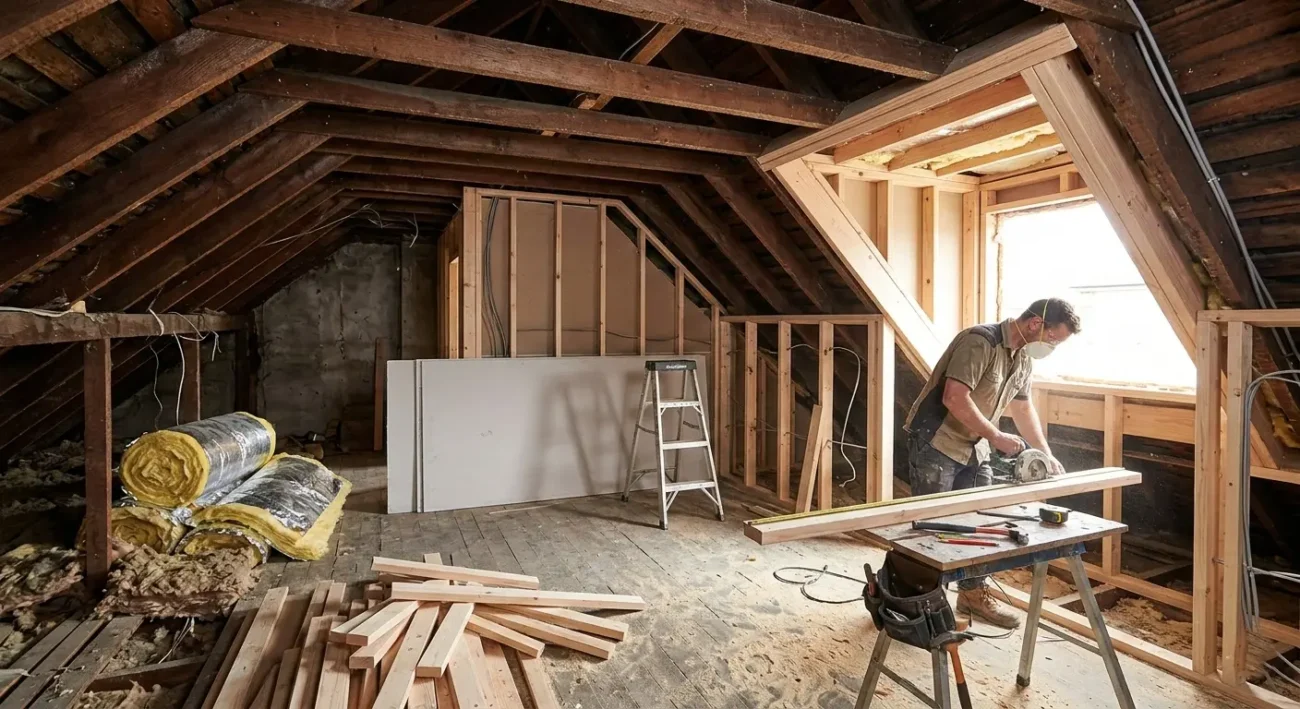
What if the extra space you’ve been searching for is already sitting right above your head?
For many Brooklyn homeowners, the upper space is nothing more than a dusty storage area filled with old boxes and forgotten items. However, with a smart plan and the right approach, that unused space can become one of the most valuable parts of your home.
In this complete guide, we’ll explore everything you need to know about attic conversions in Brooklyn. You’ll discover what makes an attic suitable for conversion, what local building codes and permits you’ll need to follow, how much it usually costs, and what design ideas work best for Brooklyn’s unique homes, from brownstones to townhouses.
What is an Attic Conversion?
An attic conversion is a home renovation project that turns an unfinished attic into a livable, finished room. Instead of letting the area above your ceiling collect dust and holiday decorations, you can transform it into a functional space for your family. Many homeowners finish their attics to create an extra bedroom, a cozy den, or a private home office. In fact, converting an attic can increase your home’s usable square footage and often yields a strong return on investment, since you’re gaining space without extending your home’s footprint.
Structural Requirements for Attic Conversion
Before you start selecting paint colors for your new attic room, ensure the structure can support the conversion. Below are key structural requirements (each of these should be checked and addressed with the help of a professional):
- Floor Joist Strength: The attic floor must be able to support the weight of people, furniture, and everyday use. Often, attic joists in older homes were designed for light storage, not a bedroom set and occupants. You’ll likely need to reinforce or upgrade the floor joists to meet code-required live load capacity for living spaces.
- Roof Structure & Rafters: Converting an attic often means modifying the roof framing – especially if you plan to add dormer windows or remove pre-fabricated trusses for an open room. The existing rafters and roof supports must be able to carry not only the roof load but also any additional loads that may be imposed.
- Ceiling Height and Dormers: One common structural modification is adding dormers – these are boxed-out extensions on the roof – to increase headroom and usable floor area. If your attic has a very low slope, at least part of the floor may not have enough standing height. By building a dormer (or multiple dormers), you create vertical walls and a bump-out that can dramatically improve the space.
- Building Permits & Code Compliance: From a structural standpoint, any changes to the home’s framework will require permits and inspections by NYC’s Department of Buildings (DOB).
What are the Advantages of Attic Conversion?
Below, we highlight five major advantages of attic conversions. Each advantage comes with its own perks that can enhance your home and lifestyle:
- Increased Living Space: The most obvious benefit is gaining more living space without expanding your home’s footprint. You’re utilizing existing space in your house that was previously unused. This can be life-changing for a growing family or anyone who just needs a bit more room to breathe.
- Cost-Effective Home Expansion: Attic conversions are often more affordable than building an addition onto your home, making them a cost-effective way to expand.
- Higher Property Value & ROI: Adding a fully finished, functional room to your home can boost your property’s value. Extra square footage (especially a bedroom or office) tends to raise appraisal value and make your property more attractive to buyers. In fact, studies suggest a well-executed loft/attic conversion can increase a home’s value by a significant margin, in some cases up to 20%.
- Improved Energy Efficiency: This may come as a surprise, but converting your attic can make your home more energy-efficient when done correctly. As part of the renovation, you’ll likely add insulation to the attic floors, walls, and roofline.
- Minimal Disruption & Quick Project Timeline: Compared to many other home expansions, an attic conversion can be less disruptive and faster to complete. Most of the work occurs in a confined space at the top of the house, so it’s somewhat isolated from your day-to-day living areas.
What are the Common Uses for a Converted Attic?
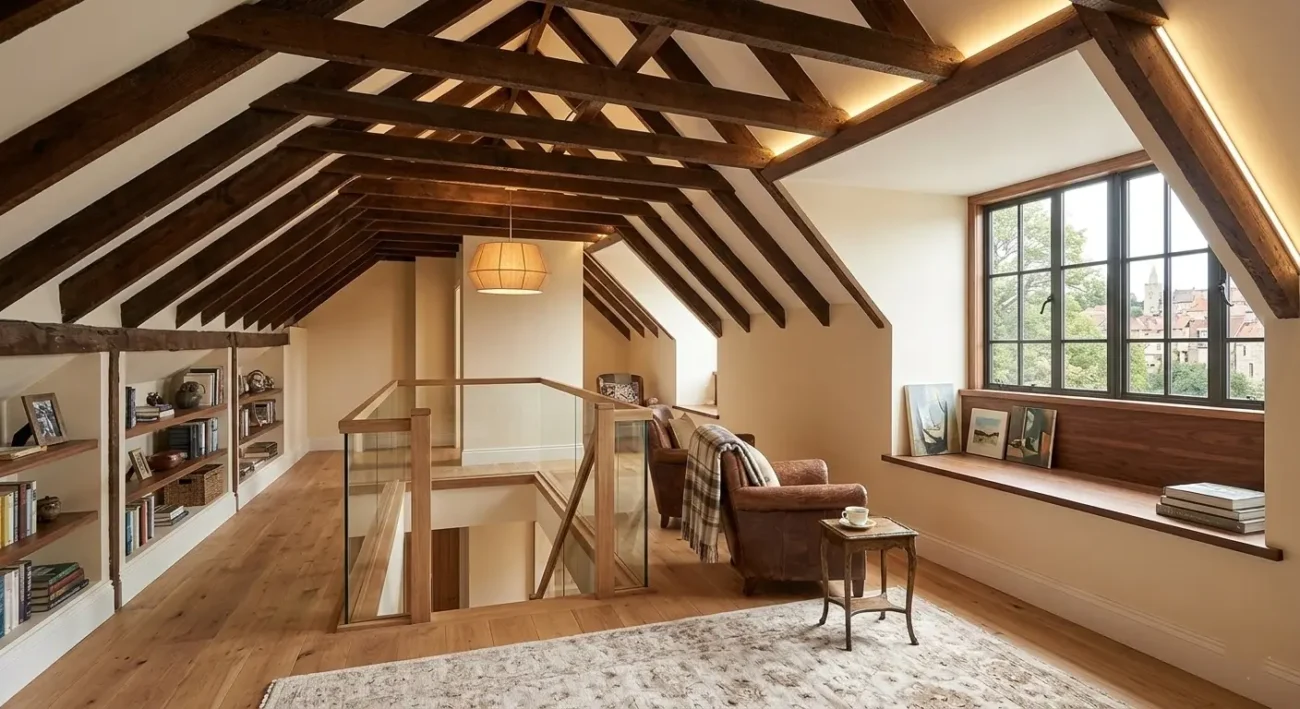
So, you’ve decided to convert your attic – but what exactly will you do with this new space? Below are five common and creative uses for a converted attic:
- Extra Bedroom or Guest Suite: One of the most popular uses for a converted attic is as an additional bedroom or guest suite. This could be a master bedroom, a cozy bedroom for a child, or a private guest room tucked away from the main floors.
- Home Office or Study: In the era of remote work and homework, having a dedicated home office or study space is invaluable. An attic can serve as the ideal home office, separated from the hustle and bustle of the main living areas.
- Children’s Playroom or Teen Hangout: If you’re tired of tripping over toys in the living room, consider making the attic a kids’ playroom or a teen lounge. Attics can be magical play spaces – a bit removed from the adults, where kids can let their imagination run wild.
- Art Studio, Hobby Room, or Home Gym: Your converted attic can also indulge your hobbies and passions. Attics make fantastic creative studios – whether for art, music, crafts, or even exercise.
- Cozy Lounge or Media Room: An attic’s intimate atmosphere – those sloped ceilings and snug proportions – lends itself beautifully to a cozy lounge, reading nook, or mini home theater. You could design it as an attic family room with a small sofa, plush cushions, and a TV or projector screen.
Attic Conversion Feasibility: Height and Space Requirements
Height Requirements: Most building codes (including New York City’s) require that a finished attic have enough ceiling height over a certain amount of the floor area. Typically, habitable rooms need a minimum ceiling height of 7 feet over at least half of the usable floor space. This is often referred to as the “rule of 7s” – at least 50% of the room must be 7 feet tall or higher. Additionally, no portion of the required floor area can have a ceiling height under a certain amount (commonly 5 feet).
Space (Floor Area) Requirements: In addition to height, codes specify a minimum floor area and room dimensions for any habitable room, including those in attics. Generally, you need at least 70 square feet of floor area for a habitable room (and that’s the area that also meets the height criteria above). Furthermore, the room usually must be at least 7 feet wide in any direction (meaning you can’t have a super-narrow sliver of a room).
This ensures the space is truly usable and not just a crawlspace called a “room.” Practically, if your attic has, say, 150 square feet of total floor but only 50 square feet where the ceiling is over 7 ft, it wouldn’t qualify as habitable until you add more height or countable area.
Pro Tip
Are You Looking for the Best Brooklyn Attic Conversion Contractor? SR General Construction NYC is a fully licensed Brooklyn team with over 15 years of experience in the city, having completed more than 750 projects and serving 500+ satisfied clients – plus they offer 24/7 support. This kind of proven track record means you’re working with experts who know how to handle surprises and deliver great results.
Staircase Access and Egress: Safety & Code Needs
For safety and code compliance, you’ll need: a full stairway to the attic and a large, easy-to-open egress window (or equivalent). The stairway ensures everyday safe access (no climbing steep ladders with laundry baskets!) and a robust escape route. The window serves as a vital backup exit in case of a fire.
Don’t take these lightly – not only are they the law, but they are crucial for protecting your family. Work with your contractor to incorporate a proper staircase (even if it means sacrificing some space below), and choose or create a window that meets the egress specs. These elements are non-negotiable for a habitable attic and will be closely scrutinized during inspections. Once in place, though, you can rest easy knowing your new attic room is as safe as any other bedroom in the house.
How to Convert an Attic into a Living Space: Tips for Attic Conversion
Converting an attic into a comfortable living space can be a complex project – but with the right approach (and a bit of patience) you can smooth out the process. Here are key tips to keep in mind when converting your attic:
1. Start by Checking Building Codes and Permit Requirements: Before swinging a hammer, educate yourself on the local building codes and permitting process for attic conversions.
2. Ensure the Attic is Structurally Sound (and Reinforce if Needed): As discussed earlier, the structure is key. One of your first steps should be to have a professional assess the attic’s structural elements, including the floor joists, rafters, and support walls.
3. Plan for Insulation and Ventilation (Temperature Control): Attics are known for being too hot in summer and too cold in winter – but your new living space doesn’t have to be. A critical tip is to insulate and ventilate the attic properly during the conversion.
4. Design the Staircase and Access Early: Figuring out how you’ll access the attic is a make-or-break aspect of the conversion, so tackle this in the planning stage.
5. Add Dormers or Skylights for Light and Headroom: When you convert an attic, one big challenge is getting enough natural light and ventilation into what was often a dark space. A great tip is to plan for dormer windows or skylights as part of the renovation.
6. Maximize Space with Smart Design (Built-Ins and Storage): Attic rooms often have quirky shapes – low knee walls, sloping ceilings, odd corners – but you can turn those quirks into advantages with clever design.
7. Consider Adding a Bathroom (Plumbing Tips): If your budget and space allow, adding a bathroom to your attic conversion can greatly increase its utility – especially if you’re creating a bedroom or suite.
Interior Design Tips for Attic Rooms
Once the construction dust has settled, you get to tackle the fun part – interior design of your new attic room! Here are some interior design tips to help you make the most of your attic room:
- Use a Light Color Palette to Open Up the Space: Attic rooms can sometimes feel small or dim, so counteract that with light, bright colors on the walls and ceilings.
- Opt for Low-Profile & Scaled Furniture: Standard furniture can sometimes look and feel awkward in an attic with a low ceiling. The trick is to choose or customize furniture that fits the attic’s scale.
- Embrace Built-In Storage and Nooks: We’ve touched on this, but it bears repeating from a design perspective – built-ins are a game-changer in attic rooms. Those shallow, odd-shaped areas under the eaves are perfect for custom cabinets, shelves, or drawers.
- Maximize Natural Light and Add Layered Lighting: Attics often have limited window space, so it’s crucial to make the most of what you have and then supplement with good interior lighting.
- Highlight the Attic’s Character (and Embrace Coziness): Attics often come with special character features – maybe some exposed beams, brick, or a unique shape. Instead of covering or fighting these, consider highlighting them as part of your design.
How Much Does an Attic Conversion Cost on Average?
As of 2025, homeowners can expect to spend anywhere from approximately $20,000 on the low end to $80,000 or more on the high end for a full attic conversion in the U.S., with many projects falling within that range. In fact, a broad guideline is that most attic conversions cost roughly between $100 to $200 per square foot of finished space. So if you’re converting a 300 sq. ft. attic, the cost might be in the ballpark of $30,000 to $60,000. Factors such as adding a bathroom (plumbing can significantly increase costs), installing dormers, or making major structural changes will push costs toward the higher end (or beyond).
What are the Common Designs of Attic Conversion in Brooklyn, NYC?
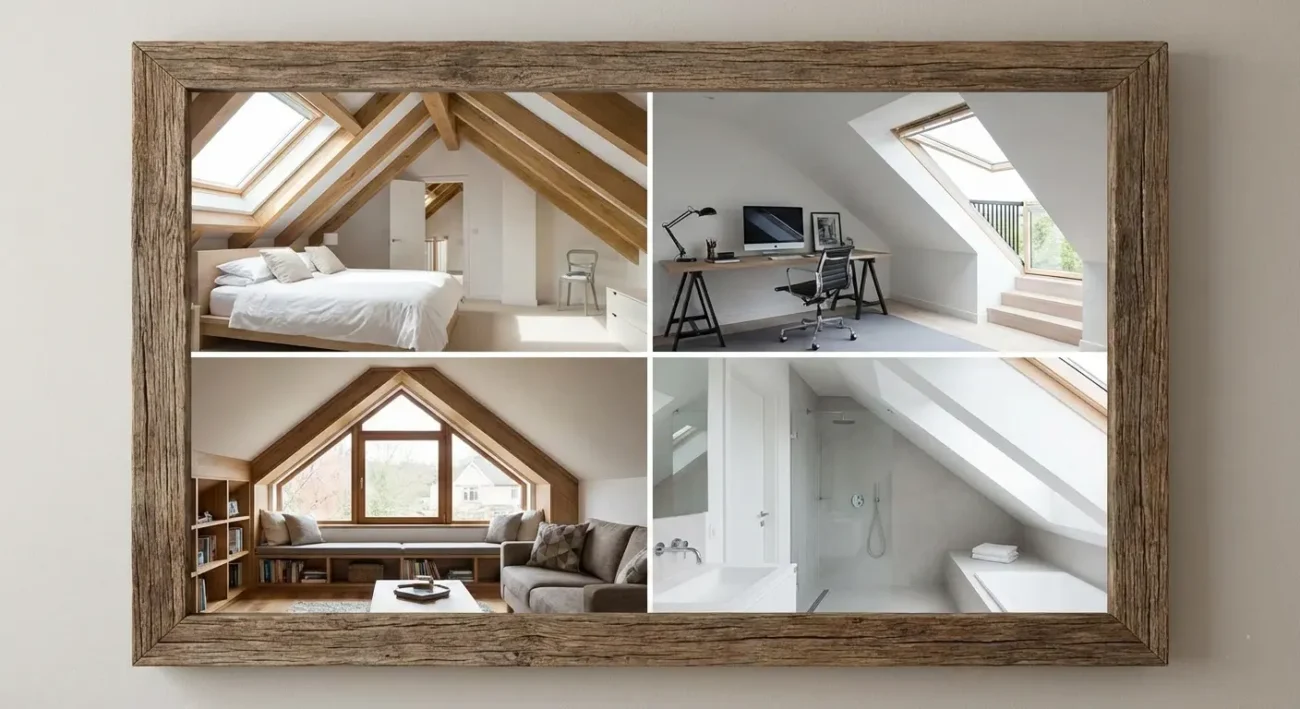
Attic conversions come in various design styles and structural approaches, particularly when considering the types of roof modifications involved. Here are a few Common Designs of Attic Conversion in Brooklyn, NYC:
- Rooflight (Skylight) Conversion: This is the most straightforward type of attic conversion design – you leave the roof shape exactly as is (no dormers or extensions), and simply finish the interior and add skylight windows for light.
- Gable Dormer Conversion: A gable dormer is a box-like projection with a peaked roof that sticks out from the existing roof. Imagine a little house shape poking out of your sloping roof – that’s a gable dormer.
- Shed Dormer Conversion: A shed dormer is another type of dormer that has a flat or single-slope roof (like a lean-to) rather than a peaked gable. It essentially looks like someone “lifted” a section of the roof and built a new wall in that area, creating a flatter extension of the roof.
- Hip-to-Gable Conversion: Some houses (especially semi-detached or corner homes) have a hipped roof, which means the roof slopes down on all four sides (instead of having a vertical triangular gable wall on the ends).
- Mansard Roof Conversion: Mansard roofs are a hallmark of many historic Brooklyn townhouses (especially those influenced by French Second-Empire style) – they have a distinctive shape with a steeply sloped lower section and a flatter upper section.
- L-Shaped Dormer Conversion: Some houses, particularly older Victorian or brownstone types, have an existing “L” shape – for example, a main rectangle plus a rear extension (like those classic Brooklyn brownstones with a three-story front and a two-story “tea porch” extension in back).
- Roof Lift (Piggyback) Conversion: When all else fails in terms of space, a more drastic design approach is to raise the roof. A roof lift or “piggyback” conversion involves building an entirely new roof on top of your existing one – usually at a higher pitch or with more height – to create a full new level.
NYC Permits and Building Code Approvals
If you live in Brooklyn, you must file your attic conversion with the NYC Department of Buildings (DOB). Most projects file as an Alteration (Alt) job: Alt-1 if the work changes or requires a new Certificate of Occupancy, and Alt-2 if it does not. That means a new bedroom or adding a legal dwelling unit will typically be classified as Alt-1, while a straight interior build-out without occupancy changes often falls under Alt-2. Your architect files plans through DOB systems and coordinates required TR-1 Special Inspections and TR-8 Energy Code progress inspections for insulation, air sealing, and related items.
In landmark districts, any exterior roof work, such as dormers or skylights, also needs Landmarks Preservation Commission approval through the Portico portal and, in many cases, a Certificate of Appropriateness. Before DOB issues permits, you must address asbestos: a DEP-certified investigator determines if asbestos is present and files the proper ACP form so your permit can move forward.
Attic Insulation and Ventilation Considerations
Insulation
Your new top floor needs a robust thermal envelope that meets the NYC Energy Conservation Code. In climate zone 4A, roofs typically target high R-values. Where space is tight, the code allows an R-30 “compact roof” exception if it is physically impossible to fit more insulation.
That exception still demands careful detailing at the eaves so insulation reaches the exterior wall plate without compression. Many Brooklyn attics use closed-cell spray foam at the roof deck or a hybrid assembly with air-impermeable foam plus batt insulation to control heat and moisture. Whatever you choose, tie insulation to thorough air sealing so that conditioned air stays inside and the roof sheathing stays dry. Your TR-8 inspector will verify that the installed values and details match the approved energy analysis.
Ventilation
A roof can be designed as either vented or unvented, and both approaches are effective when executed correctly. Vented roofs rely on continuous soffit-to-ridge airflow, which is kept clear with baffles, while unvented assemblies control moisture with air-impermeable insulation at the deck. Building-science guidance emphasizes that the choice is a design decision rather than a physics mandate as long as the details are right. If you go vented, protect the intake path at the eaves and keep baffles open to the ridge so air moves freely.
If you opt for an unvented system, size the foam layer to maintain a warm enough deck temperature to prevent condensation. Ask your design pro to select one strategy and document it thoroughly on plans and energy paperwork.
Attic Flooring Options
You want a floor that feels solid underfoot, reduces noise below, and handles Brooklyn’s seasonal swings. After structural upgrades to the joists, a glued-and-screwed subfloor (often 3/4-inch T&G plywood) provides a stiff base that resists squeaks. For the finish layer, engineered hardwood offers the look of wood with improved dimensional stability. Luxury vinyl plank gives durability and water resistance, which helps near dormer windows or a small bath. A carpet with an acoustic pad cuts impact sound and adds warmth to a bedroom or lounge. Add a sound-attenuating underlayment under hard surfaces to soften footfall over the floor below. Choose lighter finishes if you want the room to feel brighter under sloped ceilings.
Attic Lighting Ideas: Adding Dormers or Skylights
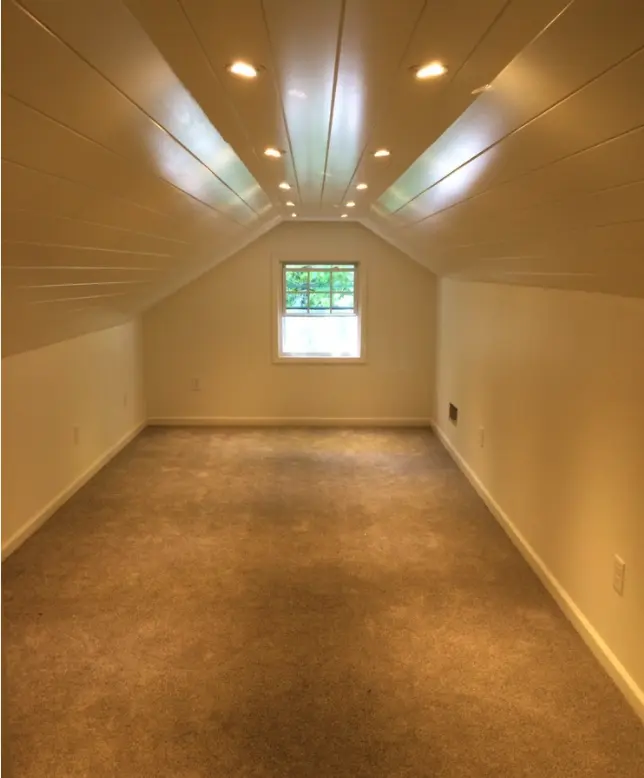
Light sells the space, and the roof plane is your best friend. Skylights and roof windows pour daylight deep into the room and can also vent hot air at the peak on summer afternoons. If you need headroom plus light, a shed or gable dormer adds vertical wall area for standard windows, which can also satisfy egress when sized correctly. Position roof windows to avoid glare over work areas and consider the difference between morning and afternoon sun when selecting slopes. Keep insulation and flashings tight around openings so you do not trade leaks for light. When you finish, layer ambient lighting with task lamps so evenings feel just as inviting as bright days.
Heating and Cooling Solutions for Attic Spaces
Attics run hot in July and cold in January, so plan for comfort before installing drywall. Right-sized equipment paired with a tight envelope keeps your energy bills predictable.
- Ductless mini-split heat pump. Delivers heating and cooling without new duct runs. A wall cassette or slim-duct unit tucks neatly into the knee wall zone.
- Extend existing ducts (only if capacity allows). Your HVAC contractor can verify if the current system can handle the extra load and add a supply/return pair. If not, consider a mini-split system and keep the main system happy.
- Low-static concealed ducted unit. A short duct network above the ceiling can supply multiple attic zones with a single small air handler. This keeps the look clean when you do not want a wall head.
- Electric radiant floor or baseboard (heat only). Good for bathrooms or as a supplemental boost on the coldest days. Pair with a cooling solution such as a mini-split.
- Balanced ventilation (ERV/HRV) as a comfort add-on. An ERV tempers fresh air and helps with humidity in tight envelopes. That means fewer stuffy days under the roof.
Plumbing and Bathroom Additions
If you plan to install a bathroom upstairs, stack it above existing plumbing to shorten the runs and control costs. Waste lines need pitch, so your plumber may elevate a shower base or use a low-profile trap to clear the structure. A dormer often solves the issue of headroom in front of the toilet and inside the shower, which keeps the bathroom code-compliant and comfortable. Vent each fixture correctly and tie the new vents into the stack according to NYC Plumbing Code standards. Add a dedicated exhaust fan ducted to the exterior to manage moisture and protect finishes. When you file permits, expect asbestos screening before demolition and TR-1 inspections for plumbing, along with TR-8 checks where applicable.
How Long Will a Loft Conversion Take
Simple attic build-outs without dormers typically take a few weeks once the permits are in place. Add dormers, a bathroom, or structural steel, and your schedule can stretch several months. Time also depends on the DOB plan review, Landmarks review (if applicable), and coordination of TR-1/TR-8 inspections. Order long-lead items early to prevent fixtures and skylights from stalling work. A realistic plan incorporates weather buffers for roof openings and inspection windows to facilitate sign-offs.
Common Challenges to Face When Converting an Attic
Every attic is unique, and a few common hurdles often appear in Brooklyn brownstones and frame houses. Plan for these early, and you save time and stress.
- Ceiling height vs. code. NYC requires 8-foot ceilings in habitable rooms under the current code; however, many attics fail to meet this requirement at the slopes. Dormers or a re-framed roof can recover a usable area in the legal zone.
- Egress and stair planning. Pull-down ladders do not qualify as habitable use, and sleeping rooms require emergency escape openings. Size a window or roof window to meet egress and dedicate space for a full stair.
- Energy and moisture control. Poor air sealing and thin insulation drive condensation and high energy bills. Follow a documented vented or unvented strategy and verify with TR-8 inspections.
- Landmarks reviews for exterior changes. Rear dormers and visible skylights in historic districts trigger LPC review. File through Portico and match historic details to expedite approvals.
- Asbestos surprises. Old roofing, pipe wrap, or plaster can indicate the presence of ACM. A DEP-certified investigator and the correct ACP paperwork keep your DOB permit on track.
How to Hire a Brooklyn Attic Conversion Contractor
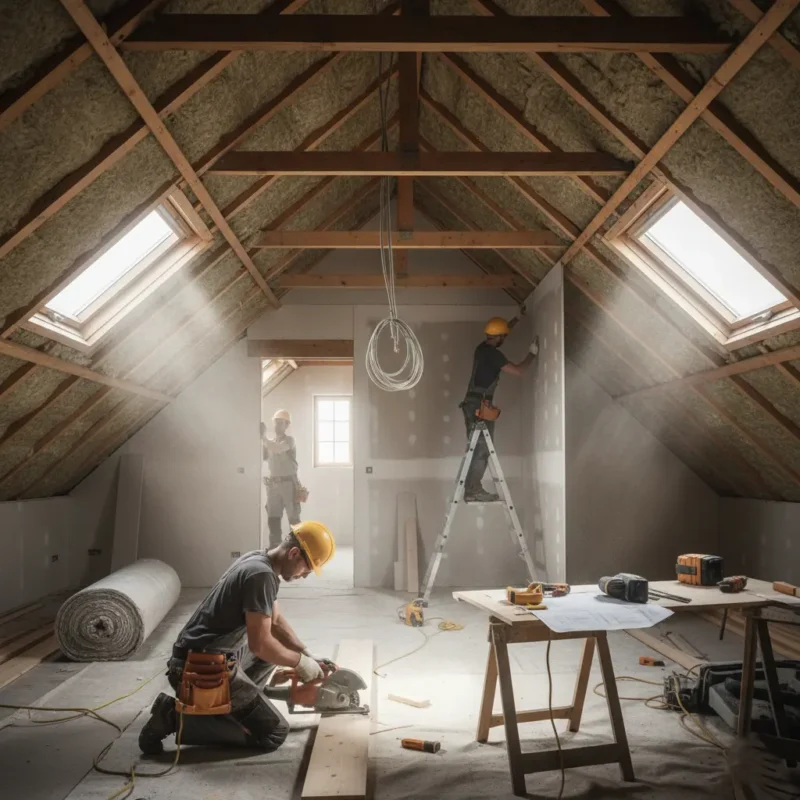
You want a team that knows NYC codes, inspectors, and the quirks of brownstones. Use these quick checks to feel confident before you sign.
- Verify licenses and insurance. Confirm the contractor’s NYC Home Improvement License and active insurance; ask for the license number on the proposal. This protects you and keeps DOB paperwork clean.
- Ask about Alt-1/Alt-2 experience. Your contractor should understand when a job changes the Certificate of Occupancy (C of O) and how that affects filings, inspections, and fees. Request two recent references for attic or dormer work in Brooklyn.
- Review code and energy approach. Have them describe the chosen insulation strategy, air-sealing details, and how they will ensure TR-8 inspections are passed. Clear answers here signal fewer surprises later.
- Plan for egress and stairs first. A strong pro starts with code-critical items such as stair layout and escape openings, then fits the design around them. That mindset avoids costly redraws during the review process.
- Clarify approvals and historic reviews. If your block is landmarked, confirm the team files with LPC and coordinate drawings that satisfy both DOB and Landmarks. One coordinated set of plans saves time.
Where to Find the Best Brooklyn Contractors
Are you looking for an expert contractor in Brooklyn, NYC? SR General Construction has you covered! Our business is located at 8807 Avenue B, Brooklyn, NY 11236, United States, in the Canarsie area.
Additionally, we offer services at Rockaway Parkway and Ralph Avenue, providing fast access to Flatlands, East Flatbush, Bergen Beach, Brownsville, and the Spring Creek section of East New York.
FAQ
1. Do I need a NYC permit to convert my attic in Brooklyn?
Yes. Most attic conversions require DOB permits; if you change the number of dwelling units or your Certificate of Occupancy, it is filed as an Alteration Type-1, otherwise, typically Alteration Type-2. Plans must be submitted by a NY-licensed architect or engineer.
2. What ceiling height makes an attic a legal room in NYC?
NYC BC §1208.2 sets an 8-foot minimum ceiling for habitable rooms, with exceptions for sloped ceilings where portions can be lower as long as the required clear areas meet code. Your design professional will verify that the measurements on the plans are compliant.
3. What egress does an attic bedroom need?
A sleeping room requires an emergency escape and rescue opening (EERO) meeting clear-opening size (generally ≥5.7 sq ft, ≤44-inch sill) and other criteria; the NYC clarified that EEROs are required regardless of whether the building has sprinklers.
4. What stair dimensions apply for an attic stair in NYC?
Typical residential stairs require at least a 36-inch width and 6′-8″ headroom; other geometric limits (rise/run, landings, handrails) also apply under BC §1011.
5. How much does an attic conversion cost in Brooklyn?
Recent NYC ranges often fall within the mid-five to low-six figures, depending on the structure, dormers, bath additions, and finishes; public guides show broad ranges that align with the complexity of NYC. Use them only as starting points, then price from stamped plans.
6. Will converting my attic change my Certificate of Occupancy (C of O)?
If you add a legal dwelling unit or change occupancy, you’ll need an Alteration Type-1 and a new/ amended Certificate of Occupancy (C of O); if you keep the same occupancy and unit count, many projects are filed as Alteration Type-2 without a C of O change.