

Do you know anything about Kitchen Pantry Design?
If you live in Brooklyn or anywhere in New York City, chances are your kitchen storage is always competing with limited space. That’s exactly where kitchen pantry design comes in; not just as a storage solution, but as a smart, functional, and stylish way to make your kitchen work better for you.
What is Kitchen Pantry Design
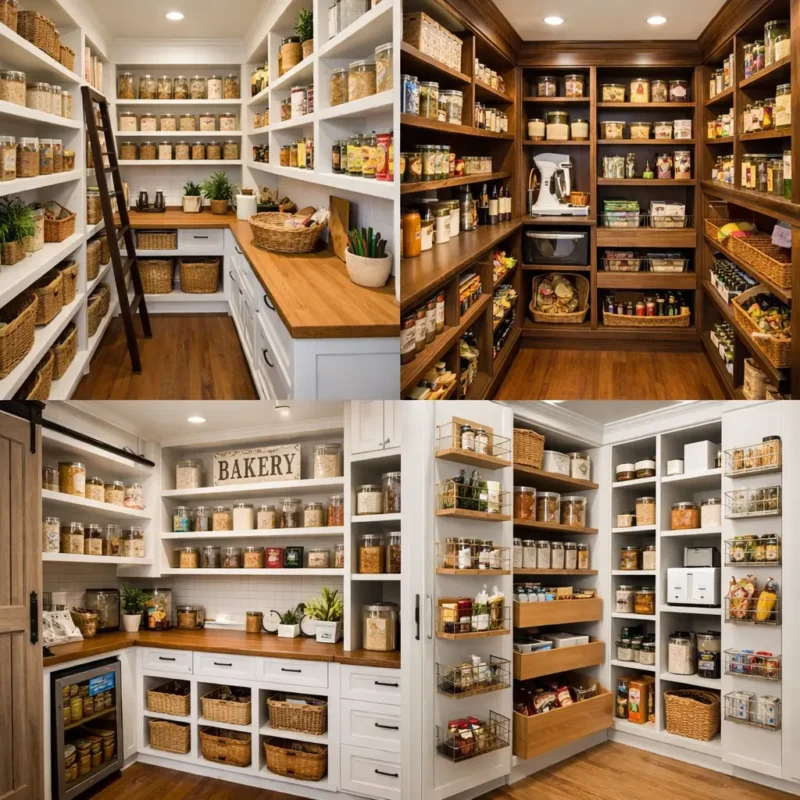
Kitchen pantry design is the planning of a pantry space so your food, cookware, and small appliances stay easy to see, easy to reach, and easy to keep tidy. It’s not only about adding shelves; it’s about choosing the right pantry type, the right placement, and storage details that match how you cook and shop. Good pantry design focuses on convenience and visibility, because a pantry that’s hard to access won’t be used. And the best part is: pantry designs can fit almost any kitchen size, from a simple pantry cabinet to a full walk-in room.
What are the Benefits of Kitchen Pantry Design
A well-designed pantry can make your kitchen feel calmer right away, especially in Brooklyn, where space is precious, and clutter shows fast. When your pantry has a system, your cooking routine becomes smoother and less stressful.
- You get a clutter-free kitchen faster. A pantry gives food and supplies a dedicated home, so counters and cabinets don’t overflow. That’s why pantry storage is often described as a “secret weapon” for keeping kitchens stocked and tidy.
- You save time during cooking and meal prep. When pantry items are organized and visible, you stop digging around for basics like oil, spices, or pasta. Even a simple category, “zones,” makes everyday cooking quicker.
- You can reduce food waste and avoid buying duplicates. A clean, organized pantry makes it easier to spot what you already have and what’s close to expiring. Many organizing guides also connect good pantry systems with less waste because items don’t get lost in the back.
- You improve visibility and access (so you actually use what you store). Pantry design experts often emphasize that visibility matters as much as space, because you can’t use what you can’t see. Features like good lighting and pull-out storage help you reach items without frustration.
- You can build a pantry around your lifestyle, not someone else’s. If you snack a lot, you can create a snack zone; if you bake often, you can give flour and mixers a dedicated area. That “design-to-fit-you” approach is why pantry organization advice often starts with how you live and cook.
N.B. Do you need kitchen pantry installation service in Brooklyn? Call SR General Construction NYC for a free estimate!
Types of Kitchen Pantry Design
There isn’t just one “right” pantry; there are multiple styles, and the best choice depends on your kitchen layout and how much storage you need. The good news is you can mix and match types, especially in NYC kitchens where every inch matters.
- Walk-in pantry. This is a small room (or closet-sized room) you can step into, usually with shelving on multiple walls. Walk-ins offer the most storage potential, but they work best when they’re placed close to the kitchen so they stay convenient.
- Reach-in pantry (closet pantry). This looks like a deep closet near the kitchen, where you stand outside and reach in. It’s a strong option for Brooklyn apartments because it fits into tight footprints while still providing real shelf space.
- Pantry cabinet (built-in tall cabinet). A pantry cabinet is a tall section of kitchen cabinetry designed for pantry storage; often with shelves, drawers, or internal organizers. It’s space-efficient, and pantry experts often point out that a well-placed cabinet pantry can beat a bigger pantry that’s far away.
- Pull-out pantry cabinet (slim or full-height pull-out). This is the “everything comes to you” style, where shelves slide out so you can access the back without losing items. It’s especially useful in narrow kitchens because it packs storage into a small width while improving visibility.
- Open wall pantry / open shelving pantry. This pantry style keeps shelves visible and easy to grab from, usually on one wall or in a niche. It can look beautiful, but it works best when you commit to containers and neat grouping so it doesn’t feel messy.
- Butler’s pantry / scullery / back kitchen. This is more than storage; it’s a supporting space that may include counters, cabinets, and sometimes a sink or appliances. Designers often explain that it acts like a “buffer” zone, keeping the main kitchen cleaner and more presentable.
How to Plan for Kitchen Pantry Design

Planning is where pantry design goes from “extra shelves” to a setup that truly works for you every day. And in Brooklyn, a smart plan matters even more because you often need to do a lot with a little space.
- Start with what you store (not what looks pretty online). Pull everything out, check dates, and notice what you actually use every week. This gives you a real inventory, so you don’t design a pantry that looks nice but doesn’t fit your habits.
- Choose the pantry type that fits your floor plan. If you have room, a walk-in is great; if not, a reach-in or pantry cabinet can still work beautifully. Many pantry guides emphasize choosing a style that matches your space—because the wrong size or placement can create wasted space.
- Plan pantry zones so everything has a “home.” Create clear categories like breakfast, snacks, baking, cooking basics, and “back stock” so you don’t shuffle items around later. Organizing sources repeatedly recommends category zones because they make finding (and refilling) items simpler.
- Design shelves and drawers with access and visibility in mind. Use adjustable shelves for tall items, and consider pull-outs or drawers for deep storage so you don’t lose things in the back. Pantry organization advice often highlights pull-out bins and vertical space as key for accessibility.
- Don’t treat lighting as an afterthought. Pantry experts talk a lot about visibility—if the pantry is dark, it feels annoying to use, and you’ll forget what you own. Even basic, well-placed lighting can change how functional the pantry feels.
- Know the NYC basics: permits and licensed contractors. NYC DOB notes that installing new kitchen cabinets typically doesn’t require a permit, but NYC also requires a home improvement contractor license for many residential improvement jobs. So, if you hire help, make sure your contractor is properly licensed to do NYC work.
Materials & Finishes for Kitchen Pantry Design
Materials and finishes aren’t just about looks; they affect how durable, easy-to-clean, and “nice to use” your pantry feels every day. Many design guides also recommend using finishes like paint and tile, and good lighting, to elevate the pantry so it feels like a real part of the kitchen.
- Painted cabinetry or painted shelving gives the pantry a finished look and helps it blend with your kitchen style.
- Tile (backsplash or accent wall) adds protection and makes pantry areas like coffee stations easier to wipe down.
- Durable flooring matters most in walk-in pantries where you’ll step in and out with groceries.
- Wood or wood-look shelving (sealed) is popular because it feels warm, but sealing helps prevent stains from spills.
- Glass-front doors (or open shelving) can make a pantry feel lighter, but they work best with tidy containers.
- Pull-out hardware (slides, baskets, drawer systems) upgrades access and reduces “lost in the back” pantry problems.
- Matching containers + labels keep open shelves and cabinet pantries organized long-term.
Lighting & Electrical: Integrated Illumination & Outlets
A pantry can be beautifully built and still feel annoying if it’s dark or you’re short on outlets. When you plan lighting and power early, you make the pantry easier to use every single day, especially in compact Brooklyn kitchens where you’re often working in tight corners.
- Use integrated lighting to make shelves “pop” and reduce shadowy corners. A backlit or internally lit pantry helps you spot items quickly, and it can even make jars and containers look more polished. Claire Douglas also points out that built-in lighting makes it easier to find what you’re looking for.
- Plan lighting like a workspace, not like decoration. Good pantry lighting improves visibility so you can locate items quickly, and it also makes tight walk-ins safer to navigate. Even basic improvements can make the pantry feel more organized and pleasant to use.
- Choose safe fixtures and think about placement near shelves. Fine Homebuilding notes that electrical codes can be strict about closet light types and locations, and it recommends extra caution if your pantry is closet-like. It also warns to keep certain fixtures well away from shelves that may hold paper goods and other combustibles.
- Add enough outlets for how you actually live (coffee maker, toaster, mixer, etc.). Homebuilding highlights that if you’re using small appliances in a pantry, you need enough electrical outlets, and it even suggests planning outlets at different heights for cords and appliance sizes. It also advises installing outlets safely, away from water sources such as sinks.
- Don’t forget the “power supply” question for walk-ins or pantry rooms. If your pantry is a walk-in or separate zone, you may need to plan power to that area as part of the design. Homebuilding specifically calls out “lighting and power” as a practical consideration for walk-in pantries.
Organization Systems: Clear Containers, Labels & Inventory Rotation
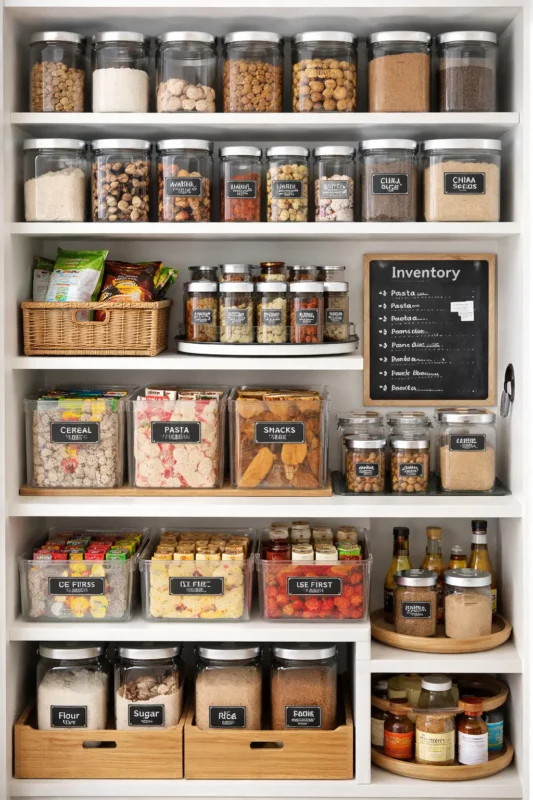
Here’s the truth: a pantry doesn’t stay organized because it’s pretty; it stays organized because your system is easy to maintain. If you build a simple system that fits your habits, you’ll stop “reorganizing” every month and start enjoying your pantry every day.
- Use clear airtight canisters for everyday dry goods. Apartment Therapy recommends clear airtight canisters for powders, snacks, pasta, cereal, and grains to keep food fresh and visible. When you can see what you have, you buy smarter and waste less.
- Treat spices and small items like a “micro-zone.” Apartment Therapy suggests using clear small glass jars for spices and organizing them in a way that’s easy to scan (alphabetical or color-coded). Add a turntable for quick access so you don’t have to dig behind bottles.
- Group food by category using bins or baskets (your future self will thank you). Apartment Therapy recommends clear or wire baskets for snacks, beverages, and canned goods, and grouping them by category; this keeps loose packages from falling over and creating chaos. The NEAT Method also supports zoning and placing heavier baskets lower for better day-to-day use.
- Label like you mean it. Apartment Therapy is very direct about the importance of labels for maintaining order, because they make it easier to put items back in the right place. Labels also make it simpler for everyone in the home to follow the same system.
- Rotate inventory so older items get used first. When you restock, move older items forward and place new items behind them (a simple “first-in, first-out” habit). This small step helps stop expired food from hiding in the back of the shelf.
Doors & Access: Sliding, Bi-Fold, Pocket & Hidden Doors
Pantry doors aren’t just about style; they decide how easy your pantry feels in real life. In Brooklyn kitchens, the best door is often the one that saves space and keeps you moving without bumping into anything.
- Sliding barn doors for a space-saving pantry entrance. Donald Gardner highlights barn-style sliding doors as a way to add character while also saving space at the pantry opening. Sliding doors help because you don’t need swing clearance like a standard hinged door.
- Bi-fold or folding doors are used when a full swing door feels too bulky. Homebuilding notes: bi-fold doors can be a great solution when you don’t have room for large-opening doors, especially for “breakfast pantry” setups. Claire Douglas also calls folding doors neat and compact for small or narrow kitchens.
- Pocket doors are perfect when you want the pantry hidden but instantly accessible. Life of an Architect describes using a pocketing door so you can open or close it to control visibility and access. Miele also explains pocket doors as a way to hide kitchen functionality behind doors when you want a cleaner look.
- Hidden/flush doors when you want the pantry to visually disappear. A concealed pantry door helps the kitchen look calmer by keeping the “busy storage” out of sight. Pocketing or concealed solutions are especially useful in open-plan kitchens where the pantry is always in view.
- Glass-front pantry doors help you stay organized. Claire Douglas notes that glass-fronted pantries help you see what you store and can make the kitchen feel more spacious by letting your eye travel through the cabinet. Just remember: glass doors reward a tidy container system.
How to Add Speciality Features
Special features make a pantry feel like a “real kitchen helper,” not just a storage closet. If you choose features based on your routine, you’ll use them constantly; especially on busy NYC mornings.
- Add a coffee/breakfast station with dedicated spots for the machine, toaster, and everyday mugs, so mornings feel smoother.
- Include extra outlets at practical heights so cords don’t drape across shelves or counters.
- Build a small prep counter if your pantry has room, because it turns storage into a working zone.
- Upgrade to a butler’s pantry setup with cabinets, counters, and often a sink, and at least one appliance when you want a true “back-of-house” workspace.
- Add a pull-out spice rack or tray dividers so spices and sheet pans don’t get buried behind larger items.
- Use a chalkboard or whiteboard near the pantry for shopping lists and quick reminders.
What are the best storage solutions for a small kitchen pantry in Brooklyn?
For most Brooklyn kitchens, the best solution is usually a tall pantry cabinet or a slim pull-out pantry, because it adds vertical storage without taking up much floor space, and Claire Douglas notes that pull-out mechanisms can even be retrofitted to optimize cabinets.
Pair that with folding or bi-fold doors when a standard door swing feels too tight in a narrow layout. Inside the pantry, rely on clear airtight containers, baskets, labels, and turntables so you can see everything and reach the back without frustration. And if you can only do one “upgrade,” choose pull-outs or a simple zone system, because visibility and easy access are what make small pantries actually work.
How can I maximize vertical space and use corners effectively in a narrow pantry?
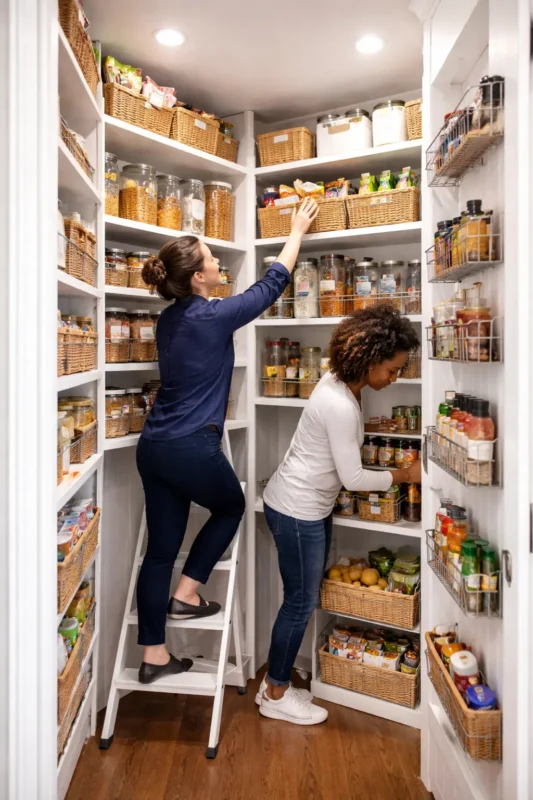
In a narrow Brooklyn-style pantry, go tall, but not too deep: shelves around 12–16 inches usually keep items visible, and making the top shelf shallower (about 12 inches) helps you actually reach and use it. Use the full height with adjustable shelves, then keep a “daily-use zone” at eye level while heavier bulk items live lower for safer lifting. For corners, use a turntable instead of stacking: a turntable makes awkward corners usable, and blind-corner pullouts/corner units bring items out where you can see them.
COST Range of Installing Kitchen Pantry Design in Brooklyn, NYC
| Pantry project type | What’s included (typical) | Estimated cost range (Brooklyn/NYC) |
|---|---|---|
| Install basic shelving (per linear foot) | Simple shelves installed in a closet/pantry niche | $21.67–$33.48 per linear foot |
| Custom reach-in pantry | Closet-style pantry build-out with shelving (small footprint) | $250–$1,500 |
| Small walk-in pantry | Usually ~5′ x 5′ with mixed shelving/cabinets | $750–$2,000 |
| Large walk-in pantry | Bigger pantry with more storage; upgrades can add cost fast | $2,000–$3,500 |
| NYC pantry cabinetry (installed, per linear foot) | Stock to custom cabinetry pricing in NYC (installed) | $187–$606 per linear foot |
| Cabinet installation labor (NYC, per linear foot) | Installation labor only (varies by complexity) | $150–$400 per linear foot |
| Electrical add-ons | New wiring and/or pantry light fixture install | $6–$8 per sq ft (wiring) + $160–$1,000 (light fixture) |
| Closet-organizer style pantry system | Prefab/custom organizer components installed like a closet system | $628–$2,525 (avg. ~$1,543) |
Where to Find the Best Brooklyn Contractors
Are you looking for an expert contractor in Brooklyn, NYC? SR General Construction has you covered! Our business is located at 8807 Avenue B, Brooklyn, NY 11236, United States, in the Canarsie area.
Additionally, we offer services at Rockaway Parkway and Ralph Avenue, providing fast access to Flatlands, East Flatbush, Bergen Beach, Brownsville, and the Spring Creek section of East New York.
FAQ
1. What’s the difference between a reach-in pantry and a walk-in pantry?
A reach-in pantry is usually a closet-sized storage zone you access from the kitchen doorway. A walk-in pantry is large enough to step inside and often uses more wall area for shelves and zones.
2. How much does a custom pantry usually cost?
Many homeowners spend around $2,000 on average, but the full range can run roughly $250 to $5,000 depending on size and features. In NYC, custom cabinetry and labor can push costs higher.
3. What lighting works best inside a pantry?
Bright, even light makes your pantry usable—people often add LED strips or a ceiling fixture. If your pantry is basically a closet, follow closet-light safety rules (fixture types and clearances) to keep it safe around stored items.
4. What pantry shelf depth is easiest to use?
For everyday groceries, 12 inches is often the sweet spot because you can reach the back without “losing” items. Walk-ins can go deeper, but if shelves get too deep, things tend to disappear and expire.
5. Are pull-out shelves worth the money?
If your pantry is narrow, pull-outs are one of the best upgrades because they bring items forward so you can actually see them. They also help you avoid wasting the back half of a deep shelf.