

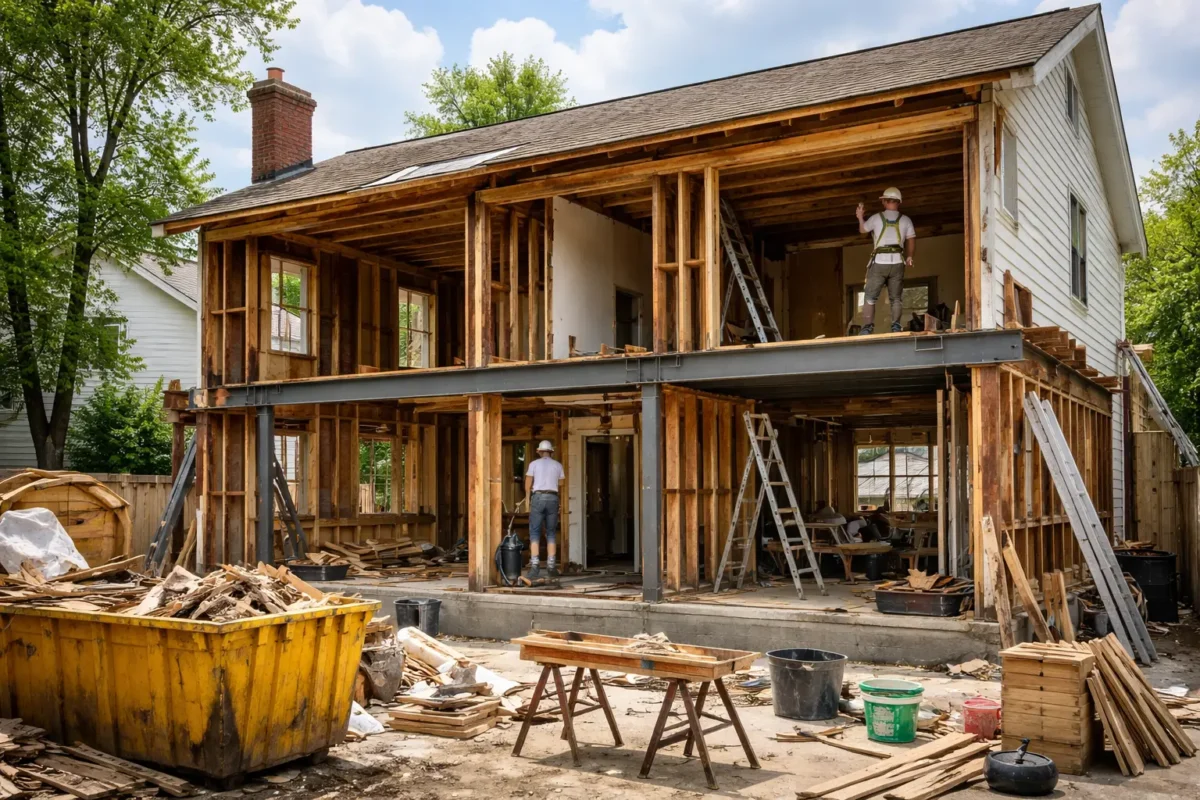
What exactly is structural renovation, and why does it matter so much for homes in Brooklyn, NYC?
Structural renovation is not about paint, tiles, or décor. It’s about the parts of your home that hold everything together: the foundation, load-bearing walls, beams, floors, and roof structure. In this guide, we’ll clearly explain what structural renovation really means, how it differs from cosmetic remodeling, and why it matters for Brooklyn homeowners in particular.
What Is Structural Renovation?
Structural renovation involves making changes to the parts of your home that support the rest of your home. It involves repairing, reinforcing, or replacing load‑bearing elements such as foundations, beams, columns, floor slabs, and walls. Unlike cosmetic work, structural changes affect the house’s core skeleton. These upgrades ensure the building stays stable, safe, and adaptable over time.
When Structural Remodeling Is Necessary
Sometimes, everyday wear and tear or lifestyle changes reveal that structural work can’t wait. In older Brooklyn brownstones and townhouses, you’ll see clear signs when it’s time to call in a structural specialist.
- Visible cracks in walls or ceilings – Small cracks can grow into big problems; horizontal or diagonal cracks often indicate shifting foundations or stressed beams. If these cracks keep widening, it’s a warning that the load‑bearing elements need attention.
- Uneven floors or sagging beams – Floors that slope or feel bouncy could mean joists or beams are weakened. Left unchecked, this can lead to structural failure and costly repairs.
- Water damage and persistent moisture – Water stains, mold, or moisture in basements undermine foundations and rot framing members. Structural renovation may involve waterproofing, replacing damaged wood, and reinforcing concrete to protect your home.
- Removing or altering load‑bearing walls – Opening up a kitchen or living area often requires installing new beams to support the weight above. Without proper planning, misaligned doorways, sagging floors, or cracked walls can follow.
- Adding a new level or room – When you expand upward or outward, you increase the load on the structure. Structural engineers must verify that the foundation and framing can handle the extra weight and design reinforcements accordingly.
Key Components of Structural Renovation
Every home has its own unique “bones,” but structural work focuses on a few critical areas. Understanding these helps you see why such renovations are more involved than simple cosmetic updates.
- Foundations and footings – The foundation transfers the home’s weight to the ground. Structural renovation can involve underpinning to strengthen a settling foundation, repairing cracks, or improving drainage around the footing to prevent future movement. Without a solid base, any other improvements are at risk of failure.
- Load‑bearing walls – These walls carry the weight of floors and roofs above. If you want to remove or reposition a wall, engineers will design a beam or column system to redistribute the load. This protects the rest of the structure while allowing an open layout.
- Beams, joists, and columns – Horizontal beams support floors and roofs; vertical columns transfer loads down to the foundation. Renovations may include replacing undersized or damaged beams, adding steel or laminated beams for extra strength, and upgrading joists to handle heavier loads.
- Floor slabs and subfloors – Concrete slabs and wooden subfloors must be level and free of cracks. Structural work may involve leveling uneven floors, installing new subfloor systems, or pouring additional slab sections to handle higher loads.
- Roof framing and trusses – The roof is a major structural element that protects the structure below. Reinforcing rafters or trusses, replacing rotted sheathing, and upgrading connections help prevent leaks and collapse, especially in older buildings with complex rooflines.
Benefits of Structural Renovations

If you’re on the fence about a major structural upgrade, consider the long‑term rewards. Beyond safety, these renovations can transform the way you live in your home.
- Improved safety and stability – Strengthening beams, walls, and foundations prevents sagging floors and reduces the risk of collapse. It also brings your home in line with current building codes, which is critical for peace of mind and insurance requirements.
- Enhanced functionality and space – Structural work allows you to remove walls, add rooms, or reconfigure layouts for modern living. By altering the home’s skeleton, you can create open spaces or add floors while maintaining structural integrity.
- Increased property value – A solid foundation and strong framing make a home more attractive to buyers. Investing in structural upgrades often yields higher resale value because buyers see long‑term reliability and lower future maintenance costs.
- Adaptability to new uses – Updating the structure enables converting a single‑family brownstone into a two‑unit home or installing heavy equipment, such as rooftop HVAC units. Structural upgrades increase the building’s load‑bearing capacity and enable new uses without risk.
- Energy efficiency opportunities – When walls or floors are open, it’s easier to add insulation, seal drafts, and update mechanical systems. These improvements can lower utility bills and make your home more comfortable year‑round.
Hiring the Right Professionals
Tackling structural renovations isn’t a DIY job. You’ll need qualified experts to ensure the work is safe, compliant, and efficient.
- Structural engineer – A licensed engineer assesses your home’s load paths, identifies weaknesses, and designs the necessary reinforcements. They provide stamped drawings required for permits and ensure modifications won’t compromise your home.
- Architect – For layout changes, an architect creates plans that integrate structural upgrades with design goals. They work alongside the engineer to balance aesthetics, functionality, and structural requirements.
- General contractor – The contractor manages construction, coordinates tradespeople, and oversees day‑to‑day work. Look for a licensed contractor with experience in structural renovations in Brooklyn and who understands local codes and approvals.
- Trusted local company – SR General Construction, NYC, is fully licensed and brings more than 15 years of renovation and remodeling experience. We’ve completed over 750 projects for 500+ satisfied clients and provide 24/7 support to keep your home safe.
- Permitting and code expert – Some contractors or engineers specialize in navigating the NYC Department of Buildings and co‑op/condo board approvals. They help secure necessary permits, so you avoid fines, stop‑work orders, and delays.
Common Structural Issues in Brooklyn Homes
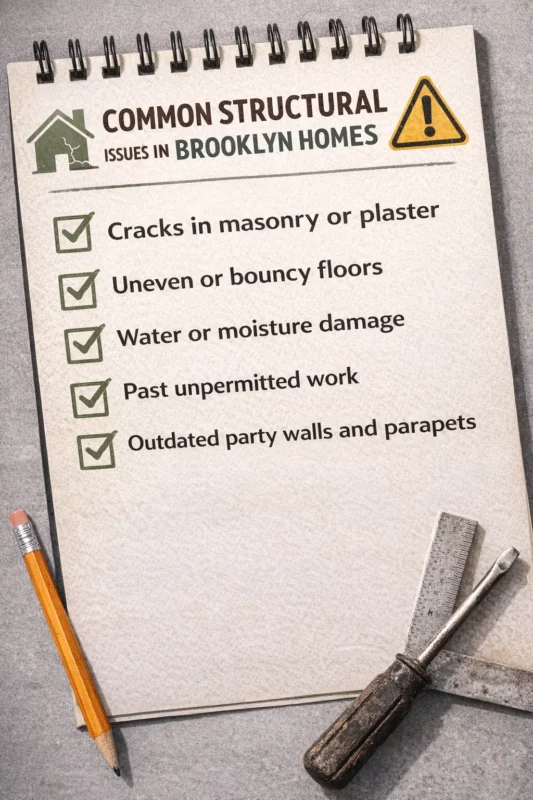
Brooklyn’s older homes carry a unique charm—and unique structural challenges. Here are some problems you might encounter and what they mean for your home.
- Cracks in masonry or plaster – Diagonal cracks often point to foundation settlement or shifting. They shouldn’t be ignored because they can widen over time and indicate deeper structural problems.
- Uneven or bouncy floors – Sloping floors and shaking when you walk suggest weakened joists or overloaded beams. This can worsen if past renovations removed load‑bearing walls without adequate support.
- Water or moisture damage – Persistent leaks erode mortar, rot wooden framing, and weaken foundations. Structural renovation may be needed to repair the damage and prevent further deterioration.
- Past unpermitted work – DIY or unpermitted changes, such as knocking down a load‑bearing wall, can compromise the structure. Signs include misaligned door frames, sagging ceilings, or cracked finishes.
- Outdated party walls and parapets – Many brownstones share walls that may show bulging or loose bricks. Tuckpointing and reinforcing these walls help prevent water penetration and structural failure.
Common Types of Structural Renovations
Different homes require different fixes, but several structural renovation types recur across Brooklyn’s housing stock.
- Foundation underpinning and strengthening – This involves excavating beneath the existing footing to pour new concrete or install steel piers. Underpinning stops settlement, increases load capacity, and stabilizes the entire structure. It’s often needed when adding floors or repairing aged foundations.
- Beam and column replacement – Rot or inadequate sizing can weaken beams or columns. Structural upgrades replace wood beams with engineered or steel members, install new columns, and add proper connections to ensure loads transfer safely.
- Load‑bearing wall removals – To create open floor plans, contractors cut openings or remove walls and install support beams or posts. This requires careful engineering, temporary shoring, and inspections to avoid sagging or cracks.
- Floor leveling and joist reinforcement – Uneven floors may need jacking up and installing sister joists or structural sleepers. Reinforcing joists helps floors handle modern loads and reduces squeaks and bounce.
- Seismic and structural retrofitting – Although NYC isn’t a high‑risk earthquake zone, older buildings may need bracing, anchoring, or tie‑downs to meet current codes. Structural retrofits improve resistance to lateral forces, such as wind or vibration, and protect against future damage.
Which structural elements are typically addressed during a renovation
During a structural renovation, builders focus on the components that carry or distribute weight. They inspect and strengthen foundations, beams, columns, load‑bearing walls, and floor slabs. Roof framing and trusses may also need reinforcement if the existing structure is weak or you’re adding new loads. Throughout the project, engineers ensure that all changes work together to maintain stability and meet modern safety standards.
The Structural Renovation Process
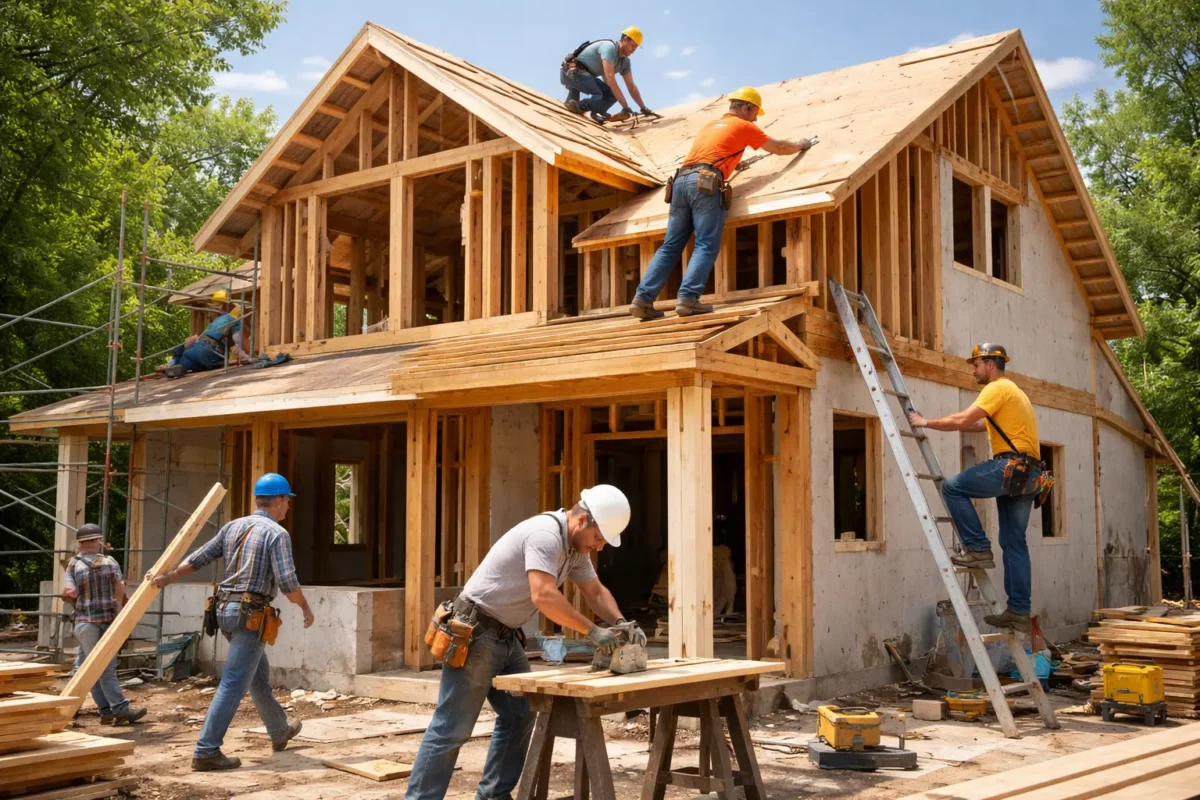
Undertaking a structural renovation may feel daunting, but breaking it down into clear stages makes it manageable. Here’s how most projects progress from evaluation to completion.
- Structural assessment and feasibility – The first step is to hire a licensed structural engineer to inspect your home and identify potential weaknesses. The engineer performs calculations, reviews past alterations, and determines whether the project is feasible and what reinforcements are needed.
- Design and planning – Once the scope is clear, architects and engineers create detailed plans and drawings. These documents balance your design goals with structural requirements and will be used to file permits and communicate with contractors.
- Permitting and approvals – In NYC, structural changes usually require permits from the Department of Buildings and sometimes co‑op or condo board approvals. Your team submits stamped drawings, obtains permits, and schedules required inspections to avoid costly stop‑work orders.
- Construction and temporary supports – During construction, contractors install temporary shoring to prevent movement and keep your home safe. They then remove or reinforce structural members, pour new concrete, install beams, and tie new work into the existing structure.
- Final inspections and handover – After the work is complete, inspectors verify that the construction meets the approved plans and codes. Once all sign‑offs are in place, the contractor cleans up, removes temporary supports, and hands the home back to you as a structurally sound, improved space.
Structural Renovations vs. Cosmetic Changes
| Category | Structural Renovations | Cosmetic Changes |
|---|---|---|
| What you’re changing | The home’s “bones” (load-bearing parts that affect stability) | The home’s “skin” (finishes and appearance) |
| Typical examples | Foundation repair, underpinning, new beams/columns, removing a load-bearing wall, floor framing repair | Painting, new flooring, new light fixtures, cabinet refacing, tile swap |
| Risk level | High — mistakes can create cracks, sagging, or unsafe conditions | Lower — issues are usually limited to look/finish quality |
| Permits in NYC | Often required (especially when changing layout or structural members) | Often not required if you’re only doing decorative work |
| Who should be involved | Licensed contractor + (often) structural engineer and/or architect | Contractor, painter, installer, designer (usually no engineer needed) |
| Timeline & disruption | More disruptive: demo, shoring, inspections, possible temporary supports | Less disruptive: surface-level work, fewer inspections |
| Budget style | More “variable” — hidden issues are common once you open walls/floors | More “predictable” — materials and labor are easier to estimate |
| Best outcome | A safer, stronger home that can support new layouts or added loads | A fresher look and feel (without changing structure) |
Structural Renovation Costs for Brooklyn, NYC
| Cost item | Typical Brooklyn/NYC cost range | Notes |
|---|---|---|
| Structural engineer (inspection + calculations + stamped drawings) | $3,000 – $12,000 | Often required for load-bearing changes and DOB filings. |
| Architect (if layout/egress/use changes) | ~15% – 25% of construction cost | Common on bigger remodels; varies with scope and deliverables. |
| DOB alteration filing fee (common residential filing types) | ALT-1: $170 • ALT-2: $130 • ALT-3: $130 | Base filing fee amounts (other DOB fees may still apply). |
| NYC permit expediter / filing representative (optional) | $50 – $250/hr OR $2,000 – $3,000 (straightforward interior reno) | Used to manage DOB paperwork, objections, and approvals. |
| Special inspections / progress inspections (TR1/TR8 items) | ~$100 – $550 per inspection item (often priced per item) | Your project may require multiple TR items (steel, concrete, masonry, excavation, etc.). |
| Dumpster / debris hauling | $440 – $1,085 (typical NYC dumpster pricing) | Size, weight limits, street logistics, and duration affect cost. |
| Remove a load-bearing wall (including supports/beam work) | $1,400 – $10,000 | Price changes with span, floors above, rerouting systems, and finishes. |
| Install/replace a main support beam (incl. labor) | $1,244 – $5,505 (typical range) | Permits and finish repairs can add extra costs. |
| Steel beam material (if priced separately) | $6 – $20 per linear foot | Length, size, delivery, and access can raise totals. |
| Floor joist replacement (common in older Brooklyn homes) | $4,000 – $12,000 | Access and how much flooring you must remove affects price. |
| Foundation underpinning / stabilization | $10,000 – $30,000+ | Method, soil, access, and how many areas need support drive cost. |
| Contingency (very important in NYC) | 10% – 25% of your total budget | Covers hidden damage, code upgrades, and surprises after demo. |
| Overall renovation budget context (if your project is “full home”) | ~$100 – $200 per sq ft (typical) • ~$500 – $750 per sq ft (high-end) | Full-home numbers include far more than structure (finishes, MEP, etc.). |
Structural Considerations for Kitchens & Bathrooms
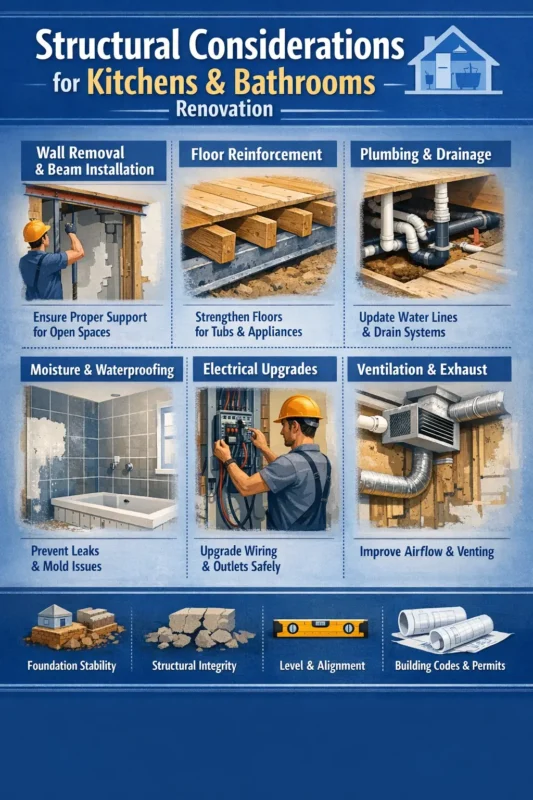
Kitchens: If you’re dreaming of an open kitchen in your Brooklyn home, the first question is usually, “Can this wall come down?” In NYC, moving a load-bearing wall is a big deal and often pushes the project into ALT2 territory, especially when paired with new outlets or gas work.
Kitchens also carry “quiet” structural loads. Heavy stone countertops, a large island, or new appliances can shift the weight on older joists—so you want your contractor (and engineer, when needed) to confirm the floor framing can handle it before installation.
Bathrooms: Bathrooms are wet zones, so structure and moisture control are tied together. If you’re adding a new bathroom or moving plumbing lines, NYC commonly treats that as an ALT2 scenario, which means plans and permits may be required.
Bathrooms also love to hide problems. Old subfloors, past leaks, and weak framing can show up once demo starts—so the smart approach is to plan for reinforcement and proper waterproofing, rather than patching and hoping they hold.
Navigating NYC Permits & Codes
Here’s the practical map of what Brooklyn homeowners usually deal with when permits and codes come into play:
- DOB Work Permits: NYC says most construction projects require DOB permits, and kitchen/bath renovations may require plans and permits depending on complexity.
- Alteration filings (ALT1/ALT2/ALT3): NYC DOB defines the main alteration types: ALT1 for major changes affecting use/egress/occupancy; ALT2 for multiple work types without changing use/egress/occupancy; and ALT3 for one minor work type.
- ALT2 for many kitchen/bath projects: NYC DOB notes most kitchen/bath renovations require ALT2, including adding a bathroom, rerouting gas pipes, + adding outlets, or moving a load-bearing wall.
- Design professional requirement (PE/RA): When plans/permits are required, DOB states you must hire a NYS licensed Professional Engineer or Registered Architect to file.
- Plumbing permits: Altering, relocating, or permanently removing piping must be supervised by a Licensed Master Plumber, and permits/tests/inspections are part of the process.
- Electrical work by licensed electricians: NYC licenses Master and Special Electricians to perform electrical work (so your electrical scope needs the right licensed pro).
- NYC Construction Codes: DOB lists the major code families that can apply to alterations: Administrative, Building, Plumbing, Fuel Gas, and Mechanical.
- Energy, electrical, and fire rules also apply: DOB notes that alteration work must comply with the current NYC Energy Conservation Code, NYC Electrical Code, NYC Fire Code, and other local laws.
- Illegal work has real penalties: DOB warns that building without approvals/permits is illegal, and severe violations can carry fines up to $25,000.
Post-Renovation Maintenance & Monitoring
Once the work is done, your job isn’t to “worry”—it’s to pay attention. A little monitoring helps you catch small issues before they become expensive ones.
- Do walkthroughs at 30, 90, and 180 days: Take 15 minutes to walk around your home and look at ceilings, corners, door frames, and floors. If something changes over time (a new crack, a new gap, a new squeak), you’ll spot it early.
- Watch for fresh cracks or cracks that grow: Hairline cracks happen, but cracks that widen, spread, or reappear in the same spot deserve attention. Snap photos and date them so you can compare week to week.
- Check doors and windows for “new sticking.”: If a door suddenly rubs or won’t latch, it can signal minor movement or settling. It doesn’t automatically mean danger but it’s a good “hey, look closer” sign.
- Keep an eye on moisture and odors: Musty smells, damp spots, or peeling paint near kitchens/baths often mean water is getting where it shouldn’t. Fixing moisture fast protects framing, subfloors, and finishes.
- Schedule periodic pro check-ins: If your project included major structural work (beams, foundation, new openings), plan a quick check-in with your contractor or engineer. It’s a simple way to confirm that everything is performing as designed.
Hidden plumbing and electrical challenges
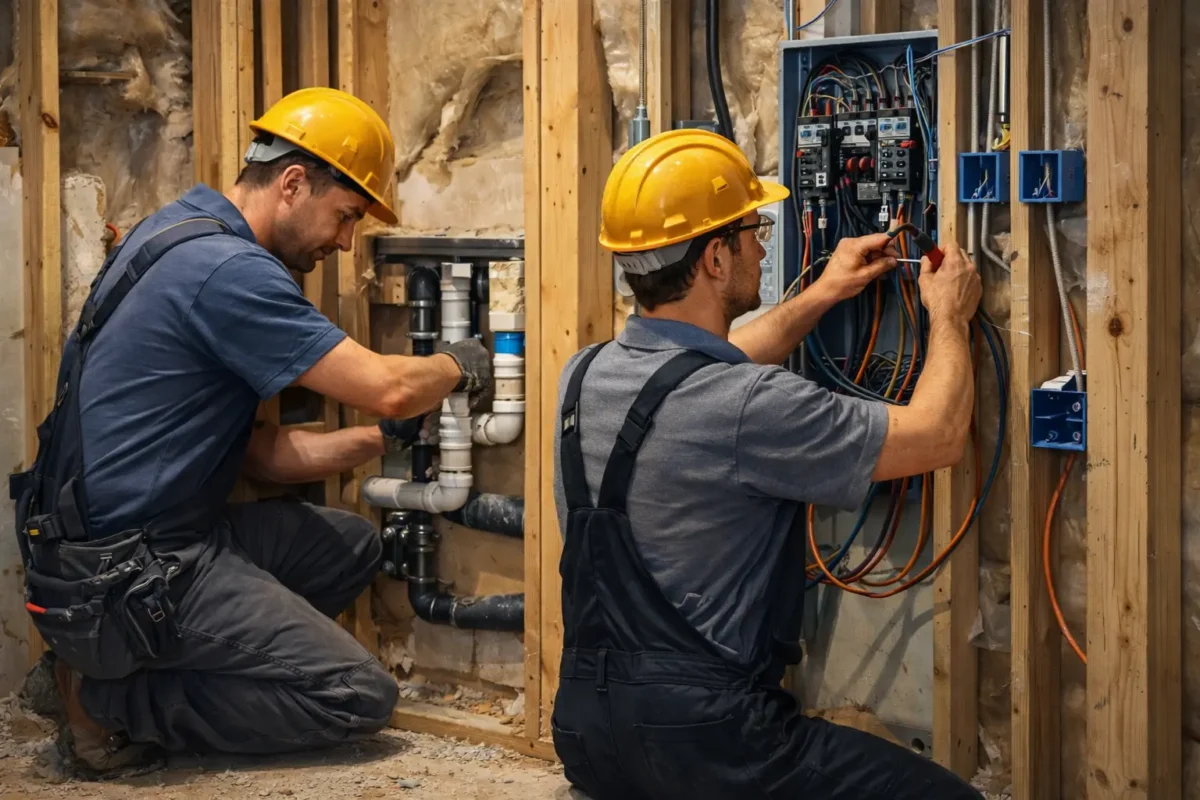
In many Brooklyn homes, plumbing and wiring don’t run neatly in open chases—they’re often tucked inside walls you want to change. Gallery KBNY notes that removing a load-bearing wall can affect hidden systems like plumbing and electrical, and may require rerouting gas lines or reconfiguring water lines to meet NYC codes.
That’s why a “simple” layout change can turn into a bigger scope once demolition reveals older wiring or brittle pipes.
DOB also notes that projects such as rerouting gas pipes and adding outlets often trigger an ALT2 filing for kitchen/bath renovations.
How long do structural renovations usually take for a Brooklyn home?
For a Brooklyn home, the timeline depends on how deep the work goes and how many areas you’re touching. A focused structural job (like adding a beam for a new opening) can be on the shorter side, while foundation work or multi-room structural changes can stretch into months. Permits and plan review can also add time, because DOB approval depends on project complexity and how quickly any objections get resolved.
If you’re combining structural work with kitchens/baths, expect the schedule to expand because those scopes often involve multiple trades, inspections, and coordination.
Where to Find the Best Brooklyn Contractors
Are you looking for an expert contractor in Brooklyn, NYC? SR General Construction has you covered! Our business is located at 8807 Avenue B, Brooklyn, NY 11236, United States, in the Canarsie area.
Additionally, we offer services at Rockaway Parkway and Ralph Avenue, providing fast access to Flatlands, East Flatbush, Bergen Beach, Brownsville, and the Spring Creek section of East New York.
FAQ
1. What is an ALT2 permit, and when is it required?
NYC describes ALT2 as an alteration with multiple work types that doesn’t change use, exits, or occupancy type. The DOB example list includes adding a bathroom, rerouting gas, + adding outlets, or moving a load-bearing wall.
2. What happens if I do structural work without DOB permits?
NYC DOB states that construction without permits is illegal and can result in fines and violations. DOB notes that a severe Class 1 violation can carry a $25,000 fine (plus additional penalties), and the work may need to be legalized or removed.
3. How do I know if a wall is load-bearing?
Don’t guess; have it confirmed by a qualified professional, because load-bearing mistakes can pose serious structural risks. NYC-focused guidance commonly recommends an architect or engineer for this decision.
4. Do I need asbestos testing when opening walls in older NYC buildings?
It may be required depending on your building age and the scope of demolition. Some NYC-focused guidance notes asbestos testing and filing requirements for permitted wall removal, especially in older buildings.