

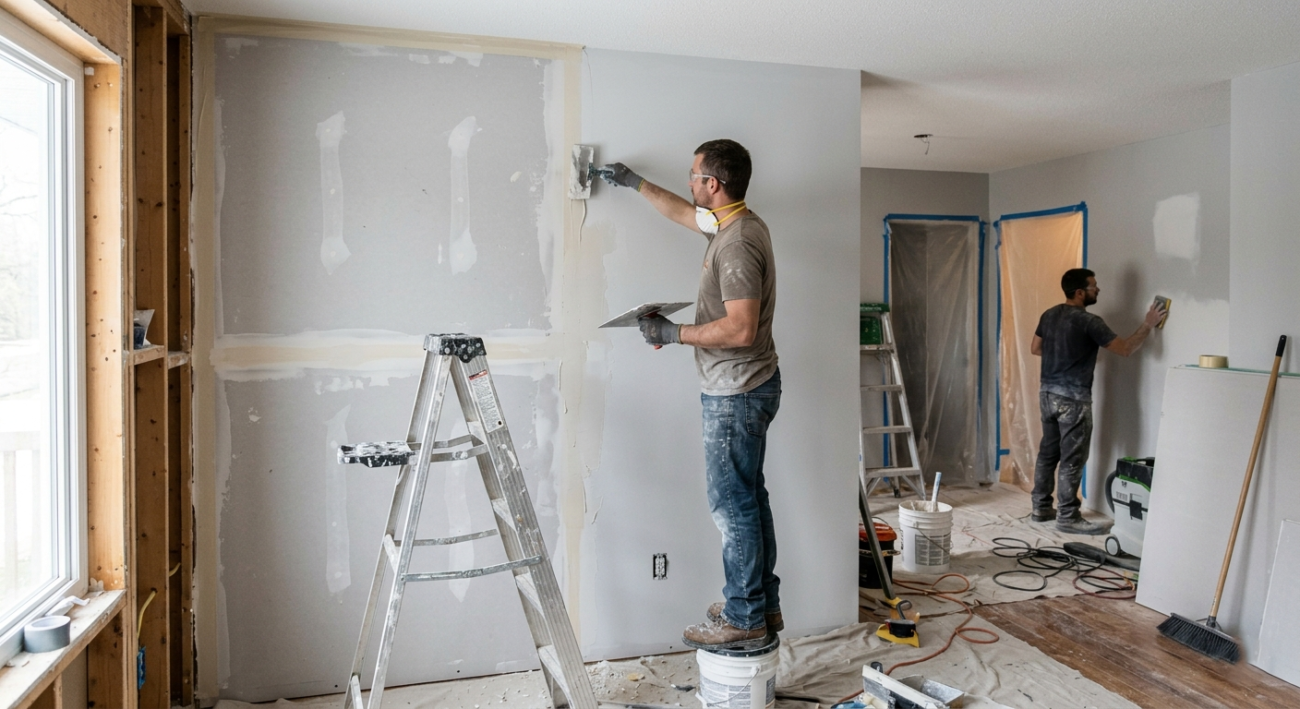
Have you ever spotted a crack, a dent, or a little water stain on your wall?
Drywall, common in Brooklyn homes, often shows wear from cracks, nail pops, or water damage. With a proper renovation, you can restore your home’s interior to a smooth, clean, and safe finish.
What Is Drywall?
Drywall is a flat board made from a layer of gypsum pressed between sheets of paper. It is used to build most modern interior walls and ceilings in homes and apartments. People also call it sheetrock or gypsum board. It creates a smooth surface that you can paint, tile, or wallpaper.
Why Proper Drywall Renovation Matters
Proper drywall renovation makes homes look cared for and protects against moisture, mold, and drafts when the right materials are used. In Brooklyn, quality drywall work improves comfort, reduces noise, and supports property value.
Common Drywall Problems in Brooklyn, NYC
Older Brooklyn buildings often have ongoing drywall problems due to years of repairs and exposure to leaks.
Typical issues you might see include:
- Hairline cracks and stress lines: These often show up around doors, windows, and corners due to building movement or settling. They may start small, but they can spread and make walls look tired and poorly maintained.
- Nail pops and screw pops: You may notice little bumps or circles on the wall where fasteners push through the paint. This happens as framing shifts slightly, causing screws or nails to move and break the surface.
- Water stains and soft spots: Leaks from upstairs neighbors, old roofing, or plumbing can soak the drywall. Over time, this can cause stains, bubbling, or soft, crumbly areas that may hide mold behind the surface.
- Mold and musty odors: In damp basements, bathrooms, or near old windows, moisture can get into drywall, creating mold. This not only looks bad, but can affect indoor air quality and may violate local health rules if left untreated.
- Holes and dents from daily life: Moving furniture, hanging shelves, or kids playing can leave small holes and dents. One or two may not matter, but many together can make walls look worn and careless.
- Sagging or cracked ceilings: Heavy, old plaster, past water damage, or poor installation can cause ceilings to sag or crack. This is not just ugly; in some cases, it can be a safety concern if sections become loose.
Tools and Materials Needed for Drywall Installation
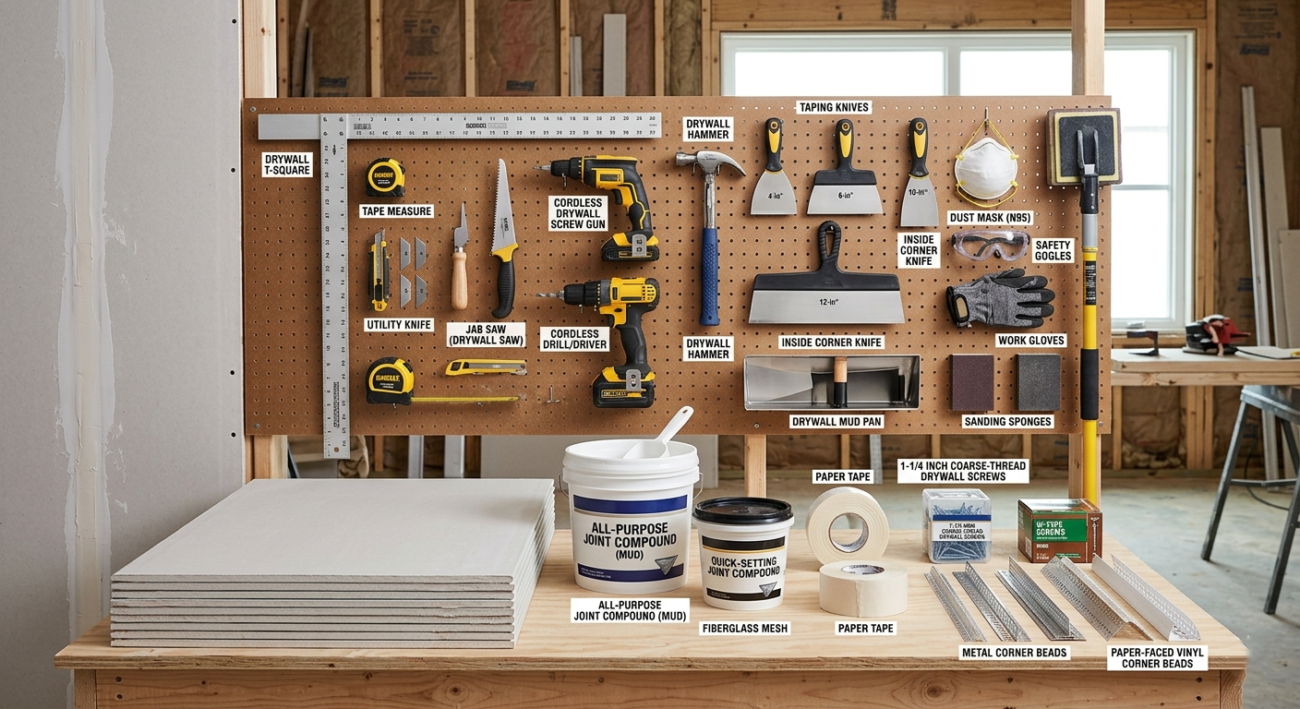
Even a simple drywall job needs some basic tools and supplies. Having the right items on hand will make the work faster, cleaner, and safer.
Common tools and materials include:
- Tape measure
- Utility knife
- Drywall T-square
- Drywall sa,w or jab sw.aw
- Drill or screw gun
- Drywall screws
- Drywall panels (sheetrock)
- Joint tape (paper or mesh)
- Joint compound (mud)
- Putty knives (various sizes)
- Sanding sponge or sanding pole
- Dust mask or respirator
- Safety glasses
- Drop cloths or plastic sheeting.ng
Step-by-Step Drywall Renovation Process
Drywall renovation is easier to manage when you break it into clear steps. This simple process works for both small repairs and larger wall or ceiling projects.
1. Inspect and plan the work: Walk through the space and mark cracks, holes, stains, or loose areas. Decide which sections need patching and which should be fully replaced, and estimate the materials you will need.
2. Protect the area and set up dust control: Cover floors and furniture with plastic or drop cloths. If possible, seal doorways with plastic to keep dust out of other rooms.
3. Remove damaged or loose drywall: Cut out soft, moldy, or badly cracked sections with a knife or saw. Be careful around wires and pipes, and remove any loose debris to ensure a clean, solid opening.
4. Check framing, insulation, and moisture issues: Look at the studs and insulation behind the removed drywall. Fix any leaks, rot, or moisture problems first, so they do not ruin your new drywall later.
5. Install new drywall panels or patches: Measure and cut new pieces to fit the opening or wall. Screw them securely into the studs so the surface is flat and the seams line up neatly.
6. Tape the seams and cover with joint compound: Apply a thin layer of mud on the seams, press tape into it, then smooth it out. Cover fastener heads and corners as well, so everything is ready for finishing.
7. Add more coats of joint compound and feather the edges: After the first coat dries, add one or two more thin coats, each a bit wider than the last. This helps blend the patch into the surrounding wall so you don’t see ridges or edges.
8. Sand the surface smooth: Once the final coat is dry, sand gently until the surface feels even and looks flat under light. Wipe away dust so it does not get trapped under primer and paint.
9. Prime the repaired drywall: Use a quality primer designed for new drywall to seal the surface. This helps paint stick better and prevents patch areas from flashing or showing through.
10. Paint and clean up: Apply your chosen paint in one or two coats for a fresh finish. Remove coverings, vacuum up any remaining dust, and enjoy your renewed walls and ceilings.
How to Choose the Right Type of Drywall for NYC Conditions
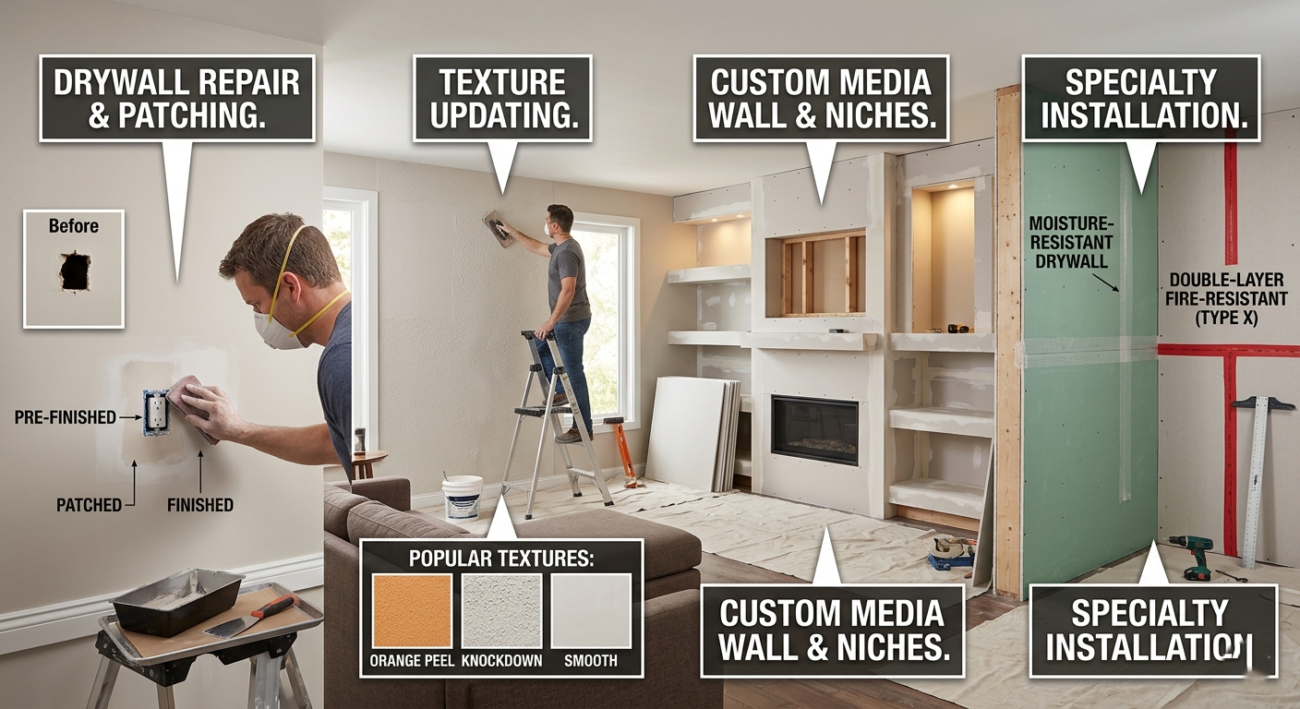
Brooklyn homes face humidity, old plumbing, noise, and strict building rules. Always match each room with the proper drywall to ensure performance and compliance.
- Standard drywall for dry living spaces: You can usually use regular drywall in bedrooms, living rooms, and hallways where there’s no extra moisture. It gives you a smooth, paint-ready surface at a good price.
- Moisture-resistant drywall for bathrooms, kitchens, and basements: In steamy bathrooms, around kitchen sinks, and in damp basements, moisture-resistant boards (often called “green board” or “purple board”) hold up better than standard drywall. They help reduce swelling, peeling, and long-term water damage.
- Mold-resistant drywall for areas with past leaks: If your Brooklyn building has a history of leaks or condensation, this type of drywall provides extra protection. It uses special cores or facings that make it harder for mold to grow when moisture sneaks in.
- Fire-rated Type X drywall for shared and exit walls: In many NYC multifamily buildings, certain walls and ceilings must meet specific fire ratings, and that’s where Type X fire-rated drywall comes in. It looks similar to a standard board but is thicker and designed to slow the spread of fire as part of a rated wall system.
- Cement board behind tile and in very wet zones: Around showers, tub surrounds, and other soaking-wet spots, cement board is usually a better choice than regular drywall. It doesn’t soften the way gypsum can, and makes a stronger base for tile.
- Sound-damping or acoustic drywall for noisy walls: If you hear your neighbors’ TV, footsteps, or subway rumble, consider acoustic drywall or double layers of regular drywall with sound-damping products. These options add mass and break up vibrations, helping reduce noise between rooms and units.
- Always check building rules and NYC code before you decide: Some interior walls in NYC must retain their fire rating, so you can’t just swap materials without considering safety or permits. When in doubt, talk to building management and a licensed contractor so your choices stay code-compliant.
How to Plan for Drywall Renovation in a Brooklyn Home
Early planning is essential to a smooth drywall renovation. Consider your space, building rules, and daily routine before work begins to save stress once the dust starts flying.
- Walk through your home and list all problem areas: Take a slow tour of each room and mark every crack, stain, soft spot, and hole you see. This list will help you explain your needs clearly to a contractor and avoid surprise add-ons later.
- Decide what you really want from the renovation: Ask yourself whether you want only cosmetic fixes or also soundproofing, moisture control, or better insulation. Clear goals make it easier to choose the right materials and finish level.
- Set a realistic budget with a small buffer: Get a rough idea of how much you’re comfortable spending on drywall, primer, and paint. Then leave some extra room in your budget in case you uncover old leaks, bad framing, or hidden damage once the walls are open.
- Talk with your landlord, co-op, or condo board early: Many Brooklyn buildings have rules about work hours, elevator use, and noise, and some may require board approval or proof of insurance. Sorting this out at the start prevents delays and awkward conversations with neighbors.
- Collect a few estimates from licensed Brooklyn contractors: Try to get at least three written quotes with clear details on materials, finish level, cleanup, and timeline. Don’t just compare the total price; compare what’s actually included.
- Plan your schedule around your life and your neighbors: Think about when you can handle noise and dust and when you absolutely can’t. If you work from home or have small kids, you might want the messiest work grouped into as few days as possible.
- Protect your furniture and decide where you’ll stay during heavy work: You can live through many drywall jobs, but it’s easier if you clear rooms, cover everything well, and know where you’ll sleep if a bedroom ceiling is being replaced. Even a simple plan like “we’ll stay in the back room for two nights” makes the process feel less chaotic.
- Schedule other upgrades before the walls close: If you ever wanted to add outlets, move a light, or upgrade insulation, the best time is while the drywall is open. Doing this now keeps you from paying twice to open and close the same wall later.
Eco-Friendly Drywall Renovation Options for Green Brooklyn Living
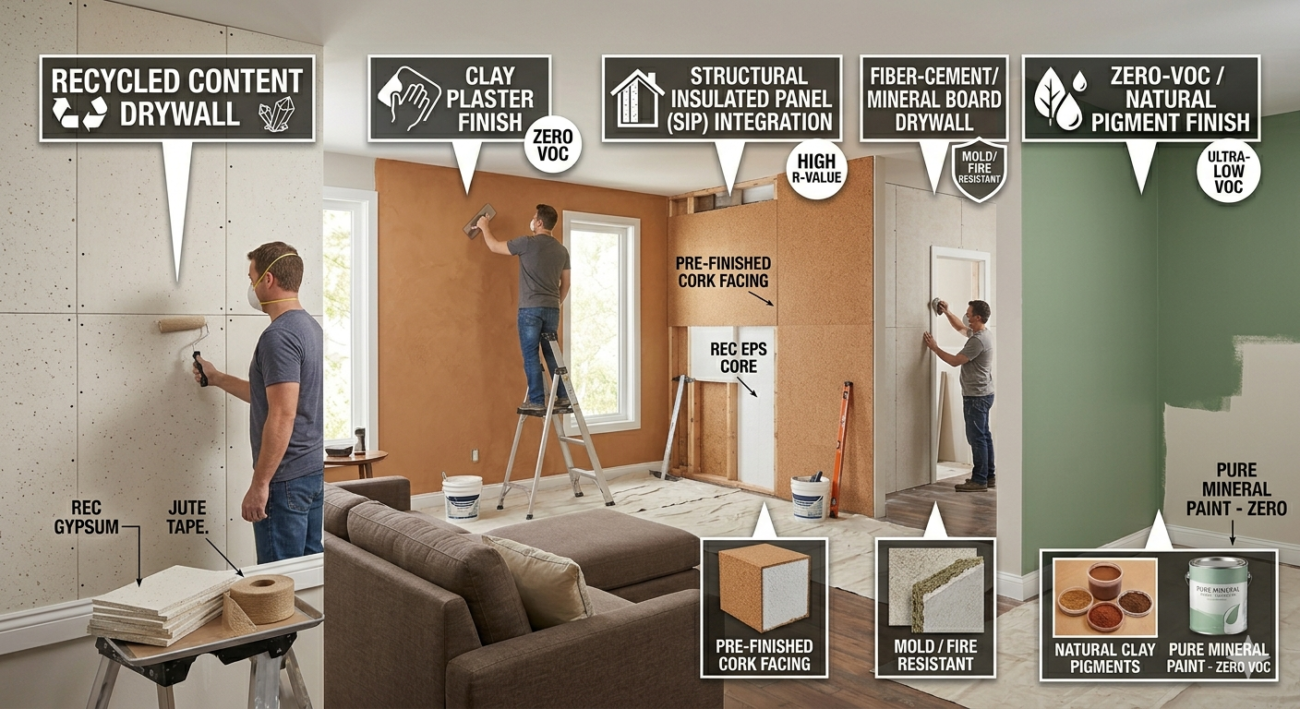
If you care about your impact on the planet, you can make your drywall project much greener without giving up comfort or safety. You’ll also enjoy cleaner indoor air and lower energy bills over time.
- Choose drywall with recycled content: Many modern gypsum boards use a high percentage of recycled gypsum and recycled paper. This reduces waste sent to landfills and cuts energy use in manufacturing.
- Look for eco-friendly or “green” gypsum board alternatives: Some products use special cores, paperless facings, or natural materials that lower emissions and improve air quality. These boards can still meet fire, moisture, and sound performance needs while supporting a more sustainable home.
- Use low-VOC joint compound and primers: Standard muds and coatings can emit volatile organic compounds (VOCs) as they dry. Low-VOC or non-toxic options help keep your indoor air cleaner, which is a big plus in smaller NYC apartments.
- Finish with low- or zero-VOC paint: When your new drywall is ready, eco-friendly paints with low VOC levels keep smells down and reduce long-term off-gassing. This makes your space more comfortable, especially if you have kids, pets, or allergies.
- Upgrade insulation to cut energy use: While the walls are open, adding better insulation helps your home stay warm in winter and cooler in summer. That means your heating and cooling system doesn’t have to work as hard, which is good for your bills and the environment.
- Recycle or properly dispose of old drywall where possible: Some facilities can take clean drywall scraps and turn them back into new material or use them in other products. Ask your contractor if they separate waste on site and use local recycling options.
Renovating Drywall Ceilings
Drywall ceilings can be tricky because everything happens over your head, but the basics are the same as wall work. You or your contractor will first remove any loose, sagging, or badly stained sections and check the framing above for leaks or damage. New boards are then lifted into place, screwed securely, taped, mudded, and sanded until the ceiling looks flat and clean again. Because ceilings involve more lifting, safety risks, and, in some cases, thicker or fire-rated boards, many Brooklyn homeowners prefer to hire a pro for this part of the job.
Soundproofing and Insulation Opportunities During Drywall Renovation
Drywall renovation is the perfect time to make your home quieter and more comfortable because the inside of your walls is already open. You can add better insulation, like mineral wool, to soak up sound and help keep heat where you want it. In some rooms, you might also choose extra layers of drywall, sound-damping compounds, or resilient channels to reduce noise from neighbors or street traffic. These upgrades cost more up front, but in a busy place like Brooklyn, they often pay off in better sleep, calmer rooms, and lower energy use over the long run.
Drywall Renovation Costs in Brooklyn: What Impacts Your Budget
| Cost item | Typical range in Brooklyn (2025) |
|---|---|
| Basic drywall installation (new walls/ceilings, standard drywall) | ≈ $3.50 – $6.00 per sq ft |
| Full drywall replacement (remove old + install new) | ≈ $5.50 – $6.50 per sq ft |
| Localized wall or ceiling repair (Brooklyn rate) | ≈ $4.50 – $8.00 per sq ft of damaged area |
| Minimum trip / small-job charge | ≈ $250 – $800 per visit |
| Moisture-resistant drywall upgrade (bathrooms, basements) | + ≈ $0.70 – $0.90 per sq ft (materials) |
| Soundproof / acoustic drywall upgrade | + ≈ $2.30 – $3.75 per sq ft (materials) |
| Ceiling work premium | Often 1.5× – 2× wall labor rate |
| Skim coat / Level 5 smooth finish (add-on) | ≈ $1.50 – $3.00 per sq ft |
| Demolition & debris removal (old drywall) | ≈ $0.50 – $2.50 per sq ft |
| Water-damage and mold-affected drywall | ≈ $500 – $2,500+ per affected area |
| Insulation added while walls are open | ≈ $1.00 – $4.00 per sq ft of wall |
| Primer and paint after drywall work | ≈ $2.00 – $6.00 per sq ft |
| Permits, building fees, and paperwork (if required) | Varies by building and scope |
| Protection, cleanup, and dust control | Usually included in labor |
How does Local Law 55 affect drywall repairs in mold-affected NYC apartments?
Local Law 55, also called the Asthma-Free Housing Act, requires NYC landlords in buildings with three or more apartments to keep homes free of indoor allergen hazards like mold and pests, and to fix leaks and moisture problems that cause the.
This means that if your drywall has mold, the owner cannot just paint over it; they must investigate, remove damaged materials, and repair the source of the moisture in a safe way.
In larger buildings with extensive mold areas, the law may require the services of licensed mold assessment and remediation contractors, and full drywall replacement is often the only code-compliant option.
Owners also have to inspect units regularly for mold and other allergens and respond quickly when tenants report leaks or visible mold.
This overview is not legal advice, so if you have a serious mold issue, it’s smart to speak with HPD, a licensed mold professional, or an attorney who knows NYC housing law.
How to Find the Right Drywall Renovation Provider
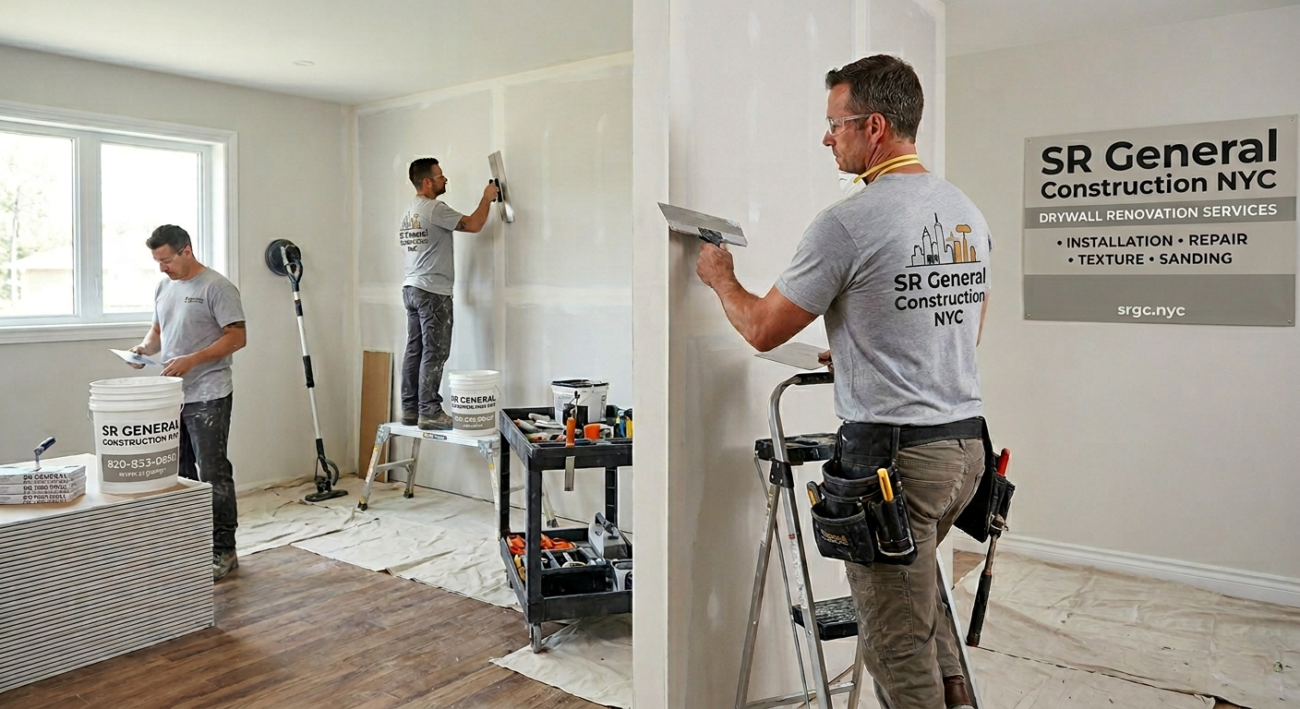
Picking the right drywall contractor in Brooklyn matters just as much as choosing the right materials. You want someone who understands NYC buildings, follows the rules, and treats your home with respect.
- Make sure the contractor is licensed and insured: In New York City, a company that performs paid home improvement work,such as drywall renovation, generally needs a Home Improvement Contractor (HIC) license from the Department of Consumer and Worker Protection.
- Ask for the license number and proof of insurance, and don’t be afraid to double-check it.
- Look for strong local experience in Brooklyn: A contractor who works in Brooklyn every day will know brownstones, co-ops, condos, and pre-war rentals—and the typical problems they hide in the walls. That local experience helps them spot issues early, like old leaks or non-standard framing, and plan a smarter drywall renovation.
- Check reviews, photos, and references: Read Google, Yelp, or Angie reviews and look for repeated comments about cleanliness, communication, and finish quality—not just price. Ask for before-and-after photos and one or two local references so you can see how their work actually looks in a Brooklyn setting.
- Ask how they handle mold and Local Law 55 issues: If your drywall has water stains or musty smells, you want a contractor who understands mold risks and NYC requirements. They should talk about finding leaks, safely removing damaged drywall, and working with licensed mold pros when needed, not just “bleaching and painting.”
- Review a clear, written estimate—not just a number: Your quote should explain what areas they will repair or replace, what type of drywall they will use, and what finish level you’ll get. It should also say who handles debris removal, priming, painting, and any needed permits.
- Ask about dust control and protection for your home: A good provider will describe how they cover floors and furniture, seal off rooms, and control dust during sanding. This is especially important in small Brooklyn apartments, where dust travels fast, and shared hallways need to stay clean.
- Consider a proven local company like SR General Construction, NYC: SR General Construction, NYC, is fully licensed and has over 15 years of experience upgrading electrical systems and roofing in Brooklyn, so we understand how all the pieces of a building work together. We’ve completed more than 750 projects for 500+ satisfied clients, and we offer 24/7 support so you can reach us any time you have a question about your home’s safety and comfort.
How do I know if my Brooklyn apartment’s drywall needs repair or full replacement?
It can be hard to tell if you should just patch a spot or tear out a whole section of drywall. A quick look at the type and size of the damage will help you decide what your walls really need.
- Small cosmetic issues usually only need repair: Tiny nail holes, light dents, and hairline cracks that don’t change over time can often be fixed with simple patching and a bit of paint. In these cases, there is no sign of moisture, bulging, or mold, and the wall still feels solid to the touch.
- Recurring cracks or damage that keep coming back may need deeper work: If you keep patching the same crack and it keeps reappearing, there might be movement in the framing or a deeper problem behind the wall. A pro may recommend cutting out a larger area of drywall to check the structure and install a stronger repair.
- Water damage, soft spots, or mold usually call for replacement: Stains, sagging areas, a soft “spongy” feel, or a musty odor are warning signs that moisture has soaked the drywall. In many cases, the safest and most code-friendly option is to remove and replace those sections, especially if Local Law 55 applies or you see visible mold.
- Large holes or broken sections often need new drywall pieces: A small hole from a picture hook is easy to fill, but a fist-sized hole or a badly smashed corner usually needs a cut-out and a new patch of drywall. Once the damaged area gets too big, patching alone won’t hold well or look smooth, so replacing that piece is the better fix.
- Old, over-patched walls may be better off with a fresh start: If your walls have been patched and skimmed many times and still look lumpy under light, it might be time for more than another quick repair. Replacing larger sections or doing a full skim coat can give you a smoother, cleaner surface and a longer-lasting result.
Which type of drywall is best for humid Brooklyn bathrooms and basements?
For most Brooklyn bathrooms and basements, you’ll want moisture-resistant or mold-resistant drywall (often called green board or purple board) instead of standard drywall, because it handles humidity much better and helps slow down mold growth.
In very wet areas, such as shower and tub walls, cement board is usually the best choice because it is much more water-tolerant and provides a solid base for tile.
Whatever you pick, you’ll still need good ventilation, fans, and leak control, or even the best drywall can eventually fail in NYC’s humid bathrooms and basements.
Where to Find the Best Brooklyn Contractors
Are you looking for an expert contractor in Brooklyn, NYC? SR General Construction has you covered! Our business is located at 8807 Avenue B, Brooklyn, NY 11236, United States, in the Canarsie area.
Additionally, we offer services at Rockaway Parkway and Ralph Avenue, providing fast access to Flatlands, East Flatbush, Bergen Beach, Brownsville, and the Spring Creek section of East New York.
FAQ
1. What is drywall renovation in simple terms?
Drywall renovation means fixing or replacing damaged wall and ceiling boards and then refinishing them so they look smooth and clean again. It can be as small as patching a hole or as big as redoing an entire room in your Brooklyn home.
2. How much does drywall renovation cost in Brooklyn?
In Brooklyn, drywall repair and replacement typically range from $4.50 to $8.00 per square foot for typical jobs, with small repair visits often carrying a minimum charge. Your final price depends on damage size, drywall type, finish level, and how hard it is to access the area.
3. How long does a typical drywall renovation take in a Brooklyn apartment?
Small repairs can often be completed in 1 to 3 visits over a few days, since the compound needs time to dry between coats. A full-room renovation may take several days to a couple of weeks, depending on size, drying time, and your building’s work-hour rules.
4. What should I do first if I see water damage on my drywall?
First, try to find and stop the source of the leak or call building management or a plumber. Then have the damaged drywall inspected, because stained or soft areas often need to be cut out, dried, and replaced rather than just painted over.
5. What questions should I ask during a drywall estimate or inspection?
You can ask about their license, insurance, exact scope of work, materials, finish level, timeline, and how they handle dust and cleanup. It’s also smart to ask whether they see any hidden issues, such as moisture or framing problems, that could affect the final price.