

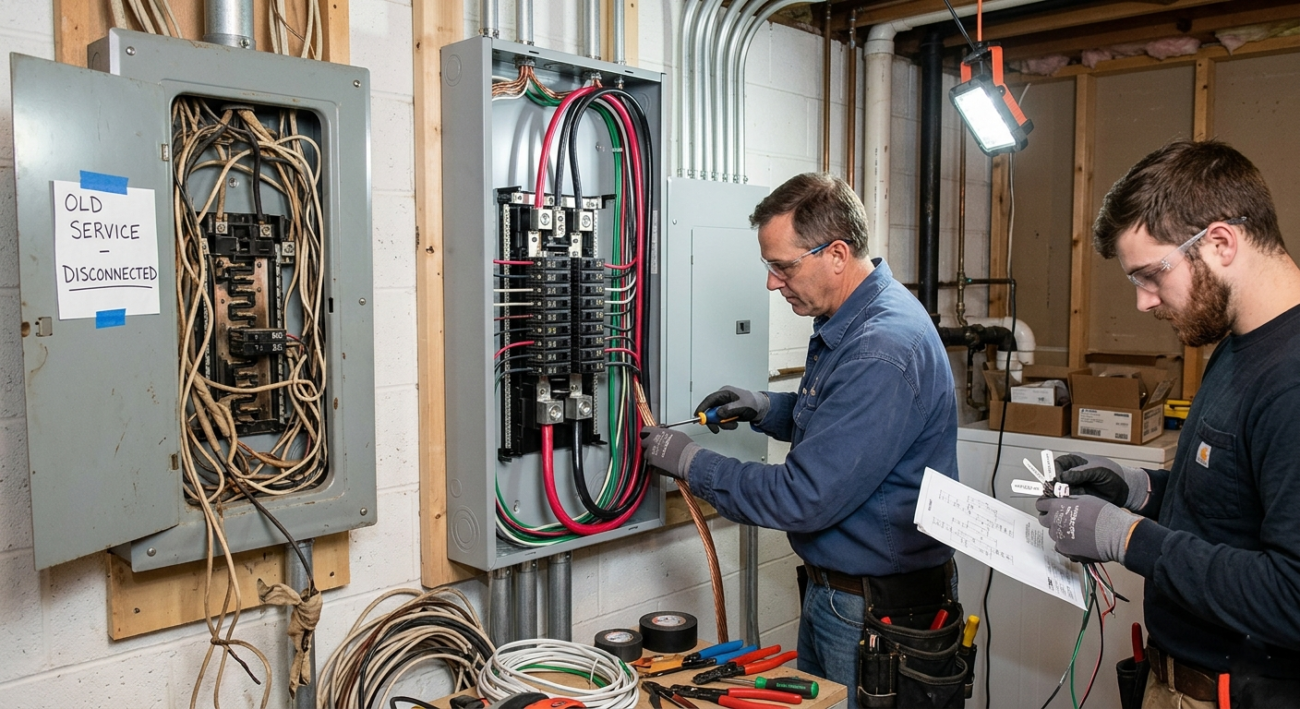
Why do so many Brooklyn homeowners suddenly find themselves needing an electrical panel upgrade?
Suppose you live in a brownstone, a pre-war apartment, or even a recently renovated condo. In that case, your home’s electrical system may be carrying far more load than it was initially designed for. Modern appliances, HVAC systems, smart home devices, and daily energy demands have increased dramatically, yet thousands of Brooklyn homes are still running on outdated panels installed decades ago.
What an electrical panel does and how it distributes power
An electrical panel, also known as a load center or panelboard, is the metal box located in your basement or utility closet that receives incoming power from the utility company and then distributes it to every circuit in your home. Each circuit is protected by a circuit breaker or fuse, which shuts off power if there’s too much current, keeping wires from overheating.
The panel’s “main breaker” controls the flow of power from the utility lines into your home and can turn off every circuit at once for maintenance or emergencies. Inside the panel, you’ll see rows of breakers connected to individual circuits that feed lights, outlets, and appliances. Together, these breakers form a safe and organized hub for your home’s electricity.
What’s Included in Electrical Panel Upgrade
Upgrading your electrical panel isn’t just about replacing the old box; it involves several key components and services to ensure your home remains safe and compliant. Here’s what’s typically included when a licensed electrician performs a panel upgrade:
- Licensed labor and permits: A master electrician handles the entire process and obtains the necessary permits from your local building department, ensuring the work meets New York City code. Having a permit also guarantees that the upgrade is inspected for safety and compliance.
- New service panel and breakers: The electrician installs a modern GE or Eaton service panel with circuit breakers sized to accommodate your home’s electrical loads. Modern breakers provide better overcurrent protection and include slots for future expansion.
- Relocating or repositioning the panel: If the existing panel is in an inconvenient or non-code-compliant location, the electrician will relocate it to a safer, code-approved spot. This step may involve running new conduit or wiring to reach the new location.
- Wiring and ancillary equipment: All necessary cables, grounding rods, bonding straps, and other hardware are supplied and installed. Proper grounding and bonding protect you from shocks and ensure the system operates safely.
- Cleanup and disposal: Once the new panel is operational, the electrician disposes of the old panel and cleans the work area. This helps you avoid handling old, potentially hazardous equipment yourself.
Signs Your Brooklyn Home Needs an Electrical Panel Upgrade
Even if your lights still turn on, hidden issues may signal that your panel is overdue for an upgrade. Older Brooklyn brownstones and pre‑war apartments often show tell‑tale symptoms that you shouldn’t ignore.
- Frequent breaker trips or blown fuses – If circuits trip or fuses blow regularly, it means your panel is struggling to handle the demand, and your wiring may be overloaded. Constant resets wear out breakers and increase the risk of overheating, so a larger panel or additional circuits may be needed.
- Flickering or dimming lights – Lights that flicker when appliances turn on suggest voltage drops caused by an undersized panel or overloaded circuits. Replacing the panel with a higher amperage model helps stabilize voltage and keep your lighting steady.
- Burning smells, scorch marks, or buzzing sounds – These are red flags that connections inside the panel are overheating and could start a fire. A licensed electrician should inspect and likely replace the panel immediately.
- Hot outlets and outdated two-prong receptacles – Warm or discolored outlets, along with the absence of a grounding pin, indicate old wiring and insufficient capacity. Upgrading the panel (and wiring) adds grounding and reduces the risk of shocks.
- Presence of knob‑and‑tube or aluminum wiring – Many Brooklyn homes still have knob‑and‑tube or aluminum wiring, which cannot safely support modern loads. During a panel upgrade, electricians often replace these outdated systems to meet current code.
Benefits Of 200‑Amp (or Higher) Electrical Panel Upgrades
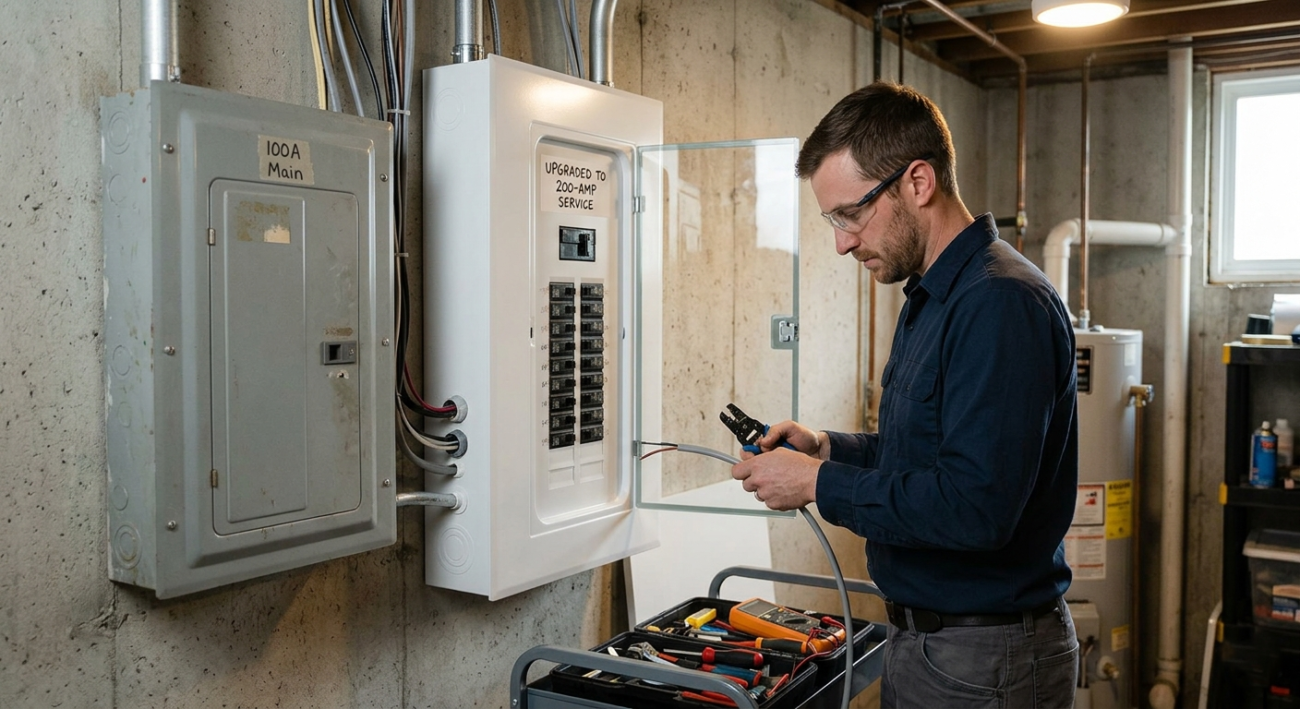
Modern lifestyles—think air conditioners, EV chargers, induction cooktops, and smart devices—demand more electricity than ever. Upgrading to a 200-amp or higher panel provides your home with the necessary capacity and flexibility.
- More electrical capacity and future‑proofing – A 200‑amp panel provides ample room for new circuits, allowing you to run multiple high‑demand appliances without tripping breakers. It also positions your home for future upgrades, such as solar panels or battery storage.
- Improved safety and code compliance – Modern panels include advanced breakers that respond quickly to faults and meet today’s stricter safety standards. This reduces the risk of electrical fires and satisfies insurance and building‑code requirements.
- Better reliability and performance – A larger panel distributes power more evenly, preventing voltage drops and improving the performance of sensitive electronics. You’ll experience fewer flickers, surges, and nuisance trips.
- Ability to accommodate new technologies – EV chargers, heat pumps, and smart homes often require dedicated circuits and higher amperage. A 200-amp or higher panel can easily handle these modern loads.
- Enhanced property value and resale appeal – Buyers value homes with updated electrical systems, knowing they won’t need to invest in upgrades immediately. A higher‑capacity panel demonstrates that the home is safe and ready for modern living.
Can Your Building Handle an Electrical Panel Upgrade?
Not every building can accept a panel upgrade without modifications, so it’s essential to know the limitations and requirements. A panel upgrade increases the number of circuits in your home, but it doesn’t automatically raise the total amperage available; the leading service from the utility and the building’s riser must support the higher load. If your current panel is undersized and your electrical demand exceeds its capacity, a utility‑side service upgrade—often coordinated with Con Edison in Brooklyn—may be necessary.
Some older co-ops and brownstones have limited riser capacity or shared service lines that restrict the amount of amperage each unit can draw; in these cases, the building’s board must approve upgrades and may require a building-wide infrastructure improvement. By contrast, if your building’s main service is already sized for 200 amps and there’s space for new wiring, a licensed electrician can usually install the panel without significant structural changes, making the upgrade a straightforward way to modernize your home.
How to Upgrade Electrical Panels: Step-by-Step Overview
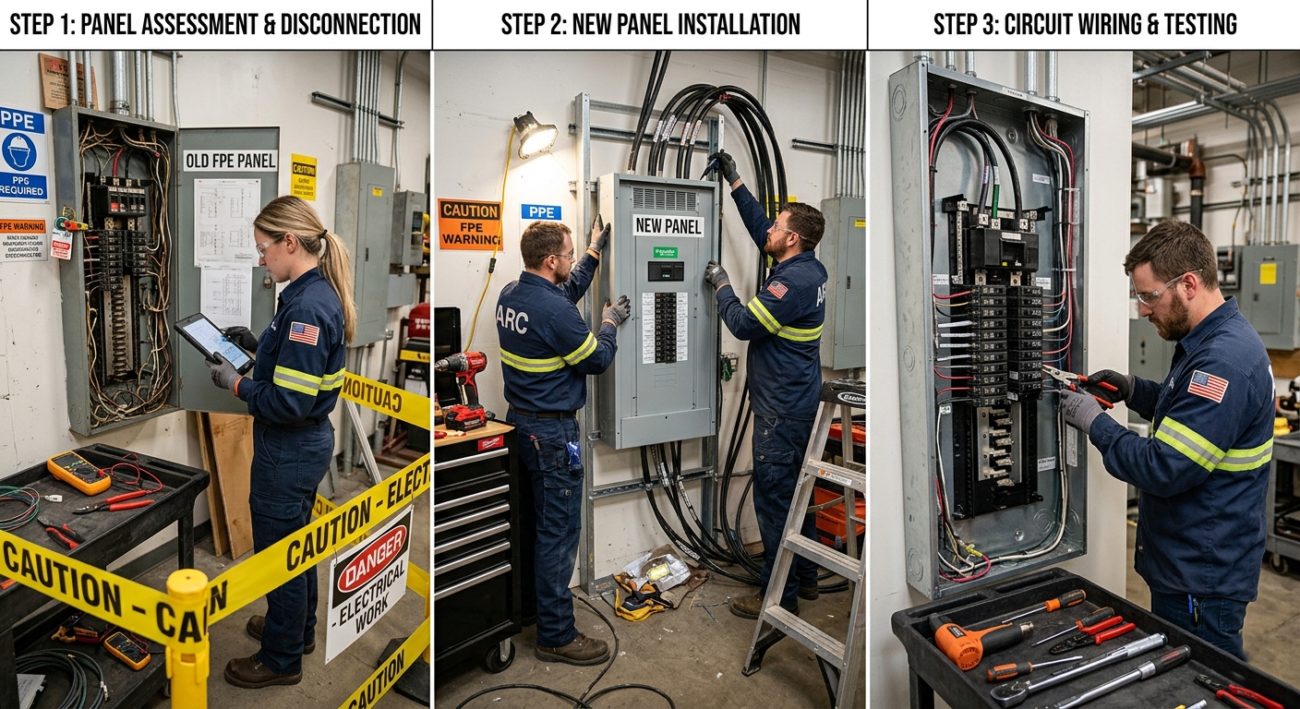
Upgrading an electrical panel is more than simply swapping out an old breaker box; it’s a carefully sequenced process that protects your home and ensures compliance with local codes. Here’s how professionals typically handle the job:
- Initial inspection and load calculation – A licensed electrician reviews your existing panel, evaluates the condition of your wiring, and calculates the total electrical load you need. This helps determine the correct panel size and identifies any circuits or appliances that may need special attention. Proper planning at this stage prevents surprises during installation.
- Permit filing and scheduling – In cities like Los Angeles (and similarly Brooklyn), electricians file permits and pick an installation window before any work begins. This step ensures that the project meets local code requirements and that inspectors and utility crews are available when needed. Permitting can take a few days, so starting early helps keep the project on schedule.
- Power shutoff and removal of the old panel – On installation day, the electrician shuts off power and makes the meter and existing panel safe before removal. Removing the old panel usually takes an hour or two, including labeling and disconnecting existing circuits. Having a clear work area speeds up this step.
- Installation of the new panel – The new panel is mounted, breakers are installed, and conductors are correctly sized and connected. The electrician also updates grounding and bonding to meet current code, ensuring that your system can safely handle higher amperage. Each circuit is labeled for easy identification.
- Rewiring and upgrades – If you’re adding circuits for future appliances or replacing outdated wiring, this part of the project can take several hours to complete. Upgrading from knob‑and‑tube or aluminum wiring often happens at this stage to ensure a safe connection. Once the circuits are installed, the electrician runs final tests and labels each breaker.
- Inspection and utility reconnection – After the work is complete, the city inspector checks the panel to verify that everything meets code and that breakers, grounding, and labeling are correct. Once the inspection is passed, the utility reconnects power, often on the same day or the next business day. A final walkthrough and cleanup wrap up the project.
Cost Considerations For Electrical System Upgrades in Brooklyn, NYC
According to industry estimates, panel upgrades typically cost between $800 and $4,000, with a standard 100-amp to 200-amp upgrade ranging from $1,300 to $3,000, including both the panel and labor. The overall cost depends on the panel size you choose—larger panels (300–400 amps) require more expensive equipment and labor. Additional expenses include permits ($50–$300), specialized breakers ($35–$60 each), moving the panel ($800–$3,000), or replacing a main breaker and hot bus bar ($200–$2,000). Rewiring or service upgrades handled by the utility can dramatically increase costs; Rewiring America notes that complete service upgrades and transformer replacements can reach $5,000–$25,000 and may be necessary if your existing service can’t handle the increased load.
Timeline Considerations For Electrical Panel Upgrades In Brooklyn, NYC
While the physical installation of a new panel typically takes a single day, the overall timeline is longer due to permitting and utility coordination. Tik Electric notes that the installation itself—including shutdown, removal, installation, and testing—typically takes 6–10 hours, with permits, utility appointments, and inspections extending the whole process to 3–10 business days.
Permit filing typically takes 1–5 business days, and inspection or utility reconnection can add one to two days, depending on scheduling. Complex projects—such as relocating a panel, running new conduit, or rewiring circuits—may require 2 to 3 days of additional labor. To avoid delays, homeowners should clear the space around the panel, provide photos in advance, and be available to make quick decisions during the project.
NYC Electrical Code and DOB permit/inspection requirements; Con Edison service capacity and potential service line upgrades
- Permits and licensed electricians are mandatory – The NYC Department of Buildings states that no installation or modification of electrical systems can be performed without a permit and a license from a NYC Licensed Master Electrician. Even minor electrical work requires a permit, and the DOB must inspect general electrical work of 1,000 KVA or less.
- Different rules apply for minor versus major work. For small repairs—such as replacing a defective circuit breaker or up to five fixtures—permits are still required, but a DOB inspection may not be necessary. Anything larger than 1,000 KVA requires a registered design professional to submit plans for approval.
- Coordination with the utility for service upgrades – Some panel upgrades also require upgrading the service line from the utility, which is the utility’s responsibility. Rewiring America notes that service upgrades or transformer replacements can cost $5,000–$25,000 and often cause delays because they depend on the utility’s schedule. In Brooklyn, this means working with Con Edison to upgrade service conductors and meter equipment.
- Documented load calculations and equipment specs – When submitting for a permit, electricians must provide load calculations, a panel schedule, and manufacturer specifications to show that the new panel meets code and can handle the anticipated load. Failure to provide this information can delay approval and inspection.
How long will my power be off during an electrical panel upgrade?
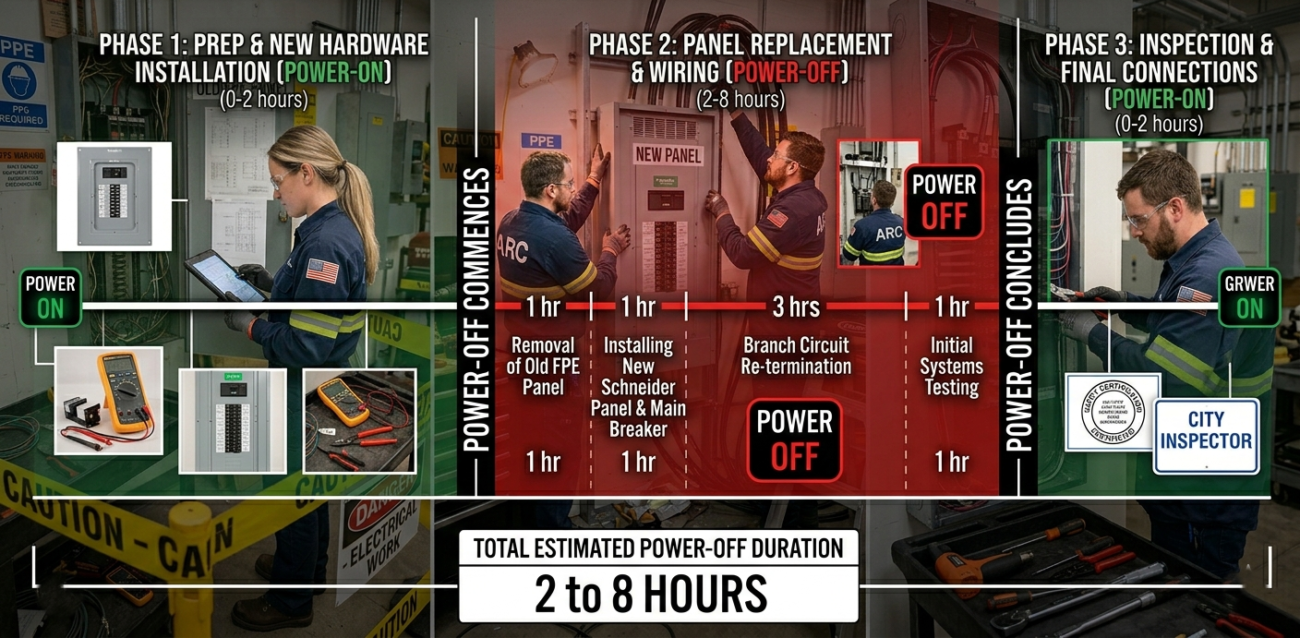
Your power won’t be off for long, but you should plan for at least a full day without electricity. Tik Electric’s timeline indicates that shutting off the power and removing the old panel takes approximately 1–2 hours, while installing the new panel—including grounding, bonding, and labeling—takes an additional 3–6 hours.
If rewiring or installing new circuits is needed, this can add 4–12 hours, and utility reconnection typically occurs later the same day or the next business day. Overall, most homes regain power within the same day, but coordination with Con Edison and city inspectors may extend this to 2–3 days for more complex upgrades.
Can I upgrade my electrical panel myself, or must I hire a licensed master electrician?
Upgrading an electrical panel is not a DIY project. This Old House cautions that working with household electrical systems is dangerous and should only be done by trained, licensed electricians—faulty wiring causes roughly 46,700 house fires annually in the U.S. You should always hire a licensed master electrician who understands NYC codes and can coordinate permits and inspections. When choosing a professional:
- Verify credentials and insurance – Request proof of licensure and confirm that the electrician carries liability insurance. Reputable contractors are happy to share these documents.
- Check reviews and experience – Look up the electrician’s Better Business Bureau profile and online reviews, and ask about their experience with panel upgrades and service changes.
- Ask about warranties and written estimates – A dependable electrician will provide a written contract, warranty their work, and explain what’s included.
- Consider SR General Construction NYC – Our company is fully licensed and has over 15 years of experience upgrading electrical systems in Brooklyn. We’ve completed more than 750 projects for 500+ satisfied clients, and we offer 24/7 support to keep your home safe and powered. By choosing us, you’ll get a detailed estimate, professional installation, and ongoing customer care.
Where to Find the Best Brooklyn Contractors
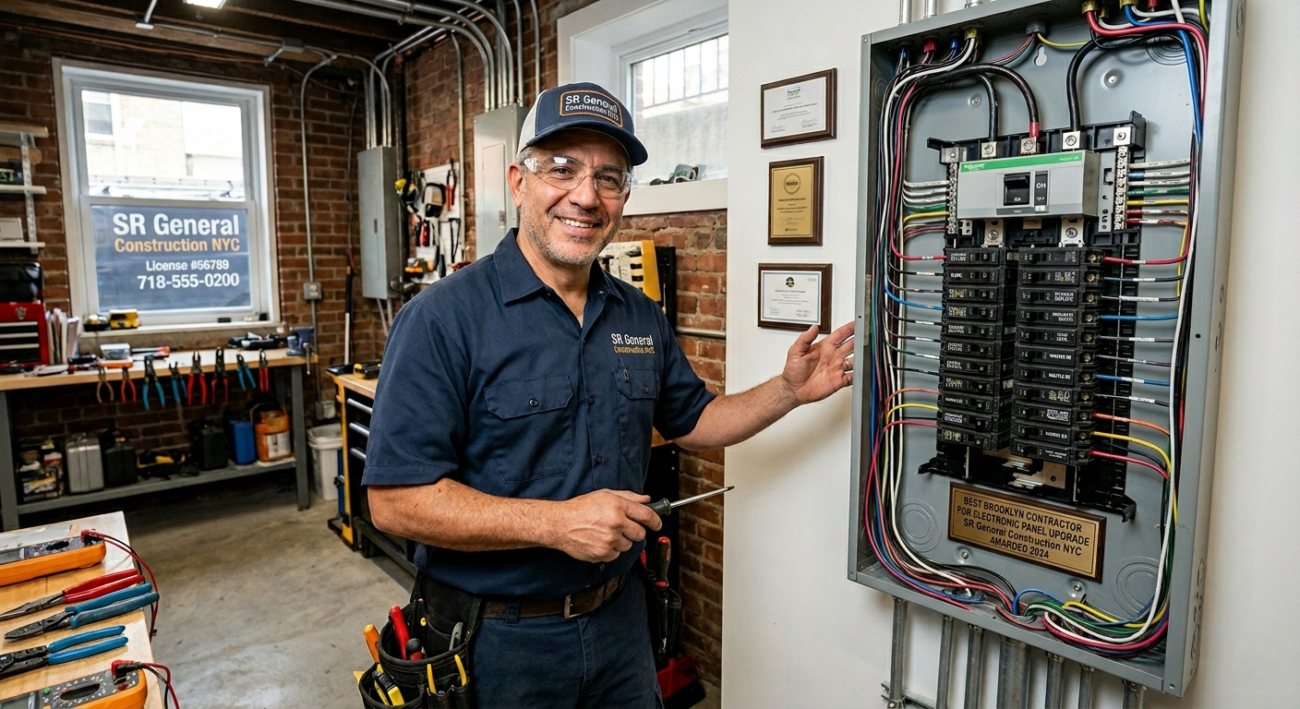
Are you looking for an expert contractor in Brooklyn, NYC? SR General Construction has you covered! Our business is located at 8807 Avenue B, Brooklyn, NY 11236, United States, in the Canarsie area.
Additionally, we offer services at Rockaway Parkway and Ralph Avenue, providing fast access to Flatlands, East Flatbush, Bergen Beach, Brownsville, and the Spring Creek section of East New York.
FAQ
1. What is an electrical panel in my Brooklyn home, and what does it actually do?
Your electrical panel serves as the main control center, taking power from Con Edison and distributing it safely to every circuit in your home. It distributes electricity to lights, outlets, and appliances, while circuit breakers shut off power if something overloads or shorts.
2. Why do Brooklyn homeowners often need electrical panel upgrades?
Older panels in brownstones and pre-war buildings weren’t built for today’s loads (EVs, smart homes, HVAC). Upgrades ensure capacity, safety, and compliance with current codes.
3. How can I tell if my electrical panel is too old or unsafe?
Frequent breaker trips, flickering lights, buzzing sounds, warm outlets, and two-prong outlets are warning signs. If your panel is decades old or uses fuse boxes, it’s time for a check.
4. How long does an electrical panel usually last before needing replacement?
Most panels serve well for about 25-40 years under normal conditions. Older age, plus heavy loads or corrosion, can shorten this lifespan.
5. Is a 100-amp panel enough for my Brooklyn home, or should I upgrade to 200 amps?
A 100-amp panel may suffice for light use, but if you plan HVAC upgrades, EV charging, or future expansion, a 200-amp panel is recommended for better capacity.
6. How much does it cost to upgrade an electrical panel in Brooklyn, NY?
Typical panel upgrades range between $1,000 and $2,500+, depending on size, wiring condition, and access.