

What makes a Brooklyn bedroom feel truly comfortable, stylish, and valuable in the real estate market?
This is a question many homeowners ask when planning a renovation in New York City, especially in neighborhoods with character, such as Park Slope, Williamsburg, or Brooklyn Heights. Your bedroom plays a huge role in your daily comfort. It also influences resale value, because buyers in Brooklyn pay close attention to bedroom size, layout, and upgrades.
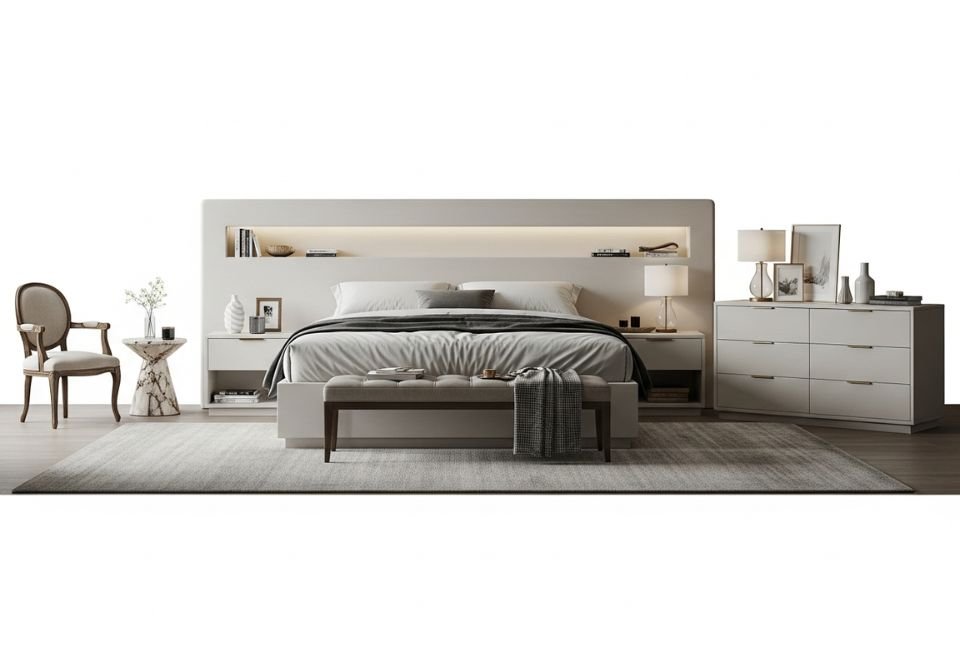
In this comprehensive guide, we walk you through every step of a successful Brooklyn, NYC, bedroom renovation ideas. You will learn how local housing rules work, what makes a bedroom “legal” in the city, and what updates need permits.
What is a bedroom renovation?
When you renovate a bedroom, you update the space to make it work better for your life and look the way you want it to. You might consider changing the layout, upgrading storage, improving light and sound, or refreshing finishes such as paint, floors, and furniture. A bedroom renovation can remain simple with cosmetic updates or evolve into more substantial work, including updates to walls, windows, and electrical systems. The main goal is clear: you want a room where you sleep well, feel calm, and also add value to your home.
How to Plan for the Perfect Bedroom Renovation Ideas
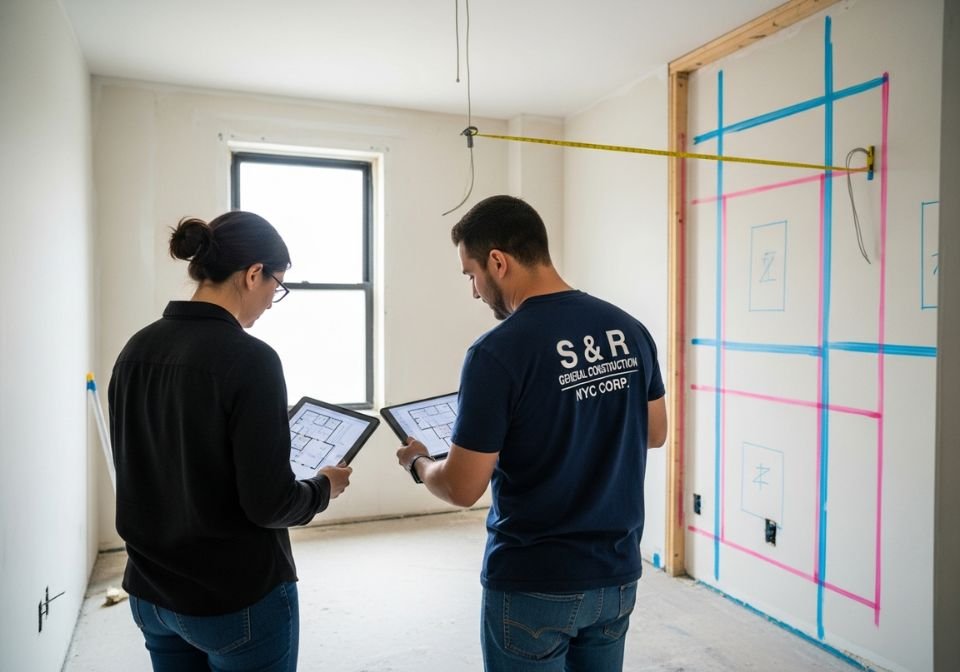
A great bedroom renovation starts with a clear vision of how you want the room to feel and how you plan to use it every day. You assess the space, light, storage, and any issues, and then you decide what needs to change and what can remain. After that, you set a realistic budget and timeline to avoid stress and incomplete work. When you feel unsure, consult with an architect, designer, or contractor who understands your type of home and local regulations.
Pro Tip
SR General Construction NYC is a fully licensed Brooklyn team with over 15 years of experience in the city, having completed more than 750 projects and serving 500+ satisfied clients – plus they offer 24/7 support. This kind of proven track record means you’re working with experts who know how to handle surprises and deliver great results.
Structural Considerations & Space Configuration
When you change walls or room layouts, you’re dealing with the structure of your home, so you need to approach the task carefully. You want your new bedroom to feel open and functional, but you must also respect load-bearing walls, building codes, and your building’s regulations.
Here is how you can approach it:
- Ask a licensed architect or engineer to confirm which walls hold weight and which ones you can move so you stay safe.
- Study your current floor plan and consider factors such as bed placement, door swing, and walking paths before deciding where to place any new wall.
- If you want a more open feel, explore wide doorways, arches, or glass partitions instead of full wall removal.
- Plan early for electrical and HVAC systems to ensure that outlets, switches, vents, and radiators are positioned in the optimal locations for your new layout.
- In co-ops, condos, or historic buildings, check the board rules and city permit requirements before you touch any wall to avoid fines and delays.
Maximizing Space in Small Bedrooms
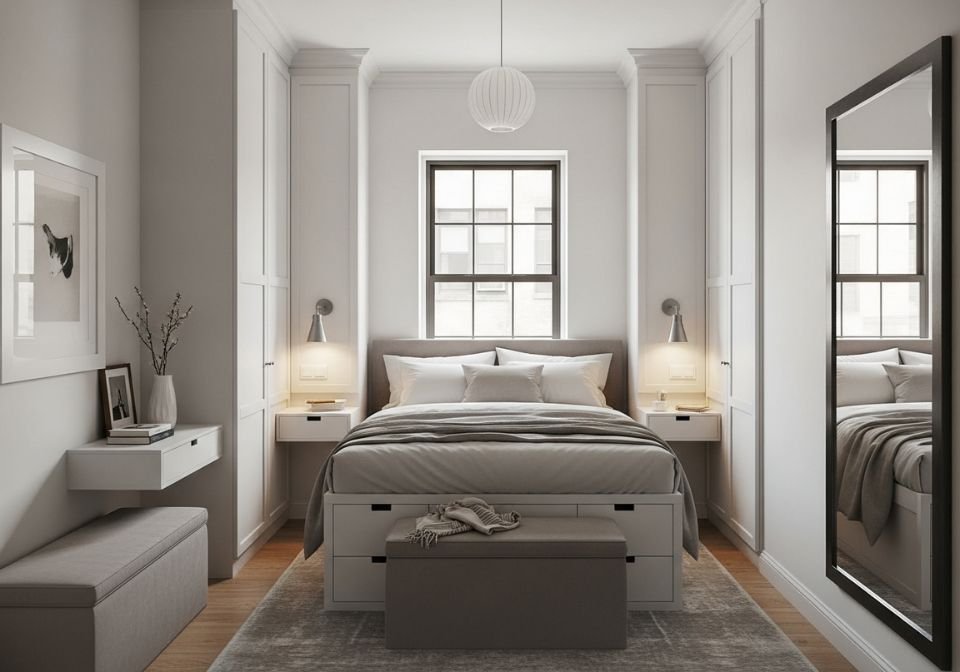
Small bedrooms are very common, but with a smart plan, you can still create a room that feels calm, not cramped. Your goal is simple: give every inch a purpose and keep the room easy to navigate.
You can try steps like these:
- Choose a bed size that truly fits your room so you still have space to walk and open drawers.
- Utilize vertical space with tall wardrobes, shelves extending up to the ceiling, and hooks on the back of doors for storing bags or robes.
- Pick furniture with built-in storage, such as beds with drawers, storage benches at the foot of the bed, and nightstands with drawers.
- Swap bulky pieces for wall-mounted items, such as floating nightstands, slim shelves, and wall lamps, to keep the floor clear and uncluttered.
- Use mirrors, light colors, and simple window treatments to make the room feel larger and less heavy.
Creating a Separate Sitting Area & Reading Nook
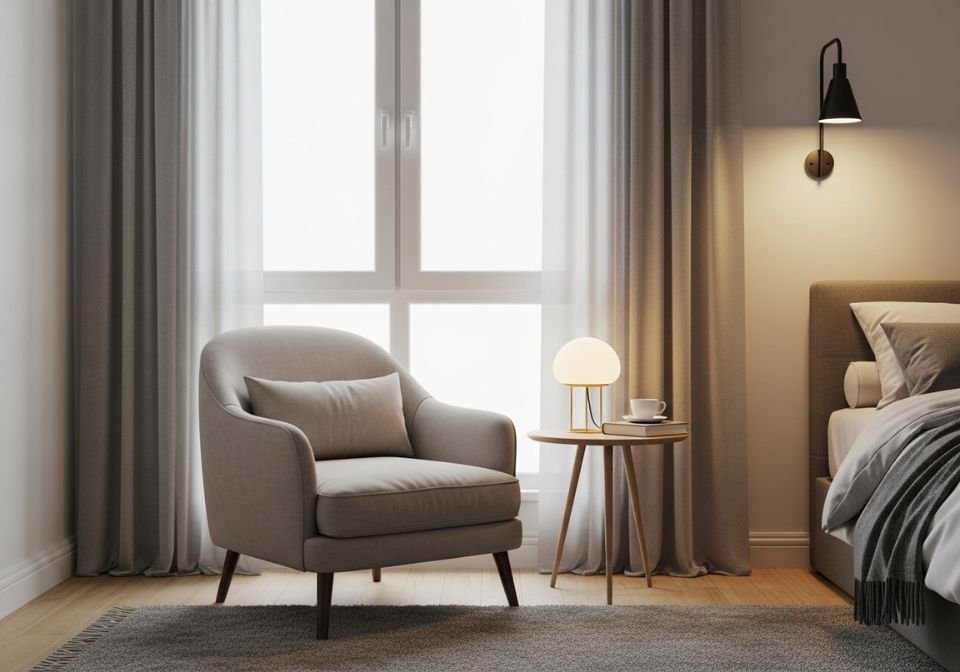
When your bedroom has sufficient space, a small sitting area or reading nook can transform your enjoyment of the space. You turn the bedroom from a place where you only sleep into a private mini-living room inside your home.
A sitting area is important for several reasons. It provides a quiet spot to read, journal, or enjoy coffee without having to leave your room. It can also feel like a tiny escape in a busy Brooklyn apartment, especially if the rest of your home stays active and loud. Over time, this small corner can support better rest because you engage in slow, calm activities there before moving to bed.
Here is how you can shape yours:
- Place a comfy chair, chaise, or small loveseat near a window so you can enjoy natural light and a view.
- Add a small side table for books, tea, glasses, and a lamp so you avoid clutter on the floor.
- Use a soft area rug to mark this corner as a separate zone inside the bedroom.
- Add a floor lamp or wall sconce with warm light to help you read comfortably at night without straining your eyes.
- If space feels tight, consider using a built-in bench under the window with storage space under the seat, allowing you to gain both seating and hidden storage.
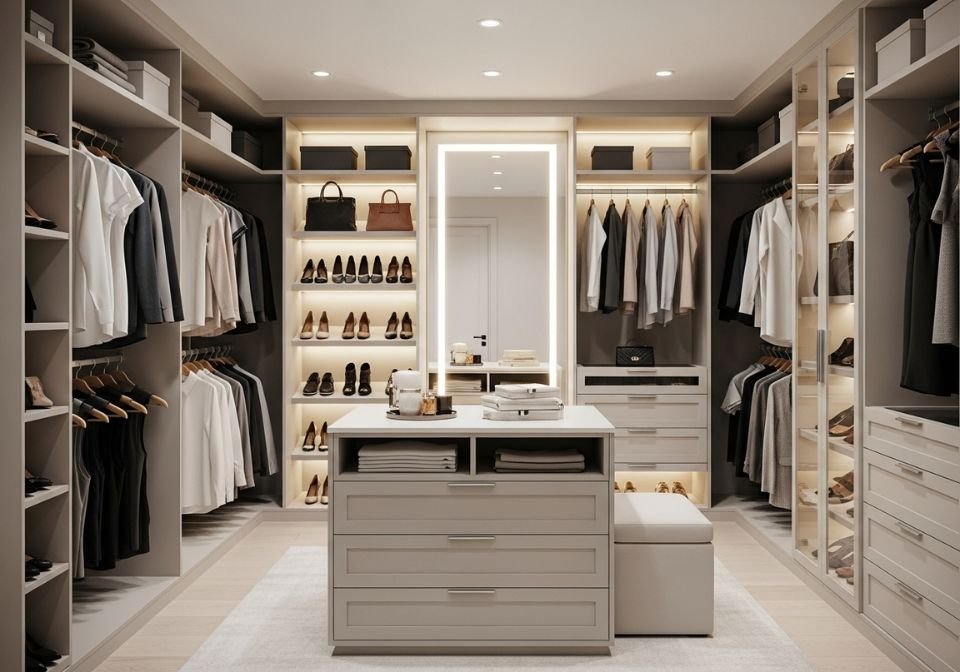
Designing a Luxury Walk-In Closet
A luxury walk-in closet transforms your daily routine into a serene ritual, rather than a rushed search for clothes. You see your outfits, shoes, and accessories at a glance, so you dress faster and with less stress. A well-designed closet also adds a “wow” factor that can support resale value and makes your bedroom suite feel more like a boutique hotel than a basic room.
You can explore styles and designs like
- Custom-built-ins feature sections for long hanging, short hanging, shelves, and drawers, ensuring every item has its designated place.
- A central island with drawers for jewelry, watches, and small items, plus a top surface where you can fold clothes or lay out outfits.
- Display open shelves or glass-front cabinets for shoes, bags, or your favorite pieces that you want to see every day.
- Integrated lighting inside shelves, under rods, and around mirrors so the space feels bright and high-end.
- A seating spot, such as an ottoman or bench, and a full-length mirror, allowing you to sit, try on shoes, and check your look in comfort.
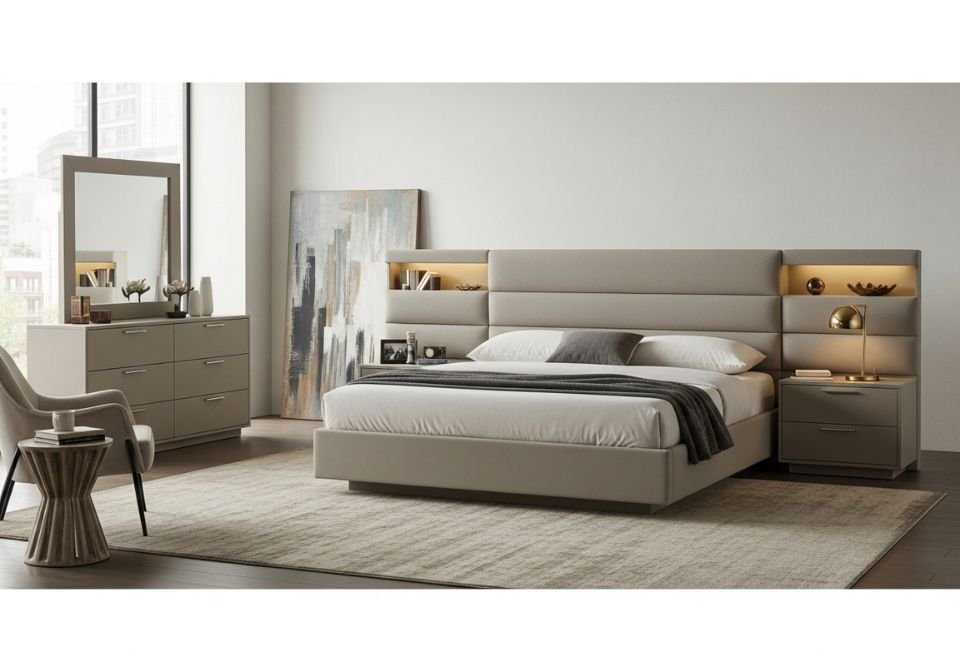
Statement Furnishings & Custom Headboards
Your main furniture choices set the mood for the whole bedroom. When you choose one or two statement pieces with care, you give the room a clear style, and you avoid random items that fight each other.
Statement pieces matter because your bed and main furniture grab the eye first. A strong bed frame or custom headboard can anchor the room and make even a simple space feel designed. Good furniture also enhances functionality, as the right size and storage space keep your bedroom comfortable and easy to use every day.
Here is how you can approach this part of your renovation:
- Invest in a quality bed frame that fits your style, such as a canopy bed, an upholstered bed, or a simple modern platform.
- Consider a custom headboard that runs wider than the bed and includes built-in shelves or lighting for a designer look.
- Match the scale of dressers and nightstands to your room and bed so that nothing feels too small or too large.
- Use one or two special pieces, such as a vintage chair, a sculptural side table, or an artful bench, to showcase your personality.
- Place an area rug under the bed that extends on both sides, framing the sleeping zone and adding warmth to the floor underfoot.
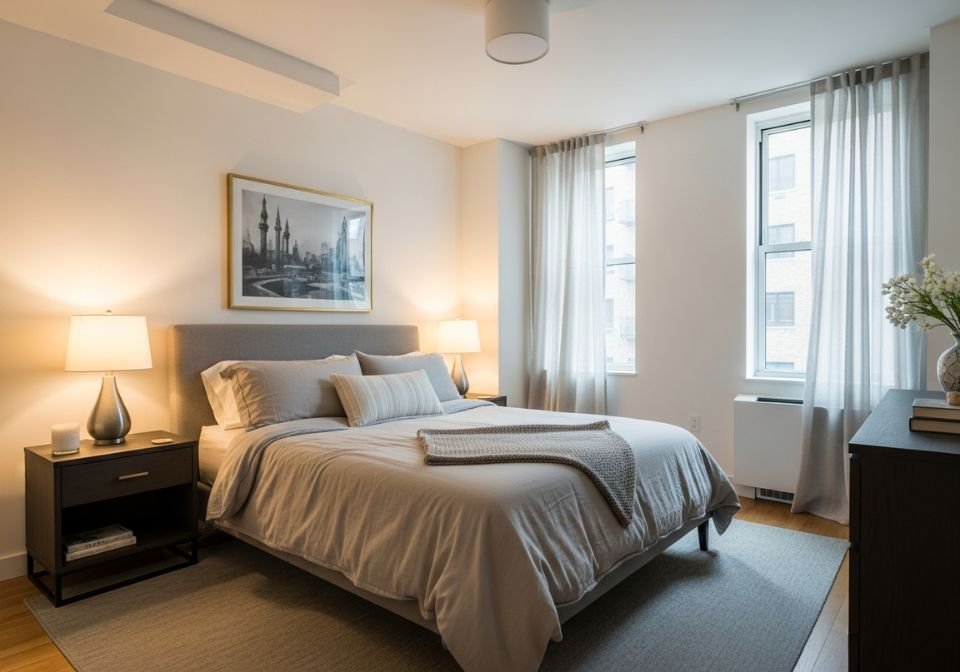
Lighting Design and Natural Light
Light has a huge impact on how your bedroom feels from the moment you wake up until the time you fall asleep. The right mix of natural and artificial light helps you relax, read, get ready, and sleep better.
Good lighting matters because it shapes mood and comfort. Bright white light at night can feel harsh and keep you awake, while warm, soft light can help your body wind down. Natural light in the morning supports your body clock and can lift your mood, and smart control of light gives you privacy without a cave-like room.
You can build a simple lighting plan like this:
- Start with a main overhead light, such as a ceiling fixture or recessed lights on a dimmer, so you can easily switch between bright and soft lighting.
- Add bedside lamps or wall sconces at reading height so you and your partner can control your own light.
- Use accent lights, such as LED strips, behind the headboard, inside closets, or under shelves, to create a layered and rich feel in the room.
- Choose window treatments that let in light during the day and block it at night, such as sheer curtains with blackout panels.
- If your budget allows, consider adding smart controls or dimmers to adjust brightness and color temperature from the bed.
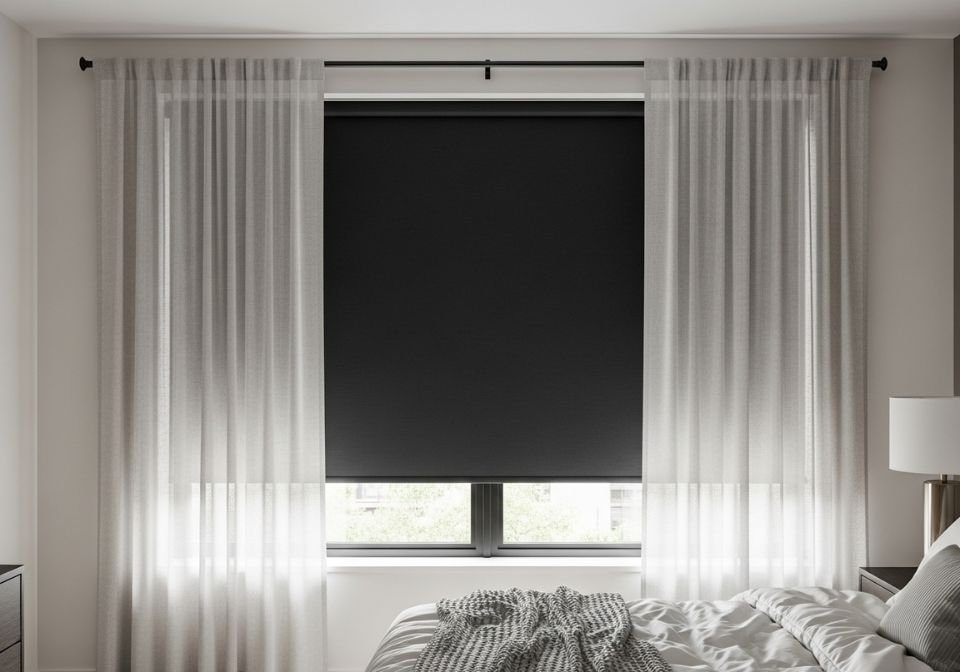
Window Treatments & Coverings
Good window coverings matter a lot when you live in a busy part of Brooklyn because streetlights, neighbors, and early sun can all disturb your sleep. Blackout shades and curtains help you control light and also add a bit of insulation, which supports comfort and energy savings. The style you choose also pulls your whole bedroom design together, so the room feels calm and intentional.
Here is how you can approach window treatments for your bedroom:
- Use blackout roller shades or lined curtains in your main sleeping area to ensure darkness, even if your windows face a bright street.
- Add a second soft layer, such as sheer curtains or light Roman shades, to enjoy daylight with privacy during the day.
- Mount curtain rods are a bit wider and higher than the window frame so your windows look larger and more elegant.
- Choose fabrics that match your lifestyle, such as easy-to-clean blends if you have kids or pets, and richer textures if you prefer a more luxurious feel.
- If your budget allows, consider motorized shades, which offer push-button control and integrate well with smart home systems.
Flooring & Area Rugs
When you step out of bed each morning, the floor under your feet shapes how the room feels. In a Brooklyn bedroom, the floor also ties old bones of the building to your fresh design.
Here are simple ways you can handle floors and rugs in your bedroom:
- If you have original wood floors in decent shape, you can refinish them instead of replacing them, which keeps the charm and often costs less than full replacement.
- In condos or co-ops, check the house rules about sound underlayment before installing new hard flooring to ensure your neighbors stay happy.
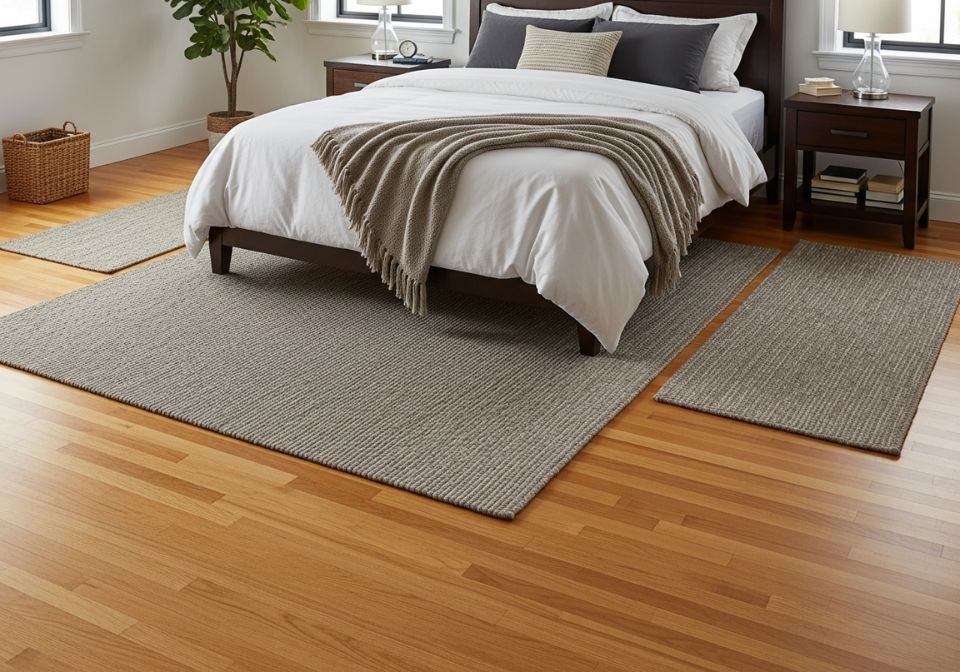
- Place a large rug under the bed that extends past the sides, so you feel the softness when getting in and out of bed.
- Use runners beside the bed or in narrow layouts to add warmth without hiding the entire floor.
- Select rug materials that match your lifestyle, such as wool for its durability or flat weave styles for a low-pile option that is easy to clean.
Smart Technology & Energy Efficiency
Smart features and efficient systems can transform your bedroom into a quiet, tech-friendly retreat, rather than just a visually appealing space. In Brooklyn’s older buildings, they also help you handle drafts, temperature swings, and street noise.
Here are ways you can bring smart tech and efficiency into your bedroom:
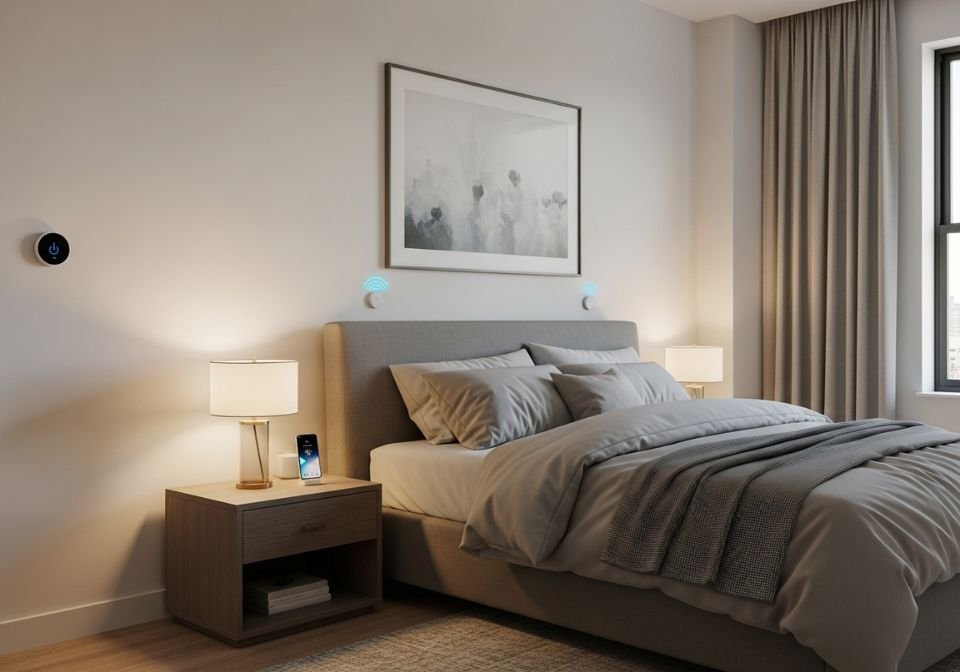
- Add smart dimmers and bulbs so you can adjust brightness and color warmth from your bed or phone.
- Install programmable or smart thermostats, and, if possible, connect them to zoned systems, such as mini splits, for better room-by-room control.
- Consider installing insulated windows or storm panels in drafty rooms, especially in older brownstones, to reduce heat loss and street noise.
- Use smart plugs or power strips for lamps and chargers to reduce phantom power consumption and manage devices more easily.
- Choose low-energy LED lighting for all fixtures, which reduces heat gain in summer and lowers your electric bill.

Understanding Local Regulations and Codes
When you plan bedroom renovation work in Brooklyn, you also deal with New York City rules. Here is a clear snapshot so you stay on the safe side:
- A legal bedroom in NYC must be at least 80 square feet in size, with a minimum width of 8 feet, a ceiling height of approximately 8 feet, and a window with at least 12 square feet of glass, plus two means of egress, such as a door and a window.
- The room must be considered a “habitable room” under NYC code, which means it must have proper lighting, ventilation, and safe egress, not just any small leftover space.
- Most interior layout changes, such as adding a bedroom or relocating walls, require a Department of Buildings alteration filing, often designated as an Alt 2, since the change involves altering the walls but not the building’s basic use.
- Minor cosmetic work, such as painting, wallpaper installation, and floor refinishing, often does not require a DOB permit; however, it is recommended to confirm with a design professional or the city before commencing.
- If you live in a co-op or condo, you must follow your building’s alteration agreement and board rules, which can add extra fees and steps on top of city permits.
- In landmarked brownstones or buildings inside historic districts, exterior changes and some window work usually require approval from the NYC Landmarks Preservation Commission before you touch the façade.
- For complex projects, owners often hire an expediter or architect to handle filings, coordinate with DOB and LPC, and keep their permits on track.
What is the cost consideration for a bedroom renovation in Brooklyn, NYC?
For a bedroom renovation in Brooklyn, very rough ballparks often fall around $100–$200/sq ft for light cosmetic work, $200–$350/sq ft for mid-range upgrades with some layout and system changes, and $400–$500+/sq ft for high-end suites with custom millwork and structural changes. Additionally, you typically add design and permit fees, plus a 10–20% buffer for unexpected surprises in older Brooklyn buildings.
Where to Find the Best Brooklyn Contractors
Are you looking for an expert contractor in Brooklyn, NYC? SR General Construction has you covered! Our business is located at 8807 Avenue B, Brooklyn, NY 11236, United States, in the Canarsie area.
Additionally, we offer services at Rockaway Parkway and Ralph Avenue, providing fast access to Flatlands, East Flatbush, Bergen Beach, Brownsville, and the Spring Creek section of East New York.
FAQ
1. What qualifies a room as a legal bedroom in NYC?
In NYC, a legal bedroom must be at least 80 sq ft, have at least one dimension of 8 feet or more, have a window with at least 12 sq ft of glass, and have two means of egress (typically a door and a window).
2. Do I always need a permit for a bedroom renovation in Brooklyn?
If your work is purely cosmetic (paint, flooring, or redecoration), you generally do not need a structural permit, but any change to walls, windows, egress, or layout likely triggers a permit (e.g., an Alt 2 filing with the New York City Department of Buildings).
3. How much does a bedroom renovation typically cost in Brooklyn?
For standard updates in NYC, costs can average around $200 to $400 per square foot, depending on the scope and finishes.
4. Can I convert a den or alcove into a bedroom in Brooklyn?
Yes, you can, but you must meet the legal bedroom standards (80 sq ft, window, width, egress) and secure building/co-op and DOB approvals.
Many buildings and boards require full alteration agreements for this kind of conversion.
5. How much storage should I build into a renovated Brooklyn bedroom?
You should aim for built-in or wall-integrated storage that uses vertical wall space and avoids floor clutter.
A rule of thumb: allocate storage space equal to 25-40% of the wall area for wardrobes, shelving, or seating with storage underneath.
References:
Casino Rocket Login https://s3.amazonaws.com
References:
Winningz Casino Erfahrungen ecircular.sarawak.gov.my
References:
Nv1 Casino Erfahrungen http://ww.visit-x.net/
References:
Bizzo Casino Test http://researchesanswered.akamaized.net/__media__/js/netsoltrademark.php?d=linkera.net/janineduvall82
References:
Levant Casino Bonus ohne Einzahlung https://privada58.ru
References:
Poseidon Casino Test https://peoplelab360.com/companies/beste-casino-apps-2026-volles-mobiles-casino-erlebnis/
References:
Goldbet Casino Bonus ohne Einzahlung https://allasguru.com/