

What makes a kitchen truly feel like the heart of your home? For many Brooklyn homeowners, it’s not just the place where meals are made—it’s where conversations happen, memories grow, and family gathers. If your kitchen feels outdated, cramped, or simply not “you,” a smart renovation can change everything.
In this complete guide to kitchen renovation in Brooklyn, NYC, you’ll learn what a renovation really involves, how it differs from remodeling, and how to plan each step with confidence. We’ll cover budgeting, permits, hiring trusted local contractors, and choosing the right designs, layouts, and materials for your Brooklyn home.
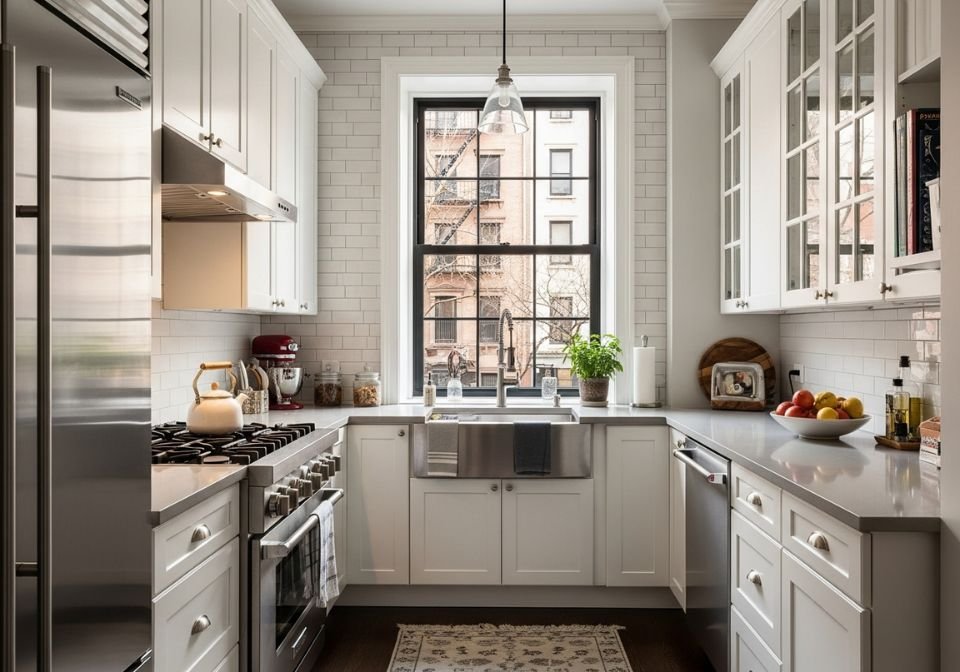
What is Kitchen Renovation?
A kitchen renovation is essentially a makeover for your kitchen that focuses on updating and refreshing the space rather than completely rebuilding it. It involves improving the kitchen’s look and functionality through upgrades such as new cabinets, appliances, or finishes, without altering the core layout. Over time, kitchens can become outdated or worn, so renovating helps fix those issues and ensures the space meets your current needs with modern features. An updated kitchen makes cooking and daily life more enjoyable for your family. It can also increase your property’s value, since a modern kitchen is a big selling point for homebuyers if you ever decide to sell.
What’s the Difference between Kitchen Renovation and Remodeling?
Renovating a kitchen essentially means refreshing what’s already there, upgrading surfaces, fixtures, and appliances, while maintaining the overall layout and structure. Remodeling a kitchen, on the other hand, involves more dramatic changes like altering the floor plan or knocking down walls to change the kitchen’s form and function.
A renovation might mean repainting and refacing cabinets, while a remodel could involve removing a wall to create open space. Renovations cost less and take less time. Remodels transform the space, need bigger budgets, and often require design and construction help.
Understanding Kitchen Renovation in Brooklyn
If you’re in Brooklyn, a kitchen renovation takes on special importance due to the unique homes and lifestyles found here. Brooklyn is known for its charming older brownstones and pre-war apartments, which often come with aging or cramped kitchens that benefit greatly from an update. Renovating your kitchen in Brooklyn can dramatically improve how you use a typically small city space so that every square foot counts and the room better fits your needs.
It also adds real value to your property – in NYC’s competitive real estate market, a modern, well-designed kitchen is a major selling point that buyers love. Instead of dealing with the high costs and hassle of moving to find a better kitchen, many Brooklyn homeowners opt to renovate their existing one. This lets you enjoy a customized, up-to-date kitchen while staying in the neighborhood you love.

Quick View of my Kitchen Renovation Tips
- Assessing Your Current Kitchen
- Planning Your Kitchen Renovation in Detail
- Creating a Realistic Kitchen Renovation Budget
- Obtaining Permits and Approvals in NYC
- Hiring the Right Kitchen Renovation Contractor in Brooklyn
- Managing Your Kitchen Renovation Timeline
- Kitchen Flooring: Choosing Durable and Stylish Floors
- Maximizing Vertical Space for Storage
- Lighting Design: Incorporating Generous Lighting
Assessing Your Current Kitchen
Before diving into the project, take a close look at your existing kitchen to figure out what needs improvement:
- Identify what works and what doesn’t: List down what works well in your kitchen and what frustrates you, so you can pinpoint the main problems you need to address. Understanding your kitchen’s strengths and weaknesses will help you prioritize your renovation goals.
- Evaluate your layout and workflow: Consider if the current arrangement of your sink, stove, refrigerator, and counter space allows you to cook and move around efficiently. If the kitchen feels cramped or the “work triangle” is inconvenient, note that as an area for improvement.
- Examine your storage space: Check if you have sufficient cabinet space or if clutter is accumulating due to a lack of storage. Identifying these trouble spots will guide decisions on what to expand or reorganize during the renovation.
- Inspect the condition of appliances and fixtures: Take stock of your appliances, sink, and fixtures, noting any that are outdated or not working properly. Identifying old or faulty items (like an aging fridge or a leaky faucet) will help you decide what to replace in your project.
- Inspect the lighting and ventilation: Notice if your kitchen is too dark or if cooking smells linger due to poor ventilation. Adequate lighting (both natural and overhead) and a proper ventilation system (like a good range hood) are crucial for a comfortable, safe kitchen, so include upgrades for these if needed.
Planning Your Kitchen Renovation in Detail
Detailed planning is the secret sauce to a successful kitchen renovation. Before you swing a hammer or start buying new appliances, take the time to map out your project step by step so you know exactly what needs to be done and when.
- Set clear renovation goals: Decide what you want to achieve with your kitchen makeover. Think about what’s currently bothering you (maybe a cramped layout or poor lighting) and list your must-haves – those priorities will guide your decisions.
- Plan your kitchen layout: Measure your space and sketch a floor plan. Ensure appliance doors won’t interfere with each other. A good layout now prevents headaches later.
- Choose materials and appliances early: Start selecting your cabinets, countertops, appliances, flooring, and fixtures as early as possible. Choosing materials and appliances in advance ensures everything fits your design vision and budget. It also helps you avoid delays from back-ordered items once construction begins.
- Create a realistic project timeline: Plan out the order of the renovation steps, from the design stage and permits to demolition, installation, and final touches. Be realistic about how long each phase will take and add some buffer for delays – a clear timeline helps you coordinate with contractors and keep the project on schedule.
- Line up the right help: Decide if you’ll do any renovation work or hire professionals. Most NYC homeowners hire a licensed general contractor (or kitchen designer). Research and get quotes from reputable contractors, and ensure everyone understands the plan and schedule.
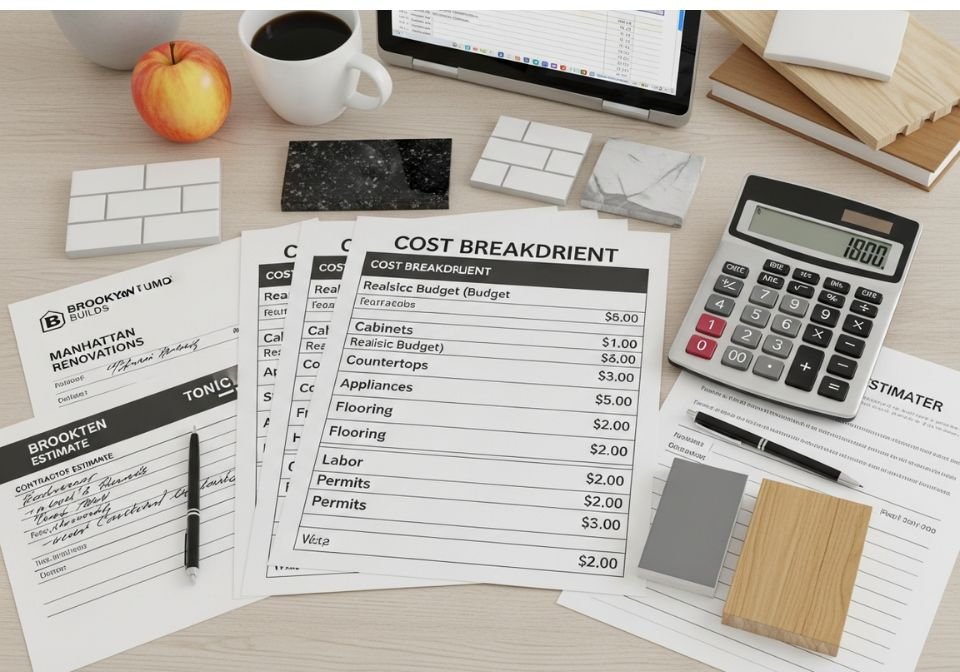
Creating a Realistic Kitchen Renovation Budget
No one likes nasty surprises halfway through a remodel, so setting a realistic budget for your kitchen renovation is crucial. Plan your costs early (and include a cushion for the unexpected) so you know what you can afford and can avoid unnecessary stress during the project.
- Determine your overall budget: Review your finances and decide on the maximum amount you’re comfortable spending on your kitchen renovation. This total budget will serve as the framework for all your planning – knowing your limit helps you make decisions on materials and the project scope that stay within your means.
- Research the costs: Educate yourself on the price range of everything, from cabinets and countertops to appliances and labor. Knowing typical cost ranges for these items will help you set realistic expectations and prevent underestimating expenses.
- Obtain multiple quotes from contractors: If you plan to hire a contractor, request detailed estimates from several reputable companies. Comparing multiple quotes helps you understand the fair price for the work and what’s included, potentially saving you money.
- Include a contingency fund: Set aside an extra 10–20% of your budget as a buffer for unexpected expenses or changes. Unforeseen problems (like discovering old water damage behind a wall) or last-minute changes are common, and having this contingency will help cover those without derailing your budget.
- Prioritize your spending: Decide where to splurge and where to save in your kitchen. You might invest in high-quality, durable items that you’ll use every day (for instance, a great stove or premium countertop) and choose more economical options for elements that are less critical. That way, more of your budget goes into the features that matter most, making the biggest impact on your new kitchen.
Obtaining Permits and Approvals in NYC
Renovating in New York City involves navigating a bit of red tape to ensure everything is legal. Here are the key points to know about permits and approvals for a kitchen renovation in NYC:
- Know when you need a permit: In NYC, any kitchen renovation that involves moving plumbing lines, adding new gas connections or outlets, or removing walls will require a permit from the Department of Buildings (DOB). Minor cosmetic upgrades (like painting or swapping cabinets without changing the layout) usually don’t need a permit, but always double-check if you’re unsure.
- Use licensed professionals to file plans: Any major renovation in NYC that requires a permit will also necessitate plans filed by a licensed professional engineer (P.E.) or a registered architect (R.A.). This means you’ll likely need to hire an architect or engineer to draw up official plans for your kitchen renovation, and you should use licensed contractors to perform the work – they’ll ensure everything meets building codes and permit requirements.
- Don’t skip the permits: Conducting construction work without the proper NYC permits is illegal and can result in serious consequences. If you are caught renovating without approval, you may face substantial fines (up to $25,000 for major violations) and even be required to undo the work. It’s not worth the risk – always get the necessary permits before starting your renovation.
- Secure co-op/condo or landmark approvals: If you live in a co-op or condo, get approval from your building’s board or management before renovating. They may have an alteration agreement with specific rules and might require proof of proper permits and insurance. And if your building is historic, you’ll also need approval from the Landmarks Preservation Commission for certain changes.
- Plan for inspections and sign-offs: When you have a permit, the city will schedule inspections (for plumbing, electrical, etc.) during the renovation to ensure the work meets code. After the work is done, the DOB will do a final inspection to close out the permit. Always ensure you get this final sign-off – an open permit can cause headaches down the line when you go to sell or renovate again.

Hiring the Right Kitchen Renovation Contractor in Brooklyn
Hiring a kitchen renovation contractor in Brooklyn can feel overwhelming, but getting it right will make your remodel so much smoother.
Here are some friendly tips to help you hire the right contractor for your Brooklyn kitchen project:
- Verify licenses and insurance: Always ensure your contractor is properly licensed and insured to work in NYC. This protects you – licensing means they meet state requirements, and insurance safeguards you in case of accidents or damage during the renovation.
- Prioritize local experience and expertise: Look for contractors with a strong track record of kitchen remodels in Brooklyn. For example, SR General Construction NYC is a fully licensed Brooklyn team with over 15 years of experience in the city and more than 750 projects completed. They’ve earned over 500 satisfied clients through quality craftsmanship and offer 24/7 support to give you peace of mind.
- Review portfolios and references: Don’t hesitate to ask for pictures of past kitchen projects or speak with previous clients. Seeing a contractor’s portfolio of completed kitchens (and reading online reviews) gives you insight into their workmanship and reliability – consistent positive feedback about things like timeliness and quality is a great sign.
- Get detailed quotes in writing: Obtain estimates from a few contractors and make sure each includes a breakdown of costs, timeline, and materials. A detailed, written contract helps avoid surprises; be wary of anyone who won’t put the scope and price in writing or who asks for a large upfront payment. Comparing multiple quotes also lets you find the best value (not just the lowest price).
- Gauge communication and reliability: Pay attention to how the contractor communicates from the start. You’ll want someone who listens to your ideas, answers your questions clearly, and responds promptly. Good communication is key to a smooth renovation – it ensures you stay updated on progress and any issues can be handled before they become problems. If a contractor is hard to reach or dismissive early on, consider it a red flag.
Managing Your Kitchen Renovation Timeline
Managing your kitchen renovation timeline is all about planning ahead and staying flexible. First, sit down with your contractor to map out each phase of the project – from design and permitting to demolition, installation, and final touches – so you have a realistic schedule. Order key materials (such as cabinets, appliances, and tiles) well in advance, as custom items often have long lead times that can delay your project. It’s also wise to build in a little buffer time for unexpected snags; even well-planned renovations can face surprises, so a cushion will reduce stress if something runs late.
Kitchen Flooring: Choosing Durable and Stylish Floors
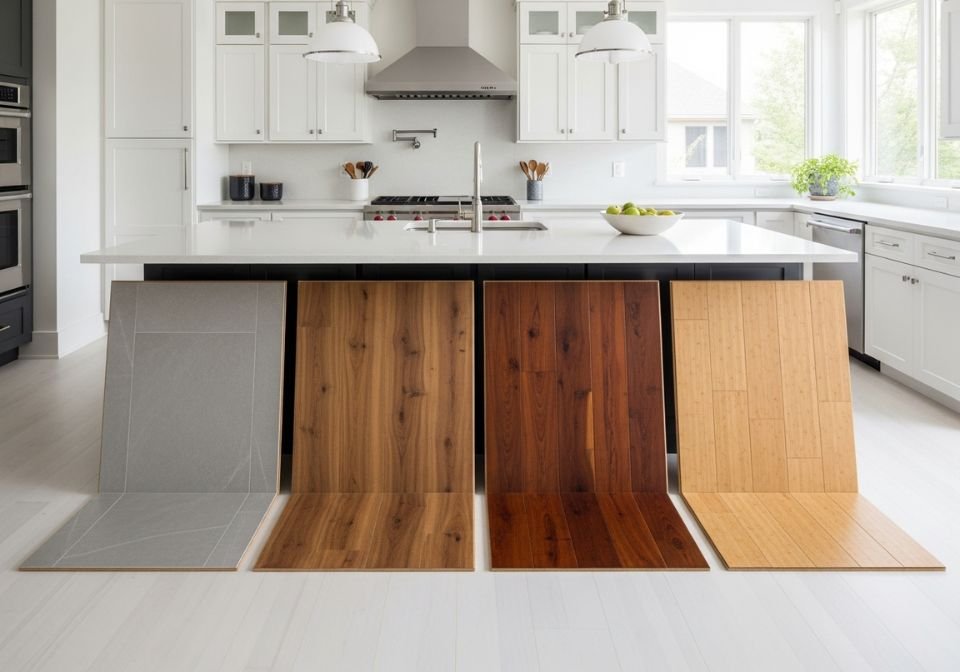
A modern kitchen featuring durable hardwood flooring with a stylish waterfall-edge island.
When it comes to kitchen flooring, you’ll want something that lasts through heavy use and looks great. Below are a few popular, durable yet stylish flooring options to consider for your kitchen:
- Porcelain Tile: Porcelain tile is often regarded as the gold standard for kitchen floors due to its exceptional durability and water resistance. It can handle spills and high foot traffic with ease, and it comes in an endless array of colors and patterns – including designs that mimic wood or stone – so you can achieve nearly any look without sacrificing toughness.
- Luxury Vinyl Plank (LVP): Vinyl plank flooring has evolved significantly in style while retaining its high practicality. LVP is 100% waterproof and resistant to scratches and stains, making it ideal for busy kitchens. It’s also softer and warmer underfoot than tile.
- Hardwood & Engineered Wood: Hardwood floors bring timeless warmth and can boost your home’s value, and today’s wood finishes are more kitchen-friendly than ever. Solid hardwood is beautiful and can be refinished over decades, although it requires some care with moisture. Engineered wood is a smart alternative that pairs a real wood surface with a sturdy core – it delivers the same cozy look but with better resistance to warping from humidity and spills.
- Bamboo Flooring: Bamboo is an eco-friendly flooring option that doesn’t skimp on durability. It’s actually a type of grass, but strand-woven bamboo floors are extremely durable and withstand heavy use well. Bamboo is also naturally moisture-resistant and comes in different tones from light to carbonized amber.
Maximizing Vertical Space for Storage
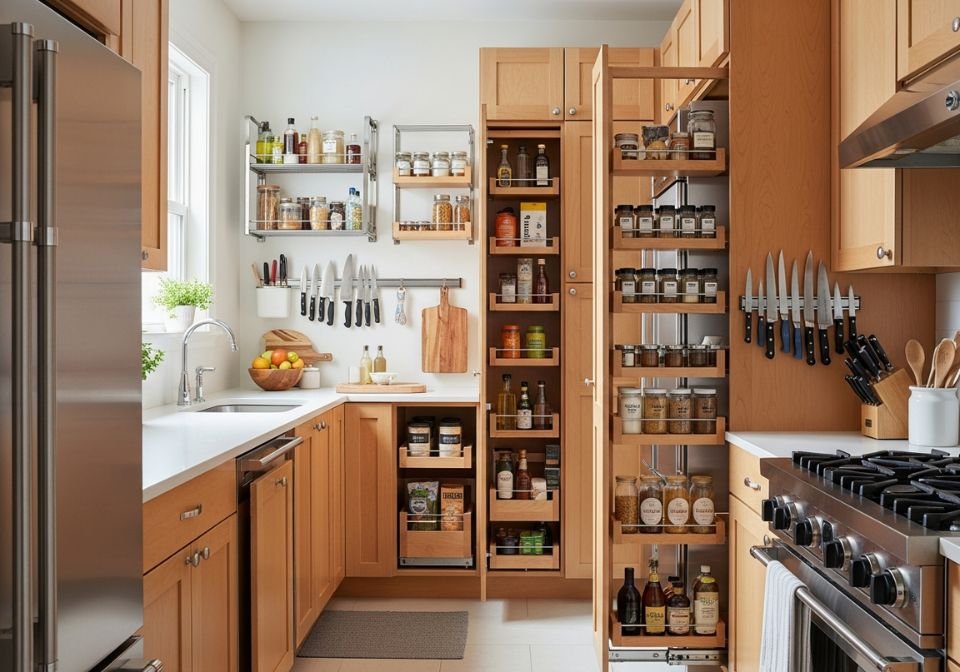
Tall pantry cabinets and pull-out spice racks maximize vertical space, providing ample storage without requiring additional floor area.
Utilizing your kitchen’s height is a smart way to add storage and keep things organized. Let’s talk about a few benefits of maximizing vertical space in your kitchen storage:
- More storage capacity without a larger footprint: Going vertical allows you to dramatically increase storage within the same floor space. For instance, installing floor-to-ceiling cabinets utilizes the entire space up to the ceiling for maximum storage. This means you can fit more dishes, pantry items, and appliances without crowding your kitchen or needing additional cabinets elsewhere.
- Clear counters and less clutter: By utilizing walls for storage – such as mounting racks for pots and pans, hanging utensils, or adding open shelves – you free up your countertops and drawers. Moving items upward keeps work surfaces clear for cooking and gives everything a home. The result is a less cluttered, more airy kitchen where you’re not constantly shuffling things around to find space.
- Great for small kitchens: In a small Brooklyn apartment kitchen, every inch counts. Vertical storage is a lifesaver in tight quarters. Tall cabinets, stacked shelves, and pegboard organizers on walls let a tiny kitchen hold way more than you’d expect, and they make the room feel taller and more open too (no wasted blank wall space).
- Better organization and accessibility: Storing items vertically can actually make your kitchen more user-friendly. You can categorize items on different shelves (e.g., everyday dishes on a lower shelf, rarely used roasting pans on a higher shelf). With pull-out pantry units or tiered racks, everything is easier to see and reach – no more forgetting about cans hidden in a back corner.

Lighting Design: Incorporating Generous Lighting
A bright kitchen with layered lighting — including recessed ceiling lights, pendants over the island, and under-cabinet lights — demonstrates how proper lighting creates an inviting and functional space.
Good lighting can make or break your kitchen’s functionality and mood, so it’s essential to incorporate a variety of light sources into your design. Don’t rely on a single overhead fixture – instead, combine different types of lighting (ambient, task, and accent) to cover all your bases.
For example, you might have ceiling pot lights or a central fixture for overall illumination, bright under-cabinet lights to illuminate your countertops while you’re chopping vegetables, and a couple of pendant lights or wall sconces to add warmth and style.
Common Kitchen Renovation Mistakes to Avoid
Even with the best intentions, it’s easy to make mistakes during a kitchen renovation that can cost you time, money, or comfort. Don’t worry – we’ve got you covered. Here are some common kitchen renovation pitfalls to watch out for, so you can avoid them and keep your project on track:
- Forgetting to set a realistic budget: Always outline a clear budget for your kitchen remodel and allocate money to each part – cabinets, appliances, labor, etc. This way, you can make informed decisions and prevent costs from spiraling out of control as the renovation progresses.
- Ignoring workflow and space planning: A beautiful kitchen isn’t much good if the layout doesn’t work for you. Common mistakes include placing an island so close that you can’t fully open the fridge, or not allowing enough space for people to pass by when the oven or dishwasher is open. Avoid these issues by mapping out where each appliance and cabinet will go, and ensure there’s room for multiple people to cook and move comfortably.
- Not considering lighting early on: It’s easy to underestimate how important lighting is until after the fact. Many homeowners make the mistake of relying on a single ceiling light or neglecting under-cabinet lights, only to end up with a dim, shadowy kitchen. Don’t do that! Plan a layered lighting scheme from the start.
- Not planning for enough storage: Another big mistake is failing to maximize storage during the renovation. Renovating your kitchen is the perfect chance to add more cabinets, drawers, and clever storage nooks.
- Taking on too much DIY (or hiring the wrong help): A kitchen renovation is not the best time to test every DIY YouTube project you’ve ever watched. Sure, painting walls or swapping hardware is fine, but trying to DIY major plumbing, electrical, or cabinet installations can lead to costly errors and safety hazards. Likewise, hiring an unqualified friend or the cheapest contractor available often ends in regret. As the experts advise, it’s usually better to bring in a trusted professional contractor for such a complex project.
Where to Find the Best Brooklyn Contractors
Are you looking for an expert contractor in Brooklyn, NYC? SR General Construction has you covered! Our business is located at 8807 Avenue B, Brooklyn, NY 11236, United States, in the Canarsie area.
Additionally, we offer services at Rockaway Parkway and Ralph Avenue, providing fast access to Flatlands, East Flatbush, Bergen Beach, Brownsville, and the Spring Creek section of East New York.
FAQ
1. How much does a kitchen renovation cost in Brooklyn, NYC?
Modest NYC updates typically start around the mid-$20,000s; mid-range “pull-and-replace” projects often fall within the $ 50,000–$ 80,000 bracket, while high-end or gut jobs can exceed $ 100,000. Local NYC guides show similar ranges, with scope, finishes, and building type driving the spread.
2. Do I need a permit for a kitchen renovation in NYC?
Yes, if you move or add plumbing, gas, electrical, or alter walls—those require DOB plans/permits filed by a NYS PE/RA and built by licensed pros. Paint, refacing, or cabinet swaps without layout changes generally do not.
3. What kitchen work doesn’t require a permit in NYC?
Painting, plastering, resurfacing floors, and installing new cabinets (no reconfiguration) are listed as no-permit items—though contractors must still hold a DCWP Home Improvement Contractor license. Always confirm borderline cases with a design professional.
4. What hours can contractors work in NYC apartments?
Standard construction hours are weekdays from 7:00 a.m. to 6:00 p.m.; work outside these times or on weekends requires an After-Hours Variance (AHV). NYC DEP also requires a Construction Noise Mitigation Plan.
5. Are gas stoves banned in NYC—can I still have one after a renovation?
NYC’s Local Law 154 and New York State’s all-electric rules apply to most new buildings (phased by height) and do not force removals in existing apartments. For existing homes, you can keep gas (subject to code and licensed gas work).
6. What’s the ROI of a kitchen renovation in the NY region?
Cost-vs-Value data show midrange kitchen projects often recoup a meaningful share of cost on resale (figures vary by scope and market cycle). Use the current CVV report for the NYC metro to set expectations.