

Ever notice snow melt on your roof, then freeze again at the edge, and wonder why the trouble keeps coming back?
You are not alone. Winter in Brooklyn turns small issues big fast. You bring a few minutes and your home details; I bring clear steps you can use right away. No fluff or jargon, just straight answers.
You want to know why roof gutters fail in winter—and how to fix that. This guide is for Brooklyn homes, brownstones, and flat roofs on narrow streets. I’ll break down the causes and share practical fixes you can apply with confidence.
Here’s what we’ll cover: causes like ice dams, clogs, and poor pitch; early warning signs; key NYC code essentials; why to choose 5-inch vs 6-inch gutters or 2×3 vs 3×4 leaders; materials and hardware that stand up to cold snaps; safe winter maintenance steps; and more.
Why Roof Gutters Fail in Winter
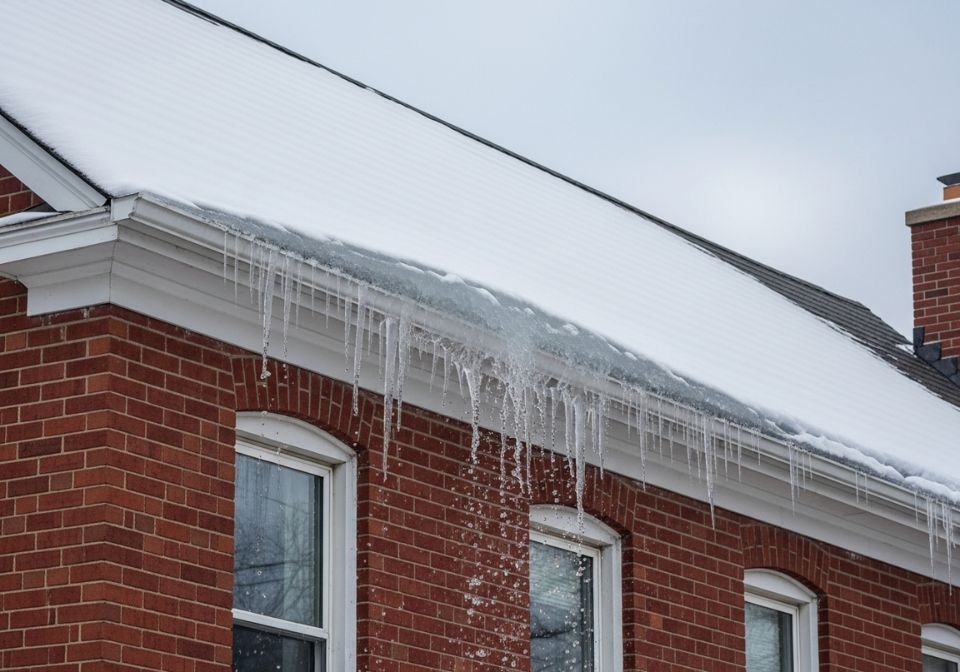
In Brooklyn winters, most gutter problems start with ice dams: heat escaping from your home melts roof snow, then that meltwater hits the cold eaves and freezes again. That ridge of ice blocks drainage. If outlets and elbows already have fall debris, meltwater can’t exit properly during a thaw, so it backs up or spills over. Low spots or poor slopes trap water, which then freezes and puts stress on seams and brackets. NYC code requires a continuous fall of at least 1/8 inch per foot to prevent pooling.
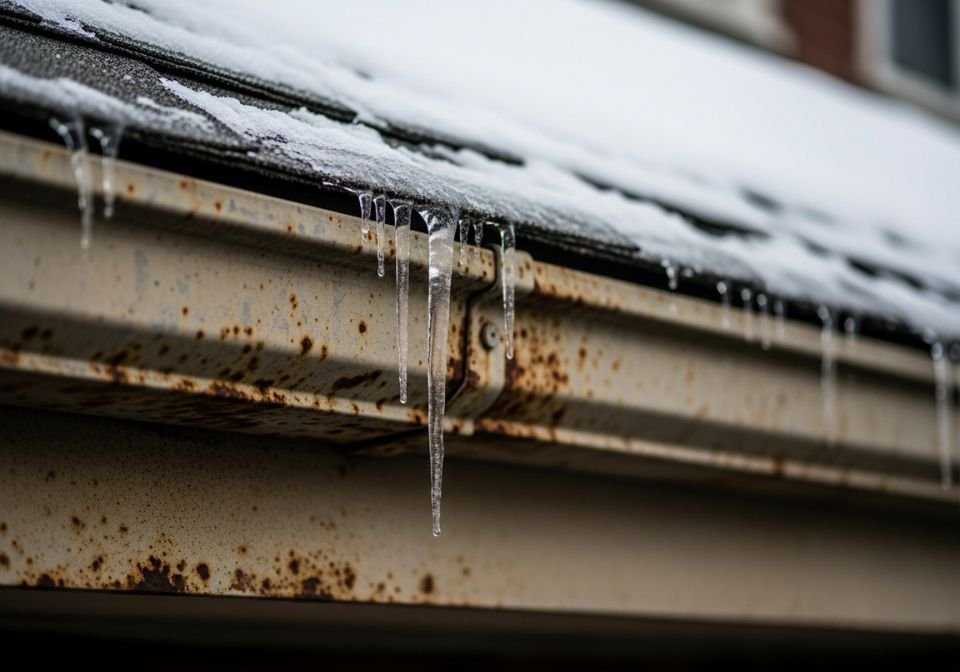
Metal and fasteners shrink during bitterly cold weather and then expand on sunny thaws, so weak joints and corners can start to open up. Frozen downspouts add weight and pressure, bending hangers, tearing sections loose, and leaving dangerous icicles along your walkways.
Common Problems of Roof Gutters in Winter and How to Prevent Them
Winter in Brooklyn pushes your gutters to the limit. Cold snaps lock water into ice, and thaws send sudden flows through tight outlets. If you fix the usual weak spots first, you’ll prevent most mid-storm surprises.
- Ice dams at the eaves: Heat leaks into the attic, roof snow melts, then refreezes at the cold edge and forms a ridge. Water sits behind that ridge and finds its way into gaps at the roof edge and the gutter lip. Seal attic air leaks, add insulation, and balance ventilation to keep the roof evenly cold.
- Frozen downspouts and elbows: Slush drops into elbows, the temperature falls, and the path locks solid. Water backs up at the outlet and spills over the front. Clear debris in late fall, fit wide-mouth outlets, and upsize to 3×4 leaders where the roof sends big flow.
- Overflow at corners and outlets: Small outlets choke first when a burst of rain or melt hits. Water climbs inside the trough and spills across the fascia. Clean before freeze season and install larger or wide-mouth outlets; add an extra downspout on long runs.
- Standing water from poor pitch: Flat spots keep water in the trough; the next freeze turns it to heavy ice. Seams open and paint peels under load. Re-pitch each run to a steady fall of at least 1/8 inch per foot toward the drop, as required by NYC code.
- Leaks at seams and miters: Metal contracts in deep cold and expands during sunny thaws; weak joints start to gap. Drips show at corners and under seams. Clean to bare metal, reseal with cold-rated sealant, and add slip/expansion joints on long straights.
- Hangers that pull under ice weight: Icicles and packed ice add a serious load along the edge. Light hardware bends, and the trough sags out of line. Tighten spacing, use heavy-duty concealed hangers, and reinforce near corners and outlets.
- Parapet roofs with no emergency overflow: A parapet can trap water if the primary drain or scupper plugs. Ponding is rising and threatening the roof edge and facade. Add code-required secondary drains or scuppers so water leaves before it reaches risky depth.
The Importance of Keeping Your Gutters Clear in the Winter
A clear gutter gives meltwater a safe exit on every mild day. You cut ice buildup at the edges and keep the flow away from walls, walks, and basements. Simple cleaning before freeze season removes the trigger for many winter failures.
- Lower ice-dam pressure: Debris at the lip acts like a small dam and traps water where refreeze starts. A clean trough lets water pass the cold edge. Pair cleaning with attic air-sealing and insulation for the best result.
- Fewer mid-storm overflows: When outlets stay open, fast rain and melt move out without climbing the front lip. That keeps water off the fascia and window heads. Add a wide-mouth outlet if a corner still surges during cloudbursts.
- Less stress on hangers and fascia: Water that moves fast does not sit and freeze into heavy blocks. Hardware stays straight and tight through cold snaps. The system lasts longer with fewer emergency calls.
- Better downspout performance: Elbows catch grit first; a clean line gives slush a clear path. Fewer freeze plugs show up at the first bend. Where trees drop heavy debris, consider micro-mesh guards and schedule quick checks.
- Insurance and risk reduction: Routine maintenance reduces water-damage claims and avoids “lack of maintenance” issues. Many experts recommend gutter cleaning as a key winter-ready step. Your budget stays on upgrades, not repairs.
Understanding Your Roof Gutter System
Think of your system as a chain: roof surface → gutter channel → outlet → downspout → lawful discharge. The gutter must hold a steady fall to the outlet so water does not stall; NYC requires a continuous slope with not less than 1/8 inch per foot and no pooling. Outlet size and downspout size set the true capacity; NYC sizes gutters and leaders by flow using Chapter 11 tables, with design rainfall based on 3 inches per hour for secondary systems and the same rainfall basis used across roof-drain design.
Flat and parapet roofs route water through drains, box gutters, or scuppers, and code calls for secondary (emergency) drains or scuppers where parapets could trap water if the primary path plugs. On long edges and complex roofs, larger 6-inch gutters, wide-mouth outlets, and 3×4 leaders give more headroom during cloudbursts.
Gutter Protection Systems: How Gutters Protect Your Roof in Winter
You want meltwater to leave the roof fast, not sit and refreeze at the edge. The right protection keeps debris out, keeps outlets open, and gives heavy winter flow a clear path. Here are the steps you can take for a Brooklyn home with trees and freeze-thaw swings.
- Pick the right guard for your block (start with micro-mesh): Micro-mesh screens block shingle grit and small seeds better than basic screens or foam inserts, so outlets stay clear longer. Reverse-curve covers shed large leaves well, but fine debris can still ride with the water. Match the guard to your debris mix and roof pitch, then plan quick visual checks each season.
- Upgrade the choke point: wide-mouth outlets. Many overflows start at the point where the gutter meets the drop outlet. A larger “wide-mouth” outlet lets more water flow during bursts and reduces the risk of freeze plugs at the hole. If one corner still surges, combine the outlet upgrade with an extra downspout.
- Size the leaders for winter flow: A 3×4 downspout carries far more water than a 2×3, which helps during cloudbursts or quick thaws. NYC sizes gutters and leaders by flow using Chapter 11 tables, so pick the larger path when one edge drains big roof areas. This change reduces ice buildup inside the elbows.
- Keep the path pitched and supported: Gutters must slope toward the drop by at least 1/8 inch per foot to prevent water from sitting and freezing. Tighten hanger spacing on long runs and near corners, because ice adds weight at the edge. A good pitch, plus solid support, cuts leaks and sags.
- Use heat cables only where problems persist: On stubborn eaves or box-gutter zones, listed de-icing cables can keep a channel open in extreme snaps. Follow the manufacturer’s instructions and focus on the eaves, outlets, and downspouts. Treat cables as a backup, not a substitute for air-sealing and insulation.
How To Prevent Snow Damage To Your Gutters
Snow slides and refreeze cycles punish hardware first, then seams. Your goal is a strong edge, a clear path, and safe removal when storms stack up. Here is a simple plan you can follow every season.
- Strengthen the edge before storms: Add heavy-duty concealed hangers and shorten spacing on long faces or wind-exposed corners. Ice and compacted snow load add real weight, so give the trough a stronger backbone. Re-check screws into solid wood, not just trim.
- Set gutter height and add snow control where needed: Gutters set too high under the roof edge can be ripped by sliding snow. A lower set and snow guards on steep, smooth roofs help break slides into small, harmless pieces. This small change prevents the front lip from tearing off after thaws.
- Remove roof-edge snow from the ground: Use a roof rake with rollers or wheels so the blade rides above shingles. Clear the first few feet at the eave to reduce melt and refreeze at the gutter line, and keep service drops clear. Call a pro if access or height turns risky.
- Protect during removal: Never chip ice with tools that can bend metal or tear shingles. Steam or controlled-melt methods prevent damage once ice has formed. When in doubt, hire a qualified crew with the right equipment.
- Keep outlets and downspout toes open: Clear packed snow at the downspout discharge so meltwater does not refreeze at the exit. If a leader plugs, a listed heat cable inside the downspout can restore flow. Pair that with pre-winter cleaning so slush doesn’t jam at the elbows.
How to Prevent Ice Dams and Frozen Downspouts
Ice dams start with uneven roof temperatures. Fix the heat leaks first, then manage snow and outlet capacity. Follow these steps and you cut the biggest winter failures.
- Air-seal the attic: Close gaps around lights, hatches, ducts, and chases so warm air does not heat the roof from below. This single step lowers the melt at mid-roof and starves ice dams at the eave. Pair with safe fire-rated sealants where required.
- Add insulation and balance ventilation: Insulation keeps heat in your rooms, and ventilation keeps the roof deck near outdoor temperature. Together, these steps prevent the melt-refreeze cycle that builds dams. Aim for continuous soffit intake and a clear high exit path.
- Clear the eave zone after heavy snows: Rake the lower roof from the ground to remove the fuel for ice dams. No snow at the edge means less meltwater over the cold gutter line. Work in small sections and watch footing.
- Use heat cables as a targeted aid: On chronic edges, listed de-icing cables can keep a channel open at eaves, outlets, and downspouts. They help during arctic snaps while you plan permanent air-sealing and insulation work. Install before winter for best results.
- Right-size outlets and leaders: Small outlets and 2×3 leaders choke first when the melt hits fast. Upgrade to wide-mouth outlets and 3×4 leaders where one run carries big roof areas. NYC sizes these parts by flow, so use the code tables when you plan changes.
- Keep the entire path pitched and clean: Gutters must slope toward the drops with no low spots so water does not sit and freeze. Clean before the first freeze and after leaf drop. A clear, pitched path avoids mid-thaw surprises.
How Brooklyn Roofs Drain: Gutters vs. Drains vs. Scuppers
Brooklyn has two common roof setups. Sloped roofs push water into external gutters that feed vertical leaders (downspouts). Flat or parapet roofs often use internal roof drains and scuppers; many also need secondary (emergency) overflow paths by code.
- External gutters on sloped roofs (rowhouses, semis): The gutter collects runoff from the edge and sends it through leaders to a lawful discharge. NYC sizes horizontal gutters by flow rate using Table 1106.6, then sizes leaders and storm piping for the 100-year, hourly rainfall of 3 in/hr. This math explains why a busy edge may need a 6-in gutter, a wide-mouth outlet, and a 3×4 leader.
- Internal drains and box gutters on low-slope/parapet roofs: A box (internal) gutter sits within the roof edge or between parallel planes and then feeds an internal drain or conductor. Internal gutters require a real slope and enough outlets; poor fall or too few drops cause failures. Designers treat these like roof plumbing, not trim.
- Scuppers through parapet walls: A scupper is an opening through the parapet that lets water exit to the exterior, often into a leader head and downspout. NYC requires secondary (overflow) drains or scuppers wherever parapets can entrap water if primary drains plug. That overflow keeps ponding from reaching unsafe depths.
- Emergency overflow, plainly stated: Code calls for separate, higher-set overflow inlets sized by the same storm-drainage rules. On a flat roof with parapets, that means either overflow drains or overflow scuppers above the primaries. The goal is simple: visible relief before water reaches a risky level.
- Why this matters to you on a Brooklyn block: Tight facades and shared walls leave little room for mistakes. When primary drains or outlets clog during a thaw, overflow scuppers or extra drops prevent water from backing into cornices, party walls, and apartments. Add those paths now, and winter problems shrink fast.
NYC Code Essentials
- Slope: continuous fall to inlets, ≥ 1/8 in/ft; no ponding
NYC requires gutters, leaders, and rainwater piping to slope continuously toward collection points. The minimum slope is 1/8 inch per foot along the entire length, and the system must not allow pooling; siphonic systems are the only exception. - Sizing: gutters/leaders sized by flow; use Table 1106.6 & leaders per 1106.3
NYC bases gutter and leader sizes on flow rate using the Plumbing Code’s Chapter 11. The design rainfall is the 100-year, 1-hour rate of 3 in/hr; horizontal gutters are limited by Table 1106.6, and leaders are sized per 1106.3. - Emergency overflow: secondary drains or scuppers when parapets entrap water. Where a parapet can hold water if a primary drain plugs, the code requires secondary (emergency) roof drains or scuppers. The Building Code section on roof drainage also ties back to Plumbing Code Chapter 11.
Physics of Winter Failures
- Ice dams: attic heat loss → snowmelt → refreeze at cold eaves/gutters
Warm air leaks into the attic, the roof deck warms, and snow melts; meltwater reaches the cold eave and refreezes into a ridge that blocks drainage. That ridge forces water back under the roof edge and into the gutter line. - Thermal movement: expansion/contraction at seams, corners, and ferrules
Metal expands in the sun and contracts in the cold; restricted movement stresses seams and joints. Over cycles, small gaps open at miters and outlets. - Static load: ice & icicles bend hangers, pull fasteners, and deform troughs
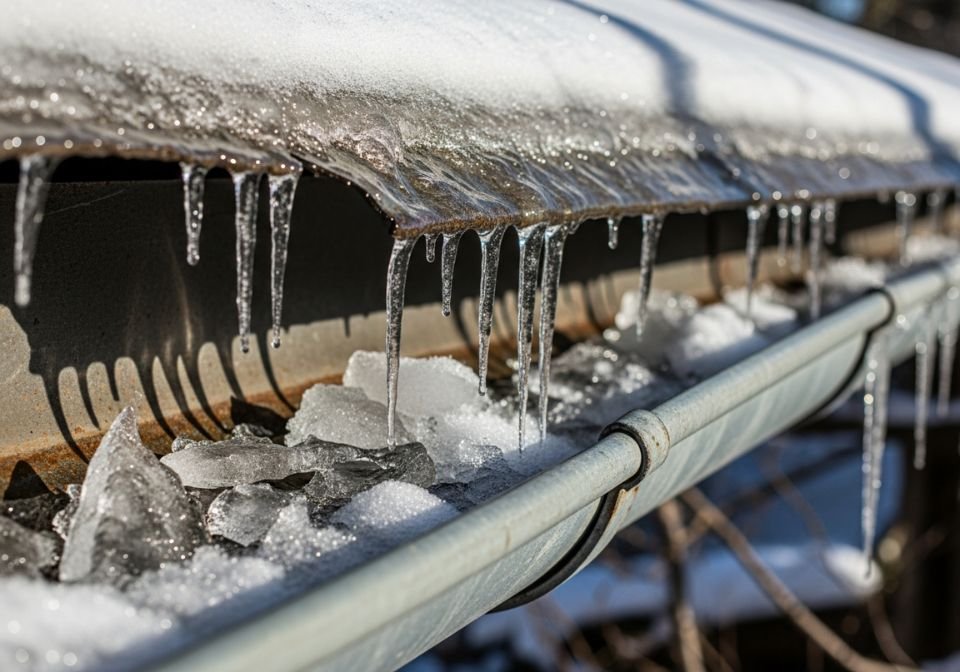
Ice and icicles add significant weight along the fascia. Weak hardware can bend or pull free, and long runs can sag.
Sizing for Cloudbursts: 5-inch vs 6-inch, Leaders, Outlets
- When a 6-inch K-style earns the nod
Large roof areas, complex planes that concentrate flow, and intense NYC bursts push capacity to the limit; that is when 6-inch gutters help. The call still rests on code math: size by 3 in/hr design rainfall and check Table 1106.6 for gutter flow limits. - 2×3 vs 3×4 leaders: why wide-mouth outlets cut choke points
A 3×4 leader passes far more water than a 2×3, so heavy thaws and downpours clear faster. The outlet hole is often the pinch point; a wide-mouth outlet reduces that restriction. Use leader sizing per 1106.3 and upgrade outlets where a corner surge is present. - Downspout count/placement on long runs or multi-plane roofs
Long edges and complex valleys push too much flow to single drops. Add outlets at low points and spread leaders so each run handles a smaller share of the flow. Industry standards such as SMACNA/NRCA cover gutter and downspout layout details to ensure durable performance.
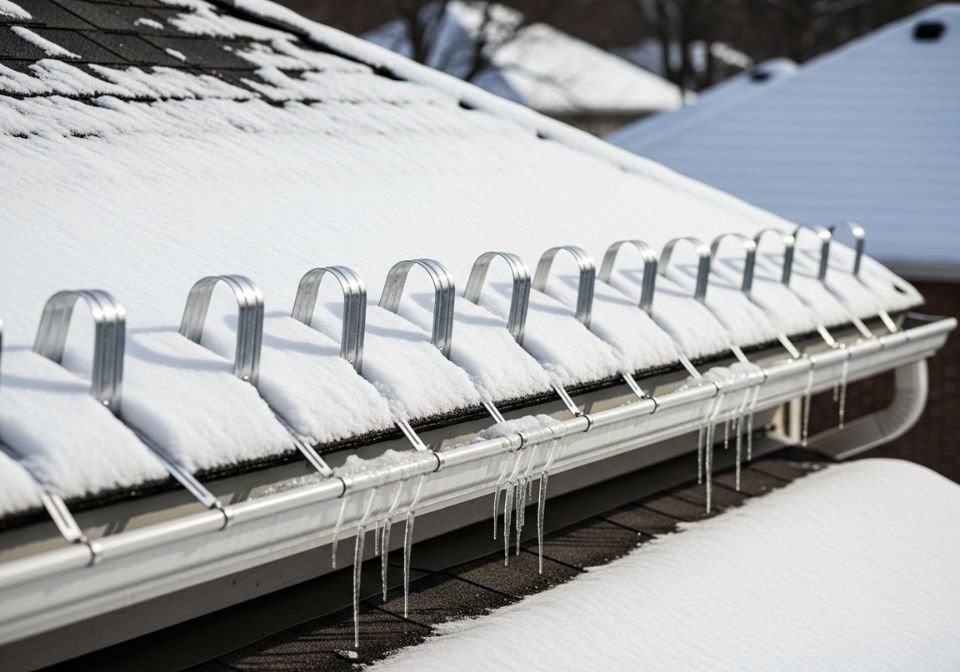
Materials & Hardware That Help Roof Gutters in Winter
Brooklyn winters test metal, joints, and hardware. You want parts that keep their shape in the cold and move water out under burst flow. The picks below work well on rowhouses, semis, and parapet roofs.
- Aluminum gutters (thicker gauge for toughness): Aluminum resists rust and accepts seamless runs that reduce joints. A thicker gauge stands up better to ladder bumps and light ice. NRCA’s metal guidance remains the reference for material selection and edge details.
- Copper or galvanized/painted steel (long life with the right details): Copper offers long service and a classic look on brownstones; galvanized or painted steel gives strength at a mid-price band. Match fasteners and sealants to the metal to avoid galvanic problems in winter moisture. NRCA’s architectural metal manuals walk through these pairings.
- Hidden, heavy-duty hangers and tested gutter assemblies: Concealed hangers support the trough without exposed spikes; heavier hardware resists ice weight. For low-slope edges, look for assemblies tested to ANSI/SPRI GT-1 where applicable. That standard addresses the performance of external gutter systems on roof edges.
- Drip edge and flashing at the eave (no water behind the gutter): NYC requires flashing at gutters and roof-wall intersections to protect fascia and direct water into the trough. Good drip edge alignment also reduces winter backflow at the lip. The requirement sits in the Building Code’s roof drainage and flashing section.
- Expansion/slip joints and cold-rated sealants: Long metal runs require movement joints to prevent thermal shifts from tearing seams. Use sealants rated for freeze–thaw and clean metal before application. SMACNA trade standards address expansion details for architectural sheet metal.
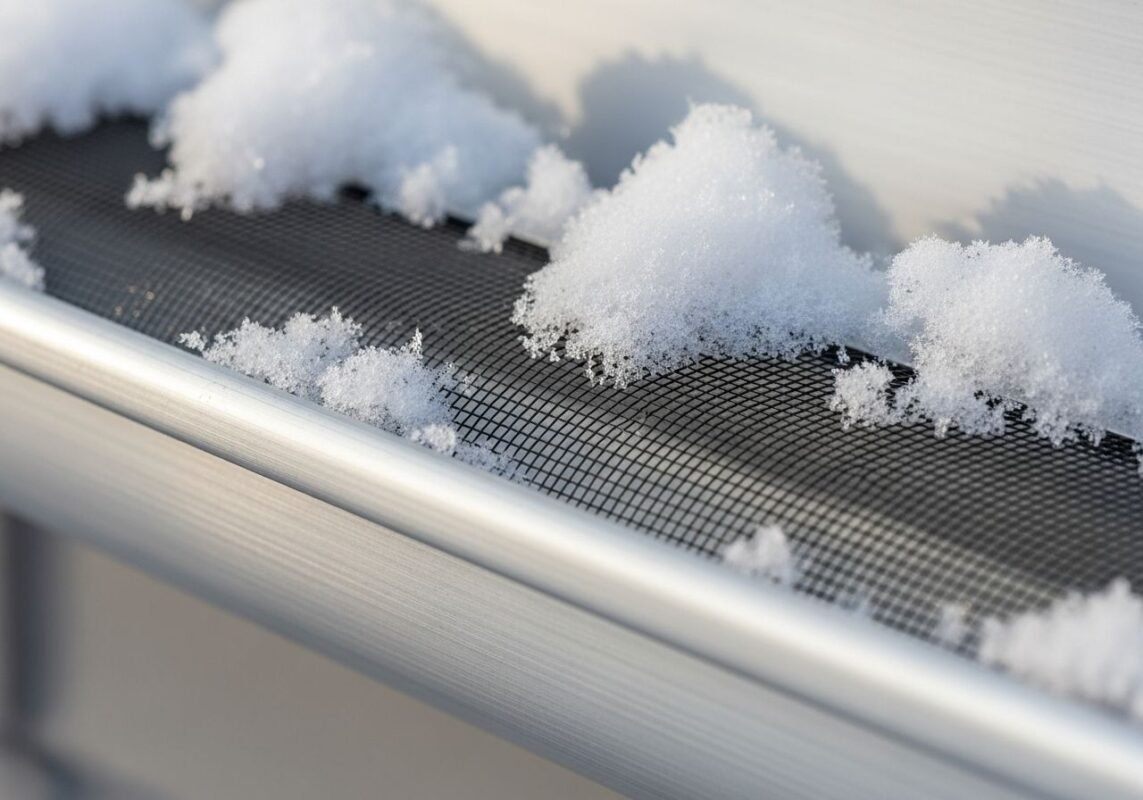
- Micro-mesh or quality perforated guards in tree-dense blocks: Guards keep debris out so outlets stay open during thaws; micro-mesh blocks fine grit and seeds, while good perforated panels can perform well too. Independent tests often rate stainless micro-mesh highly for debris control. You still plan quick visual checks after leaf drop.
- Heat cables as a targeted aid, not a cure-all: In stubborn eave zones or downspouts that freeze, listed de-icing cables can hold a small melt channel. Use them to buy time while you plan air-sealing, insulation, and sizing upgrades. Major home guides outline safe placement for this method.
- Wide-mouth outlets, leader heads, and proper transitions: Oversized outlets and leader heads ease the jump from gutter to vertical pipe. That change lowers clog risk at the hole during freeze–thaw cycles. SMACNA’s sheet-metal resources include design practices for scuppers, gutters, downspouts, and conductor heads.
- Box gutters, roof drains, and scuppers on parapet roofs: Internal or box gutters and roof drains need a real slope and enough drops; add overflow scuppers where a parapet can entrap water. These parts fall under NYC’s storm-drainage rules. A careful layout here prevents winter ponding and facade damage.
Flood-Aware Gutters: Check Your Map Before You Discharge
Downspouts in Brooklyn should move water to a legal and safe place, not toward a sidewalk that ices or a low corner that floods your basement. Start by checking your address in NYC’s Flood Hazard Mapper to see the present risk and future sea-level scenarios, then confirm the FEMA flood map for insurance and project planning. If you plan any new tie-in or change to how your leader connects to storm or combined sewers, NYC’s Unified Stormwater Rule and the Stormwater Manual set the rules and the paperwork requirements for approvals, such as House/Site Connection Proposals.
Case Studies / Local Examples of Winter Failures in Brooklyn
- Case 1: Frozen leaders on a rowhouse, central Brooklyn
A local inspection group noted winter calls for frozen, blocked gutters in Brooklyn; the pattern often starts at elbows and narrow 2×3 leaders after a thaw-and-freeze. The remedy they point to matches best practice: clear debris, open the outlet, and upsize the leader where one edge carries a large roof area. You avoid the repeat freeze plug when the outlet is larger and the downspout is 3×4. - Case 2: Downspout upgrade to stop yard pooling, southeast Brooklyn
After heavy rain, a homeowner saw water pooling near the foundation; a contractor case study shows a fix with a re-routed downspout and improved discharge to move water away from the house. This type of change helps in winter, too, because slush flows out instead of refreezing at the corner. It also sets you up for flood-aware discharge that won’t ice a walkway.
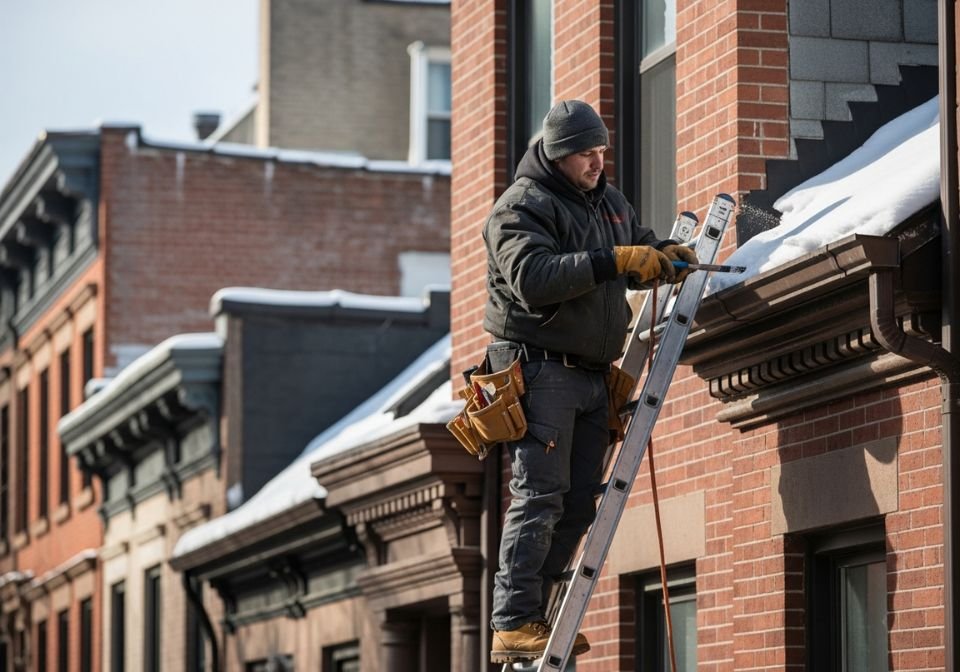
Winter Roof Gutter Maintenance Tips
Brooklyn winters swing from freeze to sudden thaw, so your system needs a clear path before the first hard cold. Do the simple things on the ground first, then decide what to change at the edge. A short checklist now saves you from ladders in a storm.
- Clean before freeze, then after big storms: Most experts recommend spring and fall cleaning; in a tree-dense block, add a quick post-storm check when thaw hits. Less debris at the outlet means fewer mid-storm spills and fewer ice plugs overnight. If heights feel risky, hire a pro and keep your feet on the ground.
- Hose-test the outlets on a mild day: Run water from the high point and watch the drop; slow flow or splash-back hints at a clog or a small outlet. Fix that now, and you avoid an overflow stripe on the fascia after a thaw. A simple test like this also shows flat spots you should repitch.
- Confirm slope to code: Gutters must slope toward the inlet by at least 1/8 inch per foot so water does not sit and freeze into heavy blocks. A chalk line and a level tell you the truth about low spots. Re-pitch runs that pond, then mark where a second outlet would help.
- Open the choke point with a wide-mouth outlet and a 3×4 leader: The outlet hole is where most surges choke; a wider opening and a larger downspout move more meltwater during a warm hour. Long facades and multi-plane roofs benefit first from this change. Tie that decision to the NYC sizing tables for a code-sound plan.
- Use guards where trees shed, then still inspect: Micro-mesh or quality perforated guards cut the debris load, so outlets stay clear longer. You still add quick peeks after leaf drop and a rinse on the first mild day. Guards help, but they do not remove the need for eyes on the edge.
- Map your flood risk and pick a safe discharge: Check the NYC Flood Hazard Mapper and the FEMA map for your address; do not send downspout flow toward a low walk or alley that freezes. If you plan any change to connections, read the USWR page and the DEP sewer-connection guidance. You avoid violations and cut sidewalk ice at the same time.
- Work safely at height: If you go above 6 feet, federal rules require guardrails, a net, or a proper personal fall-arrest system. Many homeowners choose a licensed pro so the right gear shows up with the truck. Safety first; ladders are no place to improvise.
Where to Find the Best Brooklyn Roofing Contractors
Are you looking for an expert roofing contractor in Brooklyn, NYC? SR General Construction has you covered! Our business is located at 8807 Avenue B, Brooklyn, NY 11236, United States, in the Canarsie area.
We proudly serve all areas of Brooklyn with high-quality, durable roofing solutions. From new installations to repairs and maintenance, we provide the best service at affordable prices. Contact us and experience why we’re Brooklyn’s roofing experts!
FAQ
1. Do gutters need heat cables in Brooklyn winters?
Only in especially troublesome zones (eaves, long runs) where freeze/thaw cycles cause recurrent ice plugs. As a support measure, heat cables keep a melt channel; they don’t replace proper pitch, drainage, or insulation.
2. Will a gutter guard prevent ice dams?
No, guards help keep debris from clogging gutters, which reduces the triggers for ice dams, but they don’t stop ice dams caused by attic heat loss. You still need good attic insulation, proper ventilation, and a well-designed gutter system.
3. How often should I check gutters during winter?
After every thaw or heavy snow, and at least once midseason, to spot ice buildup or clogs. Partial melts can expose trouble areas, allowing you to fix them before damage occurs.
4. Why are my downspouts freezing while the gutters are clear?
Downspouts can freeze due to narrow elbows, insufficient size, or trapped slush inside vertical pipes. Upgrading to a 3×4 leader or widening the outlet helps avoid that.
5. Are 5-inch gutters enough for Brooklyn cloudbursts?
It depends on the roof drainage area and flow concentration. For high-rain events, many homes upgrade to 6-inch gutters, wider outlets, and 3×4 leaders for increased headroom in the flow.
6. Can gutters collapse under snow in winter?
Yes—heavy snow and ice loads add stress that can bend hangers, pull fasteners, or crack gutter troughs if the system is weak or underbuilt. Strong hardware, tight spacing, and regular clearing reduce that risk.
7. Do I need an LPC permit to change gutter material in a historic district in Brooklyn?
Often, yes, material or profile changes usually require Landmarks Preservation Commission (LPC) approval, though in-kind replacements may be allowed at the staff level. Always check with LPC before work.