

Have you ever looked up at your roof during a heavy Brooklyn downpour and wondered where all that water actually goes?
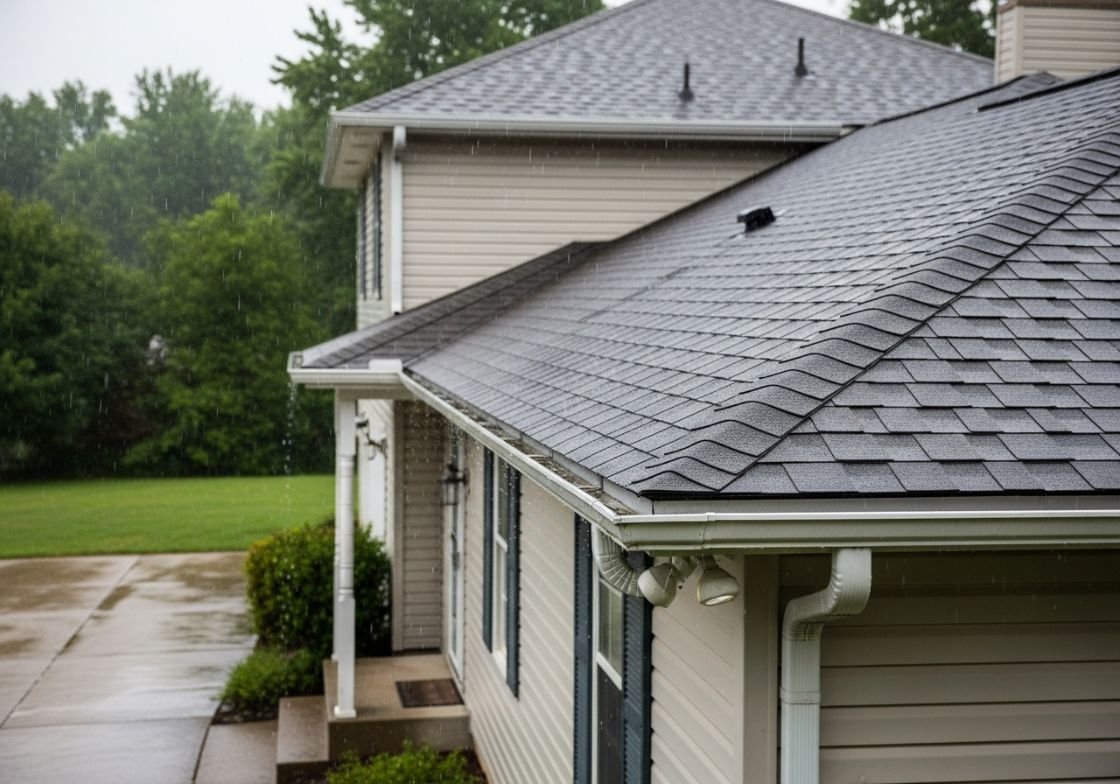
Most homeowners ignore it until they see a leak, peeling paint, or water near their foundation. However, roof gutters silently safeguard your entire home from water damage.
Gutters do more than catch rain in Brooklyn, NYC, where brownstones, flat roofs, and narrow streets interact. They prevent basement flooding, brick wall stains, and walkways from becoming small rivers during storms. Even a light rain might cause severe problems without them.
So, what exactly makes roof gutters so important in a city like Brooklyn? And how do you choose the right ones for your home?
In this ultimate guide, we’ll explain everything you need to know. You’ll learn:
- What roof gutters actually do and how they work on Brooklyn homes
- The best gutter materials and styles for local weather and architecture
- The NYC building codes every homeowner should know before replacing or installing gutters.
- How to spot early warning signs of gutter trouble
- Smart maintenance tips to keep your system working through every season
- And even some eco-friendly ways to manage rainwater right in your backyard.
What Are Roof Gutters?
Roof gutters are channels fixed along the edge of a roof that collect rainwater and meltwater. They guide this water into downspouts (also called leaders) so it can exit safely away from the building. Gutters protect walls, windows, and foundations by preventing water from striking them directly. In flat-roof setups, they help prevent water buildup and related damage.
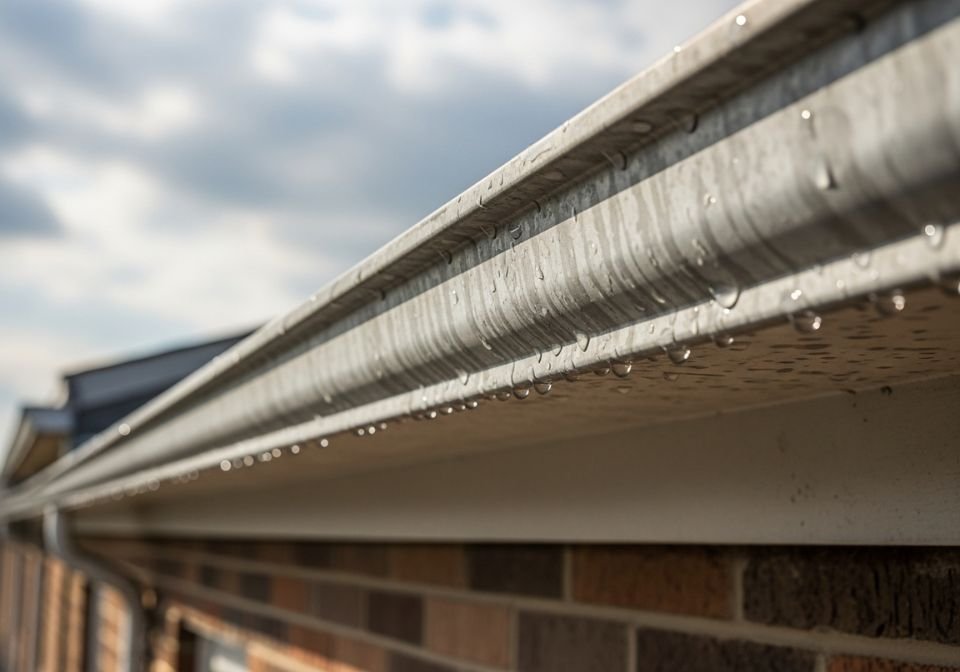
Materials used to make Roof gutters
Let’s talk about gutter materials, since these determine cost, appearance, and lifespan. Choosing the right option is about matching Brooklyn’s weather and your home’s style. Here are the common choices.
- Aluminum: It resists rust and comes in many colors, so your curb appeal stays high. Most homes choose it because the weight stays low, and installers can form long, seamless runs. Watch for dents on ladders and rails, and ask for a thicker gauge if you want extra toughness.
- Copper: You get a premium look that develops a patina and that fits brownstones beautifully. The metal lasts for decades with basic care. The price sits at the top end, so plan your budget first.
- Galvanized or Painted Steel: Strong and good for tall or exposed facades. Coatings resist rust, but scratches need attention. Provides a solid feel and durability.
- Vinyl/PVC: Inexpensive, easy to install yourself, and color stays true. Vinyl may crack in cold weather, making it less ideal for winter.
- Zinc: Develops a gray patina, matches historic styles, and rivals copper for lifespan. High initial cost and professional installation required.
N.B. Every material has trade-offs in terms of price, durability, and upkeep. Match your choice to your roof and plans.
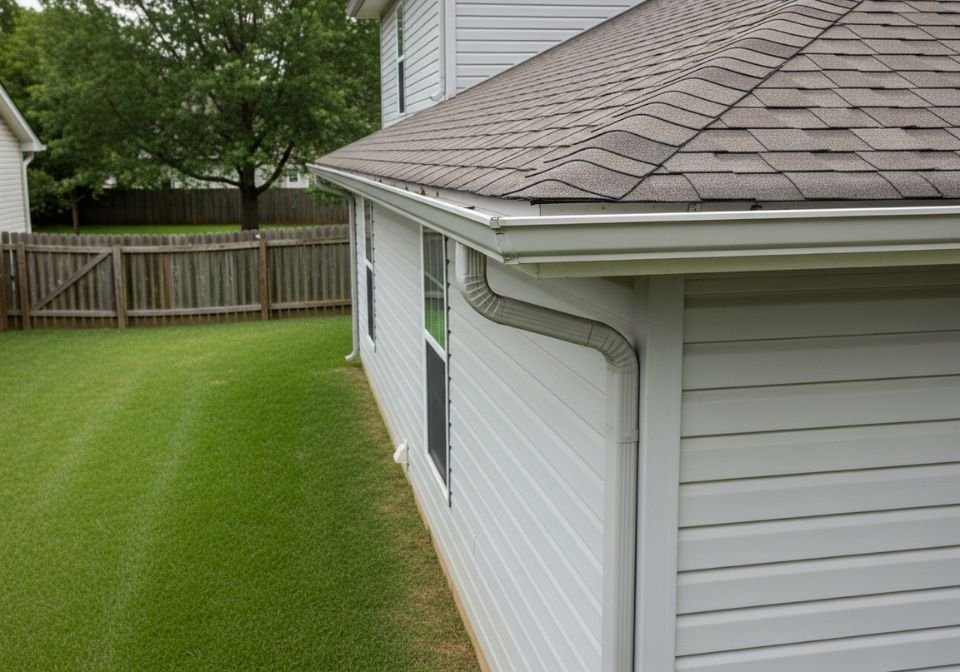
Why Brooklyn Homes Need Roof Gutters
Our blocks sit tight, and water has almost no room to spill, so gutters protect basements, stoops, and shared walls. Storms can dump inches in a single hour in New York, and that overwhelms sidewalks and drives without good drainage. Ida set the all-time hourly record, and a 2025 storm hit the second-highest hour on record, so you and I should plan for cloudbursts, not just light rain. Good gutters break the chain of damage that starts at the roof edge and ends inside your living space.
Profiles & Roof Gutter Types (What Fits a Brooklyn Brownstone?)
Your home style sets the tone, and the gutter profile should match that look while moving water fast. Brownstones and rowhouses love classic lines, and flat roofs often need details that handle overflow with grace.
- K-Style (ogee) gutters: The front edge features crown-molding lines, which pair well with many updated facades. Capacity runs strong for the size, so storms have a safer path. If you want a modern but familiar profile, this fits.
- Half-round gutters: The shape is traditional and flatters historic brownstone cornices. Interior walls stay smooth, so debris clears more easily with a flush. If your goal is a classic street view, this earns a top spot.
- Box / Internal gutters for flat or parapet roofs: These sit inside or tight to the roof edge, and scuppers or drains move water out. Detailing and slope must be right, because hidden spots can trap water. For many flat roofs in Brooklyn, this is the correct approach.
- Seamless vs. Sectional construction: Seamless runs reduce joints, which cut leak points on long elevations. Sectional systems allow easy replacement of one piece, and the starting price stays friendly. If you want fewer seams on a long brownstone facade, seamless wins most comparisons.
- Fascia-integrated looks: The gutter tucks to the trim line, and that keeps hardware out of sight. Install quality matters because pitch and hanger spacing carry the load. If you want a clean edge that blends with restored trim, ask your pro about this route.
Roof Gutters Capacity & Sizing Basics
- “5-inch vs. 6-inch” gutters and when to upsize: Most Brooklyn homes have 5-inch K-style gutters, but 6-inch profiles move more water and handle fast cloudbursts better. NYC codes size gutters by roof area and rainfall rate using Table 1106.6, so a larger gutter often helps when a roof drains big sections or has long runs. If your block sees intense rainfall like Ida or recent record-breaking storms, upsizing to 6 inches with larger outlets is a smart hedge.
- 2×3 vs. 3×4 leaders; oversized outlets to reduce overflow: A common pairing is 5-inch gutters with 2×3 downspouts and 6-inch gutters with 3×4 downspouts; the larger leader moves much more water. Flow can choke at the outlet, so a wide-mouth or oversized outlet helps water enter the downspout faster and pass small debris. If you keep seeing spillover at the outlet in heavy rain, step up to a 3×4 ladder and a wide-mouth outlet.
- Downspout count/placement on long runs or complex roofs: Spread downspouts at corners and about 30–40 ft apart on long faces, then add one mid-run if the fascia stretches beyond that distance. Place outlets at the low points of the gutter and at the ends of each run so water has a clear exit path. If a roof feeds more than one plane into a single edge, split the flow with extra downspouts.
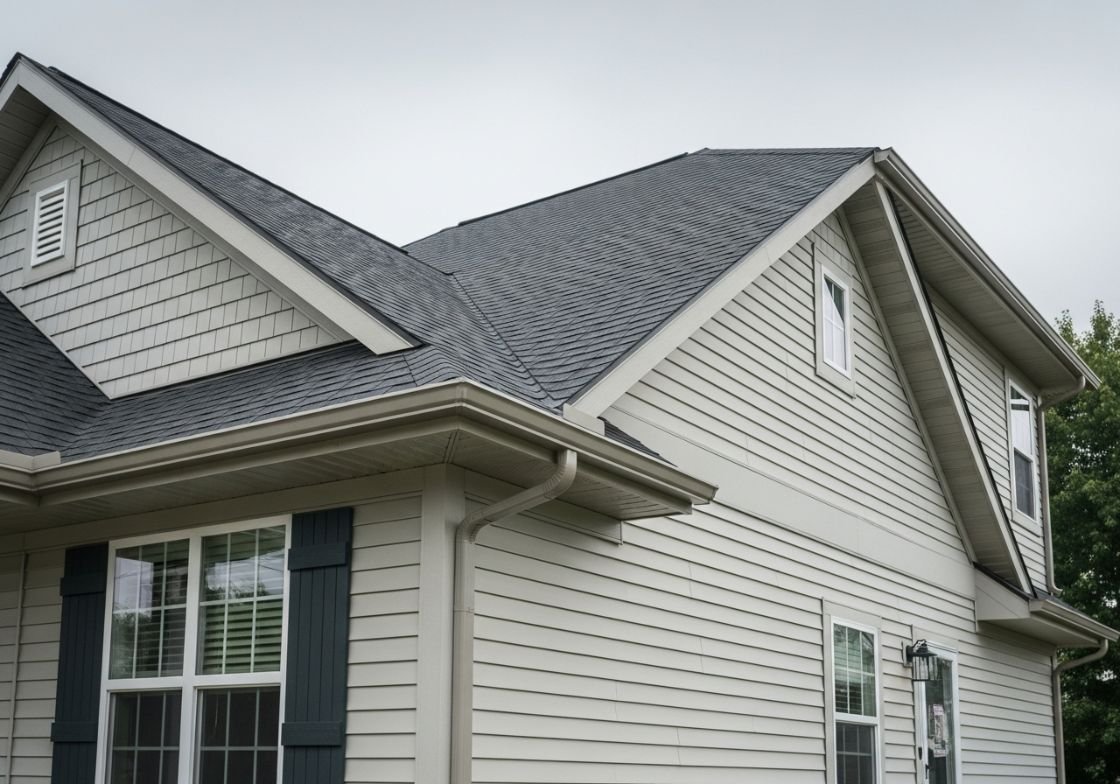
Design Details That Prevent Callbacks
- Correct pitch (avoid low spots), expansion & slip joints: NYC requires a continuous slope in gutters and leaders with not less than 1/8 inch per foot; this keeps water from pooling. Set the outlet at the low end and pitch the run evenly toward it. Long metal runs need room for thermal expansion, so use joints and sealants that allow for it.
- Bracket/hanger spacing for snow/ice loads: Hangers every 2–3 ft work for most homes; tighter spacing helps under snow, ice, and wet debris. Add extra support near outlets and corners where loads spike. If your block experiences frequent freeze-thaw cycles, choose heavy-duty concealed hangers.
- Drip edge & flashing integration; end-drop locations: A metal drip edge directs water into the gutter and away from the fascia; set shingles to overhang the drip edge per manufacturer guidance. Fasten the drip edge at the eaves and rakes, then confirm shingles reach the inner edge of the gutter. Install end drops at the pitch finish so water enters the outlet rather than washing the face.
Gutter Guards & Leaf Protection (Do They Work in Brooklyn?)
You and I see street trees all over Brooklyn, so leaves, seeds, and grit show up in gutters year-round. Guards help cut routine clogs, but they do not remove the need for seasonal checks.
- Micro-mesh guards: A fine stainless mesh blocks shingle grit and small seeds while water still drops into the trough. This style performs well in heavy rain when the guard sits level and the nose does not trap runoff. You still plan simple checks since windblown dust and pollen collect on top.
- Perforated screens: A rigid screen keeps out larger leaves and twigs and works on most rooflines. Cost stays friendly for long runs and small buildings. Fine debris can sit on the surface, so a quick broom or blower pass after leaf drop helps.
- Reverse-curve covers: A curved lid uses surface tension to roll water into the gutter while debris sheds off the edge. This design suits many pitched roofs and sheds, and big leaves well. Very steep roofs or sideways wind can send water past the lip, so check performance during the next storm.
- Foam or brush inserts: Fit inside the gutter and block large debris at a low cost. They work on short-term or quick-fix projects for sheds and small additions. They tend to accumulate grit over time, so plan more frequent swaps.
- Reality check for Brooklyn blocks with trees: Guards reduce cleaning frequency but do not eliminate it. Plan to inspect gutters twice a year, especially after storms and peak leaf drop. Remove trapped debris and check outlets and leaders to keep water moving. If you spot buildup or overflow, clean immediately to prevent damage. Guards help, but regular inspection ensures your system stays effective.
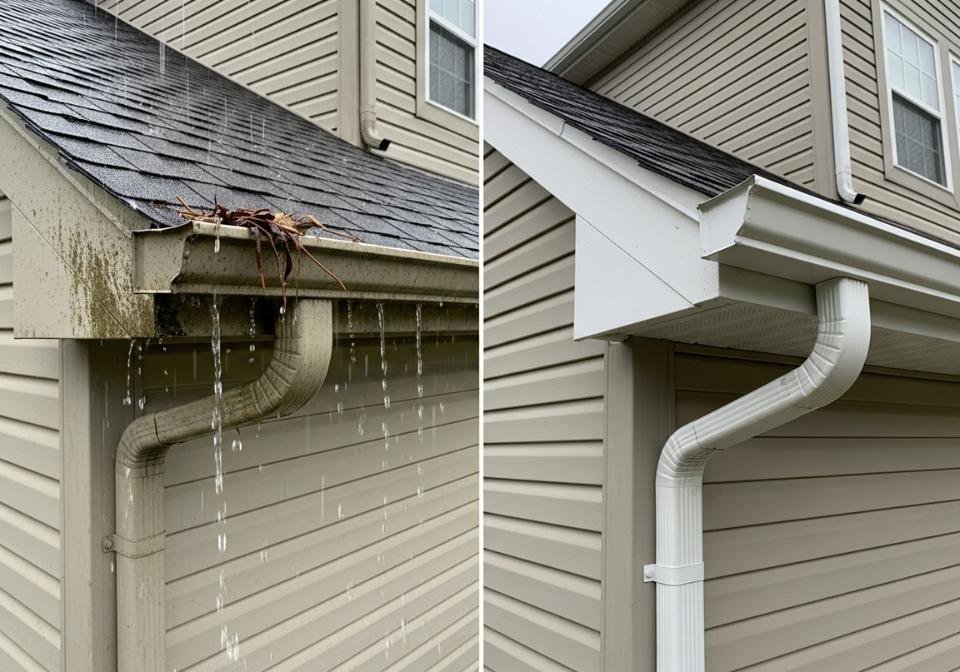
NYC Codes Homeowners Should Know about Roof Gutters
You want clear rules before you spend on gutters. NYC spells out slope, sizing, materials, overflow, and who files permits.
- Required slope: NYC requires a continuous slope toward inlets. Gutters and downspouts must slope not less than 1/8 inch per foot with no pooling. Siphonic systems are the lone exception.
- How NYC sizes gutters and leaders: Sizing is based on the 100-year, 3-in/hr hourly rainfall for New York City. The code ties gutter, leader, storm drain, and branch sizes to that rainfall rate. Your designer uses Chapter 11 tables, including gutter sizing and vertical leader limits.
- Materials, anchoring, and height: Exterior gutters must be noncombustible and corrosion-resistant, and leaders must be anchored. If the system is more than 15 feet above grade, the design must account for loads per Chapter 16. These details protect your facade and the public way.
- Secondary drainage for flat/parapet roofs: Where parapets can trap water, NYC requires secondary (emergency) drains or scuppers. Scuppers have minimum opening sizes and must limit ponding depth per the structural rules. Location and sizing follow Building Code §1503.4 and Plumbing Code Chapter 11.
- Permits and discharge paths: New or changed storm or sanitary connections trigger the House/Site Connection Proposal process with DEP. Submissions come from a NY-licensed PE or RA, and the Licensed Master Plumber pulls connection permits. NYC’s Unified Stormwater Rule and Stormwater Manual guide how your site handles runoff.
- Historic districts: Most exterior changes in landmarked areas require LPC review, often at the staff level when the work meets LPC rules. Check before you swap profiles or materials on a brownstone.
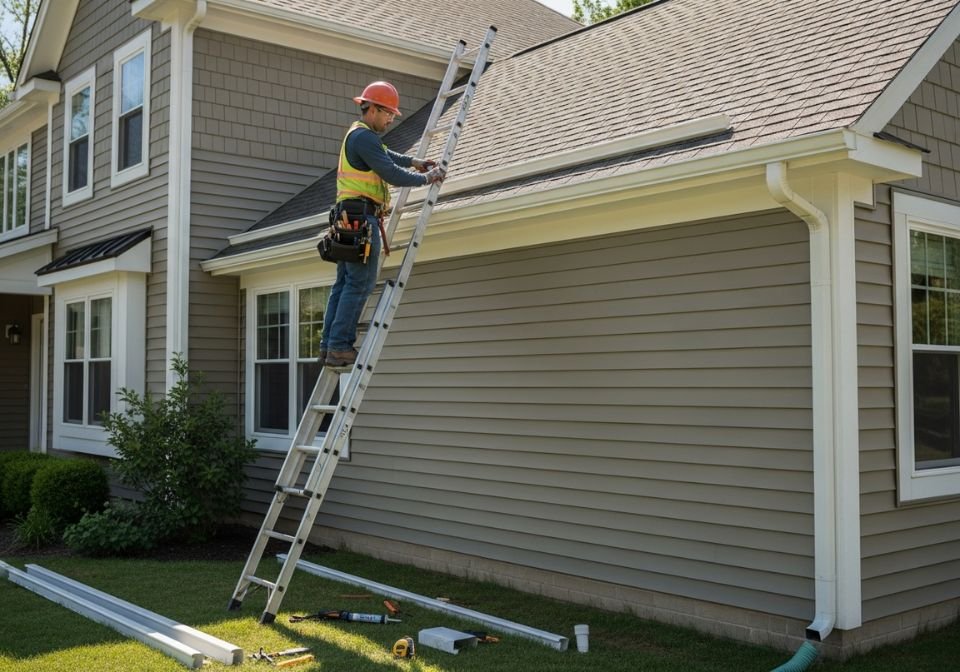
Diagnosing & Fixing Common Problems of Roof Gutters
You see stains or splashes and wonder what went wrong. A fast check of pitch, outlets, seams, and supports usually finds the culprit.
- Overflow at corners or outlets: Indicates debris, undersized outlets, or too few downspouts. Start with a safe cleanout and a hose test, then add a second downspout if one edge takes too much roof area. If spillback persists, consider a larger outlet and leader on that run.
- Sagging or pull-away: Loose or sparse hangers allow a trough to dip. Rehang on solid wood and tighten spacing on long runs or areas with ice load. Confirm the slope falls toward the drop.
- Leaks at seams and miters: Sectional joints and corners dry out or crack first. Clean to bare metal, then seal or replace the miter if damage spreads. Seamless sections reduce joints and cut leak risk over time.
- Standing water in the trough: Flat spots mean lost pitch. NYC calls for continuous fall toward inlets, so re-pitch the run to 1/8 inch per foot as needed. Reset the end drop at the low point.
- Downspout clogs: Water backs up when leaders choke at elbows or underground extensions. Clear from the top and bottom, and snake the elbow if needed. Add a cleanout or straightened path to keep the flow steady.
Safety, Licenses & Permits for Roof Gutters in Brooklyn, NYC
- Worker safety: At 6 ft or more above a lower level, crews must use fall protection such as guardrails, safety nets, or a personal fall-arrest system under OSHA 29 CFR 1926.501. NYC DOB also enforces site safety rules for permitted work.
- Licensing: Any home-improvement job over $200 requires a DCWP Home Improvement Contractor license. Always verify license status.
- Storm/sewer connections: New or modified leader tie-ins to sewers require DEP approval via HCP/SCP. A PE/RA submits the proposal; the Licensed Master Plumber applies for connection permits.
- Landmarks: In historic districts, exterior gutter changes often need LPC approval; many qualify for staff-level permits.
Installation Process of Roof Gutters
You want a clear plan before anyone lifts a ladder. Here is a step-by-step path that keeps your project safe, code-aware, and built to handle Brooklyn cloudbursts.
- Assess the roof and map the drainage path; Walk the perimeter and note every roof plane that feeds a given edge. Measure the run on the ground and sketch where the water should exit, away from your walls and walkways. Use a simple plan to mark the locations of corners, outlets, and downspouts before you buy parts.
- Confirm safety and access: Set stable ladders and staging, and keep people clear of work zones. At heights of 6 ft or more, use guardrails, nets, or a personal fall-arrest system. That rule sits in OSHA’s fall-protection standard for residential work.
- Check NYC rules for slope and sizing: NYC requires a continuous fall toward inlets with not less than 1/8 inch per foot and no pooling. Gutter and leader sizes must follow the Plumbing Code’s storm-drainage tables for horizontal gutters. Keep these two points in your plan before you pick 5-inch or 6-inch profiles.
- Choose materials and profile: Select aluminum, copper, galvanized steel, or another code-accepted, corrosion-resistant option. Pick a profile that suits your facade and drainage needs, such as K-style for capacity or half-round for historic detail. Confirm that fittings, sealants, and fasteners match the metal you chose.
- Prepare the roof edge and drip edge: Install or verify the metal drip edge so water runs into the trough rather than behind it. Seat the drip edge tight to the deck and align it with the future gutter line. This step protects the fascia and improves flow into the gutter.
- Lay out slope and hanger spacing: Mark the high point near the run’s start and the low point at the outlet, then snap a straight reference line. Follow manufacturer guidance for bracket type and spacing across the run and near corners and outlets. Fasten hangers into solid framing for strength during heavy rain.
- Cut sections and dry-fit corners: Measure twice and cut sections on the ground for safer handling. Set inside and outside miters on the layout and confirm alignment at each corner. Keep joints clean and square so seals hold under peak flow.
- Install end caps, outlets, and seals: Crimp and seal end caps, then mark and cut outlet holes at the low points you planned. Fit drop outlets and rivet or screw per the manufacturer’s sheet, then apply approved gutter sealant on seams. A clean, dry surface helps the seal last through freeze-thaw cycles.
- Hang gutter sections on the line: Lock each section into the hangers and follow your snapped slope line. Connect seams with slip joints or approved connectors and seal per instructions. Recheck the fall by eye and with a level as you go.
- Add downspouts, elbows, and straps: Set the first elbow at the outlet, align the drop to the wall, and add the bottom elbow to aim flow toward a safe discharge point. Strap the leader to the wall at regular intervals and leave a clean service path. If the run is long, add another downspout to split the load.
- Discharge water to a legal location: Direct flow to a splash block, drain, or an approved connection. Any new or altered connection to storm or sanitary systems in NYC may require DEP approvals through the House/Site Connection Proposal process. Plan this step with your contractor if you need a tie-in.
- Hose test and fine-tune: Run water from the high end to check for leaks, backflow, or ponding. Tighten fasteners, add sealant where needed, and adjust the outlet screen. Finish with a short maintenance note to remind you to schedule a spring and fall check.
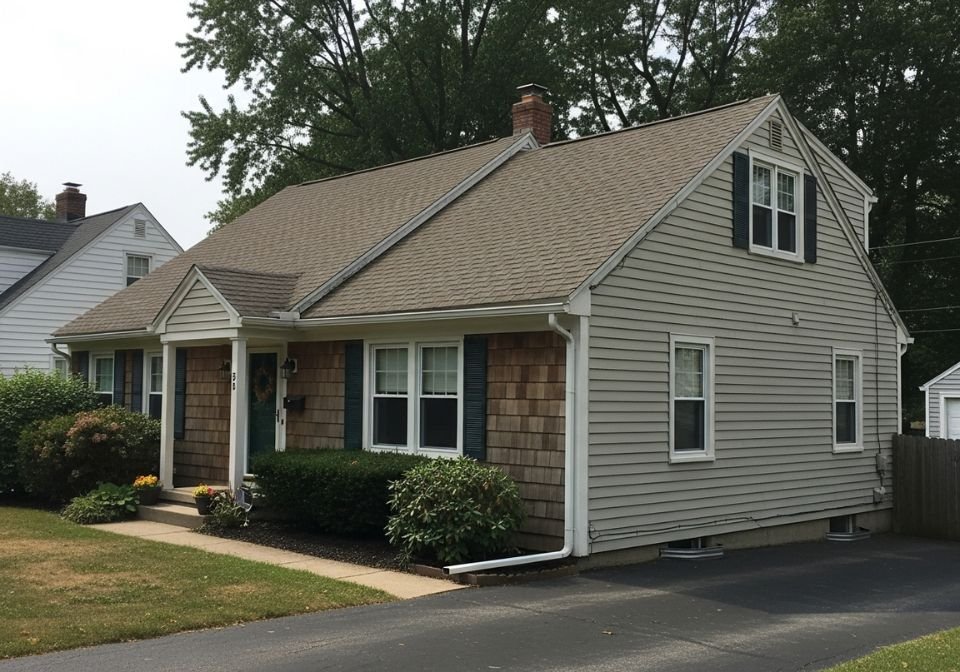
Cost of Roof Gutters in Brooklyn, NYC
Here is a practical range to plan your budget. NYC labor runs higher than in many markets, so expect the upper end of national ranges.
- Installation (NYC per linear foot): The typical installed cost is about $10.20–$15.45 per linear foot for standard materials and simple access, based on current estimator data. Complex elevations, taller buildings, or scaffolding push higher.
- Material costs (national reference, per linear foot): Vinyl: $3–$7; Aluminum: $3–$15; Galvanized steel: $5–$20; Zinc: $15–$30; Copper: $15–$40. These are material-only references; NYC install totals often sit at the top of these bands.
- Labor share (rule of thumb): For aluminum systems, labor often represents 20%–50% of the total, about $1.40–$6.00 per linear foot when broken out. Multi-story facades, tight alleys, and landmark care add time.
- Downspouts and add-ons: New downspouts average $6.50–$22.25 per linear foot installed. Upgrades like oversized outlets or extra drops add cost but reduce the risk of overflow.
- Repairs (national reference): Typical gutter repair averages $390, with a common range of $120–$900+, depending on scope and height. Spot reseals cost less than section swaps or re-pitch work.
- Cleaning (local NYC): In New York, cleaning usually runs $0.94–$1.26 per linear foot. Tight streets and tree cover in Brooklyn can push toward the high end.
Expert Tips for Maintenance of Roof Gutters
- Clean twice a year—spring and late fall; add a post-storm check.
- Flush gutters and downspouts with a hose; clear outlets; add splash blocks or extend flow 4–6 ft from the house.
- Keep correct slope toward outlets; re-pitch sagging runs to at least 1/8 in per foot (NYC).
- Inspect hangers, fasteners, and seams; tighten hardware; reseal corners and joints that drip.
- Use quality micro-mesh guards to cut debris; still schedule quick inspections and rinses.
- Follow ladder safety—use three-point contact and proper setup; stay clear of power lines.
Where to Find the Best Brooklyn Roofing Contractors
Are you looking for an expert roofing contractor in Brooklyn, NYC? SR General Construction has you covered! Our business is located at 8807 Avenue B, Brooklyn, NY 11236, United States, in the Canarsie area.
We proudly serve all areas of Brooklyn with high-quality, durable roofing solutions. From new installations to repairs and maintenance, we provide the best service at affordable prices. Contact us and experience why we’re Brooklyn’s roofing experts!
FAQ
1. Do flat roofs need gutters or just scuppers/roof drains?
NYC requires a roof‐drainage system; flat and parapet roofs typically rely on roof drains and/or scuppers with emergency overflow, while gutters may be used where appropriate. Your design must follow NYC Building Code §1503.4 and related scupper/overflow provisions.
2. What size gutters are best for NYC cloudbursts?
NYC sizes gutters and leaders by code using the 100-year hourly rainfall of 3 in/hr and Table 1106.6 for gutter flow limits, so size by calculation and site conditions. Many homes choose a 6-inch K-style with larger outlets for extra capacity, but the final size should be determined by the Plumbing Code tables.
3. Do I need an LPC permit to change gutter material/profile?
If your building is in a historic district or is an individual landmark, most exterior changes, including gutter material or profile, require LPC approval. Many in-kind or appropriate replacements qualify for staff-level permits under LPC rules.
4. How do I check my flood zone and plan downspout discharge legally?
Check your address on NYC’s Flood Hazard Mapper and FEMA’s Flood Map Service Center to see flood zones. For legal discharge or sewer tie-ins, follow NYC DEP’s Unified Stormwater Rule and, when needed, the House/Site Connection Proposal process.
5. Who maintains the curbside gutter in front of my building?
Property owners must keep the sidewalk and the gutter area 18 inches from the curb clean and clear. DSNY can issue fines if that area is not maintained.
https://mykonoscarhub.com
online number for telegram
https://members4.boardhost.com/borgward/msg/1778422307.html
kayseri car hire
https://www.keedkean.com/webboard/19/P0053698.html?s=1
https://www.flickr.com/groups/videogame/discuss/72157721925292710/72157721925285416/
https://www.tampereenslalomseura.fi/post/soveltava-alppihiihto?commentId=82b16285-a16f-44a2-8ac3-acdc813169cf
https://members4.boardhost.com/borgward/msg/1784220293.html
I think, that you are not right. I can defend the position. Write to me in PM, we will discuss.
__________