
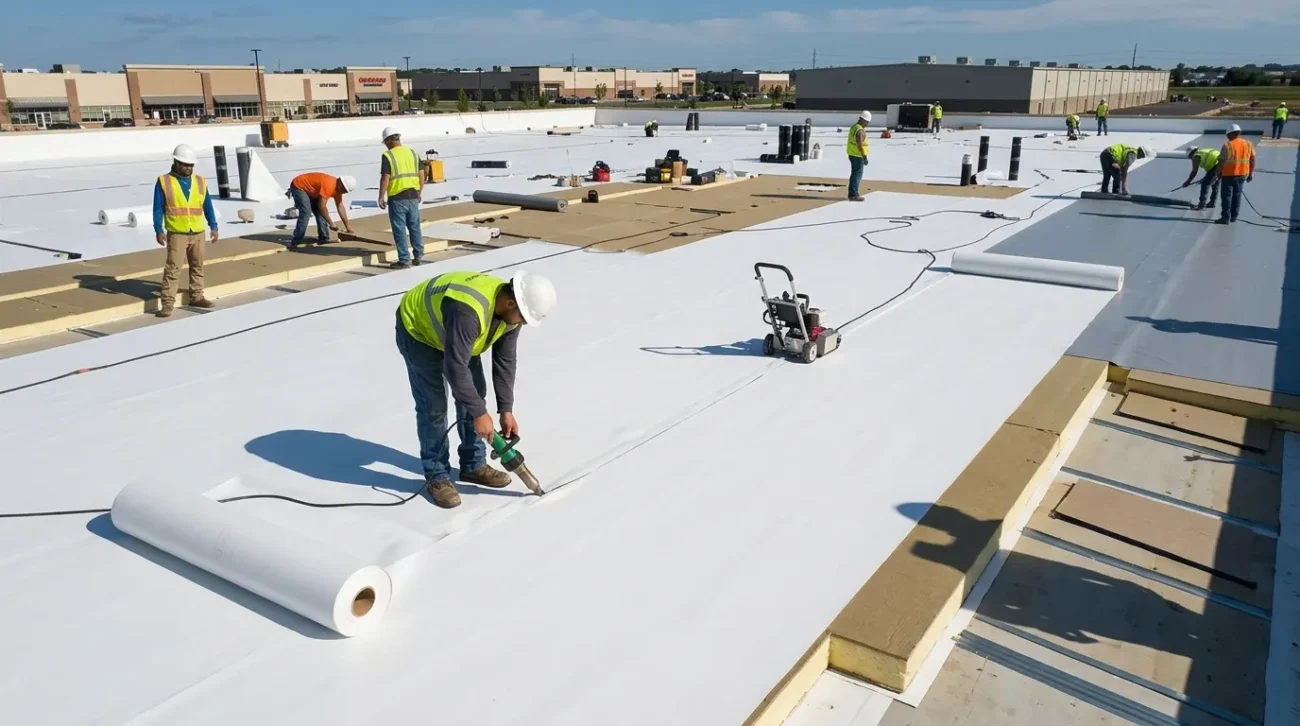
If you’re looking for a roofing solution that’s durable, cost-effective, and easy to maintain, you may have heard the term “single ply membrane roofing” before. But what is Single Ply Membrane Roofing?
Single ply membrane roofing is a modern roofing system made from a single layer of synthetic material that provides waterproof protection for flat or low-slope roofs. It’s a popular choice for both commercial and residential buildings because of its flexibility, energy efficiency, and long-lasting performance.
In this guide, we will break down everything you need to know about single ply membrane roofing. From the types of materials used to the installation methods and costs, we will cover it all. By the end, you’ll have a clear understanding of why this roofing system might be the perfect choice for your next project.
Key Information for Single Ply Membrane Roofing
- Single ply membrane roofing: Durable, cost-effective, waterproof protection for flat/low-slope roofs.
- Key components: Membrane, insulation, cover board, fasteners, adhesives, drainage, and sealants.
- Types of membranes: TPO, EPDM, PVC, TPE, CSM for different climates.
- Best membranes: EPDM for cold, TPO for heat, PVC for chemicals.
- Installation methods: Fully adhered, mechanically fastened, ballasted, hybrid, loose-laid.
- Installation cost: Ranges from $3.50 to $15 per square foot.
- Insulation options: Polyiso, XPS, EPS, Mineral Wool, Polyurethane for thermal resistance.
- Color options: White, black, grey, tan, custom colors impact energy efficiency.
- Repair tips: Patch holes, inspect seams, clean surface, replace flashings, fix water.
- Expert tips: Regular inspections, proper drainage, sealed seams, foot traffic prevention.
What Are the Key Components, Accessories, and Parts of Single Ply Membrane Roofs?
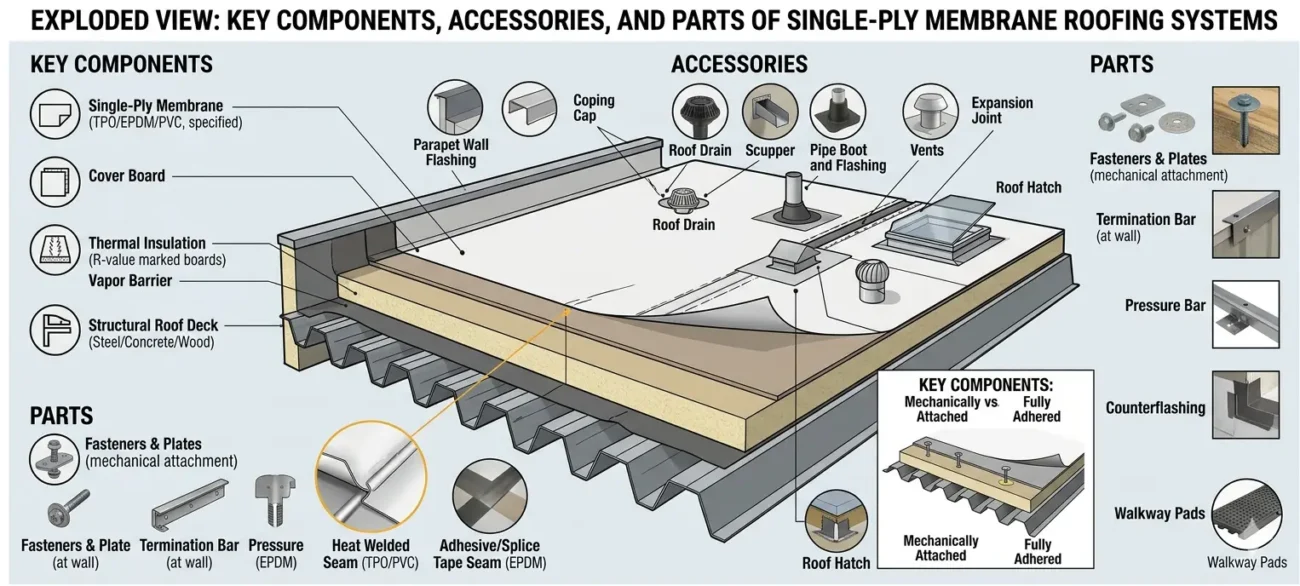
A single ply membrane roofing system consists of several important components, accessories, and parts that work together to ensure the roof’s performance and durability. From the primary membrane layer to the finishing touches, each part has a specific role in maintaining a strong, energy-efficient, and weather-resistant roof. Let’s negotiate these essential elements, their materials, thickness, and their role in the roofing system.
Key Components, Accessories, and Parts:
- Roof Membrane
- Material: TPO, EPDM, PVC, TPE
- Thickness:
- TPO: 45 mils (1.1 mm) to 80 mils (2.0 mm)
- EPDM: 45 mils (1.1 mm) to 90 mils (2.3 mm)
- PVC: 50 mils (1.3 mm) to 80 mils (2.0 mm)
- TPE: 60 mils (1.5 mm) to 90 mils (2.3 mm)
- Role: The primary waterproofing layer that shields the roof from environmental elements like rain, UV rays, and temperature changes.
- Insulation
- Material: Polyiso, EPS, XPS, Mineral Wool
- Thickness: 1.5″ (38 mm) to 4″ (102 mm)
- Role: Provides thermal resistance (R-value) to reduce heat transfer, improve energy efficiency, and maintain a comfortable temperature inside the building.
- Cover Board
- Material: DensDeck (gypsum), Perlite board, Fiberboard
- Thickness: 1/4″ (6 mm) to 1/2″ (12 mm)
- Role: Protects the insulation layer and creates a stable surface for the membrane. It provides extra durability and fire resistance.
- Fasteners and Plates
- Material: Steel or aluminum
- Thickness: Fasteners: 1.5″ (38 mm) to 3″ (76 mm) long; Plates: 2.5″ (64 mm) to 4″ (102 mm) diameter
- Role: Secure the membrane and insulation to the roof deck in mechanically fastened systems, which provide wind resistance and structural integrity.
- Adhesives and Sealants
- Material: Solvent-based or water-based adhesives
- Thickness: 1/32″ to 1/16″ (0.8 mm to 1.6 mm)
- Role: In attached systems, it bonds the membrane to the deck and seals seams to stop leaks and make sure the attachment is secure.
- Seam Tape
- Material: TPO, PVC, or similar membrane material
- Thickness: 1/16″ to 1/8″ (1.6 mm to 3.2 mm)
- Role: Seals seams between the membrane sheets to make a barrier that keeps water from getting through.
- Edge Trims and Flashings
- Material: Metal (aluminum, copper, stainless steel) or membrane-compatible material
- Thickness: 24 gauge (0.55 mm) to 18 gauge (1.2 mm)
- Role: Provides waterproofing at roof edges and around penetrations (vents, pipes, etc.). It ensures no leaks at the roof’s perimeter.
- Drainage Components
- Material: Metal or plastic
- Thickness: Varies, typically 1/8″ to 1/4″ (3.2 mm to 6.4 mm)
- Role: Drainage systems direct water off the roof to prevent ponding, water damage, and potential structural issues.
- Vents and Roof Penetrations
- Material: Rubber, PVC, or metal
- Thickness: 24 gauge (0.55 mm) to 16 gauge (1.6 mm)
- Role: It allows for ventilation and air circulation inside the building, which helps maintain indoor air quality and reduce moisture buildup.
- Material: Rubber, PVC, or metal
- Ballast (For Ballasted Systems)
- Material: Gravel, stones, or pavers
- Thickness: 2″ (51 mm) to 4″ (102 mm)
- Role: In ballasted systems, it keeps the membrane in place, which gives it stability and resilience to wind without the need for adhesives or fasteners.
What Are the Different Types of Single Ply Membrane Roofing Systems?
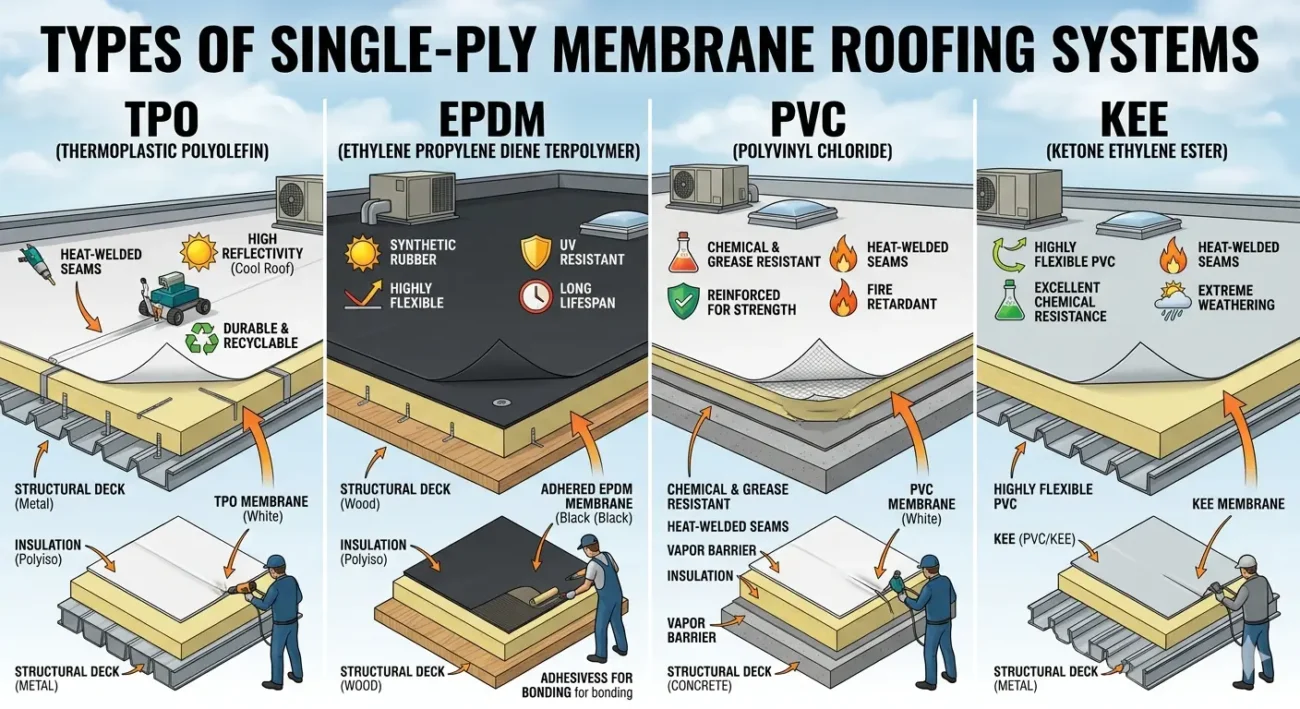
There are several types of single ply membrane roofing systems, each designed with unique features to suit different building types and environmental conditions. Below, we’ll explore the most common types of single ply roofing membranes.
1. TPO (Thermoplastic Olefin)
- Material Composition: A blend of polypropylene and ethylene-propylene rubber.
- Key Features:
- Reflective white surface that improves energy efficiency by reducing heat absorption.
- Heat-weldable seams that form strong, watertight connections.
- UV resistant, which makes it ideal for roofs exposed to harsh sunlight.
- Durable, with resistance to punctures, tears, and other forms of damage.
- Common Uses: Commercial and residential flat roofs in hot climates, where energy savings are essential.
2. EPDM (Ethylene Propylene Diene Monomer)
- Material Composition: A synthetic rubber membrane.
- Key Features:
- Highly flexible and resistant to UV rays, ozone, and extreme weather.
- Long lifespan (typically 20-30 years with proper care).
- Available in black (heat-absorbing) and white (reflective) to meet various climate needs.
- Superior ability to resist extreme temperatures, which makes it suitable for both cold and hot climates.
- Common Uses: Low-slope roofs, ideal for colder climates due to its flexibility in low temperatures.
3. PVC (Polyvinyl Chloride)
- Material Composition: A thermoplastic membrane made from polyvinyl chloride.
- Key Features:
- Excellent resistance to chemicals, oils, and grease.It is suitable for industrial environments.
- Lightweight and easy to install.
- Highly reflective surface that reduces cooling costs by reflecting sunlight.
- Durable, fire-resistant, and resistant to mold and algae growth.
- Common Uses: Commercial buildings, particularly those with exposure to chemicals, oils, or high traffic.
4. TPE (Thermoplastic Elastomer)
- Material Composition: A blend of thermoplastic and elastomeric materials.
- Key Features:
- Offers excellent UV resistance, flexibility, and durability.
- Reflective surface that helps improve energy efficiency.
- High resistance to environmental stresses, including chemicals and weathering.
- Can be welded with heat for watertight seams.
- Common Uses: Commercial roofing applications, especially in areas that require enhanced chemical resistance.
5. CSM (Chlorosulfonated Polyethylene)
- Material Composition: A synthetic rubber material that is highly resistant to chemicals and heat.
- Key Features:
- High resistance to UV rays and ozone. It is ideal for exposure to harsh environmental conditions.
- Excellent for applications requiring significant chemical resistance.
- Durable and flexible, with superior weathering properties.
- Common Uses: Niche applications in industrial environments or areas exposed to heavy chemical exposure.
6. Polyisocyanurate (Polyiso)
- Material Composition: A type of rigid foam insulation commonly used beneath the roofing membrane.
- Key Features:
- High R-value (thermal resistance), which helps to reduce heating and cooling costs.
- Lightweight and easy to install. It provides a stable surface for the membrane.
- Moisture-resistant, especially when faced with foil.
- Common Uses: Insulation layer under single ply membranes in both commercial and residential applications to enhance thermal performance.
Best Types of Single Ply Membrane Roofs
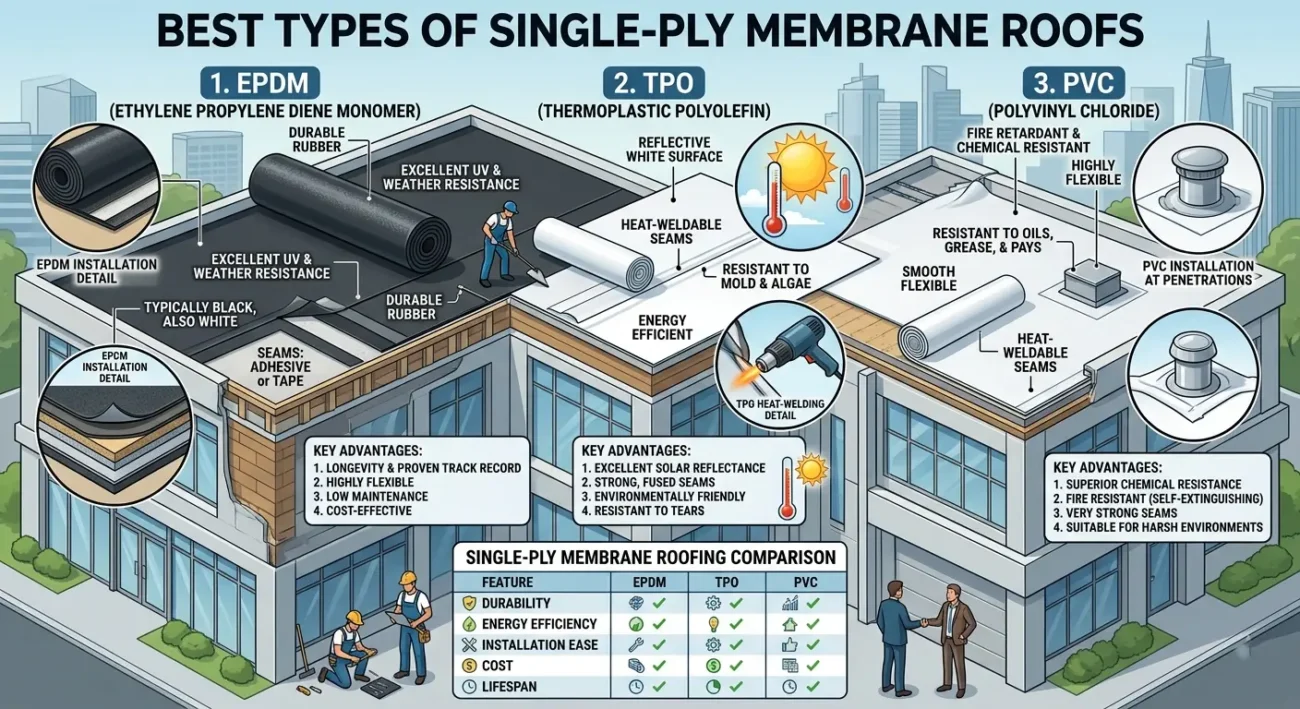
Here are three of the top-performing single ply membrane roofing options, each suited for different needs and environmental conditions:
EPDM
- EPDM performs well in both cold and hot climates.
- It is suitable for both residential and commercial buildings.
- The material is resistant to UV rays, ozone, and harsh weather.
- EPDM is available in black (which absorbs heat) and white (which reflects sunlight), which gives you thermal control options.
- With proper maintenance, EPDM lasts 20-30 years.
- It is a cost-effective option compared to other roofing materials.
- You can repair EPDM easily using patch kits.
- It works well on low-slope roofs.
- EPDM is environmentally friendly and can be recycled.
- The material is widely available and affordable.
TPO
- TPO is energy-efficient with a reflective surface that reduces cooling costs.
- It is perfect for hot climates because it reflects sunlight and reduces heat absorption.
- TPO is more affordable than PVC roofing systems.
- The material is lightweight and easy to install, which reduces labor costs.
- TPO is resistant to algae, mold, and mildew growth.
- Seam welding for TPO creates a strong, watertight seal.
- It is ideal for large commercial buildings with expansive roofs.
- The reflective properties of TPO help improve indoor comfort by reducing heat.
- TPO is available in various thicknesses to meet different roofing needs.
- TPO offers excellent long-term durability.
PVC
- PVC is chemical and fire-resistant. Consequently, it is perfect for industrial roofs.
- The material is highly durable and resistant to oils, grease, and other harsh chemicals.
- PVC has a reflective surface that reduces heat absorption and lowers cooling costs.
- It offers superior resistance to punctures and tears.
- With proper maintenance, PVC lasts over 30 years.
- PVC is available in multiple colors and thicknesses.
- The heat-welded seams form a watertight seal.
- PVC is ideal for high-traffic areas or roofs exposed to chemicals.
- The material performs well in both hot and cold climates.
- PVC is recyclable, and it is an environmentally friendly choice.
Pros and Cons of Single Ply Membrane Roofing
It’s important to understand the pros and cons of single ply membrane roofing because this helps you make an informed decision. A clear understanding of its benefits can guide you toward choosing the right roofing system. At the same time, you will know the potential downsides. This detailed suggestion will help you prepare for maintenance and repairs.
Benefits of Single Ply Roofing Membranes
- Energy Efficiency
Single ply membranes, especially TPO and PVC, have a reflective surface that helps reduce heat absorption. This can lower cooling costs significantly, especially in hot climates. Energy efficiency is a key reason why these systems are so popular for commercial buildings. - Durability
Single ply roofing membranes are designed to prevent extreme weather conditions, from harsh UV rays to high winds and heavy rainfall. They are highly resistant to cracking, shrinking, and other forms of damage. This durability ensures that your roof will last for years without needing frequent repairs. - Ease of Installation
Single ply membrane roofing systems are relatively quick and easy to install, especially compared to traditional roofing options. The installation process is typically less labor-intensive, which can save both time and money. This makes it a popular choice for new constructions and roof replacements. - Low Maintenance
Once installed, single ply membranes require minimal maintenance. These roofs are resistant to moss, algae, and mold, which makes upkeep easier. Regular inspections and occasional cleaning are typically all that’s needed to maintain a single ply roof. - Cost-Effective
Single ply roofing membranes are generally more affordable than other types of commercial roofing systems. They are also lightweight, and reduce installation costs. Over time, the energy savings and low maintenance costs make them an economical choice for building owners. - Environmentally Friendly
Many single ply membranes, like TPO and EPDM, are recyclable, and reduce environmental impact. They also contribute to energy savings by improving the building’s energy efficiency. This makes single ply roofs a sustainable option for environmentally conscious building owners.
Disadvantages of Single Ply Roofing Membranes
- Vulnerability to Punctures
Single ply membranes, especially TPO and EPDM, can be more prone to punctures than other roofing systems. Sharp objects or heavy foot traffic can cause damage. This may require repairs to maintain the roof’s integrity and waterproofing. - Expansion and Contraction Issues
Extreme temperature changes can cause the membrane to expand and contract, which may affect its longevity. If not fixed, this movement can cause gaps or seams to open up over time, which can lead to leaks.. This is particularly an issue with older or improperly installed membranes. - Installation Complexity
While installation is generally quicker, it still requires careful attention to detail. Improper installation, especially with adhesive or mechanical systems, can cause issues like inadequate sealing or weak spots. It’s very important to make sure that the roof is installed correctly so that it lasts a long time. - Color Fading
EPDM and other dark membranes can fade or discolor under prolonged UV exposure. This aesthetic issue might not impact the functionality, but it can affect the roof’s appearance over time. Regular cleaning and inspections can help manage this. - Limited Repair Options
While these roofs are durable, repairs can be more difficult if significant damage occurs. For example, large areas of the membrane may need to be replaced if damaged beyond a small patch. It’s important to act quickly to avoid extensive damage and costly repairs. - Susceptibility to Chemical Damage
Some single ply membranes, like TPO, are more sensitive to exposure to certain chemicals. Harsh chemicals or oils can cause the membrane to degrade over time. Special care should be taken to avoid exposure to such substances, especially in industrial environments.
What Are the Different Installation Methods for Single Ply Roofing?
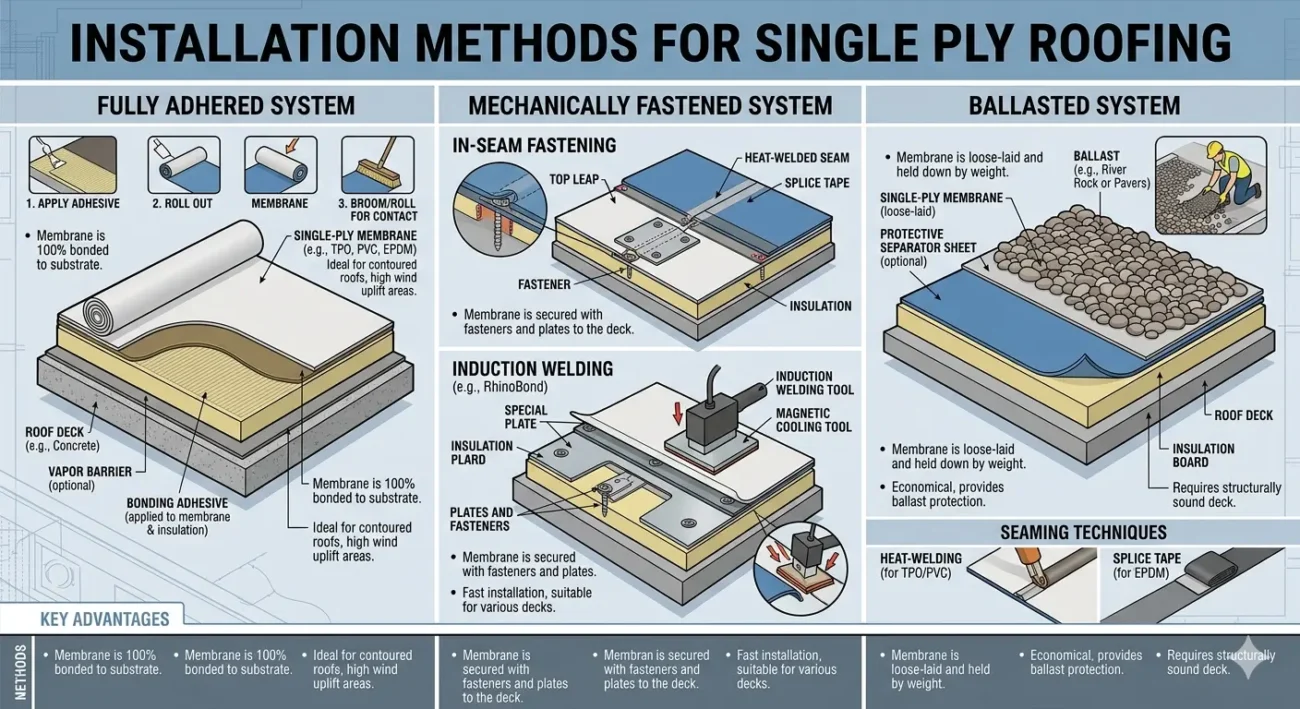
To choose the proper single ply roofing system for your needs, you need to know how to install it. Different installation methods offer distinct benefits based on factors like budget, building design, and climate. Below are the most common installation methods used for single ply roofs:
- Fully Adhered Installation
- In this method, the membrane is bonded directly to the insulation or roof deck using adhesives.
- This creates a smooth, uniform surface without mechanical fasteners.
- It provides a secure, watertight seal, which makes it ideal for areas with high wind exposure.
- Mechanically Fastened Installation
- The membrane is attached to the roof deck using fasteners and plates.
- This method is quick and often used for commercial buildings.
- It allows the roof to be easily modified or replaced in the future, but fasteners can be vulnerable to corrosion over time.
- Ballasted Installation
- The membrane is held in place by a layer of gravel, pavers, or other heavy materials.
- This method eliminates the need for adhesives or mechanical fasteners.
- It is often used in retrofit applications but requires a flat or slightly sloped roof to ensure proper drainage.
- Hybrid Installation
- This installation method combines fully adhered and mechanically fastened techniques.
- It is useful in areas where wind uplift is a concern, such as coastal regions.
- The membrane is fastened at the edges and adhered in the middle for a more secure roof.
- Loose-Laid Installation
- In this method, the membrane is laid loosely on the roof deck without adhesive or fasteners.
- It is held in place by the weight of ballast or other materials.
- This is a cost-effective installation but may not be as secure as other methods, especially in areas with high winds.
Installation Cost (per sq. ft.) of Single Ply Membrane Roofs in Brooklyn, NYC
To plan your roofing project, you need to know how much it will cost to build a single ply roof.
The cost per square foot varies depending on the type of membrane material you choose. Factors like material quality, installation method, and roof complexity can all affect the overall cost.
We will cover the installation cost for all types of single ply membrane roofs, which gives you a clear understanding of how much each option may cost per square foot. This will help you choose the best roofing solution within your budget.
EPDM Roof Installation Cost (per sq. ft.)
| Types of EPDM Roofing | Material Cost (per sq. ft.) | Labour Cost (per sq. ft.) | Total Cost (per sq. ft.) |
| Fully Adhered EPDM Roofing | $2.50 – $5.00 | $2.00 – $4.00 | $4.50 – $9.00 |
| Ballasted EPDM Roofing | $1.50 – $3.00 | $2.00 – $3.50 | $3.50 – $6.50 |
| Mechanically Fastened EPDM | $2.00 – $4.00 | $2.00 – $4.00 | $4.00 – $8.00 |
| Reinforced EPDM | $3.00 – $5.00 | $2.50 – $4.50 | $5.50 – $9.50 |
| Self-Adhering EPDM | $3.00 – $5.00 | $2.50 – $4.00 | $5.50 – $9.00 |
TPO Roof Installation Cost (per sq. ft.)
| Types of TPO Roofing | Material Cost (per sq. ft.) | Labour Cost (per sq. ft.) | Total Cost (per sq. ft.) |
| Standard TPO | $1.50 – $2.50 | $2.00 – $3.00 | $3.50 – $5.50 |
| Reinforced TPO | $2.00 – $3.00 | $2.50 – $3.50 | $4.50 – $6.50 |
| TPO with Adhesive | $2.50 – $3.50 | $2.00 – $3.00 | $4.50 – $6.50 |
| TPO with Mechanical Fasteners | $2.00 – $3.00 | $2.50 – $3.50 | $4.50 – $6.50 |
| TPO with Ballast | $2.00 – $2.50 | $1.50 – $2.50 | $3.50 – $5.00 |
| TPO with UV Protection | $3.00 – $4.00 | $3.00 – $4.00 | $6.00 – $8.00 |
PVC Roofing Installation Cost (per sq. ft.)
| PVC Roofing Type | Material Cost | Labor Cost | Total Cost |
| Standard PVC | $4 – $6 | $2 – $4 | $6 – $10 |
| Reinforced PVC | $5 – $7 | $3 – $5 | $8 – $12 |
| White PVC | $5 – $7 | $2 – $4 | $7 – $11 |
| TPO/PVC Hybrid | $6 – $8 | $3 – $5 | $9 – $13 |
| PVC with Insulation | $6 – $8 | $3 – $5 | $9 – $13 |
| Premium PVC | $7 – $9 | $4 – $6 | $11 – $15 |
Insulation Choices for Single-Ply Roofing
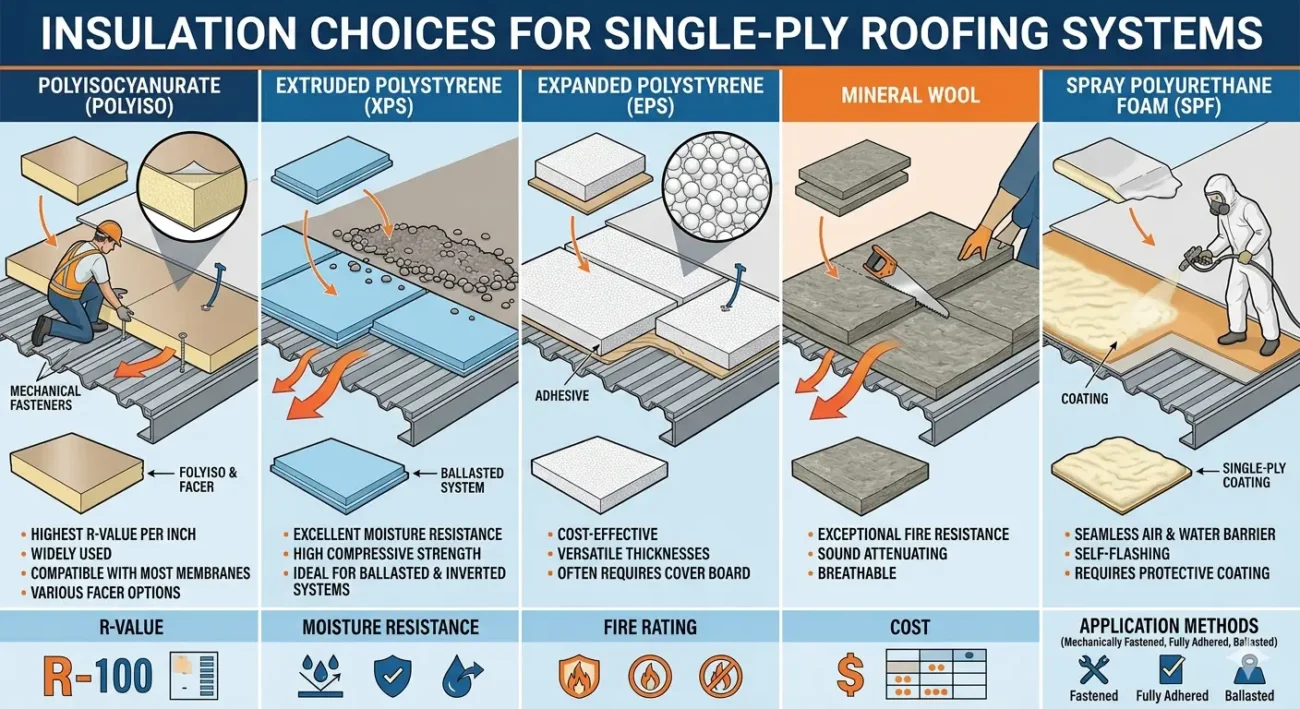
Choosing the right insulation for your single-ply roofing system is essential for improving energy efficiency and comfort. Insulation helps to regulate temperature, reduce energy bills, and enhance the overall performance of the roof. Here are the most common types of insulation used with single-ply roofing systems:
- Polyisocyanurate (Polyiso)
- Polyiso is a widely used insulation material due to its high thermal resistance (R-value).
- It is light and easy to put under the membrane, which makes the roof more energy efficient.
- Polyiso is moisture-resistant, making it a great option for flat or low-slope roofs.
- Extruded Polystyrene (XPS)
- XPS offers excellent moisture resistance and can handle extreme temperature changes.
- It has a moderate R-value compared to other insulations but is known for its durability and strength.
- XPS is ideal for roofs exposed to heavy foot traffic or equipment.
- Expanded Polystyrene (EPS)
- EPS is an economical insulation material with a lower R-value than Polyiso and XPS.
- It is lightweight and easy to handle and provides a good balance between cost and performance.
- EPS is suitable for moderate climates and is often used in commercial buildings.
- Mineral Wool
- Mineral wool provides excellent fire resistance, which makes it a great choice for roofs that require added protection.
- It has an excellent R-value and soundproofing qualities, thus it’s good for structures that are close to noisy places.
- Mineral wool is also resistant to mold and water, which makes the roof last longer..
- Polyurethane
- Polyurethane is a high-performance insulation with a high R-value per inch of thickness.
- It is resistant to moisture and makes it ideal for areas with heavy rainfall or humidity.
- Polyurethane has better thermal performance, which lowers energy expenses.
Single-Ply Membrane Colors
The color of a single-ply membrane can impact energy efficiency, roof temperature, and building comfort. You can choose from a variety of colors for both looks and function. Here are the main color options for single-ply membranes:
- White: White membranes are highly reflective. It reduces heat absorption and helps to keep the building cooler. They are especially beneficial in hot climates, as they improve energy efficiency by lowering cooling costs.
- Black: Black membranes absorb heat. This makes them ideal for colder climates where heat retention is needed. They help keep the building warm during the winter and are commonly used in colder regions.
- Grey: Grey membranes offer a balance between heat reflection and absorption. This neutral color helps reduce glare while providing moderate thermal performance.
- Tan: Tan membranes are widely utilized for looks because they go well with many types of buildings. They also reflect some light, which makes them a desirable choice for roofing in places with moderate weather.
- Other Custom Colors: Some manufacturers offer custom colors for aesthetic reasons or to match branding needs. These colors may not be as energy-efficient as white or black but provide a unique appearance for specific applications.
Repair Tips for Single Ply Membrane Roofs
Over time, single ply roofs may experience minor damage. Regular maintenance and quick repairs can extend the life of your roof and prevent costly replacements. Here are some essential repair tips to keep your single-ply membrane roof in good condition:
- Patch Small Holes Promptly: If you notice a hole or tear in the membrane, use a repair kit to patch it quickly. Small holes can let water in, so addressing them early can prevent bigger problems.
- Inspect Seams Regularly: Check the seams of the membrane for any signs of opening or cracking. Seams are common areas for leaks, and repairing them right away helps maintain the roof’s integrity.
- Clean the Roof Surface: Dirt, debris, and organic growth can cause damage over time. Regular cleaning of the roof helps preserve the membrane’s performance and prevents issues like algae growth.
- Replace Damaged Flashings: Flashings around vents, pipes, and roof edges can deteriorate with exposure to the elements. Replacing or resealing flashings ensures a proper seal and prevents water leaks.
- Check for Standing Water: Standing water on the roof can increase the risk of leaks and membrane degradation. If you notice any pooling, fix the drainage or adjust the slope to allow proper water flow.
- Hire a Professional for Extensive Damage: If you notice significant damage or can’t find the source of leaks, it’s best to hire a professional roofer. They have the experience to assess and repair the roof properly.
Expert Tips for Single Ply Roofs
Single ply membrane roofing offers great benefits, but they need proper care to function well. Here are some expert tips to help you get the most out of your roof:
- Perform regular inspections to identify potential issues early.
- Maintain proper drainage to avoid standing water on the roof.
- Ensure the seams and flashings are properly sealed.
- Avoid foot traffic on the roof to prevent punctures and damage.
- Clean the roof regularly to remove debris and organic growth.
- Choose the right insulation to improve energy efficiency.
Which Single Ply Membrane Roofing Types Are Suitable for Brooklyn, NYC?
In Brooklyn, NYC, the weather can vary greatly, with hot summers and cold winters. For this climate, EPDM and TPO are the most suitable options. EPDM offers flexibility in cold temperatures, while TPO provides energy efficiency in the heat.
Where should you choose a professional roofing contractor?
Are you looking for an expert roofing contractor in Brooklyn, NYC? SR General Construction has you covered! Our business is located at 8807 Avenue B, Brooklyn, NY 11236, United States, in the Canarsie area.
We proudly serve all areas of Brooklyn with high-quality, durable roofing solutions. From new installations to repairs and maintenance, we provide the best service at affordable prices. Contact us and experience why we’re Brooklyn’s roofing experts!
FAQ
1. What is single ply membrane roofing?
Single ply membrane roofing is a synthetic, waterproof layer used for flat or low-slope roofs. It provides durability, energy efficiency, and long-lasting protection from weather elements.
2. What are the benefits of single ply membrane roofing?
It is energy-efficient, durable, easy to install, and requires low maintenance. It also offers flexibility for both commercial and residential buildings.
3. What are the types of single ply membrane roofing materials?
The main materials are TPO, EPDM, PVC, TPE, and CSM, each suited for different environmental conditions.
4. How thick is the single ply membrane roofing material?
Thickness varies by material:
- TPO: 45-80 mils (1.1 mm – 2.0 mm)
- EPDM: 45-90 mils (1.1 mm – 2.3 mm)
- PVC: 50-80 mils (1.3 mm – 2.0 mm)
5. What are the most common installation methods for single ply membrane roofing?
The common methods are fully adhered, mechanically fastened, ballasted, hybrid, and loose-laid, each with benefits for wind resistance and installation time.
6. How long does a single ply membrane roof last?
With proper maintenance, single ply membranes, especially EPDM and TPO, can last 20-30 years.
7. What colors are available for single ply roofing membranes?
Common colors include white, black, grey, and tan. White is ideal for hot climates, while black is best for colder regions.